Researchers analyzing data from the Framingham Heart Study Offspring Cohort found that adults whose diets were more likely to promote inflammation had smaller brain volume, according to a study published in Neurology.
The study included 1,897 adults with an average age of 62. Participants completed food frequency questionnaires over several years, allowing researchers to estimate their usual eating habits. Each person received a Dietary Inflammatory Index (DII) score, which measures the inflammatory potential of an overall diet. Higher scores indicate more pro-inflammatory eating patterns, while lower scores reflect more anti-inflammatory diets.
After adjusting for factors such as age, sex, education, smoking, physical activity and health conditions, researchers found that people with higher DII scores tended to have smaller total brain volume and less gray matter. They also had larger lateral ventricles, a structural brain change commonly associated with age-related brain shrinkage.
The researchers analyzed MRI scans for several markers of brain aging and cerebrovascular health, including total brain volume, gray matter volume and signs of small vessel disease. They found no meaningful association between inflammatory diets and hippocampal volume, white matter lesions or cerebral microbleeds.
Although some loss of brain volume occurs naturally with age, accelerated shrinkage has been linked to cognitive decline and a higher risk of dementia. Researchers emphasized, however, that this cross-sectional study cannot prove that diet directly caused the observed brain changes. The findings point to an association rather than a cause-and-effect relationship.
The Dietary Inflammatory Index evaluates the combined effects of foods and nutrients rather than individual ingredients. Diets with higher inflammatory scores typically include ultra-processed foods, refined grains, sugary drinks, processed meats and foods high in saturated and trans fats.
By contrast, Mediterranean-style diets rich in fruits, vegetables, legumes, whole grains, olive oil and fish have consistently been associated with lower levels of inflammation. Omega-3-rich seafood and olive oil have also been linked to heart and brain health.
Researchers concluded that chronic inflammation may damage blood vessels, increase oxidative stress and interfere with communication between brain cells, potentially contributing to age-related brain tissue loss. While the findings do not justify immediate treatment recommendations, they add to growing evidence that healthy eating patterns may help support long-term brain health and healthy aging. Food.news.
Mediados de agosto ofrece a los residentes del Área de la Bahía una variedad de festivales culturales, música en vivo, actividades familiares y eventos empresariales.
Festival de Artes Aéreas de San Francisco
Festival de tres días llena Fort Mason con espectáculos aéreos
La séptima edición bienal del Festival de Artes Aéreas de San Francisco reúne a artistas aéreos de reconocimiento internacional, compañías de circo contemporáneo y nuevos talentos durante tres días de innovadoras presentaciones y espectáculos juveniles. Presentado por Zaccho Dance Theatre y Fort Mason Center for Arts & Culture, el festival transforma teatros y espacios públicos en escenarios para creativas expresiones artísticas.
Del viernes 7 al domingo 9 de agosto, Fort Mason Center for Arts & Culture, Gateway Pavilion, Pier 2, 2 Marina Blvd., San Francisco. Boletos e información: sfaerialartsfest.org.
Más allá del mundo hispano
La Semana Internacional destaca las alianzas globales de San Francisco
La Semana Internacional de San Francisco resalta las conexiones internacionales de la ciudad en los ámbitos de los negocios, el comercio y la cultura mediante recepciones de networking, foros empresariales y programas multiculturales organizados por cámaras de comercio, consulados y organizaciones comunitarias.
Del lunes 10 al viernes 14 de agosto. Noche inaugural: lunes 10 de agosto, de 5:30 a 8:30 p.m., Rincon Center, 101 Spear St., San Francisco. Se requiere inscripción. Información: sfcentered.org.
Fiesta en la Plaza – Noche de la Herencia Latina
Rohnert Park celebra la cultura latinoamericana
Momotombo SF actuará en el Hayward Latin Jazz Festival el 27 de junio. Momotombo SF will perform at the Hayward Latin Jazz Festival on June 27.
Disfrute de la música en vivo de Momotombo SF, con exintegrantes de Malo y Santana, además del Ballet Folklórico Papiyoltzin, una exhibición de automóviles clásicos, puestos de comida latinoamericana y artesanías en esta celebración familiar gratuita.
Viernes 14 de agosto, de 5 a 8 p.m., Rohnert Park Community Center Complex, 5401 Snyder Ln., Rohnert Park. Entrada gratuita.
Música en la Mansión
Latin Rhythm Boys encabeza el concierto de verano en Hayward
La serie gratuita Music at the Mansion, del Distrito de Recreación y Parques del Área de Hayward, continúa con la presentación de Latin Rhythm Boys, interpretando enérgica música puertorriqueña. Las familias también podrán disfrutar de actividades infantiles y puestos de comida en los históricos jardines de Mt. Eden Mansion.
Domingo 16 de agosto, de 1 a 5 p.m., Mt. Eden Mansion, 2451 W. Tennyson Rd., Hayward. Entrada gratuita. Información: thehardfoundation.org.
47.ª Convención Estatal Anual de la CHCC
Líderes empresariales latinos se reúnen en Oakland
La Cámara Hispana de Comercio de California celebrará su Convención Estatal Anual con conferencistas principales, talleres y oportunidades de networking para emprendedores, propietarios de negocios y líderes comunitarios.
Del miércoles 19 al viernes 21 de agosto, Oakland Marriott City Center, 1001 Broadway, Oakland. Se requiere inscripción. Información: CHCC2026.com.
¿Cuidado o muerte? El debate sobre el suicidio asistido plantea profundas preguntas sobre la compasión, la dignidad y la protección de los más vulnerables de la sociedad. Care or death? The assisted-suicide debate raises profound questions about compassion, dignity and protecting society’s most vulnerable.
by the El Reportero staff
More than 140 doctors, nurses and healthcare professionals in Yorkshire have spoken with remarkable courage. They are urging Members of Parliament to reject Britain’s new assisted-suicide bill, warning that it is simply “not safe for patients.”
Their warning should not be dismissed.
When those who spend their lives caring for the sick and dying tell lawmakers that a proposed law could endanger vulnerable people, society has a moral obligation to listen. These professionals are not speaking from political ideology but from years of witnessing suffering, fear, loneliness and hope at the bedside.
Their message is simple: fix end-of-life care before offering people death.
That is a position I find both reasonable and compassionate.
The debate over assisted suicide is often presented as one of individual freedom. We hear words such as “choice,” “dignity” and “autonomy.” Those are important values. But true freedom exists only when people have genuine alternatives. If a patient cannot obtain adequate pain management, hospice care, emotional support or family assistance, is choosing death really an expression of freedom—or a reflection of society’s failure?
Even Britain’s new Prime Minister, Andy Burnham, has acknowledged that palliative care and social care should be strengthened before the country moves toward legalizing assisted suicide. That alone should give legislators reason to pause.
What troubles me even more is the broader direction in which many Western societies appear to be moving.
For decades, influential organizations, governments and prominent public figures have openly discussed concerns about population growth, declining resources and the environmental impact of humanity. Population control has not been an imaginary topic; it has been debated internationally for generations. Birth-control campaigns, sterilization programs in some countries and family-planning initiatives have all been part of that history.
Because of that history, I cannot help but wonder whether today’s growing acceptance of assisted suicide reflects more than compassion alone. In my opinion, it risks becoming part of a cultural mindset that increasingly views human beings through the lens of economic cost, productivity and demographic management rather than their inherent dignity.
I am not suggesting that every supporter of assisted suicide holds such motives. Many sincerely wish to relieve suffering, and their compassion should be respected. But good intentions do not always produce good laws.
History repeatedly reminds us that societies often begin with narrow exceptions, only to gradually expand them. What starts as a limited option for the terminally ill can slowly extend to other groups once the moral boundary has shifted. That possibility deserves serious reflection before any nation changes the law.
The measure of a civilized society is not how efficiently it solves difficult problems but how faithfully it protects those who cannot protect themselves. The elderly, the disabled, the chronically ill and those struggling with depression or despair should never wonder whether society would rather help them live—or help them die.
The answer should always be life.
Instead of investing political energy in expanding access to assisted suicide, governments should guarantee universal access to high-quality palliative care, hospice services, mental-health support and family caregivers. A compassionate society should make every reasonable effort to relieve suffering without eliminating the sufferer.
The warning from these British healthcare professionals reaches far beyond the United Kingdom. It challenges every nation to ask a fundamental question: Will we respond to human suffering with greater care, or with a quicker path to death?
For me, the answer is clear. Compassion should always extend a healing hand—not an invitation to surrender life itself.
El papa León XIV.Mario Tomassetti / Gettyimages.ru
by the El Reportero staff
Pope Leo XIV will make his first official visit to Latin America as pontiff from Nov. 6 to 17, traveling to Uruguay, Argentina and Peru, the Vatican announced this week. The journey will be one of the most significant international trips of his young pontificate and marks a return to a region where he spent much of his pastoral ministry before becoming the leader of the Catholic Church.
The trip will begin in Uruguay, where the pope is scheduled to visit Montevideo, Paysandú and Florida from Nov. 6 to 8. He will then travel to Argentina, making stops in Buenos Aires, Córdoba and the Marian shrine of Our Lady of Luján between Nov. 8 and 11. The final leg of the journey will take him to Peru from Nov. 11 to 17, with visits planned to Lima, Chiclayo, Cusco and Pucallpa.
The visit carries deep personal significance for Pope Leo XIV. Before his election, he served for many years as an Augustinian missionary in Peru and later became bishop of Chiclayo. He also became a Peruvian citizen, making his return especially meaningful to the country’s Catholics. Church leaders expect large crowds to welcome him in Chiclayo, where he spent years serving the local community and became widely respected for his pastoral leadership.
The Argentina visit will also have special symbolic importance. It will be the first papal visit to the country since Pope Francis was elected in 2013. Although Francis, the first Argentine pope, never made an official visit to his homeland during his pontificate, Pope Leo XIV will travel to some of Argentina’s most important religious sites, including the National Shrine of Our Lady of Luján, one of the country’s most revered pilgrimage destinations.
The Vatican said a detailed itinerary will be released in the coming weeks. The trip underscores the continuing importance of Latin America to the Catholic Church, as the region is home to nearly 40 percent of the world’s Catholics. Vatican officials said the visit is expected to strengthen ties with local churches while encouraging the faithful throughout a region that remains central to the Church’s pastoral mission.
Sources: Vatican News, The Associated Press (AP), and Reuters.
Para 2030, California tendrá 8.7 millones de adultos mayores de 65 años, equivalentes al 20% de la población. By 2030, Californians 65 and older will total 8.7 million, representing about 20% of the state’s population. - Adobe stock.
by Suzanne Potter
A nonprofit organization advocating for better access to health care is urging California lawmakers to address the growing challenge of paying for long-term care as the state’s population ages.
The issue is becoming increasingly urgent. A University of California, Berkeley analysis projects that by 2030, California will be home to approximately 8.7 million residents age 65 and older, representing about one-fifth of the state’s population. Nationally, nearly 73 million baby boomers will have reached retirement age, placing unprecedented pressure on health care systems and long-term care providers.
The financial burden of long-term care continues to rise. According to the National Association of Insurance Commissioners, the average annual cost of in-home care exceeds $60,000, assisted living averages about $54,000, and a private room in a nursing home costs roughly $108,000 a year. While Medi-Cal covers many low-income Californians, middle-income families often earn too much to qualify for assistance but too little to comfortably pay for private care or insurance.
Bonnie Burns, training and policy specialist with California Health Advocates, said newer hybrid insurance products that combine long-term care benefits with life insurance or annuities generally remain affordable only for wealthier consumers.
“Those people who can’t afford those and who are not poor are really stuck because there isn’t anything out there to finance that kind of care for those middle-income older people,” Burns said.
California has spent several years studying possible solutions. The state’s Long-Term Care Insurance Task Force examined financing models including voluntary insurance, payroll-funded programs and public-private partnerships to help residents prepare for future care needs. The task force concluded that several options are financially feasible but require legislative action.
Advocates say investing in long-term care is becoming more important as Californians live longer and more people choose to age at home. The state’s Master Plan for Aging also promotes expanding home- and community-based services so older adults can remain independent while reducing reliance on costly institutional care.
Burns said one or more of the task force’s recommendations could help middle-income Californians prepare for future long-term care expenses if lawmakers make the issue a priority. She also warned that recent federal reductions affecting Medicare and Medicaid funding could place additional pressure on California’s home-care and nursing-home systems.
– References: California Department of Insurance Long-Term Care Insurance Task Force; California Health Advocates; California Master Plan for Aging; National Association of Insurance Commissioners; University of California, Berkeley demographic analysis.
Un agente de detención espera frente a la entrada principal del Centro de Detención de Otay Mesa en San Diego, el 20 de febrero de 2026. A detention officer waits outside the main entrance of the Otay Mesa Detention Center in San Diego on Feb. 20, 2026. Photo by Adriana Heldiz, CalMatters
by Wendy Fry and Nigel Duara
CalMatters
As California officials try to block immigration facilities across the state, the Trump administration is deploying a new strategy to secure detention capacity on the West Coast. It’s buying up the real estate outright.
The Department of Homeland Security’s $1.5 billion purchase of the Otay Mesa Detention Center and the California City Detention Facility from the private prison company CoreCivic is a direct response to the state’s political resistance to new and existing ICE detention facilities, government officials said.
Immigration and Customs Enforcement spokesman Jason Sweeney said in a statement that California detention centers are “crucial to ICE’s detention network on the West Coast.”
“Unlike in states like Florida and Oklahoma, ICE can not rely on local state and county partners for detention space in California,” Sweeney said. “The state’s sanctuary politicians continue to push legislation to outlaw or make private prisons financially infeasible.”
The conflict dates to the last Trump administration, when California Democrats raced to adopt policies that would counter his first deportation push.
Gov. Gavin Newsom in 2019 signed a law aiming to phase out all private for-profit prisons and immigration detention centers by 2028. Private prison operator GEO Group and the federal government sued, arguing the law violated the Supremacy Clause of the Constitution, which bars states from interfering with federal authority. They won, with the 9th Circuit Court of Appeals in 2022 striking down the ban on privately run immigration detention facilities.
Since then, California lawmakers have pushed newer measures, such as imposing heavy taxes on private detention centers to make them financially unviable.
The federal government’s purchase of CoreCivic properties comes in the middle of a showdown between California Attorney General Rob Bonta and the Trump administration over the controversial construction of new ICE offices near Gilroy, a former farm town south of San Jose. The city has grown to about 60,000 people and is ringed by garlic fields and vineyards in south Santa Clara County.
The state argues the land has been designated exclusively for agricultural uses since 1967.
“ICE’s plans to construct a facility near Gilroy violate multiple federal laws,” said Bonta, arguing ICE failed to examine the potential environmental consequences before beginning construction.
Federal contracting records show in 2025 the General Services Administration leased the property for 20 years from Beverly Hills-based ECG 6 LLC for a total of $26.5 million.
The federal government agreed in July to pause construction on the 26-acre site while the lawsuit proceeds.
California officials are using another law dating to the first Trump administration to demand entry and inspect detention centers. Bonta sent a letter to the Department of Homeland Security in December highlighting “dangerous and inadequate living conditions” at the California City Detention Facility. In San Diego County, local health inspectors are in a legal feud with CoreCivic over inspections of the Otay Mesa center.
Selling the properties to the federal government likely will shield them from California health inspections, said Claire Trickler-McNulty, who was a senior ICE official in the Biden administration.
“It gives them protections from state and local laws, especially from zoning and environmental requirements,” Trickler-McNulty said.
El Centro de Procesamiento de Inmigración de CoreCivic en California City, el 22 de septiembre de 2025. The CoreCivic California City Immigration Processing Center in California City on Sep. 22, 2025. Photo by Miguel Vasconcellos for CalMatters
Sales reveal a new strategy
A year ago President Trump signed a spending bill with a huge windfall for immigration enforcement. It gave ICE $45 billion for detention capacity, and the administration had a plan to build new sites all over the country.
The purchases of Otay Mesa and California City mark a significant reversal, according to Aaron Reichlin-Melnick, a senior fellow at the American Immigration Council.
That plan, laid out in early 2026 in a document known as the ICE Detention Re-engineering Initiative, centered on converting warehouses into mega-centers designed to hold 7,500 to 10,000 people — each larger than any correctional facility built in the U.S. since Japanese internment during World War II.
Reichlin-Melnick described the system as one that was never thoughtfully planned out. Todd Lyons, then-acting director of ICE, at the 2025 Border Security Expo in Phoenix said he wanted deportations to run “like [Amazon] Prime, but with human beings.”
“At no point did anyone sit down to intelligently design the ‘Amazon Prime for human beings,” Reichlin-Melnick said.
The Detention Re-engineering Initiative has largely collapsed, undone by lawsuits, an unrealistic timeline, and national shortages of correctional staff and prison healthcare workers, Reichlin-Melnick said.
But that leaves billions of dollars that ICE needs to spend before the money expires.
“We expect them to buy other facilities,” said Reichlin-Melnick.
One former senior Department of Homeland Security official said conditions for immigrant detainees in ICE-owned facilities could be an improvement.
“ICE taking over an actual facility is maybe better than warehouses or putting people in soft-sided facilities or the privately run facilities,” he said.
Prices eclipse assessment rolls
County assessor records show the federal government paid a premium on the real estate. In San Diego County, the Otay Mesa property’s assessed value for the current tax year is $164.9 million. DHS paid $739.2 million for it, or about 4.5 times the assessed value. In Kern County, the California City facility was assessed at $171.5 million; DHS paid $732.6 million or 4.3 times the figure.
A former senior ICE official, who spoke on condition of anonymity because they were not authorized to discuss the matter publicly, questioned whether the price tag matches the actual security need. “So, $1.5 billion just for the facilities and how many migrants are ever going to come in and out of there who are national security and public safety threats? The people that we actually do need to keep off the streets,” the former official said.
A spokesperson for Gov. Newsom, Anthony Martinez, called the administration’s deportation agenda a “reckless and cruel misuse of taxpayer money,” and accused the federal government of pouring billions into contractors while avoiding transparency over conditions inside their facilities.
San Diego County Supervisor Paloma Aguirre connected the purchase directly to CoreCivic’s political spending, noting the company’s $500,000 donation to the Trump’s inaugural committee. That preceded what she called a “billion-dollar taxpayer-funded windfall” that will help erase the company’s debt while letting it continue running the facilities. She said the arrangements treat detained immigrants as revenue streams rather than people.
CoreCivic said the “valuations for the facilities were established through the federal government’s required appraisal process, which is designed to determine objective fair market value.”
“CoreCivic has contributed to presidential inaugural events across multiple administrations, including Democratic ones. The federal appraisal process is conducted independently of any political contribution,” said Steven Owen, the vice president of communications for CoreCivic.
He added that under California law, the assessed values of the properties may differ greatly from their market value. He pointed to California’s Proposition 13, which prohibits most property reassessments outside of sales.
“California’s Prop. 13 limits annual increases in assessed value, which means assessed values for commercial properties can diverge significantly from current market value over time. The two figures are not directly comparable,” said Owen.
The company also expects to earn $130 million a year to run the California City detention center, according to its filing with the Securities and Exchange Commission.
Will feds buy more detention centers?
What’s next? Former ICE official Trickler-McNulty said the abandoned plan to buy 24 warehouses under former Homeland Security Secretary Kristi Noem could hold some hints to the agency’s plan under Secretary Markwayne Mullin.
An internal roadmap obtained last year by the Washington Post reveals at least 10 “turnkey” facilities originally targeted under Noem.
They include the California City facility, but not Otay Mesa. The rest of the facilities are in Texas and Oklahoma.
The purchase of an immigration detention facility eliminates risk for both the private prison companies and the Trump administration’s deportation program, said R. Andrew Free, an immigration lawyer and writer, pointing to divestments California’s two biggest pension funds made from CoreCivic and GEO Group in 2019 that contributed to the companies’ spiraling liquidity crunch and cratering stock prices five years ago.
If private prison investments become politically toxic on a national scale, Free said, federal purchases of the detention facilities safeguard the companies and the detention space itself from divestments and the kind of environmental reviews that have ended similar projects in other states.
“This is a big upfront cash award from the federal government,” Free said.
Local governments and the state will be essentially locked out of the facilities, but will still have some contact with the people inside, Free said.
The detention centers are “still going to need police and fire, they’re still going to need coroners,” Free said, but noted that the majority of traditional inspections from the state are probably over.
Free said there are two ways to look at ICE’s detention expansion. One is, to him, optimistic: They’re simply gifts from a friendly government to their valued contractors. The other is more cynical.
“The cynical view is this definitely will be used to hold people who are not migrants,” Free said. “That it will be used to hold U.S. citizens.”
A government should never ignore a warning from its own people
Marvin Ramírez, editor
by the El Reportero staff
Across California, news organizations are reporting an increasing number of incidents involving surveillance cameras being removed or damaged by citizens. Regardless of whether one approves of those actions, they reveal something much deeper than vandalism. They point to a growing frustration with governments that continue expanding surveillance while many citizens believe their concerns are being ignored.
Perhaps the most important story is not the cameras themselves, but the growing attention the media are giving to the public’s response. What began as isolated incidents has become a recurring news story. Television stations, newspapers and online publications are documenting not only the removal of surveillance cameras but also the public debate surrounding them. Increasingly, the question is no longer who removed the cameras, but why so many people sympathize with those who did. That shift reflects what many see as a public awakening over privacy, government surveillance and individual liberty.
The public reaction has been impossible to ignore. Thousands of comments posted alongside these news reports express frustration with expanding surveillance and question whether government is listening to ordinary citizens. Many argue that repeated objections have gone unanswered, leaving people convinced that traditional avenues of public participation are no longer effective.
The debate extends beyond privacy.
Many Californians also question why speed enforcement cameras appear in locations where there is little history of serious accidents or dangerous driving. Instead, they often seem to be placed along heavily traveled commuter routes used by thousands of working people every day. This naturally raises a question: Are these cameras located where safety demands them, or where they are most likely to generate citations? Whether that perception is correct or not, governments should recognize that public confidence is shaped as much by appearance as by intention.
Technology itself is not the problem.
Cameras can help investigate crimes, locate stolen vehicles and improve public safety. But technology must remain accountable to the people, not the other way around. Citizens expect transparency, meaningful oversight and clear limits on how surveillance systems collect, store and use personal information. Without those safeguards, public trust begins to erode.
History offers an important lesson. Governments often justify expanding surveillance in the name of safety or public order. Yet every free society must constantly balance security with liberty. When citizens believe that balance has shifted too far toward monitoring rather than protecting, resistance should not come as a surprise.
None of this justifies destroying public property. But neither should public officials dismiss every act of resistance as simple criminal behavior without asking why so many otherwise law-abiding citizens have reached this level of frustration. Democracies depend not only on laws but also on consent. When people believe their voices no longer matter, confidence in government inevitably declines.
The cameras are not the real story.
The real story is a growing disconnect between government and the people it serves.
Public officials should pay close attention. Every news report, every public meeting and every expression of frustration carries the same message: citizens want to be heard before more surveillance is imposed upon them.
When government stops listening, people take action.
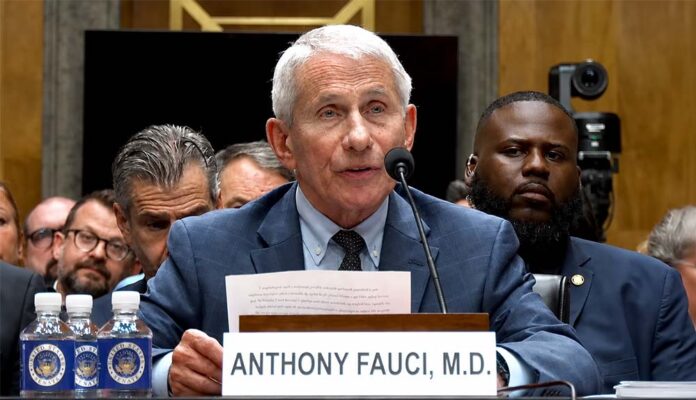
El Dr. Anthony Fauci testifica ante el Senado de EE.UU. mientras invoca la Quinta Enmienda repetidamente. Dr Anthony Fauci testifies before the U.S. Senate while repeatedly invoking the Fifth Amendment.
by the El Reportero staff
More than six years after the COVID-19 pandemic changed the course of modern history, the United States is still searching for answers. The latest chapter unfolded in the U.S. Senate, where Dr. Anthony Fauci, the nation’s former top infectious disease official, repeatedly invoked the Fifth Amendment instead of answering questions about his role during the pandemic.
The moment was extraordinary, not simply because Fauci declined to answer, but because of the circumstances surrounding his testimony. Before leaving office, President Joe Biden granted Fauci a broad preemptive pardon for potential federal offenses related to his public service. Yet despite that pardon, Fauci’s attorneys advised him to invoke his constitutional right against self-incrimination throughout the hearing.
Legally, every American has that right. The Fifth Amendment exists to protect individuals from being forced to provide testimony that could later be used against them in a criminal case. Exercising that right is not, by itself, an admission of guilt. Courts have long recognized that innocent people, as well as guilty ones, may invoke it under legal advice.
Still, the optics are impossible to ignore.
Millions of Americans watched schools close, businesses fail, churches empty, medical procedures postponed, and families separated during the pandemic. Many accepted restrictions because public health officials insisted they were necessary. Others believed government agencies exceeded their authority and suppressed legitimate scientific debate.
Whether one agrees with Fauci’s recommendations or not, few would deny that he became one of the most influential public officials in modern American history. His guidance affected virtually every household in the country.
That is why many Americans expected answers.
Critics argue that Congress has a responsibility to examine whether mistakes were made, whether government agencies were fully transparent, and whether scientific uncertainty was presented honestly to the public. They point to changing guidance on masks, school closures, vaccine mandates, and the origins of COVID-19 as reasons why accountability remains essential.
Some also believe Fauci should explain decisions that, in their view, contributed to economic hardship, educational setbacks, mental health problems, and the erosion of public trust. Others raise questions about federal funding for virus research and communications among government scientists during the early months of the outbreak.
Supporters of Fauci see the situation very differently.
They argue that he spent decades serving under both Republican and Democratic presidents, worked under unprecedented circumstances, and based his recommendations on the scientific evidence available at the time. They contend that hindsight should not become a substitute for judging decisions made during an unfolding global emergency.
They also argue that the Senate hearing had become deeply political and that Fauci’s lawyers were justified in advising him to remain silent, particularly if prosecutors might later attempt to use any inconsistencies against him in future legal proceedings. Legal scholars also note that the interaction between a preemptive presidential pardon and the Fifth Amendment has not been fully settled by the courts.
Regardless of where one stands politically, one reality remains.
Public confidence is difficult to rebuild once it has been lost.
During the pandemic, Americans were repeatedly asked to trust government officials, scientists, and public health institutions. Many still do. Many no longer do. The divisions that emerged during those years continue to shape public debate today.
Perhaps the most important issue is no longer whether Anthony Fauci had the constitutional right to remain silent. He unquestionably did.
The larger question is whether public officials who exercise enormous influence during times of national crisis also have a moral responsibility to answer difficult questions once that crisis has passed.
History will continue debating the policies adopted during COVID-19. Courts may eventually resolve the legal questions surrounding presidential pardons and congressional investigations.
But for millions of Americans still seeking clarity, silence is unlikely to provide the closure they have been waiting for.
References: Reuters; U.S. Senate Committee on Homeland Security and Governmental Affairs hearing, July 29, 2026; The Wall Street Journal. (reuters.com)
August opens with a full calendar of family festivals, live music, cultural performances and business gatherings across the Bay Area. Whether you’re looking for a community celebration, a benefit concert, an arts festival or a professional networking opportunity, the coming weeks offer activities for all ages and interests.
Familias disfrutan música, baile y convivencia durante Fiesta en el Parque en el Presidio. Families enjoy music, dancing and fellowship during Fiesta en el Parque at the Presidio. Photo courtesy of the Presidio Trust
Fiesta en el Parque
Free family festival brings Latino culture to the Presidio
Celebrate Latino culture during the fourth annual Fiesta en el Parque, featuring live music, salsa, merengue and cumbia dance lessons, arts and crafts, face painting, lawn games and local food vendors overlooking the Golden Gate Bridge. Presented by Telemundo 48 and NBC Bay Area in partnership with the Presidio Trust, the event encourages families to bring a picnic and enjoy an afternoon of music and community.
Saturday, Aug. 1, 1–4 p.m., Presidio Tunnel Tops, East Meadow, 210 Lincoln Blvd., San Francisco. Free admission. Information: presidio.gov.
MJ Santos Scholarship Fund All-Star Benefit Concert
Outstanding musicians unite for a scholarship fundraiser
Some of the Bay Area’s finest musicians will perform in a benefit concert supporting percussionist MJ Santos as he continues his education at The New School in New York. The lineup includes John Santos, Destani Wolf, Saul Sierra, John Calloway, Dan Parenti, Anthony Blea, Javier Navarrette, Miles Turk, Joaquín Ortiz, Lucca Parenti and special guests. All proceeds benefit the MJ Santos Scholarship Fund.
Saturday, Aug. 1, 7 p.m. (doors open at 6:30 p.m.), Piedmont Piano Company, 1728 San Pablo Ave., Oakland. Tickets available online and at the door.
Beyond the Latino Community
San Francisco Aerial Arts Festival returns to Fort Mason
The seventh biennial San Francisco Aerial Arts Festival presents three days of contemporary aerial performances, youth showcases and site-specific works by internationally recognized artists. Hosted by Zaccho Dance Theatre and Fort Mason Center for Arts & Culture, the festival transforms theaters and public spaces into stages celebrating movement, creativity and innovation.
Friday through Sunday, Aug. 7–9, Fort Mason Center for Arts & Culture, Gateway Pavilion, Pier 2, 2 Marina Blvd., San Francisco. Information and tickets: sfaerialartsfest.org.
CHCC 47th Annual Statewide Convention
California’s largest Latino business gathering comes to Oakland
Business owners, entrepreneurs, corporate leaders and public officials will gather for the California Hispanic Chambers of Commerce’s annual convention, featuring keynote speakers, networking sessions, educational workshops and discussions on economic development and leadership. The conference highlights opportunities for Latino businesses throughout California.
Wednesday through Friday, Aug. 19–21, Oakland Marriott City Center, 1001 Broadway, Oakland. Registration required. Information: CHCC2026.com.
Visit ElReporteroSF.com and click on the Calendar section for additional community events throughout the Bay Area.
Community organizations, artists and event organizers are invited to submit upcoming events for publication by emailing elreportero@aol.com.
In today’s fast-paced world, convenience often takes priority over nutrition, leading many Americans to rely heavily on processed foods. Packaged meals, canned soups, deli meats, frozen dinners and commercial baked goods make life easier, but they also contribute heavily to sodium intake. According to public health estimates, about 77% of the average American’s sodium consumption comes from processed and restaurant foods rather than the salt shaker. Excess sodium is associated with high blood pressure, heart disease, stroke and kidney disease, making it important to pay closer attention to what we eat.
The sodium trap
Many people believe they can control sodium simply by using less table salt. In reality, much of the sodium in the American diet is hidden in everyday foods. Bread, cheese, sauces, salad dressings, breakfast cereals and condiments often contain significant amounts of sodium, even when they do not taste especially salty.
Health experts generally recommend limiting sodium intake to less than 2,300 milligrams per day for most adults, with lower limits often advised for people with hypertension or other medical conditions. However, the average American consumes well above those recommendations.
Manufacturers commonly add sodium to improve flavor, preserve food and extend shelf life. As a result, products marketed as convenient—or even “healthy”—may still contain surprisingly high amounts of salt. A single serving of canned soup can provide hundreds of milligrams of sodium, while processed deli meats and many frozen meals can contribute a substantial portion of the recommended daily limit.
Simple ways to reduce sodium
Reducing sodium does not require giving up flavorful meals. A few practical changes can make a meaningful difference.
Shop carefully. Choose fresh or frozen vegetables without added sauces, and select fresh poultry, fish and lean meats instead of processed options such as bacon, sausage and deli meats. Look for products labeled “low sodium” or “no salt added,” and compare nutrition labels before making a purchase.
Cook more meals at home. Preparing food yourself gives you control over the ingredients. Fresh herbs and spices such as basil, parsley, oregano, rosemary, cumin, garlic, ginger, black pepper and lemon juice can add flavor without relying on excess salt. Homemade sauces based on yogurt, citrus juice or vinegar are also healthier alternatives to many bottled products.
If you use canned foods such as beans, vegetables or tuna, rinsing them under water can reduce their sodium content by as much as 40 percent.
Make smarter restaurant choices. Restaurant meals often contain more sodium than home-cooked food. When dining out, ask whether lower-sodium options are available, request that no extra salt be added during preparation and consider splitting large portions. Limiting fast-food meals can also help reduce sodium intake.
Why processed foods contain so much sodium
Sodium plays several important roles in food manufacturing. It enhances taste, improves texture and helps preserve products for longer periods. These benefits make it attractive to food manufacturers, but they can also result in diets that exceed recommended sodium levels if consumers rely too heavily on processed foods.
Reading nutrition labels and choosing minimally processed foods whenever possible are effective ways to reduce overall sodium intake without sacrificing variety or convenience.
Small changes, lasting benefits
Improving your diet does not require a complete lifestyle overhaul. Replacing a few processed foods with fresh ingredients, preparing more meals at home and paying attention to nutrition labels can significantly reduce sodium intake over time.
These simple habits may help support healthy blood pressure, improve heart health and lower the risk of chronic disease. Small, consistent changes today can lead to meaningful long-term health benefits while allowing you to enjoy nutritious, flavorful meals.