by the El Reportero staff
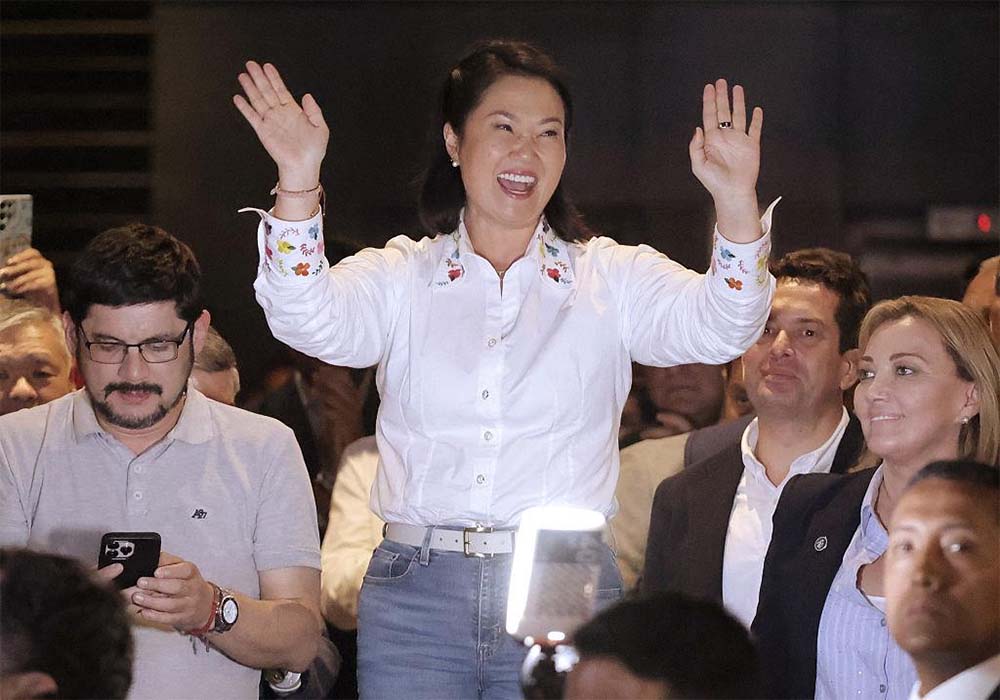
LIMA, Peru — After years of political turmoil, presidential impeachments, corruption scandals, and economic uncertainty, Peru appears poised to place Keiko Fujimori in the presidential palace, marking one of the most significant political comebacks in Latin America in recent years. The daughter of former President Alberto Fujimori has emerged from a razor-thin election as the leading candidate in a contest that has divided the nation almost evenly between left and right.
Fujimori’s rise represents much more than a personal political victory. It signals a broader shift occurring across Latin America, where voters frustrated with crime, economic stagnation, and political instability have increasingly turned toward conservative and center-right candidates. Similar trends have appeared recently in Argentina, Ecuador, and other countries where concerns about public security and economic growth have eclipsed traditional ideological debates.
For many Peruvians, the election became a referendum on the legacy of her father, former President Alberto Fujimori. To supporters, he is remembered as the leader who defeated the brutal Shining Path insurgency, stabilized a collapsing economy, and restored order during one of Peru’s darkest periods. To critics, he remains an authoritarian figure convicted of human-rights abuses and corruption offenses. The Fujimori name continues to evoke strong emotions across Peru, even decades after his presidency ended.
That legacy has followed Keiko Fujimori throughout her political career. She previously lost presidential elections in 2011, 2016, and 2021, each time facing strong anti-Fujimori coalitions determined to keep her out of office. This year, however, rising crime, public frustration with political chaos, and growing concern about Peru’s future helped soften resistance among many voters who once opposed her candidacy.
The election itself was among the closest in Peruvian history. Fujimori and left-wing candidate Roberto Sánchez traded narrow leads throughout the counting process. Overseas ballots, which strongly favored Fujimori, played a decisive role in narrowing the gap and eventually placing her ahead by only a few thousand votes out of nearly 20 million cast. Electoral authorities continued reviewing contested ballots while political observers monitored the process closely.
Supporters celebrated the outcome as a rejection of policies associated with socialism and state intervention. Many voters cited concerns about public safety, inflation, unemployment, and economic uncertainty as reasons for supporting Fujimori. Her campaign emphasized law and order, support for private investment, and efforts to restore confidence in government institutions.
Financial markets reacted positively to the prospect of a Fujimori presidency. Investors view her as a defender of Peru’s free-market economic model and expect greater policy continuity than under a left-wing administration. Business leaders have expressed hope that her government will focus on attracting investment, expanding mining projects, and reducing regulatory uncertainty. Peru remains one of the world’s leading producers of copper, making stability in the mining sector critical to the national economy.
Yet Fujimori faces enormous challenges. Peru has experienced a revolving door of presidents during the past decade, reflecting deep institutional instability and widespread dissatisfaction with the political establishment. Public trust in political parties remains low, while crime rates have increased and economic growth has slowed. Regional divisions between urban centers and rural communities continue to shape the country’s political landscape.
The election also reflects a broader ideological realignment occurring across Latin America. In several countries, voters have shifted toward leaders promising stronger security measures, economic growth, and a departure from policies associated with leftist governments. Analysts say Peru’s election may become another example of the region’s ongoing political transformation.
Critics of Fujimori remain skeptical. Human-rights organizations and political opponents argue that the country must not forget the controversies associated with her father’s government. They warn that Peru’s democratic institutions must remain vigilant and independent regardless of who occupies the presidency. Supporters counter that Keiko Fujimori should be judged on her own record and the policies she implements rather than solely on her family name.
For now, many Peruvians are hoping that the election will bring stability after years of political crisis. Whether Fujimori can unite a deeply divided nation and address its pressing economic and security concerns may determine not only the success of her administration but also the future direction of Peru itself.
If officially confirmed as president, Keiko Fujimori will enter office carrying both the weight of her father’s controversial legacy and the expectations of millions of Peruvians seeking a new chapter after years of uncertainty. Her presidency could become one of the most consequential political developments in South America in the decade ahead.
Sources: The Wall Street Journal, Reuters, Americas Quarterly, El País, and Associated Press.