by the El Reportero staff
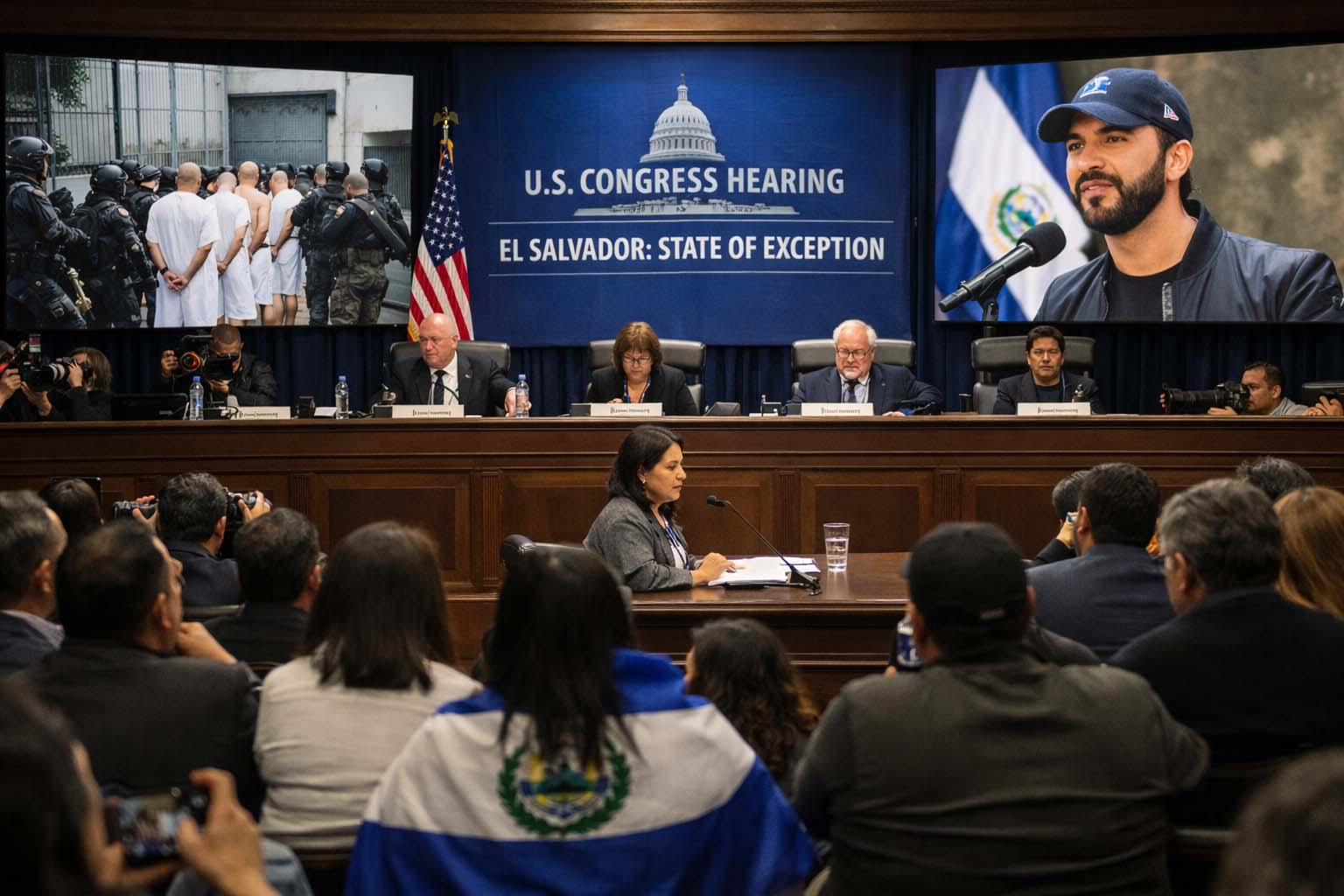
For the first time since El Salvador enacted its sweeping state of exception in March 2022, the policy will be formally examined in Washington, D.C. The Tom Lantos Human Rights Commission has scheduled a hearing for April 16, 2026, to assess the measure’s impact on human rights, public security, and democratic institutions. While centered on El Salvador, the discussion carries broader implications for Latino communities across the United States, including the San Francisco Bay Area.
The state of exception was introduced by President Nayib Bukele as part of a strategy to dismantle powerful gang structures such as MS-13 and Barrio 18, which for decades terrorized communities through violence, extortion, and forced displacement. Since its implementation, the Salvadoran Legislative Assembly has repeatedly extended the measure, allowing the temporary suspension of certain constitutional guarantees to facilitate mass arrests of suspected gang members and collaborators.
According to official figures, more than 80,000 individuals have been detained under the policy. Government authorities credit the initiative with a historic reduction in homicide rates, transforming El Salvador from one of the world’s most dangerous countries into one of the safest in the Western Hemisphere. “For the first time in decades, Salvadorans can live without fear. We have reclaimed our streets and our future,” President Bukele has stated.
For many Salvadorans, both at home and abroad, these developments represent long-awaited justice. In the Bay Area—home to one of the largest Salvadoran diasporas in the United States—community members closely follow these changes. Some express relief that their relatives can now live with greater security. “My family used to pay extortion every month,” said a Salvadoran immigrant in San Francisco. “Now they can run their small business without fear.”
However, the policy has also generated significant controversy. Human rights organizations, including Human Rights Watch and Cristosal, have raised concerns about allegations of arbitrary detentions, limited access to legal representation, and prison conditions. These groups argue that while the reduction in violence is undeniable, the long-term sustainability of these gains depends on adherence to the rule of law.
“Security is essential, but it must not come at the expense of fundamental rights,” a representative from Human Rights Watch noted. Critics warn that detaining individuals without sufficient evidence could lead to future legal challenges and potential releases, raising the risk that criminal networks might attempt to reorganize.
Supporters of the government counter that the state has a moral obligation to prioritize the rights of law-abiding citizens who suffered for decades under gang domination. “For years, gangs systematically violated the human rights of innocent people. The government’s actions are a response to that prolonged suffering,” said a regional security analyst. Proponents also argue that the prolonged incarceration of gang leaders weakens their operational and ideological influence.
The debate also carries a political dimension. Government supporters contend that opposition groups, including sectors linked to the former political party Frente Farabundo Martí para la Liberación Nacional (FMLN), have promoted international denunciations of alleged human rights violations as part of an effort to discredit the administration. From this perspective, such actions risk portraying alleged gang members primarily as victims, potentially overshadowing the suffering of the broader population. Conversely, human rights advocates emphasize that popularity does not exempt a policy from legal scrutiny. “Respect for human rights is not incompatible with security; it is essential to achieving lasting peace,” stated a representative from Cristosal.
For the broader Latino community in the United States, the Salvadoran experience raises important questions about governance, migration, and public safety. Many immigrants in the Bay Area fled violence in Central America, and the transformation in El Salvador influences perceptions about the possibility of return and regional stability. Additionally, U.S. policymakers often consider conditions in migrants’ countries of origin when shaping immigration and foreign policy.
Although the Tom Lantos Human Rights Commission does not possess direct legislative authority, its findings can influence U.S. foreign policy and international perceptions. The hearing is expected to bring together testimony from human rights organizations, legal experts, and journalists, offering a comprehensive assessment of the policy’s achievements and challenges.
Ultimately, the examination of El Salvador’s state of exception reflects a broader global debate: how to ensure public security while safeguarding democratic values. For Latino communities in the San Francisco Bay Area and across the United States, the outcome of this discussion is more than a distant political event—it is a matter that touches family ties and hopes for a safer future in the region.
Source: Diario El Mundo, El Salvador.