by the El Reportero staff
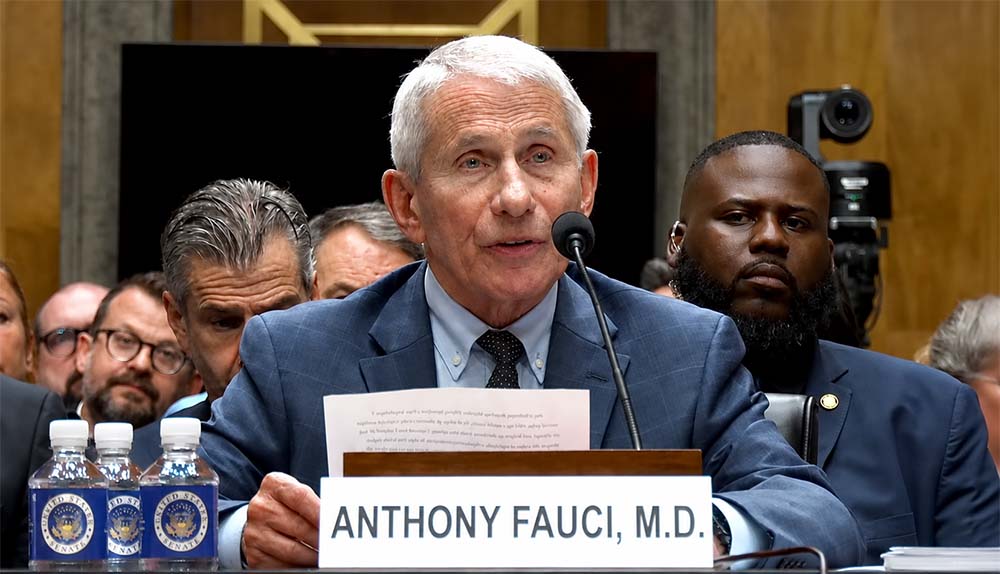
More than six years after the COVID-19 pandemic changed the course of modern history, the United States is still searching for answers. The latest chapter unfolded in the U.S. Senate, where Dr. Anthony Fauci, the nation’s former top infectious disease official, repeatedly invoked the Fifth Amendment instead of answering questions about his role during the pandemic.
The moment was extraordinary, not simply because Fauci declined to answer, but because of the circumstances surrounding his testimony. Before leaving office, President Joe Biden granted Fauci a broad preemptive pardon for potential federal offenses related to his public service. Yet despite that pardon, Fauci’s attorneys advised him to invoke his constitutional right against self-incrimination throughout the hearing.
Legally, every American has that right. The Fifth Amendment exists to protect individuals from being forced to provide testimony that could later be used against them in a criminal case. Exercising that right is not, by itself, an admission of guilt. Courts have long recognized that innocent people, as well as guilty ones, may invoke it under legal advice.
Still, the optics are impossible to ignore.
Millions of Americans watched schools close, businesses fail, churches empty, medical procedures postponed, and families separated during the pandemic. Many accepted restrictions because public health officials insisted they were necessary. Others believed government agencies exceeded their authority and suppressed legitimate scientific debate.
Whether one agrees with Fauci’s recommendations or not, few would deny that he became one of the most influential public officials in modern American history. His guidance affected virtually every household in the country.
That is why many Americans expected answers.
Critics argue that Congress has a responsibility to examine whether mistakes were made, whether government agencies were fully transparent, and whether scientific uncertainty was presented honestly to the public. They point to changing guidance on masks, school closures, vaccine mandates, and the origins of COVID-19 as reasons why accountability remains essential.
Some also believe Fauci should explain decisions that, in their view, contributed to economic hardship, educational setbacks, mental health problems, and the erosion of public trust. Others raise questions about federal funding for virus research and communications among government scientists during the early months of the outbreak.
Supporters of Fauci see the situation very differently.
They argue that he spent decades serving under both Republican and Democratic presidents, worked under unprecedented circumstances, and based his recommendations on the scientific evidence available at the time. They contend that hindsight should not become a substitute for judging decisions made during an unfolding global emergency.
They also argue that the Senate hearing had become deeply political and that Fauci’s lawyers were justified in advising him to remain silent, particularly if prosecutors might later attempt to use any inconsistencies against him in future legal proceedings. Legal scholars also note that the interaction between a preemptive presidential pardon and the Fifth Amendment has not been fully settled by the courts.
Regardless of where one stands politically, one reality remains.
Public confidence is difficult to rebuild once it has been lost.
During the pandemic, Americans were repeatedly asked to trust government officials, scientists, and public health institutions. Many still do. Many no longer do. The divisions that emerged during those years continue to shape public debate today.
Perhaps the most important issue is no longer whether Anthony Fauci had the constitutional right to remain silent. He unquestionably did.
The larger question is whether public officials who exercise enormous influence during times of national crisis also have a moral responsibility to answer difficult questions once that crisis has passed.
History will continue debating the policies adopted during COVID-19. Courts may eventually resolve the legal questions surrounding presidential pardons and congressional investigations.
But for millions of Americans still seeking clarity, silence is unlikely to provide the closure they have been waiting for.
References: Reuters; U.S. Senate Committee on Homeland Security and Governmental Affairs hearing, July 29, 2026; The Wall Street Journal. (reuters.com)