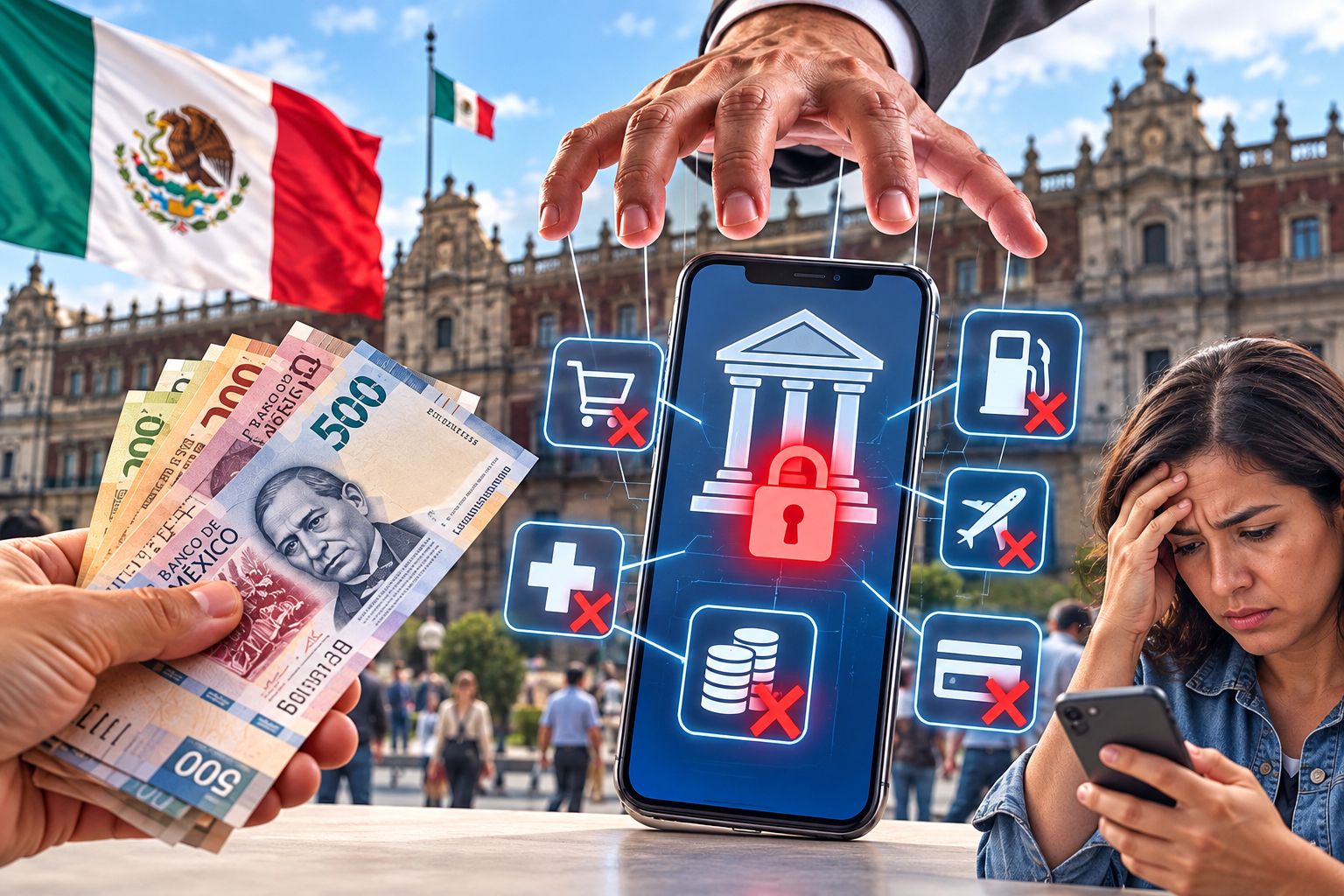
Mexico’s digital economy proposal raises concerns about privacy, financial independence and the future of cash
by the El Reportero editorial board
The promise of a digital economy
Mexico is moving toward a more digital economy. President Claudia Sheinbaum’s administration is promoting electronic payments to reduce dependence on cash, improve financial inclusion and modernize commercial transactions.
Government officials argue that digital payments can improve security, reduce costs and expand access to financial services. However, modernization raises a fundamental question: What happens to individual financial freedom when society becomes increasingly dependent on electronic money?
The issue extends beyond Mexico. It concerns the relationship between governments, financial institutions and ordinary citizens everywhere.
Who controls your money?
When individuals possess physical cash, they can generally spend it without authorization from banks, payment processors or digital platforms.
Electronic money operates differently.
Bank deposits and electronic transfers depend on financial institutions, technological infrastructure and government regulations. Accounts can be frozen, transactions blocked and access temporarily suspended.
These powers already exist within conventional banking. However, an increasingly cashless society could leave individuals without practical alternatives when financial institutions restrict access to their money.
Imagine being unable to purchase groceries, medicine or transportation because your bank account has been frozen or an electronic payment system has failed.
For families with limited resources, the consequences could be devastating.
The danger of financial surveillance
Every electronic transaction potentially creates a record identifying the payer, recipient, amount and sometimes the location of the purchase.
Such information can help combat fraud, money laundering and other crimes. However, extensive financial records also create opportunities for surveillance and abuse.
Political opponents, journalists, activists and ordinary citizens should never face arbitrary financial restrictions because of their opinions or lawful activities.
Mexico’s digital payment initiative does not itself authorize political confiscation. Nevertheless, expanding electronic transactions makes privacy protections, independent oversight and due process increasingly important.
The question is whether governments and financial institutions should possess the practical ability to monitor virtually every financial transaction citizens make.
Mexico’s proposal and its implications
Mexico’s initiative seeks to expand existing electronic payment systems rather than establish a new government-controlled digital currency.
President Sheinbaum has indicated that cash will not be generally prohibited, although her administration intends to reduce its use in certain economic sectors.
That distinction matters.
Encouraging voluntary electronic payments differs fundamentally from forcing citizens to abandon physical currency.
However, the gradual disappearance of cash from essential services could eventually create practical restrictions without an outright prohibition.
Older adults, rural communities and people without reliable internet access could encounter additional difficulties.
Financial inclusion should not become financial exclusion.
Protecting the right to use cash
Cash provides advantages that electronic systems cannot completely reproduce.
It permits transactions without internet access, offers financial privacy and remains useful during power outages or technological failures.
It also allows individuals to hold money outside conventional banking institutions, although physical currency carries risks involving theft, loss and inflation.
Digital payments offer genuine benefits, particularly for small businesses and consumers seeking convenience. The objective should therefore be to preserve both alternatives.
Mexico’s lawmakers should establish clear protections guaranteeing continued access to cash, safeguarding financial information and preventing arbitrary restrictions on personal accounts.
Any account freeze should follow established legal procedures, with meaningful opportunities to challenge improper decisions.
Modernization without surrendering independence
Technological progress should expand people’s choices rather than eliminate existing alternatives.
A society in which virtually every transaction requires approval from financial intermediaries risks concentrating extraordinary power within governments and financial institutions.
Such concentration deserves scrutiny regardless of which political party controls the government.
Mexico has an opportunity to demonstrate that modernization and individual freedom can coexist. Its policies should protect voluntary participation, financial privacy and continued access to physical currency.
Citizens should retain meaningful alternatives when electronic systems fail or institutions make mistakes. Strong safeguards must accompany technological changes before dependence becomes widespread.
Financial innovation should improve people’s lives without making access to their own resources unnecessarily vulnerable to institutional decisions.
A digital economy should expand financial freedom, not make citizens entirely dependent on those who control its infrastructure.