by the El Reportero Editorial Board
An October 14 Spanish-language media briefing organized by opponents of California’s Proposition 39 raised a consequential question: Would stricter voter identification requirements strengthen elections or create unnecessary barriers for eligible voters?
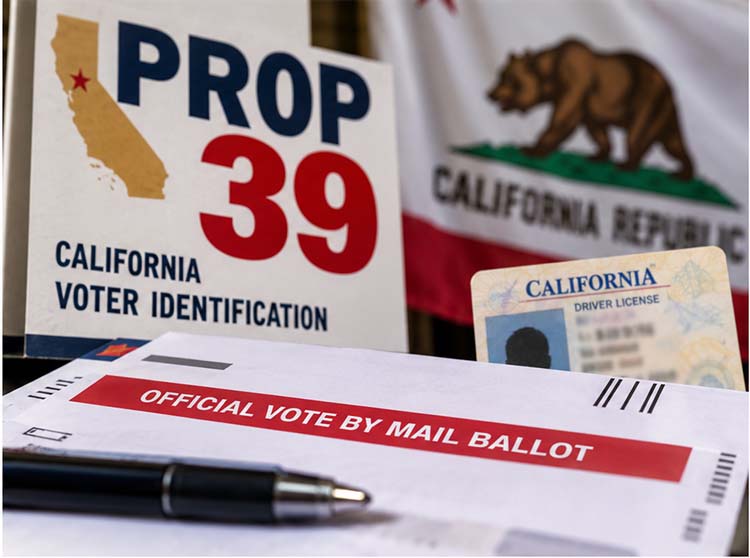
State Senator Anna Caballero, Assemblymember Juan Carrillo and ACLU of Southern California attorney Julia Gómez addressed the proposed constitutional amendment, which would require government-issued identification for in-person voting and additional identifying information on mail ballot envelopes.
Caballero defended California’s existing registration and signature-verification procedures. She warned that discrepancies in names could complicate voting, citing her father, whose name changed from Jorge to George during military service. Married voters, she added, could encounter similar difficulties. Her argument was that legitimate ballots should not be jeopardized by differences in records.
Carrillo criticized the potential administrative expense and argued that new requirements could discourage Latino participation. He also expressed concern about requiring identifying numbers on mail ballots. His suggestion that such information could enable political manipulation was a campaign allegation, not an established consequence of the measure.
Gómez pointed to Texas, where identification-number requirements initially produced high rejection rates for mail ballots. She argued that additional steps can disproportionately affect Latino and Black voters and noted that California already checks identifying information during registration and verifies signatures on returned mail ballots.
Supporters offer a different assessment. Assemblymember Carl DeMaio and other Proposition 39 advocates contend that standardized identification requirements would improve election integrity and public confidence. They argue that verifying identity is a reasonable safeguard and that the measure would preserve voting by mail while adding checks.
The proposal also calls for a free voter identification card upon request and government efforts to verify citizenship. Its implementation would require further rules, and California’s nonpartisan fiscal analysis projects substantial additional public costs.
Both sides raise questions worth examining. Existing safeguards should be evaluated against credible evidence of fraud, while new requirements should be assessed for their ability to prevent mistakes without excluding eligible voters. Predictions of widespread fraud or mass disenfranchisement should not be accepted merely because a campaign repeats them.
The October 14 briefing supplied a detailed case against Proposition 39. Voters also deserve a fair hearing of its supporters’ arguments and a careful reading of the measure itself.
Election security and ballot access are not mutually exclusive. California’s decision should rest on demonstrable benefits, realistic costs and protections for every eligible voter—not partisan suspicion or fear, before casting their November ballots.