by the El Reportero editorial board
Every time an election approaches, we hear the same argument: “Why should I vote if everything has already been decided?”
I understand where that feeling comes from. Many people have lost confidence in our political system. They feel ordinary citizens do not really choose who becomes a candidate because, by the time names appear on the ballot, those candidates have already passed through political parties, donors, special interests and powerful organizations that have influenced politics for generations.
There is plenty to question about that system.
No ordinary citizen can change overnight a political structure that has existed for decades. Nor should we fool ourselves into believing that casting a ballot automatically solves our country’s problems.
But that does not mean we should stop voting.
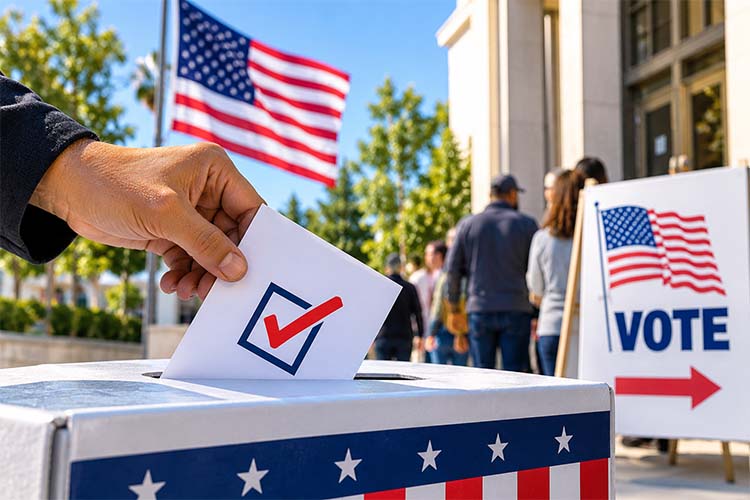
On Tuesday, Nov. 3, Californians will again have an opportunity to participate in the electoral process. We will elect a governor and other officials and decide various measures and public issues. As always, campaigns and interest groups will spend enormous amounts of money trying to persuade us to support one candidate, reject another, approve one measure or defeat another.
As a newspaper, El Reportero does not believe in telling readers whom they should support. Maintaining our independence and respecting our readers’ freedom to reach their own conclusions are important to us.
But as a citizen, I can say this: vote.
Vote even if you are disappointed.
Vote even if you cannot find the perfect candidate.
Vote even when you believe the choices presented to you are limited.
We can still study the candidates and determine which one comes closest to our principles, our needs and our conscience.
Personally, moral and spiritual values carry considerable weight in my decisions. For example, I believe deeply in the value of human life, including the life of an unborn child. That conviction comes from my family, my grandparents and the values with which I was raised. Therefore, I find it difficult to support politicians whose positions on that issue fundamentally conflict with my conscience.
Other readers may disagree with me, and they have every right to do so.
That is precisely what freedom means.
Every voter must determine which principles matter most. For some, it may be protecting unborn life. For others, it may be immigration, education, public safety, the economy, housing, individual liberties, taxes or other issues affecting their families and communities.
What matters is that we do not surrender our decision through indifference.
Because when you do not participate, someone else is making decisions for you.
Even when it seems we are choosing between two bad alternatives — between “the devil and the lesser devil,” as the saying goes — we still have a responsibility to become informed.
Read about the candidates. Examine what they have actually done, not simply what they promise to do. Read the measures on the ballot. Find out who supports them, who opposes them and who is financing the campaigns behind them.
That exercise alone has value.
Civic participation is also something we learn. Perhaps today you know very little about politics. After studying one election, however, you will know more. By the next election, you may recognize the candidates, understand the issues better and remember promises made years earlier. You can compare those promises with what politicians actually accomplished once they were in office.
And you will be better prepared to make your next decision.
Democracy does not end at the ballot box either. If one day you conclude that none of the politicians represents your community, you can organize, support someone else, promote an initiative or even become a candidate yourself.
Institutions change only when enough citizens become involved.
I do not pretend that our political system is perfect. Powerful interests influence it, political parties exercise enormous control, and many things need reform. Nor do I believe that one election will magically solve problems accumulated over generations.
But we still have a ballot.
We can still read.
We can still question.
And we can still choose.
So this Tuesday, regardless of your political beliefs, vote according to your conscience.
Not because the system is perfect, but precisely because it is not.
If we stop participating, others will decide for us.