by Maya C. Miller – CalMatters
As California’s June primary approaches, anxiety inside Democratic circles is reshaping how some voters plan to cast their ballots in the race to replace Gov. Gavin Newsom. Rather than voting early, some Democratic activists and strategists are encouraging voters to hold onto their ballots until the final days before Election Day in hopes of preventing a rare Republican sweep into the November runoff.
California’s “top-two” primary system allows the two candidates receiving the most votes — regardless of party — to advance to the general election. With a crowded Democratic field splitting liberal voters and only a handful of major Republican contenders consolidating conservative support, some Democrats fear the possibility that two Republicans could finish first and second in June.
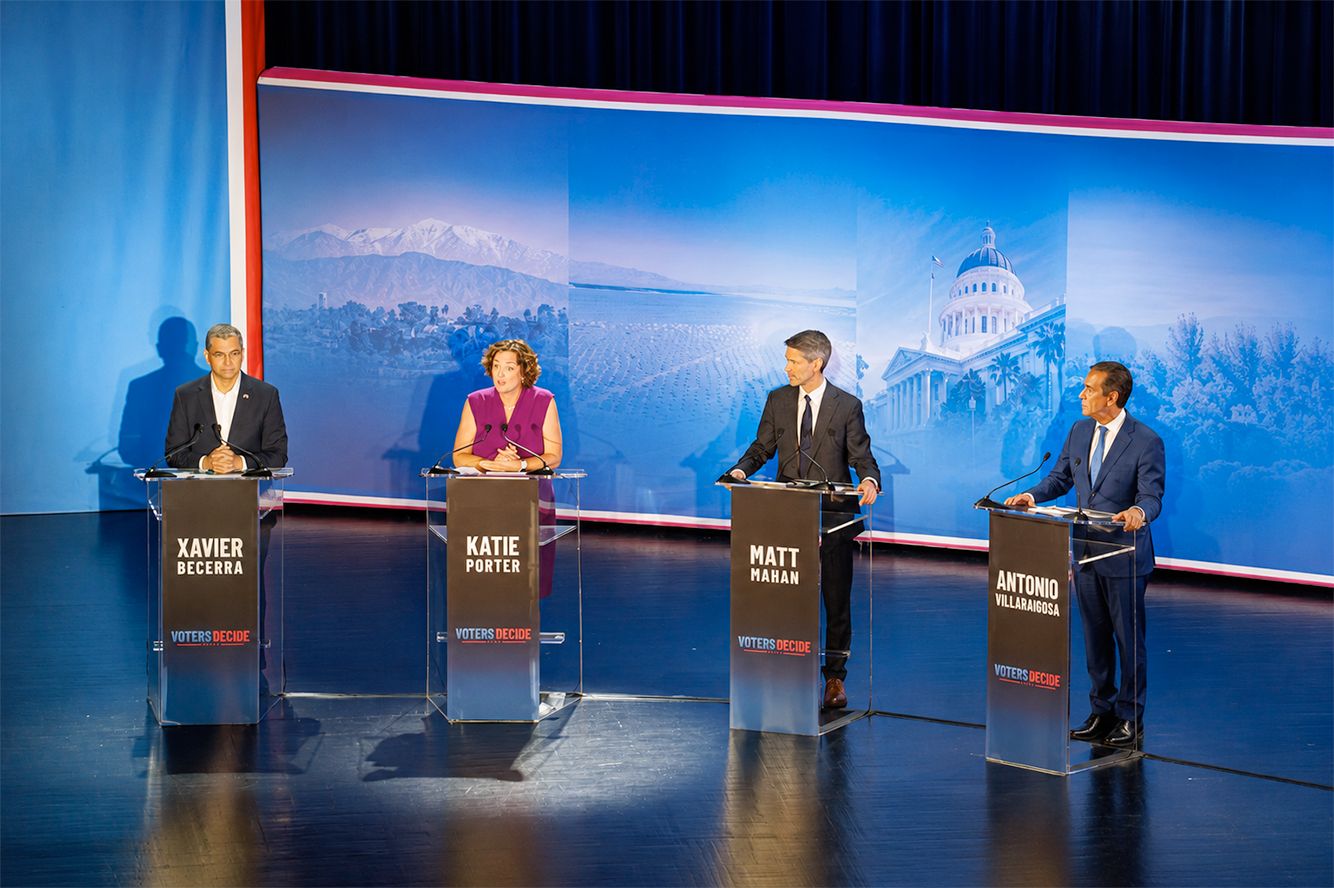
The concern has intensified after months of polling showed Republicans Steve Hilton and Riverside County Sheriff Chad Bianco remaining competitive while Democratic candidates divided support among several prominent names, including former Health and Human Services Secretary Xavier Becerra, former Rep. Katie Porter, billionaire Tom Steyer and former Los Angeles Mayor Antonio Villaraigosa.
Political organizers promoting the delayed-voting strategy argue that waiting until the final stretch could give Democratic voters a clearer picture of which candidate has the strongest chance of advancing. By monitoring polling trends, endorsements and campaign momentum, voters could theoretically rally around one Democrat and avoid fragmenting the vote.
Election officials, however, warn that such tactics could further slow California’s already lengthy ballot-counting process. The state’s elections system permits mail ballots postmarked by Election Day to arrive several days later and still be counted. Large numbers of last-minute ballots often prolong final results for days or even weeks after elections conclude.
Some county election administrators say encouraging voters to wait until the final moment could create an additional wave of late-arriving ballots that would complicate reporting timelines and intensify public frustration about delayed election outcomes. California has frequently faced criticism from national political observers over how long it takes to finalize close races.
The Democratic panic partly reflects the unusual shape of the 2026 governor’s contest. Gov. Gavin Newsom is term-limited, leaving the office open for the first time since 2018. At the same time, Democrats have struggled to unite behind a single dominant successor despite California’s strong Democratic voter registration advantage.
Earlier in the race, many Democrats briefly rallied around former Rep. Eric Swalwell, hoping he could emerge as the consensus candidate. But his campaign collapsed after allegations of sexual misconduct surfaced, forcing Democratic strategists back into uncertainty.
That collapse helped elevate Becerra into a leading position among Democrats, although his candidacy has also faced scrutiny tied to his tenure in the Biden administration and criticism over immigration-related controversies. Rivals have repeatedly targeted him during televised debates.
Meanwhile, Republicans see a potential opening in a state that has not elected a Republican governor since Arnold Schwarzenegger won reelection in 2006. Conservative candidates have emphasized voter frustrations over homelessness, housing costs, crime and California’s high cost of living.
Hilton, a former adviser to British Prime Minister David Cameron and later a Fox News host, has attempted to position himself as an outsider capable of challenging Sacramento’s political establishment. Bianco has appealed to conservative voters through aggressive criticism of state regulations and immigration policies.
Despite Democratic fears, several political analysts believe an all-Republican November ballot remains unlikely because Democrats still significantly outnumber Republicans statewide. But analysts also acknowledge that California’s top-two system can produce unpredictable results when one party’s vote becomes badly fragmented.
The debate over strategic voting has created tension among some Democratic organizers, with critics arguing that encouraging voters to delay participation could undermine public confidence in elections or create confusion among casual voters. Others counter that the strategy reflects political reality in an unusually volatile contest.
California voters began receiving mail ballots in early May, and voting centers across the state are already opening for early in-person participation ahead of the June 2 primary.
For now, Democratic leaders continue urging voters to participate while campaigns intensify their final push to consolidate support in what has become one of California’s most unpredictable governor’s races in years.
This article was reduced to fit space.