by Marvin Ramírez
Last week, El Reportero warned that the controversy surrounding Flock cameras is about something much larger than catching stolen cars or locating criminal suspects. The fundamental issue is the indiscriminate collection of information about ordinary people who are suspected of no crime.
“Since then, several developments have made that concern even more urgent.”
On Wednesday, the San Francisco Democratic Party considered two competing resolutions involving Flock. Former Supervisor Gordon Mar proposed stronger safeguards and consideration of suspending the city’s contract. A competing resolution by committee chair Nancy Tung and Supervisor Matt Dorsey affirmed support for the city’s continued use of the cameras. It passed 11-3, with four abstentions
In effect, the party voted to continue supporting a surveillance system intended to help police find stolen vehicles and people connected to crimes — but one that, in the process, records information about countless other vehicles belonging to people suspected of absolutely nothing.
To search for the few, the government watches the many.
That is the larger problem.
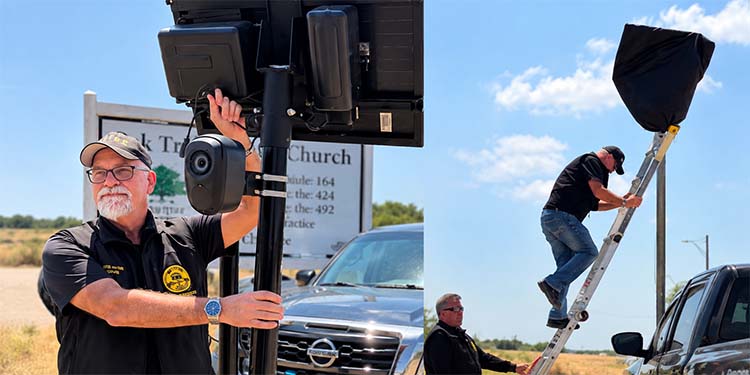
In Hood County, Texas, officials terminated their Flock agreement, and Constable John D. Shirley personally unplugged and covered the county’s three cameras after commissioners authorized their shutdown, saying the devices indiscriminately recorded ordinary people.
The scale of the network may be even larger than previously understood. A new map published by cybersecurity researcher Joshua Michael, using location coordinates he says came from Flock’s own database, identifies more than 170,000 cameras and more than 130,000 additional devices connected to the company’s nationwide surveillance infrastructure. Flock is now seeking to have the map removed from the internet, according to The Intercept.
While San Francisco was debating Flock, the controversy reached Washington.
The U.S. Senate Judiciary Subcommittee on Crime and Counterterrorism held a hearing Wednesday titled “Always Watching: Flock’s Nationwide AI Surveillance Network.” Senators examined the expanding use of automated license-plate readers and the questions they raise about privacy, data sharing and government oversight.
Among the witnesses was Lindsey Isaacs of Florida, who described being wrongfully accused in connection with a deadly traffic crash. She spent 13 days in jail and faced serious criminal charges before the case against her was eventually dismissed. Her experience illustrates a broader danger: technology may provide investigators with information, but information can be misinterpreted, combined with other errors and used against an innocent person.
None of this means technology has no legitimate place in law enforcement. Police have a responsibility to recover stolen vehicles, locate dangerous suspects, find missing people and investigate serious crimes.
But public safety does not erase constitutional principles.
The Fourth Amendment protects Americans against unreasonable searches and seizures and establishes requirements for warrants. A camera photographing a license plate on a public street is legally different from police entering someone’s home. But the constitutional principle of limiting government intrusion remains relevant: government does not receive unlimited authority merely because technology makes surveillance easier.
Americans would not accept police entering every house in a neighborhood simply to determine whether someone wanted for a crime might be inside.
Why, then, should we accept the creation of enormous searchable databases documenting the movements of people who have done nothing wrong simply because a criminal might also pass before one of those cameras?
San Francisco must confront that question.
The city can pursue criminals without treating the entire population as potential suspects. It can embrace technology without abandoning reasonable limits on government surveillance.
The debate has now reached cities across America, San Francisco’s political leadership and the United States Senate.
El Reportero raised this concern before these latest developments. We raise it again because the central question remains unanswered:
How much surveillance should innocent Americans be required to accept in the name of finding those who break the law?
Public safety matters.
So does liberty.
And in a free society, we should never be forced to surrender one in order to preserve the other.