Before removing his name from public spaces, have all relevant witnesses and family accounts been examined?
by Marvin Ramírez
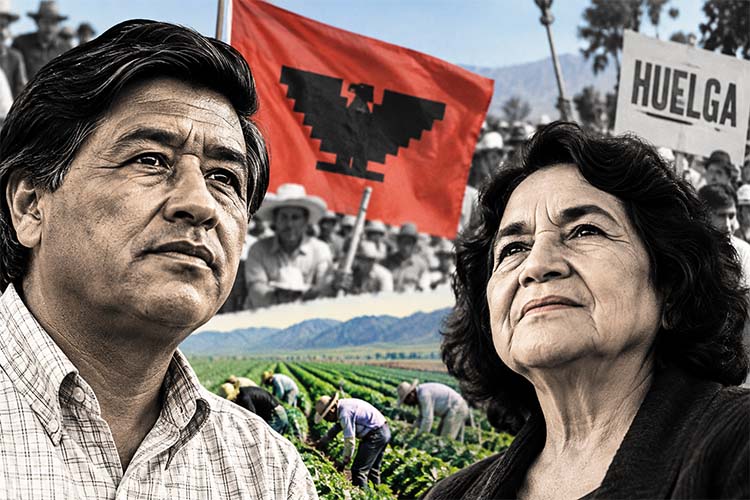
The death of Dolores Huerta on October 28 closes a chapter in American labor history. El Reportero extends condolences to her family and those mourning her. Respect for her contributions to farmworkers does not require us to abandon difficult questions about César Chávez or their shared past.
The allegations against Chávez are grave. Women who describe abuse deserve to be heard, and The New York Times reported accounts beyond Huerta’s. I am not declaring Chávez innocent, nor accusing his accusers of dishonesty. But I ask: before communities remove his name from streets and schools, have they heard every witness?
I have spoken with people close to the history of the farmworker movement who say another account exists. Some claim firsthand knowledge of events involving the movement and people around its leaders. Their testimony is not yet verified, and I will not publish allegations as fact. Nevertheless, why should those voices be excluded from further investigation?
Who has interviewed relatives? Who has sought out people who knew Chávez and Huerta away from microphones, marches, and political platforms? Who has checked family records, correspondence, dates, and recollections against the accounts? I do not claim that nobody has done this work. I am asking investigators to explain what they examined, whom they approached, and what remains unknown.
Chávez died in 1993 and cannot answer for himself. Huerta said she had remained silent to protect the movement. Survivors may delay disclosure for decades; that delay alone does not undermine their accounts. Yet the impossibility of questioning a deceased accused makes thorough corroboration important.
There is also a separate controversy involving the Dolores Huerta Foundation. A former employee filed a lawsuit in 2025 alleging labor violations and raising questions about a $95,000 grant. The foundation disputed her account of her departure. Proceedings occurred in March 2026, near the public disclosure of Huerta’s allegations. No verified evidence establishes a connection between those events. A journalist should investigate the chronology, not mistake it for proof.
What troubles me is the speed with which a complicated history can become a simple public verdict. Chávez organized boycotts, marches, and campaigns that helped farmworkers demand dignity. Those achievements do not excuse abuse. Neither should allegations erase decades of organizing without a community discussion.
In San Francisco’s Mission District, the proposed renaming of César Chávez Street affects residents, merchants, and families who live with that history. I believe the name should remain while the community examines the evidence and hears perspectives that have not received attention. If a change is ultimately chosen, Calle de las Américas could honor the district’s many Latin American communities.
We should apply the same standard to powerful women and men: no automatic immunity, no automatic condemnation. Political loyalties must not decide what counts as evidence. Nor should the desire to defend a beloved leader silence women who report harm.
Huerta’s death also invites a human thought. Many of us imagine meeting those we knew after death. Perhaps Chávez and Huerta will meet again; what they might say belongs to faith, not reporting.
Here on earth, we still have work to do. Find the witnesses. Examine the documents carefully. Ask the families. Protect those who speak. And before rewriting the names on our streets, make sure the public understands both what is known and what remains unproven.
– Sources: The New York Times, ABC30, Los Angeles Superior Court records.