
by Marvin Ramírez
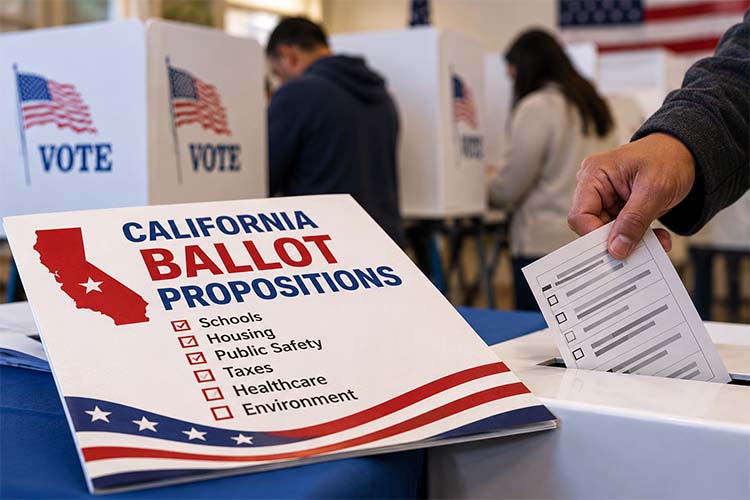
Every two years, Americans return to the polls, and another collection of ballot propositions awaits voters in states like California. Whether during midterm or presidential elections, citizens are repeatedly asked to approve new laws, authorize spending, raise taxes, or change existing policies.
But why do we constantly need new propositions when so many previous measures were supposed to solve problems that remain unresolved?
For many immigrants from Latin America, California’s proposition system can be confusing. In their countries of origin, elections often focus primarily on choosing presidents, mayors, legislators, and other representatives, although referendums also exist in some nations.
In California, however, voters can decide directly on proposed laws, constitutional amendments, taxes, and public spending measures. These are called ballot propositions. Some reach the ballot through citizen signatures, while others are placed there by the Legislature.
A “Yes” vote generally approves the proposed measure, while a “No” vote rejects it. But understanding the consequences is not always easy.
One campaign promises better schools, housing, transportation, or public services. Another warns that the same proposition will increase taxes, create debt, or benefit special interests.
Who should voters believe?
Government exists to protect citizens’ rights, freedoms, and well-being. Yet every election seems to introduce additional regulations, financial obligations, or government programs.
Does more legislation necessarily mean better government? Or have we created a political system that depends on continuously proposing solutions without adequately evaluating previous results?
Consider the financial implications. The federal government carries enormous debt, while many state and local governments face continuing fiscal pressures.
Nevertheless, voters repeatedly encounter proposals requesting additional public resources.
Some propositions authorize bonds that must eventually be repaid, often with interest. Others establish taxes, redirect revenues, or finance programs whose long-term costs may receive insufficient scrutiny.
Ultimately, taxpayers bear much of that responsibility.
Behind many campaigns stand political consultants, lobbying organizations, contractors, unions, corporations, and other interest groups investing substantial resources to influence public decisions.
For some participants, ballot propositions represent economic opportunities. Campaigns generate advertising expenditures, consulting contracts, and political influence. Approved measures may create administrative positions, government programs, and lucrative contracts.
This does not mean every proposition is unnecessary or dishonest. Some address genuine public needs, protect rights, or correct outdated laws.
But shouldn’t government first demonstrate that existing programs are working before asking citizens for additional money?
Imagine an America where lawmakers concentrated on evaluating existing legislation rather than continually introducing new measures.
Imagine requiring independent audits, transparent accounting, and measurable results before approving additional expenditures.
What if every proposition requesting public money had to explain why previous funding failed to achieve its promised objectives?
Democracy should not be measured by the number of laws enacted or propositions approved. Its success should be measured by the freedom, prosperity, security, and opportunities citizens actually experience.
Perhaps the most troubling aspect is how normal this endless cycle has become.
We approve one proposition, wait for results, and encounter another promising to correct what remains unresolved.
And when the next election arrives, another campaign will undoubtedly tell us something is missing, something is broken, and another proposition is urgently necessary.
But when will we finally ask whether the problem is the absence of another law—or the failure of government to deliver on the laws we already have?