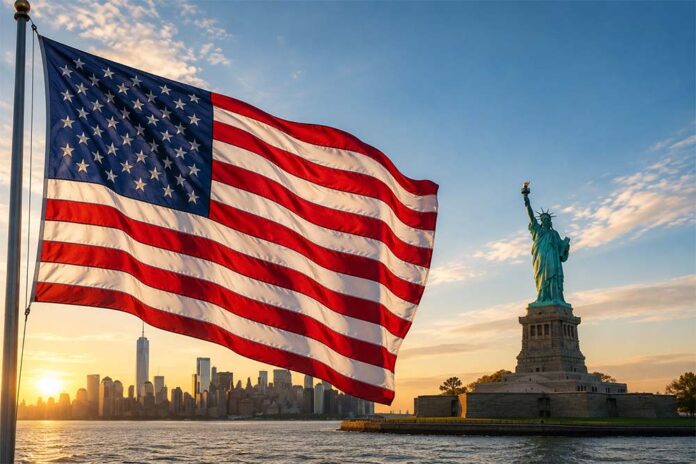
As the United States marks its 250th anniversary, millions of immigrants celebrate not only a nation, but an opportunity that changed their lives
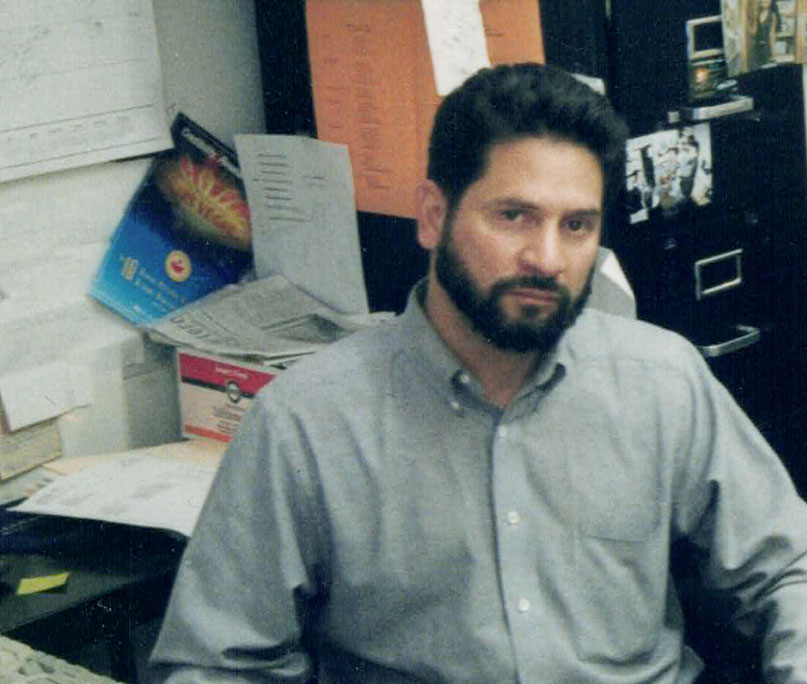
by Marvin Ramírez
The United States is not a perfect nation. No country in history has ever been. Yet, after 250 years, America remains one of humanity’s greatest experiments in freedom, opportunity and self-government. That achievement deserves recognition and gratitude.
For millions of immigrants like me, America has represented far more than a place on a map. It has been a refuge, a classroom, a workplace and a home where dreams once considered impossible became attainable through determination and hard work.
People arrive here from every corner of the world carrying little more than hope. Many begin with humble jobs, learning a new language while working long hours to support their families. Some clean offices, harvest crops, wash dishes, drive trucks or start small businesses. Their children often become teachers, engineers, doctors, journalists, entrepreneurs and community leaders. That story has been repeated generation after generation, and it remains one of America’s greatest strengths.
This nation has welcomed people escaping war, political persecution, poverty and oppression. It has offered them the freedom to worship, to speak openly, to vote, to start businesses and to pursue an education. Those opportunities have not only transformed individual lives—they have strengthened the country itself.
America has always been built by people willing to work, create and innovate. Every successful company, family-owned restaurant, neighborhood grocery store and growing business represents someone’s willingness to take a risk and build something better. Those efforts create jobs, strengthen communities and inspire others to dream even bigger.
Of course, America has faced difficult chapters throughout its history. Like every democracy, it continues to wrestle with injustice, political disagreements and social challenges. The nation’s greatness does not come from pretending those problems do not exist. Rather, it comes from its enduring ability to confront them, debate them and continue moving forward while preserving the freedoms that make such debate possible.
Today, critics often focus exclusively on the country’s shortcomings. Honest criticism has an important place in every democracy because it encourages improvement. But it should never cause us to overlook the extraordinary achievements that have made the United States a beacon of hope for generations. Millions continue to seek the opportunities found here because they believe in the promise of liberty and the dignity of work.
As we celebrate America’s 250th anniversary, we should remember that this nation is more than its government or its politics. America is its people—the workers, entrepreneurs, teachers, soldiers, volunteers, parents and dreamers who build stronger communities every day. It is the belief that one’s future is not determined solely by where one was born, but by character, perseverance and the willingness to contribute.
As an immigrant, I am grateful for the opportunities this country has given me, my family and countless others. That gratitude is shared by millions whose lives have been transformed by the American promise.
Happy 250th anniversary, United States of America. May the next generation continue building a nation that remains a symbol of freedom, opportunity and hope for the world.
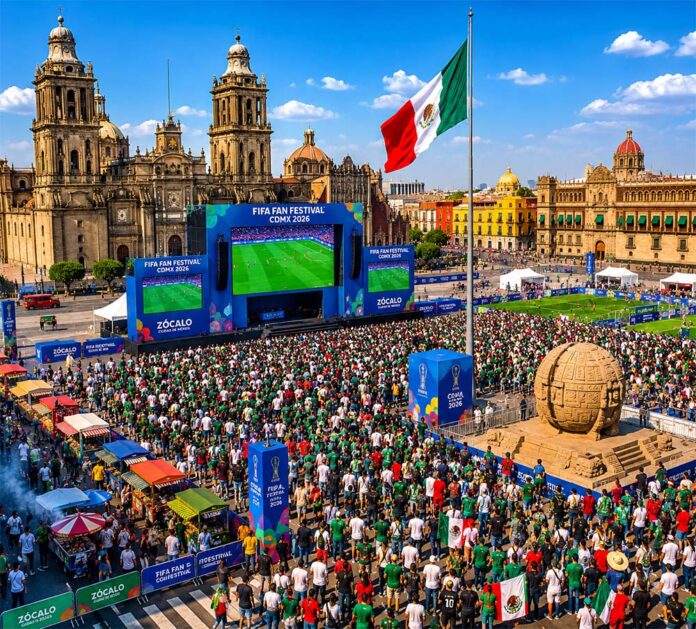
Miles de aficionados al fútbol celebran en el Zócalo capitalino durante el Mundial FIFA 2026, símbolo de unidad. Thousands of soccer fans celebrate in Mexico City’s Zócalo during the 2026 FIFA World Cup, a symbol of unity.
by the El Reportero staff
Analysis
As the 2026 FIFA World Cup unfolds across North America, Mexico City has become far more than a host venue. It has emerged as one of the tournament’s emotional centers, where soccer, history and culture converge to create an experience that extends well beyond the matches themselves.
Long before kickoff, thousands of fans filled the city’s plazas, parks, restaurants and public squares. Visitors from dozens of countries gathered alongside Mexican supporters, transforming neighborhoods into lively meeting places where cultures, traditions and a shared passion for soccer came together.
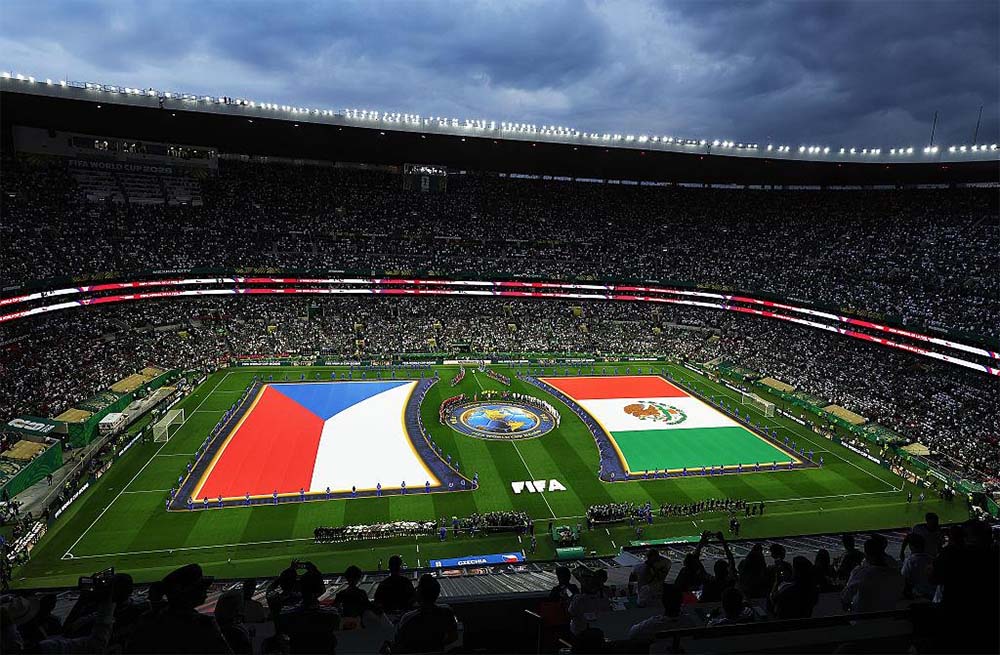
The tournament marks another milestone in Mexico’s rich soccer history. After hosting the FIFA World Cup in 1970 and 1986, the country once again welcomes the world’s most popular sporting event, becoming the first nation to stage World Cup matches in three different editions. The achievement reinforces Mexico’s place among the sport’s most passionate and influential hosts.
At the center of that legacy stands the iconic Estadio Azteca, one of the most celebrated venues in international soccer. Fans remember it as the stadium where Pelé lifted the World Cup trophy in 1970 and where Diego Maradona produced both the legendary “Goal of the Century” and the controversial “Hand of God” goal in 1986. For many visitors, stepping inside the stadium is an opportunity to connect with some of the game’s greatest moments.
Beyond the stadium, Mexico City offers an experience that few host cities can match. Visitors have explored museums, colonial architecture, archaeological landmarks, public parks and vibrant neighborhoods such as Centro Histórico, Coyoacán and Roma. Together, these attractions provide an authentic look at one of Latin America’s largest and most culturally diverse capitals.
The city’s celebrated culinary scene has also become part of the World Cup experience. Restaurants, neighborhood eateries and traditional markets have welcomed visitors eager to sample authentic Mexican cuisine while enjoying the festive atmosphere. Local musicians, artisans and street performers have added to the celebration, giving fans an opportunity to experience the country’s cultural traditions firsthand.
The tournament has delivered a significant economic boost to the capital. Hotels have reported strong occupancy, restaurants have extended operating hours and transportation systems have adjusted to accommodate increased demand. Thousands of temporary jobs have been created in tourism, hospitality, security and event services, providing additional income for local workers and businesses.
Years of preparation also helped position Mexico City for the global spotlight. Investments in transportation, visitor services and public safety have allowed millions of guests to move throughout the city more efficiently while improving the experience for residents and tourists alike. Many of those improvements are expected to continue benefiting the city long after the tournament ends.
Equally memorable has been the hospitality shown by local residents. Visitors frequently describe Mexicans as welcoming hosts who gladly offer directions, recommend neighborhood restaurants and share their enthusiasm for the sport. Those personal encounters often become lasting memories that reflect the warmth for which the country is widely known.
International television coverage has introduced millions of viewers not only to packed stadiums but also to Mexico City’s historic landmarks, modern skyline and thriving cultural life. The images have presented a broader picture of the capital, highlighting a city that successfully blends centuries of history with contemporary energy and creativity.
Every World Cup creates unforgettable moments on the field, but many visitors say their favorite memories are being made away from the stadium. Conversations in neighborhood cafés, celebrations in public squares and the friendships formed among supporters from different nations have become part of the tournament’s unique character.
When the final match is over, the goals and championships will become part of soccer history. For Mexico City, however, the greatest legacy may be the opportunity to remind the world that it is not only one of football’s historic homes, but also one of the world’s most welcoming and culturally vibrant destinations.
Sources: FIFA, Mexico News Daily, Mexico City tourism authorities.
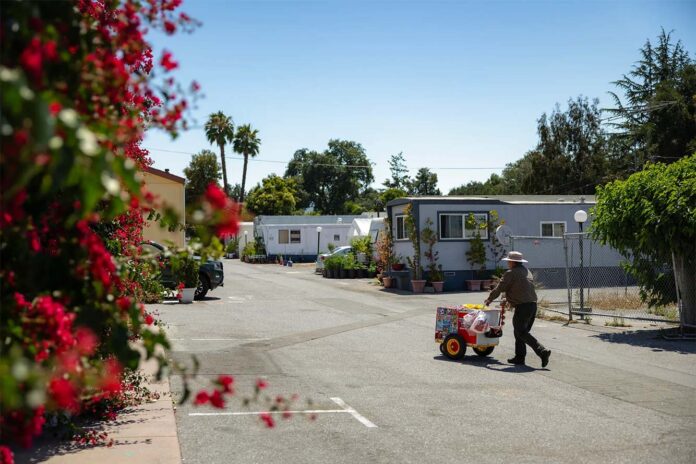
Un paletero camina por el parque de casas móviles Buena Vista, en Palo Alto, el 16 de junio de 2026. A paletero walks through the Buena Vista Mobile Home Park in Palo Alto on June 16, 2026. Photo by Manuel Orbegozo for CalMatters
In 2023, the Manufactured Housing Opportunity and Revitalization was given a new name, a new focus and millions more to spend revitalizing California’s most overlookedsource of affordable housing. Three years later, the results are starting to come in
The roads used to flood at Shady Lane Estates whenever it rained.
Water pooled on the mostly-dirt roads that ran through the mobile home park, combining with the waste of constantly backed-up septic tanks. Early on those wet mornings, parents would pack their kids into cars and ferry them through the noxious slurry to the front gate to catch the school bus.
Summer days weren’t much better.
Afternoon temperatures regularly exceed 110 degrees in unincorporated Coachella Valley. The park’s antique electrical system regularly failed, knocking out AC units and turning the decades-old, poorly-insulated mobile homes into family-sized kilns. Rubi Castro, a mother of four, remembers placing her small children in large buckets of cold water until the power lurched back on.
That chapter of the park’s history came to a celebrated end in late April when it reopened, renewed.
Funded partly through a state program aimed at rehabilitating California’s aging mobile home parks, Shady Lane’s robust new electrical system can now endure the draw of dozens of air conditioners. Pipes connect the park to the local water and sewer utilities. The roads are paved, there’s a shaded playground for kids and each of the 32 old mobile homes has been replaced with new, built-to-last units — plus eight more, to boot.
Castro, speaking on June a day that topped out at 113, said it’s been warm out since she moved back in April. But she’s comfortable in her new home where, she said proudly, “it feels like we live in winter.”
She “can’t wait to experience the rain.”
The glow-up of Shady Lane under the ownership of the nonprofit Caritas Corporation comes courtesy of another dramatic overhaul inside California’s housing department.
Back in 2023, as CalMatters reported, a state program designed to throw a financial lifeline to dilapidated mobile home parks had gone largely unused and forgotten for at least a decade thanks to a labyrinthine application process and a focus too narrow to help most applicants.
That year it was stripped down to its studs, rebuilt and renamed the Manufactured Housing Opportunity and Revitalization (MORE) program.
Along with funding from Riverside County and the city of Coachella, the Shady Lane overhaul received $10.6 million, one of 28 parks to receive an award and the first rehab project to be completed. Another 19 have broken ground, according to the state housing department.
For a state facing a crippling housing affordability crisis and an affordable housing financing system often characterized as sclerotic and costly, the transformation is a rare bit of unquestionably good news.
But the short history of the program also underlines just how challenging it is to maintain and rehabilitate old mobile home parks, a largely overlooked source of the state’s scant low-cost housing stock.
California is home to 4,635 mobile home parks, according to the state housing department. Together they provide space for nearly half a million units. Most are owner-occupied. They’re also significantly cheaper than comparably sized single-family homes or townhouses, making them one of the few homeownership opportunities that is even plausibly affordable to Californians with lower incomes.
“While it’s not as shiny or flashy as a big beautiful new rental apartment, it’s a vital source of affordable housing,” said Betsy McGovern-García, vice president of Self-Help Enterprises, an affordable housing developer in the San Joaquin Valley which manages two parks.
Even after receiving state funding through the MORE program, some projects are still mired in permitting delays or have been scaled back for lack of funding. And despite awarding nearly $140 million to more than two dozen parks that hold more than 1,000 mobile homes, housing advocates say that likely covers just a small fraction of the need.
No more money is on the horizon.
Sabrina Ramírez en su casa del parque de casas móviles Buena Vista, en Palo Alto, el 16 de junio de 2026. Sabrina Ramirez at her home in the Buena Vista Mobile Home Park in Palo Alto, on June 16, 2026. Photo by Manuel Orbegozo for CalMatters.
A new program for old parks
The program emerged from the bureaucratic makeover of a 1980s state loan initiative called the Mobile Home Resident Ownership Program. As implied by the name, it was initially focused on helping California’s mobile home owners — who typically own their units, but not the land on which they sit — to buy their parks and run them as resident-owned cooperatives. Later, that narrow purpose was expanded to fund park purchases by nonprofits and local governments.
After an initial wave of acquisitions early on, the program fell into disuse. Between 2013 and 2023, it awarded only a single loan, despite having tens of millions of dollars in the bank.
The 2023 overhaul expanded the program to serve a separate, pressing concern: The sorry state of many of California’s mobile home parks. Funds could now be used not just to fund purchases, but to repair and replace park infrastructure and even the dilapidated units themselves. Private owners could apply. The application was simplified and the terms made much more generous such that many of the loans might ultimately be forgiven.
To top it off, lawmakers threw in an additional $200 million through two one-off budget bills.
“It’s more responsive to the range of challenges that park residents and park owners are seeing,” said Brian Augusta, a housing policy lobbyist who advocated for the change. Case in point: Roughly two-thirds of the funds awarded through the program went to repair and rehabilitation projects.
The Caritas Corporation was the one organization to receive funding through the older version of the program in the preceding decade. Officials at the state housing department encouraged the nonprofit to give the money back and reapply for more funding through the new one.
“It’s a great program, much easier,” said Tracy Bejotte, chief operating officer at Caritas. “They really got their act together.”
The proof, she said, is Shady Lane.
“It used to be a rough, tough place,” said Joel Beltran, a produce vendor at a local shop, who lives at the park with his wife and five children. He recalls how sparks would leap from the outlets of his old mobile unit.
“Today, it’s like Disneyland,” he said.
The challenge of aging parks
The high cost of home upkeep and repair is a challenge bedeviling communities across the country, but mobile home parks in California make for a particularly tough case.
Park residents are much less likely to have the spare money necessary to make home repairs. Nor are they as likely as traditional homeowners to be able to turn to insurance or home loans. Affordable coverage for manufactured housing can be hard to come by and banks don’t typically see them as worthy collateral.
That’s especially true of older units, many of which were never designed to get old in the first place. Those built prior to 1976, when more onerous federal standards went into effect, are particularly vulnerable to moisture, mold and fire damage. They are often poorly insulated, making them uncomfortable — even dangerous — when temperatures fall or spike.
Many of these pre-’76 units are ”probably no longer suitable to be living in,” said Andrew Rumbach, who has studied mobile home parks at the Urban Institute. They’re also disproportionately common in California. According to estimates by Rumbach and his colleagues, nearly 40 percent of California’s mobile homes were built before federal regulations kicked in, among the largest shares of any state.
Even if a park’s units are in good shape, the parks themselves are often not. Frequently located on the least desirable tracts of land along urban fringes, they are much more likely to be disconnected from public utilities and, increasingly, at risk of wildfire. Sewage, water and electrical infrastructure is frequently owned and operated by the park owners themselves.
“These systems tend to be run by whoever runs the park, which may be an absentee owner or a property manager,” said Gregory Pierce, a UCLA researcher who studies urban planning and water insecurity. “Even if they have the best of intentions, that person may not be well-equipped to run a water system.”
Still waiting
Even as the Shady Lane project has been mostly wrapped up for months now, the promised overhaul of Buena Vista Mobile Home Park in Palo Alto has barely begun.
Of the 28 rehabilitation projects awarded funding through the MORE program, Buena Vista, owned and managed by the Santa Clara County Housing Authority, received the most: $24.6 million.
Awarded in the winter of 2023, those funds were initially slated for a full-scale redevelopment project. Decades-old mobile homes would be replaced with new models, as would the community’s leaky gas lines and patchy roads. For the park’s renters, the housing authority proposed a mid-sized apartment complex with a community center.
But in 2024, those ambitions were radically scaled back. Housing authority officials blamed the change of plans on unanticipated cost overruns, a lack of sufficient funding, resident pushback and the fact that the state’s mobile home renovation funding came with a use-it-or-lose-it deadline of mid-2027. In a new plan released late last year, only the park’s common infrastructure — the water, gas, power and sewer lines — will be replaced. Residents from 49 homes have been told that they will be relocated during the eight months of construction and then returned to their existing units.
The move-out date was originally scheduled for February. It has since been bumped to September.
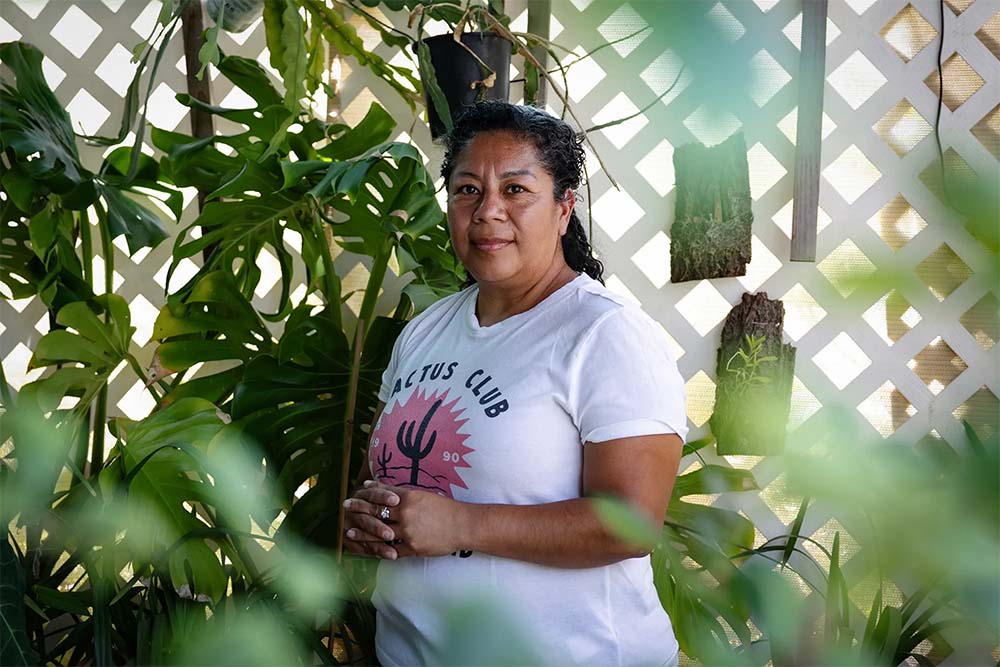
“It keeps getting pushed back and pushed back,” said Sabrina Ramírez, a childcare worker who has lived at the park since 1999. The uncertainty has been stressful. But the delay through the summer has been good for her dozens and dozens of outdoor plants — a pandemic passion project that now surrounds her 1960s-era home. “My jungle’s loving it. I did not want to move them during the beginning of the year.”
She and Buena Vista’s other plant parents are coordinating with neighbors outside the park to care for the flowers, succulents and fruiting vines once construction begins.
Tapped out
The MORE program ultimately doled out $136 million in repair, replacement and acquisition grants in 2023, but denied applications that added up to another $186 million.
That mismatch between the money requested and the funding available reflects how much need is out there — but it’s also likely an understatement, said Kate Rose, deputy director at the California Coalition for Rural Housing, a Sacramento-based nonprofit. The owners of many parks may simply not have applied because they hadn’t yet heard about the new program. Others — mom and pop owners — might not have had the bandwidth to submit an application on time.
For those projects that lost out or never applied in the first place, additional help is not on the way. The bulk of the program’s prior funding came through one-time budget allocations. The coming year’s strained state budget does not include a top up. The remainder came from a special fund fed with park permit fees. At last count, that fund had $27 million and has grown at less than half of 1 percent over the last two years. That’s not enough for another statewide funding round, said Rose, who described the total as “peanuts.”
For owners of aging mobile home parks, that doesn’t leave many other options.
When Self-Help Enterprises acquired La Hacienda Mobile Home Park in Fresno, “we really didn’t have a long-term revitalization plan,” said McGovern-García. “We simply knew there had to be an intervention.”
After years of legal turmoil and bad blood between the park’s residents and the prior owner, the site was in rough shape. All of the units except one were built before 1980, she said. Nearly two dozen had been abandoned and left boarded up. Most were beset with water damage and mold.
Self-Help applied for a $3.7 million improvement grant hoping to provide the home owners with low-cost or interest-deferred loans to fund the replacement of the units. They didn’t get it.
“It would have changed the entire trajectory of the community,” said McGovern-García. “It really is like getting Willy Wonka’s golden ticket for the mobile home world.”
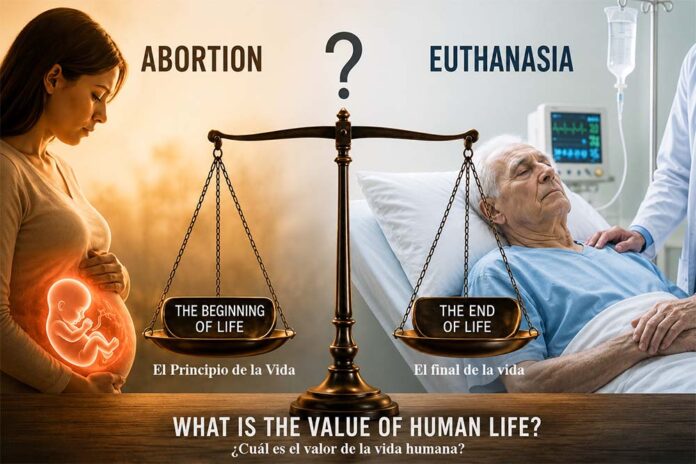
Abortion and euthanasia are often discussed as separate issues, but they share a common ethical question: How does a society define the value of human life?
Abortion concerns life at its earliest stage. Euthanasia, or physician-assisted death where it is legal, concerns life near its natural end. They occur at opposite points of the human journey, yet both ask whether human dignity depends on age, health, independence or personal circumstances.
Supporters of abortion frequently argue that a woman should have the right to make decisions about her own body and future. Supporters of euthanasia often contend that individuals facing unbearable suffering should have the right to choose the timing and manner of their death. While these arguments differ, both place a strong emphasis on personal autonomy.
Others see the issue differently. They argue that human dignity is inherent, not something that increases or decreases according to health, productivity or convenience. From this perspective, every life deserves protection, compassion and care, especially during its most vulnerable moments.
At the same time, many developed nations face a different challenge: rapidly declining birth rates. Countries across Europe, as well as Japan, South Korea and China, are experiencing aging populations and shrinking workforces. Governments that once worried about population growth are now encouraging families to have more children because fewer young people will eventually mean fewer workers, caregivers and taxpayers to support future generations.
These demographic realities raise legitimate questions. Can a society thrive if fewer children are born while a growing number of people view death as an acceptable solution to suffering? The answer is not simple, but it deserves thoughtful discussion.
Equally concerning is the mental health crisis affecting many young people. Rising levels of anxiety, depression and loneliness have been documented in numerous countries. The reasons are complex and cannot be reduced to a single cause. Social media, family instability, economic uncertainty, isolation and the search for identity all appear to play a role.
In our view, another factor deserves consideration: the gradual loss of shared moral and spiritual foundations. Many young people grow up searching for purpose in a culture that often celebrates achievement, consumption and personal success while offering little guidance about enduring meaning, responsibility or hope. Whether one approaches this question from a religious or secular perspective, human beings need reasons to persevere during difficult times.
This is why public policy should focus not only on individual choice but also on strengthening the conditions that make life worth living. Expanding access to quality mental health care, supporting stable families, improving palliative care for the seriously ill, encouraging community involvement and creating policies that make it easier to raise children are practical steps that affirm human dignity.
Respect for life should not end with birth, nor should compassion end when suffering begins. A truly humane society responds to pain by offering treatment, companionship and hope rather than isolation and despair.
Abortion and euthanasia will remain subjects of intense debate. People of good faith will continue to disagree. Yet one principle should unite us all: every human life possesses value that cannot be measured solely by convenience, productivity or suffering. If we lose sight of that truth, we risk not only demographic decline but also the moral foundation upon which every compassionate society ultimately depends.
Keiko Fujimori saluda a simpatizantes tras confirmarse su ajustada victoria en las elecciones presidenciales.Keiko Fujimori greets supporters after her narrow victory in Peru’s presidential election was confirmed.
Peru’s official vote count ended June 29, giving Fujimori a razor-thin lead of fewer than 50,000 votes over Roberto Sánchez.
by the El Reportero staff
Peru brought nearly three weeks of electoral uncertainty to an end after the National Office of Electoral Processes (ONPE) completed the official count of the presidential runoff, confirming a narrow victory for Keiko Fujimori, leader of the Popular Force party.
According to the final results released by the electoral authority, Fujimori received 9,223,396 votes, or 50.135% of the valid ballots cast, while her opponent, Roberto Sánchez of Together for Peru, won 9,173,755 votes, or 49.865%. The margin was just 49,641 votes, making it one of the closest presidential races in Peru’s recent history.
Although ONPE has completed the official count, the formal declaration of the winner rests with the National Jury of Elections (JNE), which must finish the legal certification process before officially proclaiming the country’s next president. News reports indicate that the official proclamation could come during the first days of July.
Fujimori, daughter of former President Alberto Fujimori, is set to reach the presidency on her fourth attempt after losing elections in 2011, 2016 and 2021. Her victory would mark the return of Fujimorismo to the presidential palace more than two decades after her father’s political downfall.
The conservative candidate thanked her supporters and said she would assume office with “humility and responsibility.” During the campaign, she pledged to combat rising crime, strengthen the economy and restore stability to a country that has endured years of political turmoil.
Sánchez, however, has refused to concede the election. His campaign questioned part of the overseas vote and alleged voting irregularities, although it has not presented conclusive evidence of fraud. Overseas ballots proved decisive for Fujimori, who received strong support from Peruvians living abroad.
The new administration is scheduled to take office on July 28, Peru’s Independence Day, facing significant challenges. The country has experienced a succession of presidents over the past decade, along with social unrest, growing security concerns and declining public confidence in government institutions.
The razor-thin outcome underscores a deeply divided Peru, with many urban voters supporting Fujimori’s promises of security and economic stability, while Sánchez drew stronger backing in rural regions with proposals for political change and constitutional reform.
Sources: Reuters, Associated Press, Peru’s National Office of Electoral Processes (ONPE), and the National Jury of Elections (JNE).
Gov. Gavin Newsom signed a package of more than 20 bills on June 30, approving measures that range from public safety and financial regulation to consumer services and transportation. While many of the new laws make technical changes to state statutes, several are expected to have a noticeable impact on California residents.
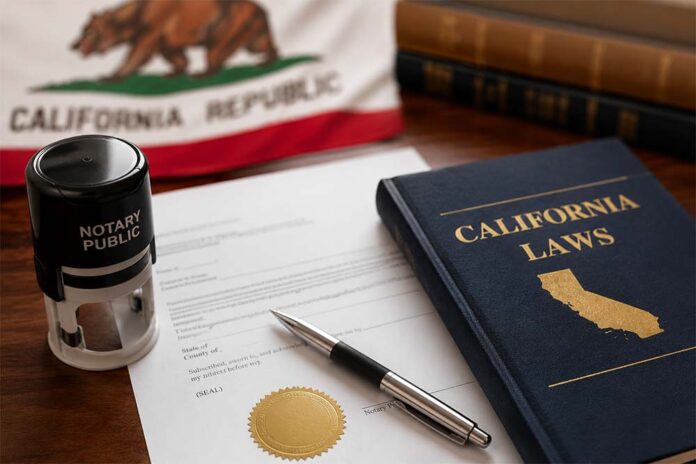
One of the most immediate changes comes through Assembly Bill 1597, which increases the maximum fees California notaries public may charge for several common services. Beginning in 2027, the maximum fee for acknowledgments, jurats and certified copies of powers of attorney will increase from $15 to $20. Fees for deposition services will rise from $30 to $35, while charges for administering a deposition oath and issuing the certificate will increase from $7 to $12 each. Supporters say the adjustments reflect rising operating costs after nearly a decade without a fee increase.
Another measure drawing attention is Senate Bill 97, which establishes a legal framework for digital financial assets, including stablecoins. As digital payments continue to expand, lawmakers say the legislation is intended to provide greater regulatory clarity, strengthen consumer protections and encourage responsible financial innovation in California.
Automobile owners may also benefit from Senate Bill 719, which expands access to connected vehicle service information. Often described as a “right-to-repair” measure, the law is designed to improve independent repair shops’ ability to diagnose and repair newer vehicles, potentially increasing competition and giving consumers more choices beyond dealership service departments.
Among the public safety measures, Assembly Bill 1948 updates provisions governing concealed-carry firearm licenses. The legislation modifies procedures within California’s licensing system as the state continues adjusting firearm regulations following recent court decisions.
Newsom also signed Assembly Bill 2455, designating an official Bruce Lee Day in California. The measure recognizes the martial arts icon’s lasting influence on film, fitness and Asian American culture, particularly in the San Francisco Bay Area, where Lee spent part of his youth.
The remaining bills signed Tuesday address topics including domestic violence programs, criminal procedure, arbitration, school facilities, powers of attorney and local government administration. Together, they represent another round of legislative changes that will take effect according to the timetable established in each measure, with many becoming operative in 2027.
A refreshing glass of watermelon juice may do more than quench thirst during the summer. Emerging research suggests the popular fruit could help support healthy blood pressure, thanks to naturally occurring compounds that improve blood vessel function.
Scientists have been studying watermelon because it is one of the richest natural sources of L-citrulline, an amino acid that the body converts into L-arginine. This process stimulates the production of nitric oxide, a molecule that relaxes blood vessels and improves circulation. Better blood flow can contribute to lower blood pressure, particularly in people with elevated readings.
Recent reviews of clinical studies found that watermelon supplementation has shown encouraging results in adults with prehypertension, hypertension, obesity or other cardiovascular risk factors. Several trials reported modest reductions in both systolic and diastolic blood pressure after participants consumed concentrated watermelon products for several weeks. However, researchers emphasize that benefits were generally greater among people already at risk for heart disease than among healthy adults.
Watermelon also provides potassium, an essential mineral that helps the body regulate sodium levels. A diet rich in potassium has long been associated with improved blood pressure control. In addition, the fruit contains lycopene, vitamin C and other antioxidants that may help reduce inflammation and protect blood vessels from oxidative stress.
Despite these promising findings, experts caution that watermelon juice should not be viewed as a replacement for prescribed blood pressure medications. Many of the strongest research results involved concentrated watermelon extracts or powders that supplied higher amounts of L-citrulline than are typically found in a single serving of fresh juice.
Another consideration is sugar intake. Although watermelon contains natural sugars, whole watermelon also provides fiber that slows absorption. Juice contains much less fiber, making it easier to consume larger quantities and increasing the potential impact on blood sugar levels, particularly for people living with diabetes.
Nutrition specialists recommend enjoying watermelon juice as part of a balanced eating plan rather than relying on it as a treatment. Combining a diet rich in fruits, vegetables, whole grains and lean proteins with regular physical activity, adequate sleep, stress management and reduced sodium intake remains the most effective strategy for maintaining healthy blood pressure.
As research continues, watermelon appears to be another example of how everyday foods may contribute to better cardiovascular health. While more long-term clinical studies are needed to determine the ideal amount and form of consumption, adding moderate servings of watermelon to a healthy lifestyle may offer a simple and refreshing way to support heart health.
Sources: Food.news, Health.com, News-Medical.net, and peer-reviewed studies published in Nutrients and the British Journal of Nutrition.
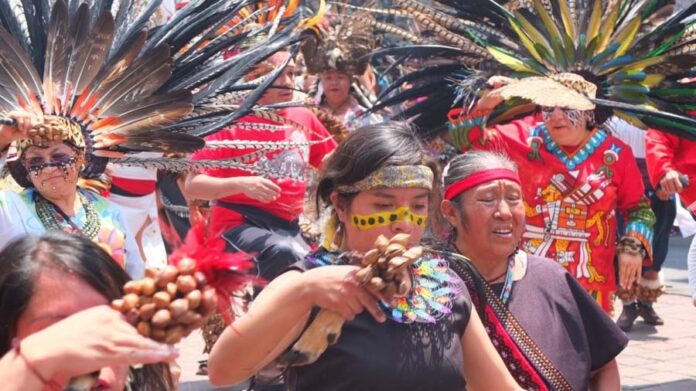
Danzantes indígenas preservan antiguas tradiciones mediante música, fuego, danza y ceremonias comunitarias ancestrales. Indigenous dancers preserve ancient traditions through music, fire, dance and ancestral community ceremonies.
by the El Reportero staff
Today in Mexico, the word mitote is commonly used to describe a noisy gathering, a lively party or even a dramatic commotion. Long before it entered everyday language with those meanings, however, the term referred to one of the most significant ceremonial traditions practiced by Indigenous peoples throughout Mesoamerica.
The mitote was far more than a celebration. It was a sacred communal ritual in which music, dance and fire strengthened social bonds while expressing the relationship between people, nature, the spiritual world and the cosmos.
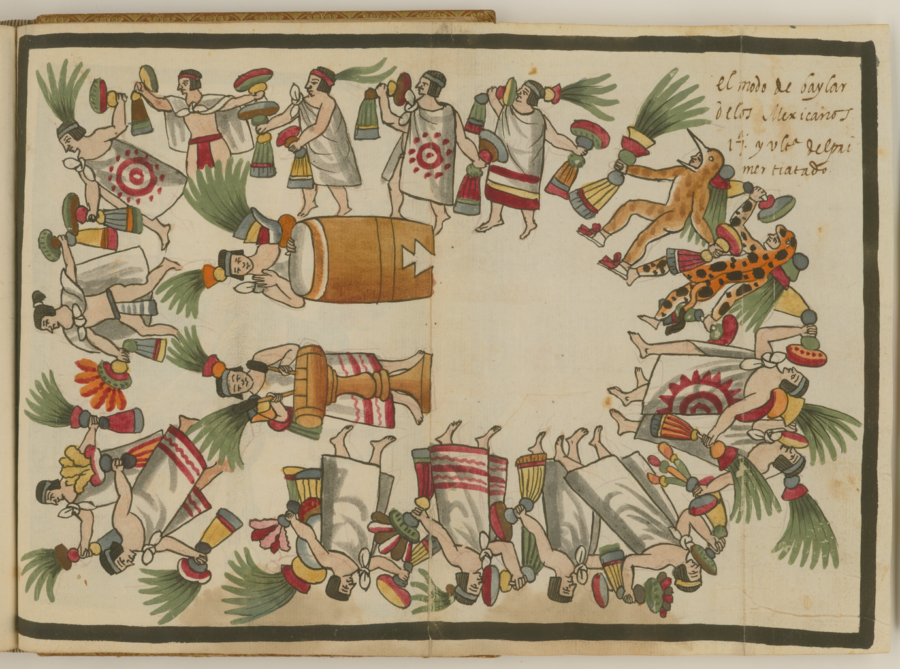
Códice Tovar mostrando danzas rituales, como lo era el mitote, acompañadas por atabal y teponaxtli. Tovar Codex showing ritual dances, such as the mitote, accompanied by atabal and teponaxtli. Wikipedia.
Several Indigenous communities, including the Cora, Huichol and Tepehuán peoples, performed these ceremonies during key moments of the agricultural calendar. They gathered to give thanks for successful harvests, pray for rain and seek blessings for future planting seasons. Other groups, particularly some Chichimeca communities, held mitotes before going to war, asking for courage, protection and victory in battle.
The ceremonies typically took place around large bonfires. Participants formed circles while dancing to the steady rhythm of drums and traditional chants that often continued throughout the night. Every movement, song and beat carried ceremonial meaning that had been preserved through generations.
Spanish chroniclers of the 16th century recorded these gatherings with amazement because of the large crowds and the intensity of the rituals. To outside observers, the celebrations appeared chaotic, filled with music, constant movement and participants entering deep spiritual trances. For the Indigenous communities themselves, however, the ceremonies followed a precise spiritual order in which every action held symbolic significance.
Some oral traditions also connect the mitote to creation stories. In one version, the gods created humanity from corn, regarded as a sacred gift. To prevent humans from possessing unlimited divine knowledge, they surrounded them with a symbolic mist—known as the mitote—that clouded their vision. In this tradition, the mitote represents both the boundary between humanity and the divine and the spiritual journey to understand what lies beyond it.
Over the centuries, the meaning of the word gradually evolved. While remnants of the original ceremonies still survive in some Indigenous communities, mitote entered everyday Mexican Spanish as a way to describe noisy celebrations, gossip, excitement or public drama.
Expressions such as “There’s quite a mitote,” “Don’t make such a mitote,” or “You’re a real mitotero” have become common throughout Mexico, reflecting how the word adapted to modern life while retaining its association with collective gatherings and shared experiences.
Although its everyday meaning has changed dramatically, the essence of the mitote remains remarkably similar. Whether around a ceremonial fire centuries ago or amid the lively bustle of a modern city, the mitote continues to symbolize community, shared energy and the enduring tradition of people coming together to celebrate, express themselves and preserve their cultural identity.
Source: Based on reporting by México Desconocido, adapted by the El Reportero staff.
Julián Quiñones y Mateo Chávez celebran sus goles en la victoria de México sobre Chequia durante la Copa Mundial 2026. Julián Quiñones and Mateo Chávez celebrate their goals in Mexico’s victory over Czechia during the 2026 World Cup. Credit: Getty Images.
by the El Reportero staff
After an impressive group-stage performance, Mexico enters the FIFA World Cup knockout rounds with growing confidence and renewed expectations. Regardless of the outcome of its next match, El Tri has already demonstrated that it has the talent, discipline and resilience to compete with the world’s top national teams.
Mexico advanced by combining organized defending with an increasingly dynamic attack. The team has shown greater composure under pressure and a willingness to play aggressively when opportunities arise, earning praise from fans and analysts alike.
One of the tournament’s biggest revelations has been Mateo Chávez, the young defender whose maturity and confidence have exceeded expectations. Calm on the ball and reliable in defense, Chávez has emerged as one of Mexico’s brightest young stars and a key piece of the team’s future.
The offense has also benefited from the outstanding play of Julián Quiñones, whose speed, creativity and finishing ability have made him one of Mexico’s most dangerous attacking weapons. His contributions have provided the team with the offensive spark needed to challenge elite opponents.
Mexico’s success has also been built on teamwork. Veteran leaders have blended well with a new generation of players eager to prove themselves on soccer’s biggest stage. The balance between experience and youth has given head coach Javier Aguirre multiple tactical options as the tournament enters its most demanding phase.
The knockout stage presents an entirely different challenge. Every match becomes a winner-take-all contest where one mistake can end a team’s championship dreams. Defensive discipline, efficient finishing and mental toughness often make the difference between advancing and going home.
For Mexican fans across the United States, including thousands throughout the San Francisco Bay Area, the national team’s performance has generated renewed excitement. Restaurants, sports bars and family gatherings have filled with supporters proudly wearing the green jersey and celebrating each step forward in the tournament.
Whether Mexico’s World Cup journey continues deep into the knockout rounds or concludes sooner than hoped, this squad has already demonstrated that it belongs among the world’s strongest competitors. More importantly, the emergence of promising young talent suggests that the future of Mexican soccer remains bright long after this World Cup comes to an end.
Sources: FIFA World Cup tournament coverage, FMF (Mexican Football Federation), and Associated Press reporting.
Summer celebrations continue across the Bay Area as communities prepare for Independence Day weekend with music, festivals and family-friendly activities. From San Francisco and Santa Cruz to Berkeley and Redwood City, the coming weeks offer opportunities to enjoy live entertainment, cultural traditions and outdoor gatherings.
Fillmore Jazz Festival returns to San Francisco
One of the West Coast’s largest free jazz festivals returns to San Francisco’s historic Fillmore District for two days of live music, arts, food and community celebration. Visitors can enjoy performances on multiple stages, browse arts and crafts booths, sample local cuisine and experience one of the city’s signature summer traditions. Saturday and Sunday, July 4–5, 10 a.m. to 6 p.m., Fillmore Street between Jackson and Eddy streets, San Francisco. Free admission.
Santa Cruz Latin Collective performs at Midtown Block Party
Santa Cruz Latin Collective brings salsa, Latin rock and Afro-Cuban rhythms to the Midtown Block Party. Inspired by the music of Santana, Malo, Azteca and Eddie Palmieri, the band will perform an energetic outdoor concert for music lovers of all ages. Friday, July 3, 6 p.m. to 8 p.m., Midtown Block Party, 1111 Soquel Ave., Santa Cruz. Free admission.
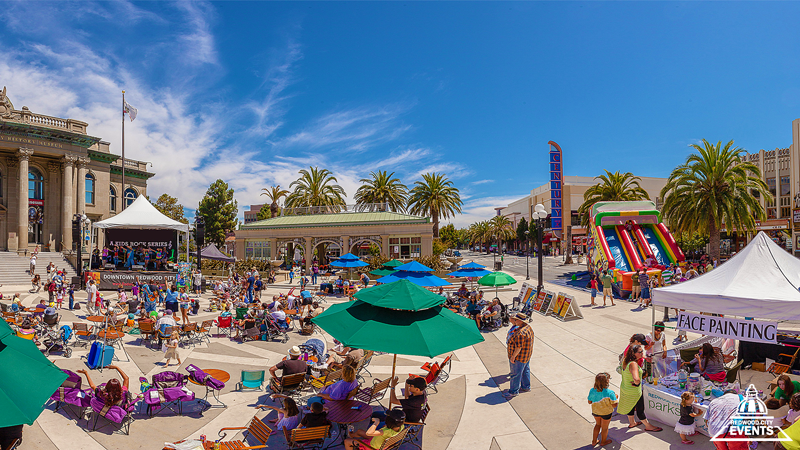
¡Kids Rock! regresa con su serie musical centrada en los niños. Kids Rock! returns with its kid-focused music series
Kids Rock! returns to Redwood City
Families are invited to enjoy the Kids Rock! summer concert series featuring Lori & RJ with interactive music, dancing and activities designed especially for children. Saturday, July 18, 10 a.m. to noon, Courthouse Square, Redwood City. Free admission.
Omar Sosa celebra el lanzamiento de su más reciente álbum con una presentación en Berkeley. Omar Sosa celebrates the release of his latest album with a performance in Berkeley.
Omar Sosa Quarteto Americanos performs in Berkeley
Grammy-nominated pianist Omar Sosa joins his Quarteto Americanos for an evening blending Afro-Cuban jazz, Latin rhythms and contemporary improvisation. Sunday, July 19, at 7 p.m., Freight & Salvage, 2020 Addison St., Berkeley.
Viva Perú Festival returns to Newark
The third annual Viva Perú Festival celebrates Peruvian culture with live music, traditional cuisine, dance performances and family activities. International salsa star José Alberto “El Canario” is scheduled to headline the entertainment. Sunday, July 26, 11 a.m. to 7 p.m., Swiss Park, 5911 Mowry Ave., Newark.
For additional summer events and updated listings, visit ElReporteroSF.com under Calendar. Organizations, nonprofits, artists and event promoters are invited to submit upcoming community events for possible publication by emailing elreportero@aol.com.