by the El Reportero staff
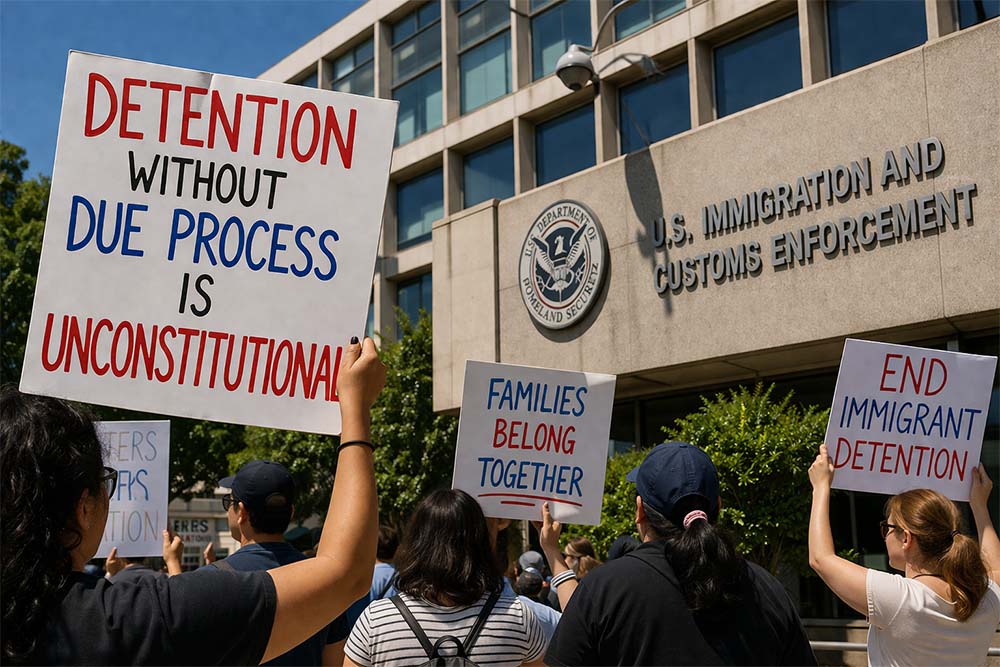
A federal appeals court ruling rejecting the government’s attempt to expand mandatory immigration detention without bond is intensifying debate nationwide, while advocates in California and the San Francisco Bay Area say the decision highlights serious concerns about due process and fairness.
The ruling centers on a controversial policy that allowed U.S. Immigration and Customs Enforcement to detain immigrants without giving them the opportunity to seek release on bond, even when they had no criminal record and had lived in the United States for decades.
In its decision, the 2nd U.S. Circuit Court of Appeals rejected the government’s argument that such detention practices were authorized under existing immigration law. The court found that federal authorities had stretched legal definitions beyond their intended meaning, raising constitutional concerns.
The decision creates a split among appeals courts. While some circuits have upheld the policy, others have ruled against it, increasing the likelihood that the issue will reach the U.S. Supreme Court.
The ruling does not immediately end detention or guarantee release, but it could expand access to bond hearings for certain detainees. Immigrants arrested inside the United States, particularly those with long-term residency and no criminal history, may now have stronger arguments to request release while their cases are pending. However, the impact remains uneven because different courts have reached different conclusions.
For immigrant advocates, the ruling represents a significant challenge to a policy they say has expanded detention without proper judicial oversight.
“This goes to the heart of due process,” said a Bay Area immigration attorney. “People should not be held indefinitely without the chance to argue for their release.”
The policy relied on classifying immigrants arrested inside the country as “applicants for admission,” a category typically used for those arriving at the border. By applying it broadly, authorities argued they could impose mandatory detention without bond hearings.
The appeals court rejected that interpretation, concluding it would allow the government to detain large numbers of people without individualized review.
Legal experts say the ruling reflects growing concern about the scope of immigration detention.
Across the country, many federal judges have questioned similar applications of the policy, citing lack of safeguards and the risk of prolonged confinement without court review.
In California, where immigration enforcement often clashes with local protections, the ruling has drawn strong reactions.
Organizations such as ACLU of Northern California and Immigrant Legal Resource Center have long argued that detention without bond undermines constitutional rights and harms immigrant communities.
“People are being detained for months without a chance to see a judge,” said a community advocate in San Francisco’s Mission District. “That is not justice.”
The issue is especially relevant in the Bay Area, where many detainees have deep ties to their communities.
Advocates say that under the policy, even individuals with no criminal history could be held far from home, making it difficult to access legal help or stay in contact with family.
Supporters of the policy argue that detention ensures compliance with immigration proceedings and protects public safety. Federal officials maintain their interpretation follows the law.
Critics, however, say the policy expands government power beyond what lawmakers intended.
“The law was never meant to be applied this broadly,” said a California legal scholar. “Detention is becoming the default, not the exception.”
The split among appeals courts has created uncertainty. An immigrant’s ability to request bond can depend on where the case is heard.
“That inconsistency is a serious problem,” the Bay Area attorney said. “Rights should not depend on geography.”
San Francisco officials have emphasized protecting immigrant communities, though they have limited authority over federal detention decisions.
Advocates say the ruling could strengthen efforts to challenge detention practices.
“This shows the courts are starting to recognize the problem,” said the Mission District organizer. “But more work is needed.”
As the legal battle continues, the Supreme Court may be asked to resolve the conflicting rulings.
Such a decision could determine whether immigrants nationwide have the right to seek release while their cases proceed.
For now, the ruling gives momentum to advocates, especially in California, where immigration enforcement remains a major issue.
“This is about more than immigration,” the legal scholar said. “It is about limits on government power.”
The legal fight over immigration detention is far from over, and its consequences are expected to unfold in the coming weeks and months as additional courts weigh in and attorneys continue to challenge the policy. For immigrant communities in California and across the country, the outcome could shape access to bond hearings and due process protections for years to come.
With reports from national media and community sources