
What have we become?
by Marvin Ramírez
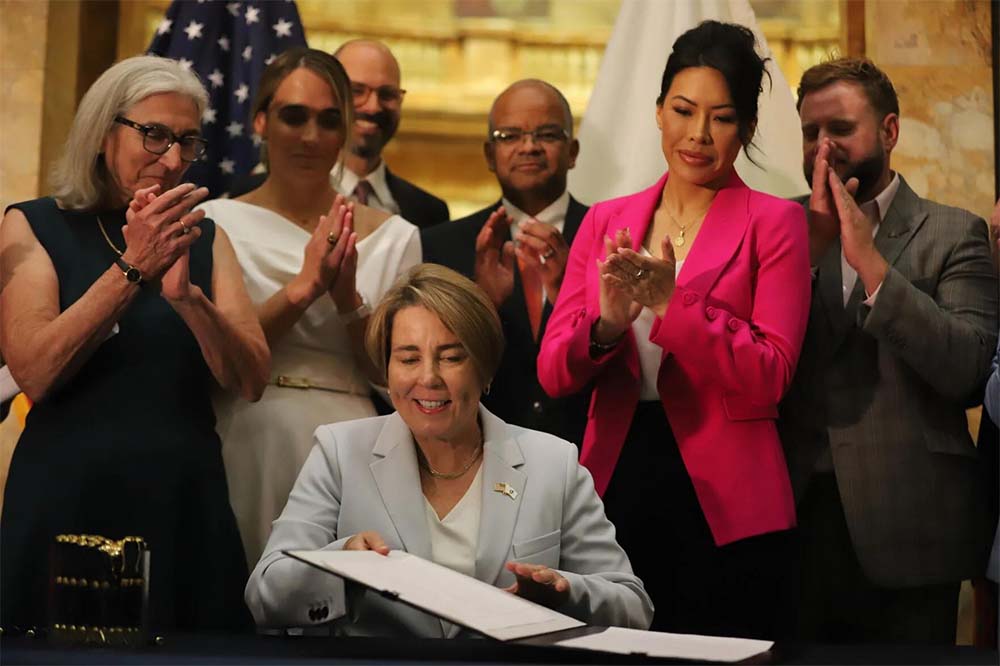
On Aug. 10, Massachusetts Gov. Maura Healey signed a law removing the state’s specific restrictions on abortions performed at or after 24 weeks of pregnancy. Under the former law, such abortions were permitted only when necessary to protect the woman’s life or physical or mental health, or when the unborn child had a lethal or grave diagnosis. The new law replaces those defined conditions with the “professional judgment” of a physician.
Supporters describe this as compassion and health care. But compassion for whom? Where is the compassion for the unborn child, particularly one who has reached the point of viability and may be capable of surviving outside the womb?
At 24 weeks, we are not talking about an invisible cluster of cells. The child has a recognizable human face, arms, legs, fingers and toes. The heart has been beating for months. The child moves, responds to sound and continues developing rapidly. By approximately 28 weeks—about three months before full-term birth—the eyes can open and close.
Modern medicine works heroically to save premature babies born at these stages. Doctors and nurses place them in incubators, help them breathe and spend weeks fighting for their survival. Families pray beside them and celebrate every ounce gained. Yet under another set of circumstances, a child at a similar stage of development can be denied the most fundamental protection: the right to continue living.
How can our society hold these two positions simultaneously?
Defenders of the Massachusetts law emphasize that abortions late in pregnancy are uncommon and frequently involve tragic medical complications. Those realities must be acknowledged. Some parents receive devastating diagnoses, and some pregnancies place women in serious danger. They deserve truthful information, excellent medical treatment, emotional support and human compassion.
But difficult cases cannot justify removing clear protections for every viable unborn child. If lawmakers believe abortions after 24 weeks should be allowed only in extraordinary medical emergencies, they should write those exceptions plainly into the law. Instead, Massachusetts eliminated the specified conditions and placed the decision almost entirely within the physician’s discretion.
A civilized society does not make the protection of human life dependent upon how wanted, healthy or convenient that life may be. Nor should a viable child’s future depend on the private judgment of a single professional without meaningful statutory safeguards.
The smiling and applause surrounding the bill signing were especially disturbing. Whatever one’s political position, expanding the legal power to end developing human life should never be treated as a joyful occasion. There is nothing celebratory about abortion. It represents, at minimum, the loss of a developing human being and often leaves grief that political slogans cannot erase.
For many people of faith, the idea of ending the life of a child shortly before birth is not merely misguided; it feels horrifying and even satanic—an inversion in which destruction is presented as mercy and death is called care.
We must also question the cultural conditioning that brought us here. For decades, the public has been told that abortion concerns only a woman’s body, as though the unborn child’s separate heartbeat, DNA and developing organs do not exist. Language has been carefully sanitized. The child becomes “pregnancy tissue,” abortion becomes “care,” and opposition becomes an attack on women.
Repeating those words does not change biological reality.
A woman facing an unexpected or medically complicated pregnancy must never be abandoned. She needs financial assistance, prenatal care, housing, counseling and support after birth. When a diagnosis is fatal, families deserve compassionate perinatal hospice and the opportunity to accompany their child with love. Protecting unborn life must include protecting the mother—not condemning her or leaving her alone.
But compassion cannot require us to pretend there is only one human life involved.
Who speaks for the child who cannot vote, protest, hire an attorney or plead for mercy? Who protects the smallest and most defenseless member of the human family when government withdraws its protection?
The answer should be all of us.
Massachusetts has crossed a frightening moral boundary. Other states should not follow. Americans must demand laws that protect women in medical emergencies while establishing firm and unmistakable safeguards for viable unborn children.
If we cannot defend a child who may be only weeks away from birth, the question is no longer merely what abortion has become. The question is what we have become.