por el equipo editorial de El Reportero
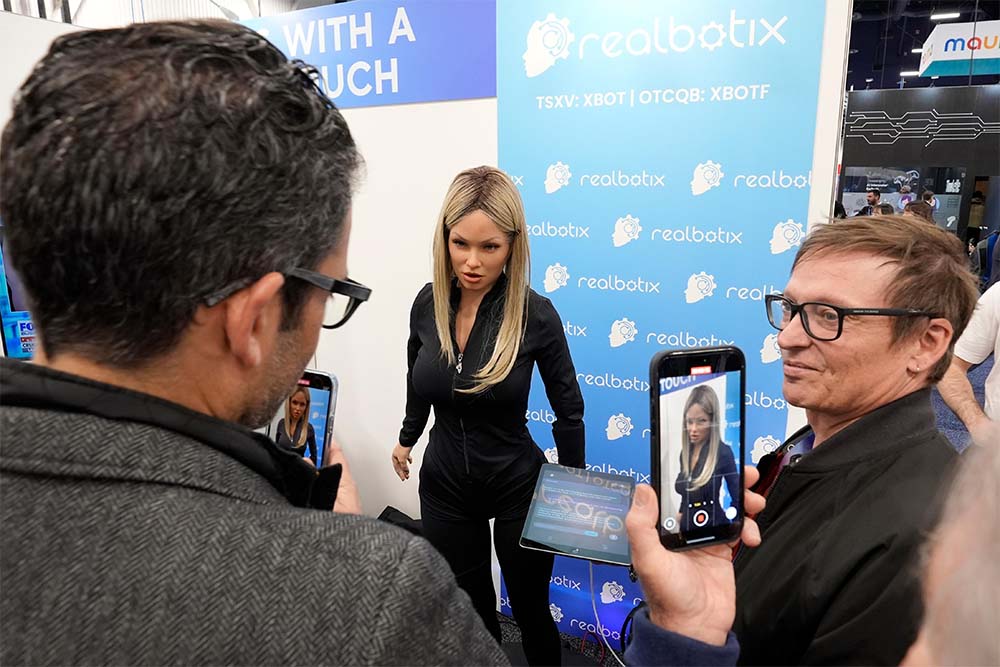
What happened in Salamanca, a small city in western New York, should awaken parents, teachers and taxpayers across the country. The local school board approved spending $57,590 on “Sally,” an artificial intelligence-powered humanoid robot intended for high school technology classes. After strong opposition from residents, educators and state officials, the district paused the project on July 24.
Accuracy matters: district leaders said Sally would assist students studying robotics and technology, not immediately replace a teacher. But substitution often begins with a pilot described as limited, innovative and harmless. First, a machine arrives to “help.” Later, administrators may argue that it can serve more students, work without wages, vacations or health insurance, and reduce operating costs. By the time a community recognizes the danger, contracts may already be signed and the precedent established.
Public education belongs to the people who finance it through their taxes. No school board should experiment on children or commit public money to technology capable of transforming jobs and processing student information without open debate, independent evaluation and informed parental consent. Taxpayers deserve to know the complete cost, who controls the data, what conversations the system retains, whether information reaches outside companies, and who is legally responsible when the machine gives a harmful or false answer.
New York Education Commissioner Betty Rosa expressed concern about the effect a humanlike robot could have inside a classroom. New York State United Teachers emphasized that students need interaction with real people. This is not an argument against computers, educational software or responsible artificial intelligence tools. It is about establishing a firm boundary: technology must remain subordinate to the teacher, never elevated as a substitute for human judgment, authority and presence.
UNESCO warns that artificial intelligence is developing faster than the policies needed to govern it. Its international guidance says AI should not enter education without public engagement, safeguards and government regulation. UNESCO also emphasizes a human-centered approach to learning. A teacher notices fear, isolation, hunger, abuse, enthusiasm or confusion. A teacher changes an explanation, inspires confidence, mediates conflict and accepts moral responsibility. A robot may imitate an affectionate response, but it feels no compassion and cannot answer to a family.
The employment concern is not fantasy. The International Labour Organization estimates that one in four jobs worldwide is potentially exposed to generative AI. The ILO also says transformation, rather than complete elimination, is currently the more likely outcome. That distinction should not make us complacent. It means the final result will depend on the rules society establishes, who owns the technology, and whether AI is used to strengthen workers or merely to cut payrolls.
The same logic can reach hospitals and nursing homes. Robotics can assist surgeons, carry supplies, monitor patients and detect certain risks; such applications may save time and lives. But doctors and nurses are not simply information processors. They listen, interpret subtle signs, comfort frightened people and assume professional responsibility for decisions affecting bodies and families. If saving money becomes the controlling standard, efficiency will eventually displace dignity.
We cannot honestly claim that Sally eliminated teaching positions, because that did not happen. Nor is there evidence of a secret conspiracy in Salamanca. There is, however, a structural conflict: technology companies want to sell systems; administrators want quick solutions; and teachers, students and taxpayers bear the consequences when an experiment fails.
Los Angeles provides a warning. Its school district launched an ambitious AI student assistant named Ed in 2024, then shut it down after the contractor, AllHere Education, collapsed. The failure left serious questions about public spending and the handling of student data. Technological promises do not eliminate the need for accountability; they make accountability more urgent.
The answer is not to destroy innovation, but to place it under democratic control. Before any district introduces humanoid AI, it should require public hearings, privacy review, security testing, full publication of contracts and a binding guarantee that no teaching position will be eliminated because of the system. Teachers, parents, students, independent experts and labor representatives must all have a voice.
The Salamanca parents and educators proved that public resistance works. They stopped the project before novelty became normality. That vigilance must extend to every school, hospital and public office.
A society that entrusts its children’s formation to the cheapest provider will eventually treat teachers, doctors, nurses and caregivers as disposable. Machines can serve humanity; they must never define humanity’s value. Our future cannot be decided in a boardroom while the public sleeps, or while corporate salesmen write the rules themselves.
Sources: Associated Press, New York Focus, UNESCO, International Labour Organization, EdSurge