by Tracy L. Barnett
“One thing about me, I loved school.”
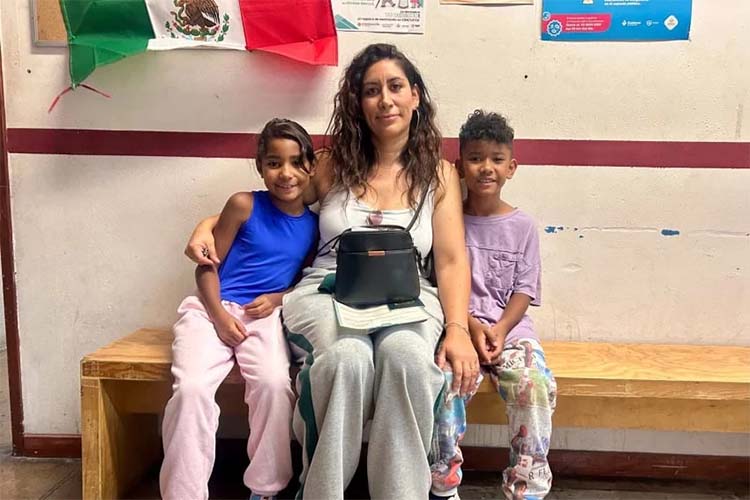
Lina remembers herself as an outgoing girl who played basketball and piano, studied French, painted and loved attending school.
Today, at 17, she is a U.S. citizen living in Jalisco, Mexico. She has not attended school in five years.
“I don’t work. I don’t go to school. I don’t talk to anybody,” she said. “I’m just alone in my thoughts all day.”
Caught between two countries
Lina is among an unknown number of American-born children living in Mexico following a parent’s deportation. Although children born abroad to Mexican parents are entitled to Mexican nationality, obtaining documentation can become a costly bureaucratic struggle.
Without Mexican identification, children may encounter obstacles enrolling in school, accessing services and continuing their education.
The national Soy México program offers a temporary solution. During limited registration periods, eligible applicants can obtain Mexican birth certificates and their Unique Population Registry Code (CURP) without certain expensive requirements.
In Jalisco, the program opened Aug. 22 and is expected to continue through late October, unless federal funding runs out.
For Lina, obtaining those documents could finally reopen the classroom door.
“I have a higher possibility of going to school,” she said.
A family torn apart
Lina’s ordeal began five years ago in Florida, when she learned that her mother, Hanna, had been arrested and faced deportation.
“I was like, just come home, just come home,” Lina recalled.
Her mother’s detention disrupted the family. Lina and her brothers moved among relatives before eventually being separated.
Hanna, born in Mexico but raised in the United States since early childhood, arrived in Mexico with only $100. She struggled to find support and establish a stable home.
Fearing her children might enter state custody, Hanna arranged for them to join her in Mexico.
Lina, who had completed part of seventh grade in Florida, hoped to resume her education. However, without a CURP or Mexican birth registration, her mother could not enroll her.
“I had so much hope every time,” Lina said. But each attempt ended in disappointment.
Her younger brothers encountered similar difficulties. Their elementary school permitted them to attend classes as listeners, without receiving academic credit.
A bureaucratic obstacle
Tran Dang, executive director of The Rhizome Center for Migrants, which assisted the family, explained that obtaining Mexican registration normally requires authenticated, translated and certified U.S. birth records.
Even small discrepancies between documents can delay applications for months.
The organization helped Lina obtain her first government-issued photo identification, a U.S. passport. However, obtaining and apostilling another Florida birth certificate could have taken approximately eight months.
Instead, the family decided to wait for Soy México.
Operating since 2017, the program electronically verifies qualifying U.S. birth records, allowing applicants to bypass certain requirements. Eligible families may receive Mexican documentation the same day.
Nevertheless, not all states participate, and some applications cannot be completed. Texas is among the excluded states.
José Israel López, the program’s coordinator, said educational difficulties are among the principal reasons families seek assistance. Approximately 400 applications were received across Jalisco during the program’s first month.
Lost years, uncertain future
Lina’s brothers have returned to the United States, while she remains in Mexico with her mother.
She watches former classmates and relatives approach college while she struggles to return to school.
In a letter describing her experience, Lina wrote:
“My mother’s deportation did not only affect her. It changed the course of my life.”
Dang warned that bureaucratic delays can have lasting consequences for children’s futures.
Despite everything, Lina continues dreaming of a career and personal achievement.
“I want to be somebody big. Not somebody big to other people, but I want to be someone big to myself.”
Editor’s note: This article was edited to fit the available space in the print edition.
Tracy L. Barnett is a Guadalajara-based freelance writer and founder of The Esperanza Project.