by the El Reportero staff
The recent “Misa Azteca” performed inside the Cathedral of Our Lady of the Angels in Los Angeles has reignited a debate that reaches far beyond one concert. It raises an important question Christians have wrestled with for centuries: How far can the Church go in embracing local cultures without compromising the integrity of its faith?
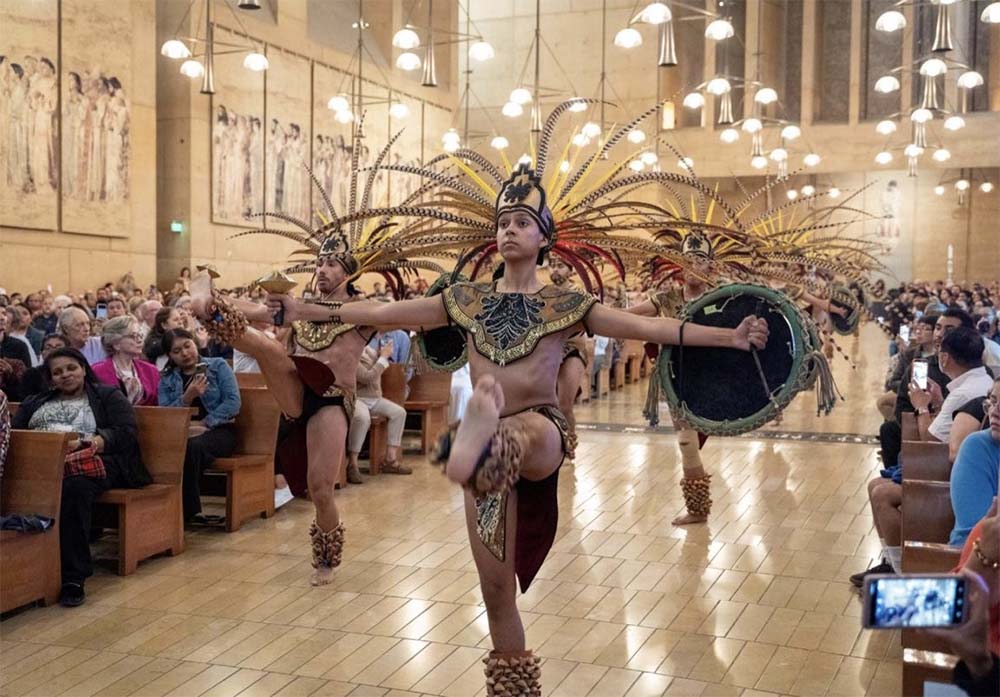
On June 27, the cathedral hosted a musical performance that blended traditional Catholic liturgical music—including the Kyrie and Ite, Missa Est—with Aztec rhythms, indigenous instruments, Nahua poetry, and ceremonial dances performed near the altar. Composer Joseph Julián González said the work was inspired by his devotion to Our Lady of Guadalupe and described it as an expression of faith celebrating the Indigenous roots of Mexican Catholicism.
To many in attendance, the event was a beautiful tribute to culture, history, and diversity.
To others, it crossed a line.
The controversy is not about whether Indigenous cultures deserve respect. They certainly do. Nor is it about denying the contributions Native peoples have made to Christianity in the Americas. The question is whether practices that originated as religious ceremonies honoring pre-Christian deities belong inside a Catholic cathedral, particularly in the sanctuary where the Eucharist is celebrated.
Understanding the debate requires looking back in history.
Before the arrival of the Spanish in the sixteenth century, the Aztec civilization practiced a religion centered on gods associated with war, fertility, agriculture, and nature. Dance was not merely entertainment but part of ceremonies and rituals honoring these deities. While modern Aztec dance groups vary in belief, some present their dances as cultural heritage, while others continue to describe them as spiritual practices rooted in Indigenous traditions.
The Catholic Church has long distinguished between inculturation and syncretism. Inculturation expresses the Christian faith through the language, music, art, and customs of different peoples while preserving Catholic doctrine. Syncretism, by contrast, blends Christianity with religious beliefs or rituals originating outside the faith.
That distinction lies at the heart of the controversy.
Supporters argue the Los Angeles performance reflected the cultural identity of Indigenous Catholics rather than a revival of the ancient Aztec religion. They note that Christianity has long embraced local artistic traditions. Gregorian chant, African rhythms, European architecture, and Asian sacred art demonstrate how the Church has incorporated cultural expression without abandoning its essential beliefs.
Critics respond that dances rooted in pre-Christian worship belong in a different category. They argue that performing them near the altar risks confusing Christian worship with practices the Church has historically rejected. Inside a cathedral, they say, every gesture carries theological meaning.
The debate also recalls the controversy surrounding the 2019 Amazon Synod, when ceremonies involving the figure known as Pachamama took place in the Vatican Gardens. For many Catholics, those events raised similar concerns about whether respect for Indigenous cultures had crossed into religious ambiguity.
History offers another perspective through the story of Our Lady of Guadalupe. According to Catholic tradition, her appearance to St. Juan Diego in 1531 inspired the conversion of millions of Indigenous people to Christianity. The image of Guadalupe incorporated symbols familiar to native peoples while remaining unmistakably centered on Christ rather than the religion that preceded Him.
Perhaps that remains the enduring lesson.
The Church has always welcomed every people, language, and nation. Cultural diversity has enriched Christianity throughout history. Yet diversity alone cannot answer every theological question. As societies become increasingly multicultural, the Church must continue asking where cultural expression ends and sacred worship begins.
That conversation deserves more than slogans. It deserves careful history, mutual respect, and fidelity to the faith the Church has been entrusted to preserve.
Editor’s Note: This article was prepared by the El Reportero staff with reporting by Antonino Cambria of LifeSiteNews and additional historical context and analysis.