A legacy that continues to endure
by Marvin Ramírez
More than five centuries ago, as the Mexica (Aztec) Empire expanded across much of Mesoamerica, one powerful rival resisted its advance. In what is now the Mexican state of Michoacán, the Purépecha Empire flourished as one of the most sophisticated civilizations of pre-Hispanic Mexico. Remarkably, its descendants still preserve their language, traditions, and cultural identity today.
From their capital at Tzintzuntzan, on the shores of Lake Pátzcuaro, the Purépecha built a strong political system, became masters of copper metallurgy, and established one of the region’s most formidable states. Unlike many neighboring peoples, they were never conquered by the Mexica despite repeated military campaigns.
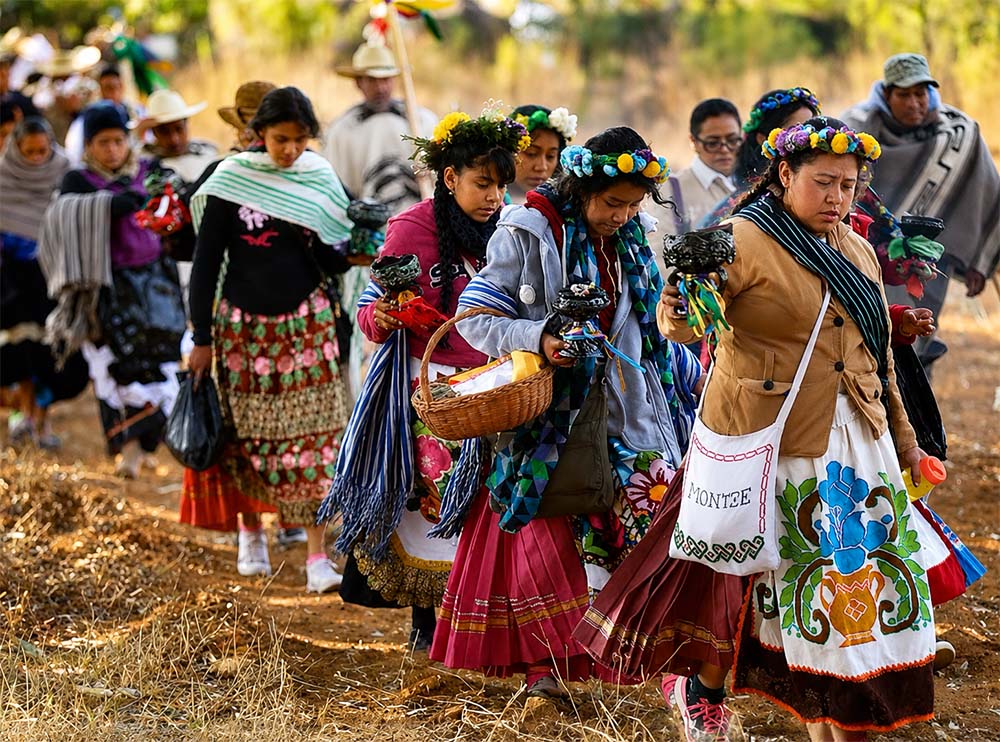
Today, more than half a million people identify as Purépecha, mainly in the Purépecha Highlands and the Lake Pátzcuaro region. Their ancestral language remains widely spoken, while customs, ceremonies, and community traditions continue to be passed down through generations.
The Purépecha possess one of Mexico’s richest cultural heritages. Their traditional music, the pirekua, was recognized by UNESCO as Intangible Cultural Heritage of Humanity for its role in preserving memory, identity, and social harmony. Their artistic traditions also include the world-famous guitars of Paracho, hammered copper from Santa Clara del Cobre, pottery, lacquerware, embroidered textiles, and colorful ceremonial masks.
Traditional celebrations remain central to community life. The annual Purépecha New Fire ceremony, religious festivals blending Indigenous and Catholic traditions, and the celebrated Day of the Dead observances around Lake Pátzcuaro attract thousands of visitors eager to experience one of Mexico’s oldest living cultures.
That legacy, however, faces modern challenges. Communities such as Sevina and Cherán have recently drawn national attention because of pressure from organized crime groups seeking control of natural resources and local territories. An armed attack on Sevina last May underscored the need to protect not only Indigenous communities but also the cultural heritage they safeguard.
Despite these threats, the Purépecha continue to preserve their traditions with remarkable resilience. Their language, community governance, music, and ceremonies remain symbols of cultural pride. On social media, descendants living in the United States frequently express that same connection to their roots. As one viewer commented on a Loving Mexico YouTube documentary, “We’re here and we aren’t going anywhere. Long live Michoacán!”
More than a relic of history, the Purépecha are a living civilization whose endurance demonstrates that the greatest victory is preserving a people’s identity through the centuries.