
by Marvin Ramírez
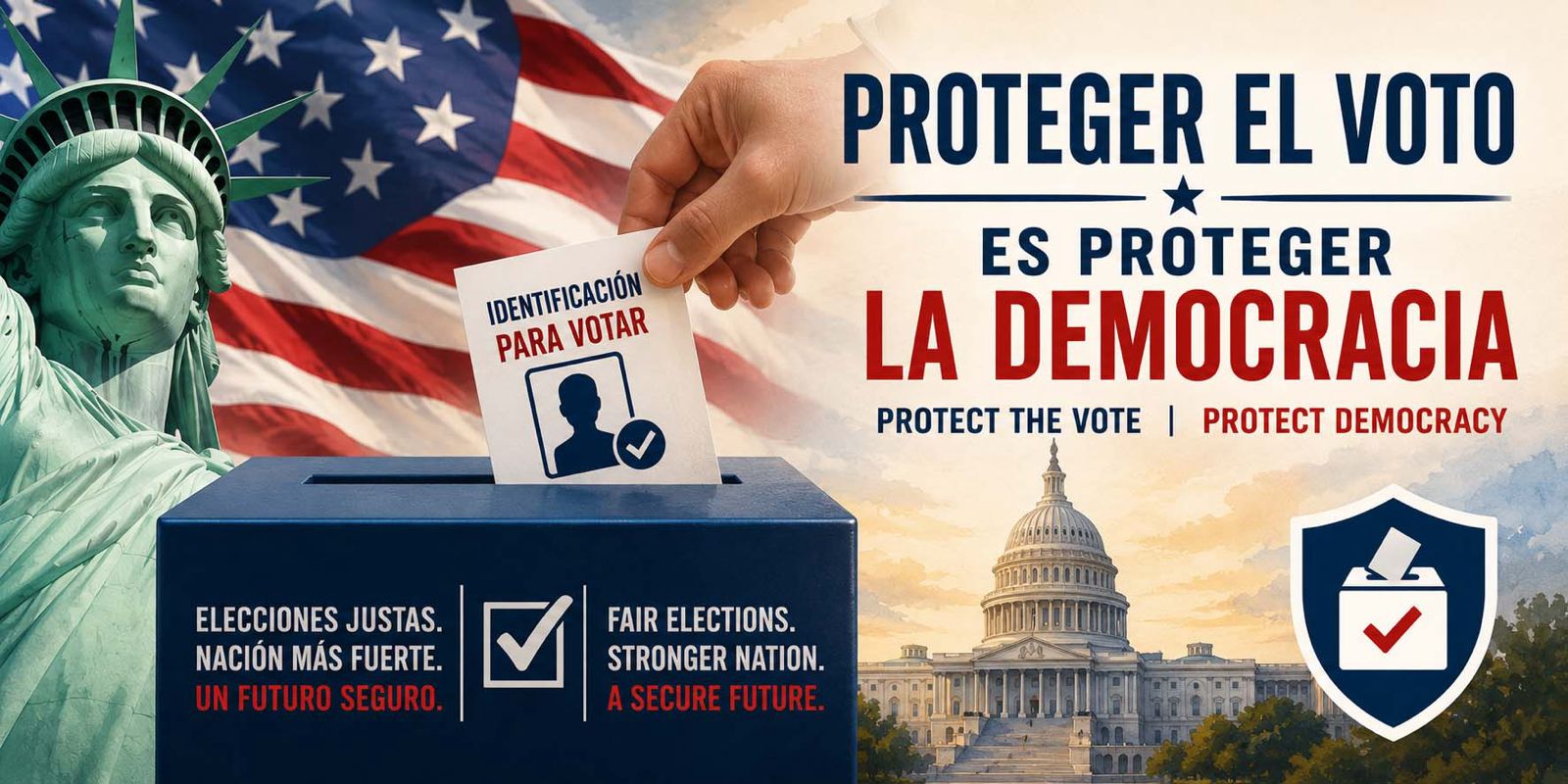
The U.S. House of Representatives has approved legislation that would establish a federal voter identification requirement while also restricting members of Congress from purchasing new individual stocks. Whether the measure ultimately becomes law will depend on the Senate, but one provision deserves careful attention on its own: requiring every voter to verify his or her identity before casting a ballot.
That should not be a controversial idea.
In a constitutional republic, voting is the highest expression of civic participation. It is the moment when citizens peacefully transfer political power and determine the nation’s future. Because of its importance, elections must meet two equally essential standards: they must be fair, and they must be seen as fair. When either of those standards is weakened, public confidence begins to erode.
For generations, the United States was regarded as a global model of democratic stability. In recent years, however, Americans have witnessed repeated accusations, investigations, recounts, lawsuits, and political disputes over election integrity. Regardless of which party raised those concerns or whether individual allegations were ultimately validated or rejected, one fact is difficult to dispute: millions of Americans today have less confidence in the electoral system than they did a decade ago.
No democracy benefits when its citizens doubt the legitimacy of its elections.
It is also difficult to explain why Americans are routinely asked to verify their identity for activities that carry far less significance than voting. A government-issued ID is commonly required to board an airplane, open a bank account, apply for many public benefits, obtain a driver’s license, complete financial transactions, or enter numerous government facilities. Identity verification has become a normal safeguard because it protects both institutions and the public from fraud.
Why should choosing the leaders of the world’s oldest continuous constitutional republic require a lower standard of verification?
The argument for voter identification is not about making voting harder. It is about making illegal voting harder.
Every democracy has two equally important responsibilities. The first is ensuring that every eligible citizen can vote freely and conveniently. The second is ensuring that every citizen can be confident that only eligible voters participated in deciding the outcome. These goals are not contradictory. In fact, they depend on one another.
Critics argue that voter identification requirements could create obstacles for certain groups, including senior citizens, low-income Americans, rural residents, or people who lack current identification. Those concerns deserve serious attention. If government decides that identification should be required, then government also has an obligation to make obtaining acceptable identification simple, accessible, and free whenever possible. No qualified citizen should lose the right to vote because of unnecessary financial or bureaucratic barriers.
At the same time, public confidence cannot be dismissed as an inconvenience. Elections do not derive legitimacy solely from accurate vote counts. They also depend on widespread public trust that the rules are applied equally to everyone.
Reasonable verification measures alone will not solve every challenge facing American elections. No single law can accomplish that. But requiring voters to confirm their identity sends an important message: every legal vote belongs to one eligible citizen, and every eligible citizen deserves assurance that the integrity of the ballot is being protected.
Trust is one of democracy’s most valuable assets. Once it is lost, rebuilding it becomes extraordinarily difficult.
For generations, Americans have accepted a simple principle in nearly every aspect of public life: trust is important, but verification protects everyone. Elections should not be the lone exception. Safeguarding access to the ballot and safeguarding confidence in the ballot are not competing values. They are complementary responsibilities.
Protecting the right to vote also means protecting the credibility of the vote itself. When citizens believe the process is fair, they are far more likely to accept the outcome—even when their preferred candidates lose. That confidence is not a victory for Republicans or Democrats. It is a victory for American democracy.