by Marvin Ramírez
Another election has come and gone. Candidates celebrate victories, supporters cheer at campaign headquarters, and television stations fill the screen with images of excitement and political drama. For a few days, politics becomes entertainment.
Then life returns to normal.
Most voters go back to work, return home exhausted, eat dinner, watch a few minutes of television or social media, and go to sleep. The next morning, the cycle begins again. In today’s society, many people consume information in 30-second clips, headlines, memes, and sound bites. They know the faces of candidates because they see them repeatedly, but how many truly understand the policies, priorities, and consequences behind the promises?
That question deserves serious reflection.
Election campaigns often focus on personalities, slogans, and carefully crafted messages. The same names frequently appear election after election, moving from one office to another. Familiarity becomes a powerful force. The more voters see a face, the more comfortable they become with it. But familiarity is not the same as accountability, and repetition is not the same as results.
Many campaign advertisements promise solutions to homelessness, public safety concerns, education problems, transportation challenges, and economic difficulties. Yet voters often find themselves asking the same questions every election cycle because many of those problems remain unresolved.
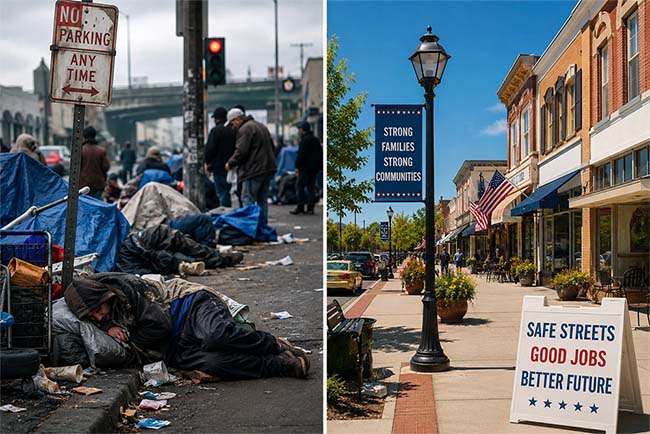
One cannot walk through parts of California’s major cities without noticing visible challenges. Homeless encampments, struggling businesses, rising costs, concerns about public safety, and frustration over government spending are common topics of conversation among residents. Whether one blames local officials, state leaders, federal policies, economic conditions, or a combination of factors, the reality is that many voters are dissatisfied with the direction of their communities.
Yet public debate rarely goes deep enough.
Instead of focusing primarily on campaign slogans, perhaps voters should be asking more practical questions. What measurable results has a candidate produced? What promises were made in previous campaigns? Which promises were fulfilled? Which were not? How will proposed policies be paid for? What unintended consequences might they create?
These are not partisan questions. They are citizen questions.
Perhaps the greatest weakness in our democracy is not the lack of information but the lack of civic education. Students spend years studying many subjects, yet relatively little time learning how government functions, how to evaluate political claims, how public budgets work, or how to distinguish facts from political marketing.
Imagine if high schools taught practical citizenship alongside traditional subjects.
Students could learn how to evaluate candidates and ballot measures. They could learn basic economics and personal finance. They could learn how taxes work, how government spending is allocated, and how debt affects future generations. They could learn how to read food labels, understand nutrition, compare financial products, and identify misleading advertising.
Such knowledge would benefit citizens regardless of political ideology.
Communities also deserve honest conversations about quality-of-life issues that directly affect residents. Transportation, parking, housing affordability, small-business survival, public safety, and infrastructure are concerns that impact people every day. Yet many citizens feel their concerns are often overshadowed by broader political battles.
For example, transportation policy should begin with reality. Many Americans depend on cars because public transportation is not always available, convenient, or reliable. While expanding transit options is a worthy goal, policymakers must also recognize the practical needs of working families who rely on automobiles to reach their jobs, schools, and businesses.
Likewise, discussions about education should focus on academic achievement, literacy, mathematics, critical thinking, and preparing students for successful adult lives. Parents have legitimate interests in understanding what their children are learning and how schools are performing.
None of these issues should belong exclusively to one political party.
The health of a democracy depends on informed citizens who think independently. Elections should not be popularity contests driven by name recognition and advertising budgets. They should be opportunities for voters to carefully examine records, evaluate results, question assumptions, and demand accountability.
Democracy works best when citizens do more than watch.
It works best when they read, question, compare, verify, and think.
As another election season fades into memory, perhaps the most important question is not who won.
The more important question is whether voters are becoming more informed, more engaged, and better prepared to hold all elected officials accountable—regardless of party, ideology, or title.
That is the responsibility of citizenship. And that responsibility lasts far longer than Election Day.