
America has the right to secure its borders, but it also needs a permanent immigration solution
by the El Reportero staff
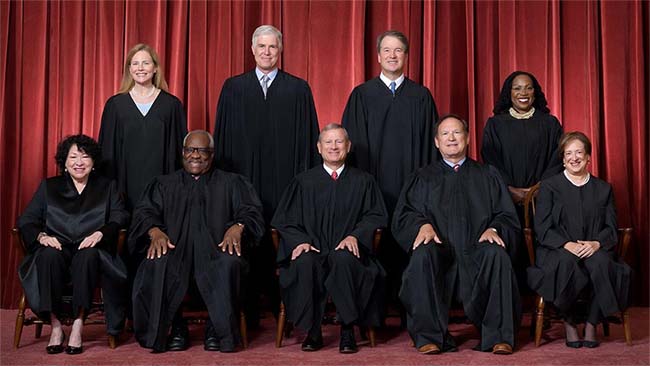
The U.S. Supreme Court delivered two significant immigration victories to President Donald Trump this week, reinforcing his administration’s authority to tighten asylum rules and move forward with ending Temporary Protected Status (TPS) for certain groups while legal challenges continue. Legally, the Court answered two important questions. Politically and economically, however, the larger debate remains unresolved.
No nation can function without secure borders. Every sovereign country has both the right and the responsibility to determine who may enter its territory and under what conditions. Immigration laws are meaningful only if they are enforced consistently, and it is understandable that many Americans expect their government to maintain an orderly immigration system.
The Court’s decision on asylum reflects that principle. By ruling that migrants who remain outside the United States have not legally “arrived” in the country, the Court gave the federal government greater authority to limit asylum processing before individuals cross the border. Whether one agrees with the policy or not, the ruling rests on the government’s longstanding authority to control entry into the country.
At the same time, the Court allowed the administration to move forward with ending TPS protections for certain groups while litigation continues. Again, the legal question before the Court was relatively narrow. TPS was created as a temporary humanitarian measure for people whose home countries faced war, natural disasters, or other extraordinary conditions. It was never intended to become permanent immigration status.
Yet the practical reality is far more complicated than the legal definition.
For more than two decades, Congress has repeatedly failed to modernize America’s immigration system. Instead of creating permanent solutions, successive administrations from both political parties simply renewed temporary protections again and again. As a result, many TPS recipients have spent twenty or even thirty years living legally in the United States.
During those years, they have done what America has traditionally encouraged immigrants to do. They have worked, paid taxes, purchased homes, started businesses, raised children, and become active members of their communities. Many now have children and grandchildren who are American citizens. They are no longer simply temporary visitors waiting for conditions to improve in their home countries. They have built lives here.
This is where the immigration debate becomes more than a legal issue. It becomes an economic one.
American businesses, particularly small and medium-sized companies, depend heavily on immigrant workers. Agriculture, construction, hospitality, food processing, health care support, maintenance, landscaping, and countless service industries rely on employees willing to perform demanding jobs that are increasingly difficult to fill.
If large numbers of long-term TPS holders were suddenly forced to leave, employers across many industries could face serious labor shortages. The consequences would not be limited to immigrant families. Businesses would struggle to replace experienced workers, production costs could rise, and consumers would likely feel the impact through higher prices and reduced services.
None of this suggests that immigration laws should simply be ignored. It means that immigration policy must recognize economic reality alongside legal principles.
The asylum system also deserves thoughtful reform. The United States has experienced a dramatic increase in asylum applications over the past decade, placing enormous pressure on immigration courts already burdened by years of backlogs. Many applicants ultimately do not qualify under the legal standards established by U.S. law, while others present legitimate claims of persecution that deserve careful consideration. Distinguishing between those cases requires an efficient system capable of making timely decisions, not one that leaves families waiting for years.
America should continue to offer protection to those genuinely fleeing persecution while discouraging abuse of the asylum process. Those two objectives are not mutually exclusive.
The Supreme Court has now clarified important questions about existing law. But courts cannot solve problems that belong to Congress.
Only Congress can enact comprehensive immigration reform that strengthens border security, modernizes the asylum process, meets the nation’s workforce needs, and provides a fair, permanent solution for people who have lived responsibly in this country for decades under temporary programs.
The Court has spoken. Now lawmakers must do what they have postponed for far too long.
America deserves an immigration system that is lawful, orderly, economically sound, and faithful to both its security interests and its long tradition as a nation of opportunity.