by El Reportero wire services
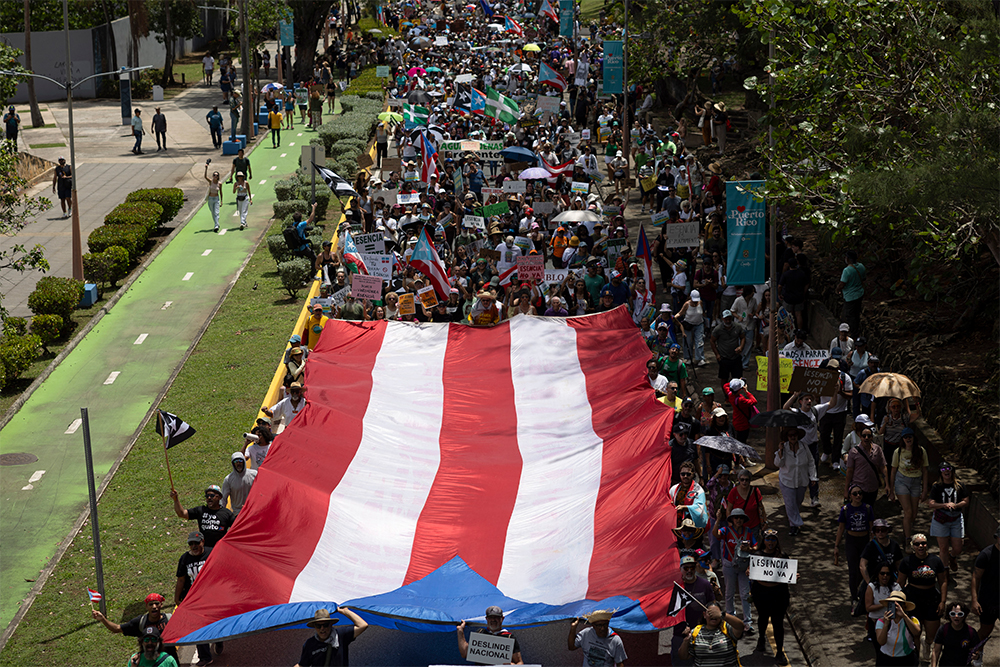
Thousands of demonstrators took to the streets in Puerto Rico on Sunday to oppose the proposed “Esencia” megaproject in Cabo Rojo, raising alarms about environmental damage, community displacement, and the long-term impact of large-scale luxury developments on the island.
The march began at El Escambrón, moved past the Capitol, and headed toward La Fortaleza, drawing a diverse coalition of more than 60 organizations alongside residents of all ages. Protesters carried a unified message: economic development should not come at the expense of natural resources or local communities.
At the center of the controversy is the scale and location of the Esencia project, which would bring hotels, high-end residences, and tourism infrastructure to an ecologically sensitive region in southwestern Puerto Rico. Environmental advocates warn that construction could threaten nearby mangroves, coastal ecosystems, and wildlife habitats that play a critical role in protecting the island from flooding and erosion.
Critics also argue that such developments often limit public access to beaches, a deeply sensitive issue in Puerto Rico, where coastal areas are legally considered public. Concerns over “hidden privatization” have fueled opposition, with many fearing that luxury tourism projects cater primarily to wealthy outsiders while restricting access for local residents.
Beyond environmental and access concerns, the protests reflect broader anxieties about economic inequality. While developers promise job creation and increased investment, opponents question who will truly benefit. Rising property values and living costs linked to upscale developments have already contributed to displacement in some parts of the island, intensifying fears of gentrification.
The backlash also highlights a growing distrust of government oversight. Protest organizers argue that the approval process lacked transparency and failed to adequately include community voices. For many, the issue goes beyond a single project and speaks to a larger pattern of decision-making that sidelines local input.
Puerto Rico’s recent history — including economic hardship and the devastation caused by Hurricane Maria — has heightened public sensitivity to how land and resources are managed. As the island continues to rebuild, residents are increasingly demanding a more balanced approach that prioritizes sustainability, equity, and community participation.
The outcome of the Esencia controversy could shape future development across Puerto Rico, as communities push for growth that respects both people and place.
https://www.facebook.com/reel/842314868892018