Community discussion at the convenience store. Discusión comunitaria en la tienda de conveniencia.
News analysis by El Reportero‘staff
As lawmakers in Sacramento consider a bill to regulate California’s largely unregulated temporary staffing industry, advocates say new oversight is urgently needed to protect workers and honest employers from widespread fraud. But small businesses and community employers warn the proposal could bring unintended consequences, making it harder to hire short-term help and raising costs for already strained local operations.
California hosts the largest temporary staffing market in the United States, employing hundreds of thousands of workers and generating billions in annual revenue. Yet, according to worker advocates and former prosecutors, the sector has become a magnet for abuse, with some staffing agencies allegedly presenting fake workers’ compensation insurance, evading payroll taxes and disappearing when workers are injured.
Jennifer Lentz Snyder, a retired prosecutor with the Partnership Organization for Workplace Ethics and Reform, said fraudulent operators undercut legitimate companies by offering lower prices while leaving injured workers without adequate medical coverage. Advocates estimate staffing-related fraud and payroll tax evasion cost California taxpayers and businesses up to $2 billion annually.
To address the problem, the proposed Staffing Agency Fair Employment Act would require staffing firms to register with the state, disclose company principals, identify the industries they serve and provide verifiable proof of insurance and financial capacity. Supporters argue the bill would give employers a way to confirm that staffing agencies are legitimate before contracting with them.
However, business groups and some small employers caution that additional fees and compliance requirements could disproportionately affect smaller staffing agencies and the small businesses that rely on them. Under the proposal, agencies would pay a $5,000 registration fee, a cost that may be negligible for large firms but burdensome for smaller, community-based operators.
Local business owners note that rising labor costs, insurance requirements and regulatory compliance have already made it harder to hire part-time or temporary help. Some worry that tighter regulation could further reduce flexibility in hiring, particularly for small shops, ethnic media outlets and neighborhood businesses that depend on short-term or seasonal workers.
The debate reflects a broader policy tension in California: how to crack down on fraud and worker exploitation without shrinking job opportunities or pushing smaller players out of the market. As the bill moves through the Legislature, lawmakers face pressure to balance worker protections with safeguards that prevent overregulation from sidelining legitimate small businesses.
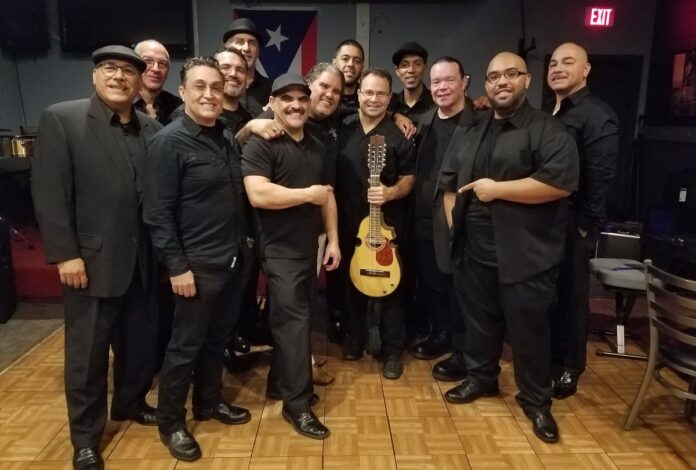
La orquesta Latin Rhythm Boys, te ofrece el mejor show latino del área de la bahía (Cortesía: https://www.bayarealatinjazzfestival.com/index ) - The Latin Rhythm Boys orchestra offers you the best Latin show in the Bay Area
By Magdy Zara
Like every Saturday, get ready for a night of great music, amazing people, and lots of fun, where reggaeton, cumbia, and vallenato will take center stage. However, as with any Latin party, you’ll also find salsa, bachata, guaracha, Latin pop, house, and more.
Carbon Lounge is an exclusive venue, known for its fun atmosphere and elite vibe, offering quality entertainment where you can have a great time to kick off the weekend. Rumba Colombiana is this Saturday, February 28th, starting at 10 p.m. Carbon Lounge is located at 383 Bay St – San Francisco.
Admission is free. For more information and reservations, please call (650) 281-5391 or visit www.carbonloungesf.com
Salsa Sunday at Sausalito Seahorse Restaurant
Italian food and seafood, live music, salsa, and free dance classes make for the perfect weekend plan.
To make it perfect, DJ José Ruiz and the Latin Rhythm Boys band will be spinning tunes. This renowned salsa and Puerto Rican music orchestra, based in the Bay Area, specializes in “salsa dura,” plena, and mountain rhythms, keeping Puerto Rico’s musical heritage alive in the United States.
The Sausalito Seahorse experience is magical. Enjoy exquisite Italian food, a warm atmosphere for families, live music, and free salsa dance classes every Sunday. This March 1st, the event will be held at Sausalito Seahorse, located at 305 Harbor Drive, Sausalito 94965, at the Golden Gate Bridge intersection and the Rodeo Ave exit, starting at 4 p.m. The entrance fee is $15.
Mexican singer Lila Downs in concert.
Lila Downs, winner of six Latin Grammys and one Grammy, possesses one of the most powerful and unique voices of our time. With her symbolic stage presence and emotionally charged narrative, her singing transcends all language barriers.
Downs’ music encompasses influences ranging from Mexican folk and ranchera music to the music of the southern United States, breaking down barriers and generating sounds that span folk, jazz, folk blues, indigenous music, ranchera, and even hip hop.
The Sonoma State University Green Music Center is the venue chosen by Lila Downs for her performance, which will take place this Saturday, March 7, starting at 7:30 p.m. The center is located at 1801 East Cotati Avenue, Rohnert Park.
Andrea Nicole Devis at the Ramp Gallery
On January 29th, the exhibition of artist Andrea Nicole Devis opened, featuring work that explores the sacred connection with Mother Earth, Lupa Yuta. It stems from a desire to reconnect with ancestral ways of knowing and caring for this beloved planet.
Andrea Nicole Devis is a multidimensional artist who works with painting and installation. Her work is inspired by nature and the feminine divine. Drawing from collective memory and diasporic rituals, her work invites the viewer to remember the sacred.
The Ramp Gallery is an artist-run exhibition space at SOMArts that is currently accepting applications for solo and group exhibitions.
The SOMArts Ramp Gallery is located at 934 Brannan Street in San Francisco.
Business optimism is returning for small and midsize business leaders at the start of 2026, fueling confidence and growth plans.
The 2026 Business Leaders Outlook survey, released in January by JPMorganChase reveals a turnaround from last June, when economic headwinds and uncertainty about shifting policies and tariffs caused some leaders to put their business plans on hold.
Midsize companies, who often find themselves more exposed to geopolitical shifts and policy changes, experienced a significant dip in business and economic confidence in June of 2025. As they have become more comfortable with the complexities of today’s environment, we are seeing optimism rebounding in the middle market nationwide – an encouraging sign for growth, hiring, and innovation. Small businesses, meanwhile, maintained steady optimism throughout 2025, but they aren’t shielded from domestic concerns. Many cited inflation and wage pressures as the top challenges for 2026 and are taking steps to ensure their businesses are prepared for what’s ahead.
“Business leaders across the Pacific region continue to demonstrate a unique blend of resilience and forward-thinking, even in the face of ongoing economic uncertainty,” said Brennon Crist, Managing Director and Head of the Pacific Segment, Commercial Banking, J.P. Morgan. “Their commitment to innovation and growth is evident in the way they adapt to challenges and seize new opportunities. It’s this spirit that keeps our region at the forefront of business leadership and progress. We look forward to helping our clients navigate all that’s ahead in 2026.”
Overall, both small and midsize business leaders are feeling more confident to pursue growth opportunities, embrace emerging technologies and, in some cases, forge new strategic partnerships. That bodes well for entrepreneurs in California. Here are a few other key findings from the Business Leaders Outlook about trends expected to drive activity this year:
Inflation remains the top concern for small business owners. Following the 2024 U.S. presidential election, many anticipated a favorable business environment. By June 2025, however, that feeling shifted amid concerns about political dynamics, tariffs, evolving regulations and global economic headwinds.
Going into 2026, 37% of respondents cited inflation as their top concern. Rising taxes came in second at 27% and the impact of tariffs was third at 22%. Other concerns included managing cash flow, hiring and labor costs.
For middle market leaders, uncertainty remains an issue. Almost half (49%) of all midsize business leaders surveyed cited “economic uncertainty” as their top concern – even with an improved outlook from a few months ago. Revenue and sales growth was second at 33%, while tariffs and labor both were third at 31%.
And tariffs are impacting businesses costs. Sixty-one percent of midsize business leaders said tariffs have had a negative impact on the cost of doing business.
Despite challenges, leaders are bullish on their own enterprises. Though the overall outlook is mixed, 74% of small business owners and 71% of middle market companies are optimistic about their company’s prospects for 2026.
Adaption is the theme. For small business owners surveyed across the U.S., responding to continuing pressures is important in 2026. Building cash reserves (47%), renegotiating supplier terms (36%) and ramping up investments in marketing and technology are among the top priorities.
Big plans are on the horizon. A majority midsized company leaders expect revenue growth this year, and nearly three out of five of (58%) plan to introduce new products or services in the coming year, while 53% look to expand into new domestic and/or international markets. Forty-nine percent say they’re pursuing strategic partnerships or investments.
The bottom line
Rebounding optimism among U.S. business leaders at the start of the year is setting the stage for an active 2026. With business leaders looking to implement ambitious growth plans that position themselves for the future, momentum in California could be beneficial for leaders looking to launch, grow or scale their business this year.
For informational/educational purposes only: Views and strategies described in this article or provided via links may not be appropriate for everyone and are not intended as specific advice/recommendation for any business. Information has been obtained from sources believed to be reliable, but JPMorgan Chase & Co. or its affiliates and/or subsidiaries do not warrant its completeness or accuracy. The material is not intended to provide legal, tax, or financial advice or to indicate the availability or suitability of any JPMorgan Chase Bank, N.A. product or service. You should carefully consider your needs and objectives before making any decisions and consult the appropriate professional(s). Outlooks and past performance are not guarantees of future results. JPMorgan Chase & Co. and its affiliates are not responsible for, and do not provide or endorse third party products, services, or other content.
Deposit products provided by JPMorgan Chase Bank, N.A. Member FDIC. Equal Opportunity Lender.
Tributes poured in within hours after the salsa legend’s death, as fans and artists reflected on a legacy that crossed borders and generations
by the El Reportero staff
Willie Colón, born William Anthony Colón on April 28, 1950, and died Feb. 21, 2026, the legendary trombonist, composer, arranger and bandleader whose innovative sound helped transform salsa into a global musical force, died at 75, his family announced Saturday.
Born in the Bronx to Puerto Rican parents, Colón emerged in the late 1960s as one of the defining architects of New York’s burgeoning Latin music scene. As a teenager, he signed with Fania Records, the influential label that would become synonymous with salsa’s worldwide rise. His 1967 debut album, El Malo, announced a new, urban sound—brassy, gritty and unapologetically rooted in the lived experiences of Latino communities in New York.
Across dozens of albums, Colón blended Afro-Caribbean rhythms with elements of jazz, rock and contemporary storytelling. His music drew on traditions from Cuba, Puerto Rico, Brazil and Africa while speaking directly to immigrant life in New York. Over the course of his career, he sold more than 30 million records and earned multiple platinum certifications, along with 11 combined Grammy and Latin Grammy nominations.
In what now reads as a poignant farewell, Colón told a festival audience in Puerto Rico that the performance might be his last, offering emotional thanks to fans who had accompanied him throughout his life and career. The moment, which passed quietly at the time, has taken on deeper meaning following his death.
Colón’s creative partnerships helped define an era. His collaborations with singer Héctor Lavoe produced enduring anthems including Ché Ché Colé and Aguanilé. Later, his work with Rubén Blades culminated in Siembra (1978), pairing danceable rhythms with socially conscious narratives. Anchored by Pedro Navaja, Siembra remains the best-selling salsa album in history.
Colón’s influence also shaped personal journeys far from New York. One of the most enduring examples is tied to La Murga de Panamá, one of his signature songs. Marvin Ramírez, editor of El Reportero, recalls that the track became a turning point in the career of Nicaraguan singer Cali Alemán, whom he had recently brought to San Francisco from Nicaragua. After introducing Alemán to renowned bandleader Benny Velarde, Ramírez persuaded Velarde to let the young singer take the stage during a performance at Club El Señorial on Mission Street. That appearance opened doors that later — again with Ramírez’s support — led Alemán to work with figures such as José Fajardo, and eventually to share stages with Celia Cruz and members of the Fania All-Stars.
Tributes highlighted Colón’s role as more than a performer. His longtime manager, Pietro Carlos, said Colón expanded salsa’s artistic and political reach, using music to chronicle urban life and give voice to Latino identity. Fania Records praised him as a visionary who helped carry Latin music from the streets of New York to international stages. Colón was inducted into the International Latin Music Hall of Fame in 2000 and the Latin Songwriters Hall of Fame in 2019, received a lifetime achievement award from the Latin Recording Academy in 2004, and was named by Billboard as one of the most influential Latin artists of all time.
Within hours of his passing, the news spread across the Latin world through social media and mainstream outlets, and by the time El Reportero published this story, the loss of Willie Colón was no longer breaking news. But publishing this account is not about being first. It is about being part of the storytelling — preserving the memory of an artist whose music shaped generations and ensuring that his legacy is kept on the record as part of our shared cultural history.
Follow-up: Family alleges financial stripping, isolation and attempted private sale of property
by Marvin Ramírez
In a dramatic turn in the legal dispute surrounding renowned Latin music promoter and businessman César Ascarrunz, the 90-year-old cultural icon was removed Tuesday from a senior care facility in Modesto, California, after attorneys representing his younger son and the child’s mother secured his release after months of restricted contact amid allegations of financial abuse, unlawful isolation and misuse of legal authority.
Marta Rodríguez, the mother of Ascarrunz’s youngest son, Leonardo “Leo” Ascarrunz, confirmed in a phone interview that César was taken out of the facility after months of restricted contact. “He was being isolated. They wouldn’t let family speak to him or see him. Today we finally got him out,” Rodríguez said. “This has been about control — of his person and of his money.”
According to family members and attorneys involved in the case, several bank accounts belonging to Ascarrunz were allegedly emptied while he was confined to the facility, leaving him with roughly $200. The family also claims that preparations were underway for a private sale of his property without broad notice — a move they say would have concealed the transaction from other interested parties and the court. “They were moving fast to dispose of assets while he was cut off from the outside world,” Rodríguez said.
The case centers on accusations that older siblings, identified in court filings as Scott and Michael Ascarrunz, exerted control over César’s finances and access to communication by disconnecting phones, limiting visits and relying on what the family contends was an invalid or misused power of attorney. Family members say César was presented to outside parties as mentally incapacitated, despite the absence of any court determination to that effect. “They told people he was not able to make decisions. That is not what the doctors found,” Rodríguez said.
The legal fight is now expected to intensify. A restraining order has been issued against the siblings accused of exploiting César, and a return to court is scheduled for next week. Attorneys for Leonardo Ascarrunz are seeking further court supervision over any decisions involving César’s person and property. The family says false accusations were also made against Rodríguez and Leonardo, alleging they had abused César financially. “That was a lie used to justify taking control away from him and cutting us off,” Rodríguez said.
The dispute also extends to César Ascarrunz’s home near the Mission District, where a tenant identified as Blanca was allegedly allowed to remain while César was kept away. Family members say Blanca, who was purportedly acting as a caretaker, prevented phone calls and visits and used César’s vehicles while he was confined. The family expects the tenant to vacate so César can return to his home. “He wants to go back to his house. That’s his place, his life,” Rodríguez said.
Beyond the immediate legal battle, the family says plans are underway to help César regain independence and dignity after prolonged isolation. Those plans include providing assistive technology for the visually impaired — such as accessible phones and computer tools — as well as physical therapy to rebuild strength after prolonged inactivity. “He’s been sitting for so long that his body needs to be reactivated,” Rodríguez said. “We want him to be able to communicate freely and live with some normalcy again.”
César Ascarrunz is widely remembered as the founder of Cesar’s Latin Palace, a landmark venue that helped define Latin music and culture in San Francisco for decades. Friends and community members have expressed concern that the elder musician’s legacy stands in stark contrast to the vulnerability he has faced in recent months. As the case returns to court, advocates for elder rights note that allegations of isolation, financial stripping and misuse of legal authority fall squarely within areas of concern under California’s elder protection statutes.
For now, the family says the priority is restoring César’s freedom of communication, protecting his assets under court supervision and allowing him to return home. “This is about his liberty,” Rodríguez said. “No one should be isolated and stripped of their life’s work at the end of their life.”
This follow-up report is based on court filings, interviews with family members, and statements from attorneys involved in the case.
https://www.facebook.com/reel/661450205251109
SEE ALSO: https://elreporterosf.com/isolation-silence-and-legal-dispute-surround-the-case-of-cesar-ascarrunz/
NOTICE IS HEREBY GIVEN that a Statewide Direct Primary Election will be held on Tuesday, June 2, 2026, in San Mateo County.
NOTICE IS HEREBY GIVEN TO ALL QUALIFIED PERSONS that elections will be held for the following offices in San Mateo County, California, for the purpose of electing members to the Federal, State, and County Offices listed below:
Federal and State Offices: United States Representative, Districts 15 and 16: One 2-year term each, beginning January 3, 2027
Governor: 4-year term beginning January 4, 2027
Vice Governor: 4-year term beginning January 4, 2027
Attorney General: 4-year term beginning January 4, 2027
Secretary of State: 4-year term beginning January 4, 2027
Comptroller: 4-year term beginning January 4, 2027 2027
Treasurer: 4-year term beginning January 4, 2027
Insurance Commissioner: 4-year term beginning January 4, 2027
Member, State Board of State Taxation, District 2: 4-year term beginning January 4, 2027
Member, State Assembly, Districts 19, 21, and 23: 2-year term each beginning December 7, 2026
State Nonpartisan Offices:
State Superintendent of Public Education: 4-year term beginning January 4, 2027
County Nonpartisan Offices:
Superior Court Judge, 9 seats available: 6-year term each beginning January 4, 2027
Member, Board of Supervisors, Districts 2 and 3: 4-year term each four-year terms each, beginning January 4, 2027
County Assessor-Secretary-Recorder: Four-year term beginning January 4, 2027
County Comptroller: Four-year term beginning January 4, 2027
Medical Examiner: Four-year term beginning January 4, 2027
Treasurer-Tax Collector: Four-year term beginning January 4, 2027
County Superintendent of Schools: Four-year term beginning January 4, 2027
Statements of candidacy and nomination documents for eligible candidates wishing to run for any of the elected offices may be obtained from the San Mateo County Division of Registration and Elections, 40 Tower Road, San Mateo, CA 94402, (650) 312-5222 beginning February 9, 2026, and must be filed no later than 5:00 p.m. on March 6, 2026. If any eligible officeholder fails to file nomination documents by the established date and time, voters will have until 5:00 p.m. on March 11, 2026 to nominate candidates other than the incumbent of such office.
I FURTHER PROCLAIM that in such election, the proposed constitutional amendments, questions, propositions, and bills shall be submitted to the electors for a vote, as required by the Constitution and laws of this State.
NOTICE IS HEREBY GIVEN that principal arguments for or against county, school district, or special district bills may be submitted in writing to the San Mateo County Division of Registration and Elections, 40 Tower Road, San Mateo, CA 94402, for printing and distribution to voters, pursuant to the provisions of the California Election Code, no later than 5:00 p.m. on March 10, 2026. Rebuttal arguments from the authors of such principal arguments may be submitted in the same manner until 5:00 p.m. March 17, 2026.
The printed arguments submitted to voters will be titled either “Argument in Favor of Bill ___” or “Argument Against Bill ___,” and “Rebuttal to the Argument in Favor of Bill ___” or “Rebuttal to the Argument Against Bill ___,” respectively.
All arguments regarding the aforementioned bills must include the following model declaration, which must be signed by each author and proponent of the argument:
The undersigned proponent(s) or author(s) of argument ___________ (main or rebuttal) ___________ (for or against) of Bill ___ on the ballot for the _____________________________ (name of the election) for the _____________________________ (name of the jurisdiction) to be held on _______________ (date of the election), hereby declare that said argument is true and correct to the best of their knowledge and belief.
Signed
____________________________
Date
____________________________
No main argument shall exceed 300 words. Only one argument for and one argument against each bill shall be selected for printing and distribution to voters. No argument may bear more than five signatures.
The authors of the main arguments for or against each bill may draft and submit rebuttal arguments not exceeding 250 words. The authors may authorize in writing any other person or persons to draft, submit, or sign the rebuttal argument. No rebuttal argument may bear more than five signatures.
FURTHERMORE, NOTICE IS HEREBY GIVEN that a 10-calendar-day inspection period will be established for public review of these arguments. During this period, any registered voter eligible to vote on the bills, or the election official, may seek a court order or writ requiring that some or all of the material be amended or struck down. The period for reviewing the main arguments for or against ballot measures will begin at 5:00 p.m. on March 10, 2026, and will end at 5:00 p.m. on March 20, 2026. The period for reviewing rebuttals to the main arguments for or against ballot measures will begin at 5:00 p.m. on March 17, 2026, and will end at 5:00 p.m. on March 27, 2026.
FURTHERMORE, NOTICE IS HEREBY GIVEN that all Voting Centers will be open for at least eight hours daily, beginning ten days before Election Day, from 9:00 a.m. to 5:00 p.m., including weekends and holidays. Voting Centers will be open from 7:00 a.m. at 8:00 p.m. on Election Day.
PLEASE BE ADVISED that all ballots for the Election to be held on Tuesday, June 2, 2026, will be counted at the location indicated below:
County of San Mateo
Registration & Elections Division
40 Tower Road
San Mateo, CA 94402
Dated: February 20, 2026
/f/ Mark Church
Chief Elections Officer and
County Appraiser-Secretary-Recorder
2/20/26
CNS-4014928#
THE REPORTER
Notice is hereby given that the governing board (“Board”) of the Peralta Community College District (“District”) will receive by electronic submission, bids for the following project, Bid 25-26/07 Laney College Student Center Improvements. The Project consists of all labor, materials, equipment, and services necessary to provide the building improvements to the Student Center building located at Laney College, 900 Fallon St, Oakland, CA 94607. Contract Documents are available as of February 20, 2026, for review and may be downloaded from the District’s Purchasing website.
The District will only receive bids submitted electronically. Bids will be received until 2:00 p.m., April 13, 2026, only at the following web address:
Any bid submitted after this time will be nonresponsive and returned to the bidder. Each bidder is solely responsible for the timely submission of its bid; the District is not responsible for any technological issues in a bidder’s ability to timely submit its bid or portion thereof on time. Any claim by a bidder of error in its bid must be made in compliance with section 5100 et seq. of the Public Contract Code. Prior to publicly reading aloud bids at the video conference, the District reserves the right to verify the genuineness of any bid security.
There is a mandatory site visit on March 3, 2026, at 2:00 pm, at Laney College, 900 Fallon St, Oakland, CA 94607. Building F, Room 200.
To bid on this Project, the Bidder is required to be registered as a public works contractor with the Department of Industrial Relations and to possess one or more of the following State of California Contractor Licenses: Class A or B. The Bidder’s license(s) must remain active and in good standing throughout the term of the Contract.
The successful Bidder shall be required to furnish a 100% Performance Bond and a 100% Payment Bond if it is awarded the contract for the Work. The successful Bidder may substitute securities for any monies withheld by the District to ensure performance under the Contract, in accordance with the provisions of section 22300 of the Public Contract Code.
The successful Bidder shall comply with all requirements of Division 2, Part 7, Chapter 1, of the Labor Code and Title 8 of the California Code of Regulations. For all work performed pursuant to this Contract, the Contractor and all subcontractors shall pay all workers not less than the general prevailing rate of per diem wages and for holiday and overtime work as determined by the Director of the Department of Industrial Relations, State of California, (“DIR”) for the type of work performed and the locality in which the work is to be performed within the boundaries of the District, pursuant to sections 1770 et seq. of the California Labor Code. Prevailing wage rates are also available from the District or the DIR website at: http:// www.dir.ca.gov. This Project is subject to labor compliance monitoring and enforcement by the DIR.
The Bidder and all Subcontractors under the Bidder shall comply with applicable federal, State, and local requirements relating to COVID-19 or other public health emergency/epidemic/ pandemic including, if required, preparing, posting, and implementing a Social Distancing Protocol.
The Board reserves the right to reject any and all bids and/or waive any irregularity in any bid received. Unless otherwise required by law, no bidder may withdraw its bid for ninety (90) days after the date of the bid opening.
Chucho Valdez performs four shows in SF. (Courtesy: www.billboard.com/espanol/) -- Chucho Valdez realiza cuatro presentaciones en SF.
by Magdy Zara
With the goal of honoring the “Sacred Feminine” and the “Sacred Masculine,” a special romantic evening will be held, where poetry and music will take center stage.
Luz América will be the guest artist at this event, and along with poets Sergio Herrera and Grace Grullon, will recite aloud the desires of the soul and take the opportunity to give a couple of brief talks on the subject.
This will be the first of its kind in the Bay Area, where Luz América will perform songs like “Bésame Mucho,” which will be the anthem of this collective ceremony.
Humor is essential at an event like this, so a couple will dedicate a few minutes to a sketch titled “The Topic Doesn’t Matter.”
This will be a safe and healthy environment for teenagers and adults. We will explore the theme of eroticism through well-known Spanish songs from popular culture, along with several meaningful talks about general and personal experiences related to this topic. The event is on February 21st, starting at 6 p.m., at La Casa Azul, located at 684 S Second St, San Jose.
Salsa Party Every Sunday
Sundays won’t just be for relaxing anymore, but also for sharing and dancing to salsa. DJ Pachangero will be spinning salsa, merengue, and bachata all night long.
This is an opportunity you can’t miss, as you can dance, drink tequila, and feel the rhythm all night long.
The party starts with a free salsa class between 3 and 4 p.m., ideal for beginners.
This Sunday, February 22nd, the doors of Casa del Toro open at 3 p.m. to welcome you. Admission is completely free.
Casa del Toro is located at 1034 B Street, Hayward.
Chucho Valdés presents his Royal Quartet project
The virtuoso pianist, composer, and arranger, winner of six Latin Grammys, Chucho Valdés, returns to the SF Jazz Center to celebrate 60 years of musical alchemy with the SFJAZZ premiere of his Royal Quartet project.
Known as the most influential figure in modern Afro-Cuban jazz, he will give four masterful performances between Thursday, February 26, and Sunday, March 1, at the Miner Auditorium of the SF Jazz Center, located at 201 Franklin Street, at 7 p.m. Tickets range from $55 to $125.
The best Latin party in San Francisco
Want to dance to reggaeton, dembow, salsa, and other Latin rhythms? Urbano offers it all in one night of live music. Urban music and DJs will keep you dancing and having fun all night long, so we invite you and your friends to the best Latin party in the Bay Area, taking place this February 27th starting at 10 p.m. at the Valencia Room, located at 647 Valencia St, San Francisco.
Made in Mexico: Octavio Paz and the search for a national soul -- Octavio Paz es uno de los más grandes autores y poetas de México
by María Meléndez
Amigos, so far I’ve told you about writers that I think are quintessential for
understanding from another perspective what Mexico really is. Of them all, Octavio Paz
is my favorite — admitting that in mixed company, and especially in front of women, this admission can be controversial.
Paz is the only Mexican writer to have won the Nobel Prize in Literature. Yet for many,
the prize is tarnished by his friendliness with the ruling party of his era, the PRI. For
some women, the Nobel means little in light of his treatment of his ex-wife, the writer
Elena Garro.
More than merely a writer, Paz was a thinker who knew how to use language. His work
spans poems, essays, cultural criticism and philosophy. He developed as both a writer
and a diplomat, a dual life that let him see Mexico from afar and return with a clearer
view. His prose and poetry capture the tensions of a nation shaped by conquest,
religion, revolution, solitude and a long, fraught effort to reconcile Indigenous and
European inheritances.
To read Paz today is to wrestle with the same conflicts he confronted throughout his life:
art and politics, national identity and global exchange, solitude and community.
The making of a poet and philosopher
Octavio Paz was born in Mexico City on March 31, 1914, into a family marked by both
intellectual engagement and the upheavals of the Mexican Revolution. His grandfather,
a liberal intellectual with a substantial library, introduced him early to literature. Paz
published his first poetry collection, “Luna Silvestre” (“Wild Moon”), at just 19.
He briefly studied law at the National University of Mexico before abandoning it for
writing and journalism. In 1937, he traveled to Spain during the Civil War and joined the
Second International Congress of Anti-Fascist Writers — an experience that left a lasting
mark and revealed a pattern: Paz habitually looked outward, toward other countries and
traditions, to better understand his own. Hearing firsthand the conversations and
laughter of those behind the opposing lines convinced him that people on the other side
were human too, which made him more inclined toward tolerance and a readiness to
understand their perspectives.
After World War II, he entered Mexico’s diplomatic corps, spending two decades
abroad. His postings took him to the United States, France, Japan and India — years
that profoundly shaped his thinking. In Paris, he engaged with surrealism and European
modernism; in Japan, he absorbed Zen aesthetics and the discipline of haiku; in India, he
encountered Hindu and Buddhist thought. These cross-cultural encounters broadened
his sense of what poetry and identity could be, sustaining an intellectual curiosity that
resisted simplistic ideological labels.
The view from outside: Writing Mexico’s identity
Paz’s most celebrated work remains “El Laberinto de la Soledad” (1950), translated
as “The Labyrinth of Solitude.” It is not a conventional history of Mexico. It is an inquiry
into the psychological and cultural forces that shape Mexican experience.
Paz argued that Mexicans navigate a profound sense of solitude forged by the legacy of
conquest and mestizaje (cultural and racial mixing), and that this solitude expresses
itself in ritual, celebration, death, music and language. His reflections on
masks — symbolic and emotional — suggest a people negotiating between pride and
defensiveness, intimacy and distance.
His interpretations of fiestas, Day of the Dead rituals, and the figure of La Malinche are
not folkloric descriptions but attempts to chart a collective emotional landscape. “The
Labyrinth of Solitude” became essential reading in Mexico and abroad for anyone
seeking to understand the paradoxes at the heart of Mexican identity: joy entangled with
melancholy, pride layered over trauma.
Poetry as inquiry
Paz’s poetry is as probing as his essays. His early work reveals influences from
Marxism, surrealism and existentialism; his later poetry immerses itself in eroticism,
time and the inner life of language.
His long poem “Piedra de Sol” (“Sunstone”), published in 1957, is widely considered his
masterpiece. Structured around the 584-line cycle of the Aztec calendar, the poem
offers a circular meditation on love, time, memory and myth. It earned international
acclaim and was central to the body of work recognized by the Nobel committee.
Paz believed poetry did more than reflect reality — it transformed perception. His later
works often blur the boundaries between lyricism and philosophy, asking readers to
reconsider what it means to read, experience and interpret.
Politics: Between dialogue and dissent
Paz’s political positions resist easy categorization. Early in his career, he aligned himself
with left-leaning causes but never adhered strictly to ideological dogma. Experiences in
Spain, France and the United States made him cautious of rigid political identities long
before Cold War polarities hardened across Latin America.
His most famous political rupture came in 1968, when he resigned as Mexico’s
ambassador to India in protest of the government’s massacre of student demonstrators
in Tlatelolco. Few public intellectuals within the establishment took such a visible stand,
and his resignation cemented his reputation as someone willing to break ranks on
matters of principle.
Yet in later decades, he supported political and economic reforms that put him at odds
with more radical currents. He welcomed openings within Mexico’s political system,
defended liberal democratic ideals, and openly debated figures across the ideological
spectrum.
One of the most emblematic moments occurred during a televised conference in the
early 1990s, when Paz invited Mario Vargas Llosa to speak. After Paz remarked that
Mexico was the only Latin American country without a dictatorship, Vargas Llosa
famously countered that Mexico lived under “the perfect dictatorship.”
His discomfort stemmed partly from the fact that he was, indeed, close to certain
political actors. He believed that the new generation of PRI politicians in the late 1980s
and the 1990s were genuinely attempting to steer Mexico toward greater political openness. History ultimately showed that the party was undergoing a deep internal rupture and that there were figures committed to democratic reform.
For critics, this proximity to power damaged Paz’s credibility. For admirers, it
underscored his belief in dialogue rather than dogma. Whether one agrees with him or
not, his political thought was never simplistic; it reflected a consistent skepticism toward
authoritarianism and a faith in humanistic reason.
A cultural bridge and critical legacy
Paz’s influence extended well beyond his books. Through the literary
magazines Plural and later Vuelta, he helped shape intellectual debate across the
Spanish-speaking world. Vuelta, in particular, became a crucial forum for essays on art,
politics and culture, drawing contributions from Latin America, Europe and the United
States.
Paz anticipated discussions that today dominate cultural studies: the intersections of
identity and history, the weight of colonial legacies, and the friction between tradition
and modernity. His sustained engagement with Asian philosophies long before “global
literature” became a buzzword marks him as a thinker ahead of his time.
Why Octavio Paz still matters
Nearly three decades after he died in Mexico City in 1998, Octavio Paz remains
central to discussions of Mexican culture and identity. His writings are not relics but
living documents that invite readers to ask difficult and often uncomfortable questions.
Paz endures not because he offered final answers but because he insisted on
formulating the right questions:
What does it mean to be Mexican after conquest and revolution? How can poetry reveal
our deepest anxieties and desires? How do culture and history shape the self? Can
dialogue across traditions deepen our shared humanity?
These are not abstract inquiries. They continue to resonate across Mexico — on its
streets, in its newspapers, and in the diverse voices shaping its future.
Where to Start?
If you want to explore Paz’s work with greater depth, here are some accessible books in
English:
“In Light of India” — reflections on India, selfhood and cross-cultural encounter.
“Sunstone” — his most celebrated long poem, and a modern classic.
“The Bow and the Lyre” — Paz’s philosophical meditation on poetry, language and
meaning.
Octavio Paz may remain uncomfortable for some readers — too nuanced, too elusive,
too willing to confront contradictions. But it is precisely that refusal to be easily
categorized that makes him one of Mexico’s most enduring cultural voices.
Lastly, if you’re wondering what happened with his ex-wife, and why many feminists
despise Paz, stay tuned for the Elena Garro piece.
Maria Meléndez writes for Mexico News Daily in Mexico City.
The Trump administration has ordered U.S. Immigration and Customs Enforcement (ICE) officers to detain certain refugees who entered the United States lawfully but have not secured permanent resident status within one year of arrival, according to a government memo filed this week in federal court. The directive marks a sharp departure from long-standing immigration enforcement policy and has alarmed refugee advocates.
Under federal law, refugees are eligible to apply for lawful permanent residency, commonly known as a green card, one year after admission to the United States. Many face delays due to backlogs, documentation issues and processing constraints. The new guidance instructs ICE to treat the one-year mark as a mandatory checkpoint, requiring refugees who have not adjusted their status to return to government custody for additional screening.
The memo authorizes ICE to detain refugees during the inspection process to determine whether they obtained their status through fraud or whether they present national security or public safety concerns, including possible ties to terrorism or serious criminal activity. Refugees who fail to appear for scheduled interviews may be located, arrested and detained. Those who trigger “red flags” could be stripped of legal status and placed in deportation proceedings.
Refugees are admitted to the United States after proving they are fleeing persecution based on race, religion, nationality, political opinion or membership in a particular social group. The resettlement process typically involves years of background checks and security vetting overseas. Historically, the United States resettled tens of thousands of refugees annually, though admissions have declined sharply amid recent policy restrictions and pauses to the program.
Administration officials say the policy enforces the law as written and is intended to strengthen oversight of those granted refuge. A spokesperson for U.S. Citizenship and Immigration Services said the change prevents gaps in review and protects national security.
Immigrant advocates argue the directive unfairly targets people who entered the country legally and complied with the refugee process. They note the policy reverses prior ICE guidance that did not treat failure to obtain a green card within a year as grounds for detention and required rapid custody determinations. Critics also point to recent efforts to reexamine previously approved refugee cases and pauses on applications from certain countries as evidence of a broader tightening of legal immigration channels.
“This policy is a transparent effort to detain and potentially deport people the U.S. government itself welcomed after years of vetting,” said Beth Oppenheim, CEO of HIAS, a refugee resettlement organization. Legal challenges are expected as advocacy groups argue the directive undermines refugee protections and due process.