by the El Reportero‘s news services
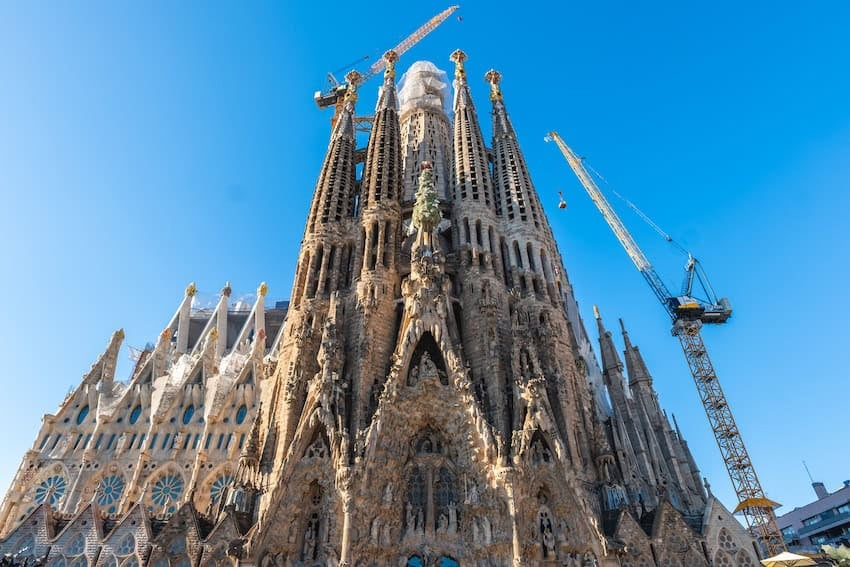
More than 140 years after construction began, Barcelona’s iconic Sagrada Familia is approaching its final phase — and Mexican artist Javier Marín could play a decisive role in bringing Antoni Gaudí’s unfinished vision to life.
Conceived by Gaudí as a monumental expression of faith, the basilica has long been described as a “Bible in stone,” blending architecture and sculpture to narrate Christian theology. It stands today as the most emblematic work of Catalan Modernism and is part of a UNESCO World Heritage listing that recognizes Gaudí’s inventive and highly expressive style.
Construction began in 1882, and the structure is defined by three monumental façades representing the life of Christ: Nativity, Passion and Glory. The last of these — the Glory Façade — remains incomplete and is considered the most ambitious and symbolically dense section of the entire project. Designed as the main entrance, it will depict humanity’s journey from sin to salvation, including scenes of the Last Judgment, hell and divine glory.
Unlike the earlier façades, this final stage presents a significant challenge. Gaudí left limited instructions before his death in 1926, requiring contemporary artists and architects to interpret his vision while integrating modern techniques and materials.
That task now includes Javier Marín, a 63-year-old artist from Uruapan, Michoacán. He is one of three artists invited to present proposals for the Glory Façade, alongside Spanish artists Miquel Barceló and Cristina Iglesias. A final decision is expected soon from the basilica’s governing board.
Marín has spent months immersed in Gaudí’s work and philosophy. He has expressed admiration for the architect’s ability to conceive a project of such scale while accepting that future generations would complete it using technologies not yet invented in his time.
Renowned for merging classical forms with contemporary techniques, Marín has produced monumental works exhibited across Mexico and internationally, including appearances at major European institutions and the Venice Biennale. His proposal for the Sagrada Familia reflects that same approach, combining traditional sculptural methods with tools such as artificial intelligence and robotics.
Meanwhile, another Mexican professional has already contributed to the basilica’s evolution. Architect Mauricio Cortés Sierra recently completed the cross atop the Tower of Jesus Christ, now the tallest point of the structure at 172.5 meters.
Together, these contributions underscore Mexico’s growing presence in the final chapter of one of the world’s most extraordinary architectural endeavors.
With reports from La Jornada, El Sol de México, La Crónica and Architectural Digest México y Latinoamérica, via México Desconocido.