
by Marvin Ramírez
During this sacred period of the Christian calendar, as the world enters Holy Week, millions of Latin Americans—both in their home countries and abroad—turn their attention to a tradition that is not only religious, but deeply cultural, emotional, and communal. It is a time that revives childhood memories, the voices of grandparents, the scent of incense, the ringing of church bells, and the solemn processions that move through towns and cities with unwavering devotion.
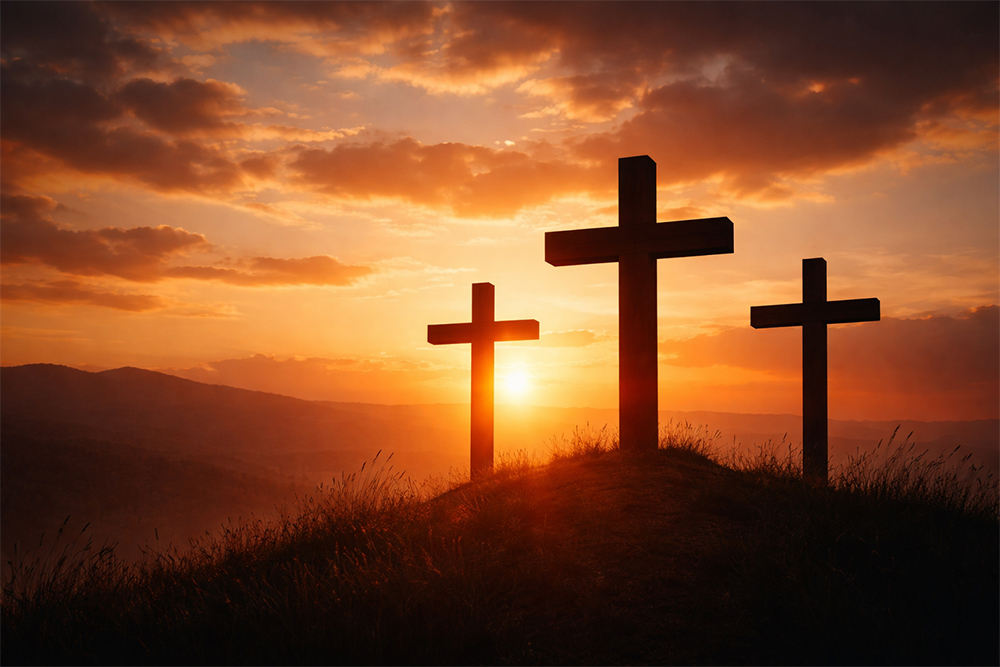
Across Central America, South America, and Mexico, Holy Week represents far more than a religious observance; it is a living expression of identity. Entire communities pause to commemorate the passion, death, and resurrection of Jesus Christ, a figure who embodies love, sacrifice, forgiveness, and hope. From the vibrant sawdust carpets of Guatemala to the solemn processions of Peru and Mexico, each region brings its own cultural expression to the tradition while preserving its spiritual essence.
For many believers, this week draws a clear distinction between faith and disbelief. Those who believe find in these days a reaffirmation of values that go beyond the material world—humility, compassion, and redemption. The story of the crucifixion is not merely a historical account; it is a narrative that is relived each year as a reminder of human suffering and the possibility of spiritual renewal.
Dramatic reenactments of the Passion of Christ, often portraying each moment of the Via Crucis, are not simply symbolic performances. In many towns, these representations are experienced with profound intensity, as though time itself has stood still. Participants take on their roles with deep devotion, and those who gather to witness do more than observe—they reflect, feel, and, in many cases, undergo a personal transformation.
Yet, the experience of Holy Week shifts when lived far from one’s homeland. In the United States, for example, while many communities strive to preserve these traditions, the multicultural environment and wide range of religious beliefs mean the celebration does not carry the same dominant presence it holds across Latin America. Here, faith coexists with diverse perspectives, which can soften that sense of unified spiritual identity so characteristic of many Latin American countries.
Even so, for immigrants, Holy Week remains a powerful emotional bridge. Many travel back to their hometowns or countries to reconnect with their roots, their families, and a way of living their faith that is difficult to replicate elsewhere. Others recreate these traditions within local communities, ensuring that what was learned in childhood continues to endure across generations.
Holy Week also highlights an important spiritual reality: the diversity of belief. While Catholicism has historically been the predominant faith in Latin America, numerous Christian denominations and other religious expressions have emerged over time. Despite these differences, there remains a shared point of connection—the figure of Jesus Christ and the message of hope embodied in the resurrection.
That hope is perhaps the central thread running through the entire week. In a world marked by conflict, uncertainty, and constant change, the story of the resurrection offers a promise of renewal. It reminds believers that even in the darkest moments, there is the possibility of a new beginning, a restoration of faith, and a path forward.
For El Reportero, this season is also an opportunity to recognize the cultural and spiritual richness of our community. It is a time to pause, reflect, and reconnect with what truly matters: family, friendship, and faith in its many forms. These traditions are not only about remembrance but about continuity—about passing down values and experiences that shape identity and belonging.
As Holy Week unfolds, we extend our heartfelt wishes to all who observe it. May this time bring unity, inner peace, and a renewed sense of purpose. Whether celebrated in a small village, a bustling city, or far from home, the essence remains the same. Beyond borders, languages, and differences, there are values that continue to bind us together as a community—faith, memory, and enduring hope.