by the El Reportero staff
SAN FRANCISCO — While sexual abuse allegations against César Chávez have triggered strong institutional reactions across the country, a closer look at social media comments reveals a more complex reality: a deeply divided community where support for accusers coexists with doubt, skepticism, and a strong defense of the farmworker leader’s historical legacy.
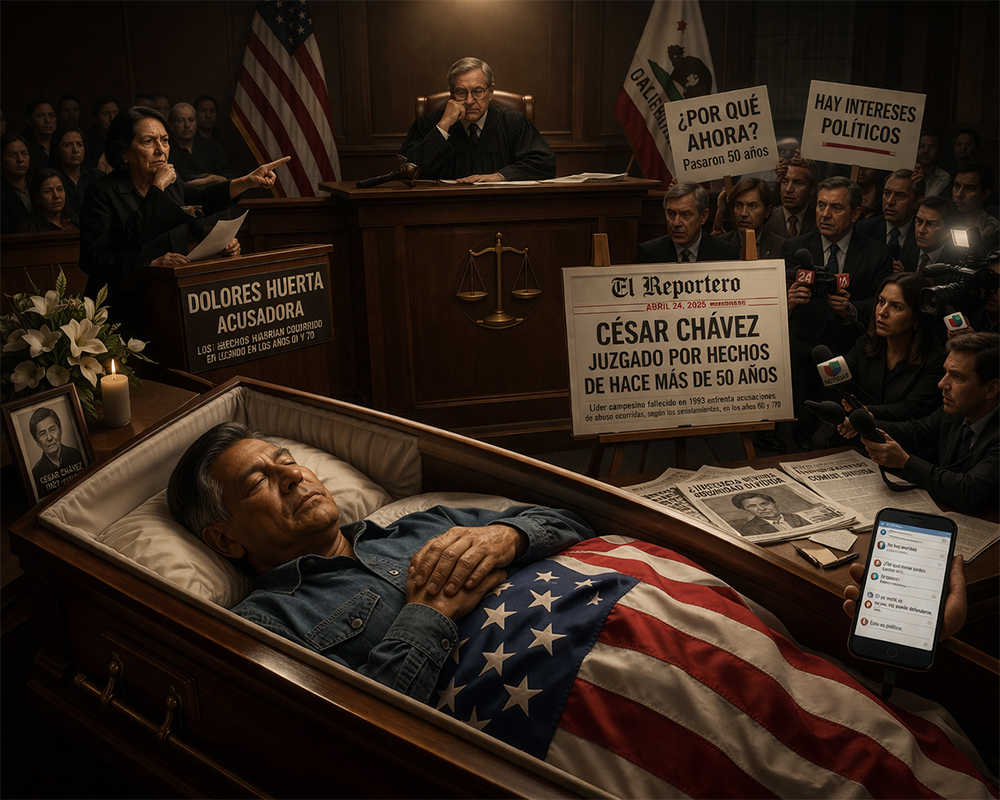
On platforms such as Facebook, particularly in posts shared within Latino circles, the comment sections show recurring patterns. Among the most common are questions about the timing of the allegations — “why now?” — as well as concerns about the lack of documentary evidence beyond testimony. Phrases such as “I don’t believe her” or “this seems political” appear frequently, reflecting a level of skepticism that contrasts with the response seen in major media and institutions.
At the same time, a significant portion of comments does not focus on examining the allegations themselves, but rather on defending Chávez’s legacy. “That man fought for us,” some users write, while others insist that his history should not be erased. For many, Chávez represents far more than an individual — he is a symbol of the farmworker struggle, the Chicano movement, and Latino identity in the United States.
The allegations, which also involve longtime activist Dolores Huerta, have been supported by investigative reporting that includes multiple testimonies. However, on social media, these elements are not always central to the conversation. Instead, emotional responses often dominate, with Chávez’s cultural significance weighing as heavily as — or more than — the claims against him.
Analysts note that such reactions are not unusual when widely respected historical figures come under scrutiny. In communities where leaders like Chávez have reached near-iconic status, allegations can be perceived as an attack not only on the individual but on the community itself. This can generate a defensive response that prioritizes protecting legacy over evaluating new information.
Cultural context also plays a role. For decades, both within the farmworker movement and in broader Latino communities, reporting abuse was often difficult due to stigma, fear of not being believed, or concern about harming collective causes. This background helps explain both the long silence surrounding some allegations and the resistance now seen in parts of the public reaction.
Meanwhile, at the institutional level, the impact has been immediate, including canceled events, reconsideration of public honors, and broader debates about Chávez’s legacy. The contrast between official responses and the tone of many social media comments highlights a significant gap between public discourse and the perceptions held within certain segments of the community.
Beyond confirming or rejecting specific narratives, social media comments are making one thing clear: the case has opened a broader conversation — not only about the allegations themselves, but about how a community grapples with the tension between its history, its symbols, and modern demands for accountability.