by the El Reportero staff
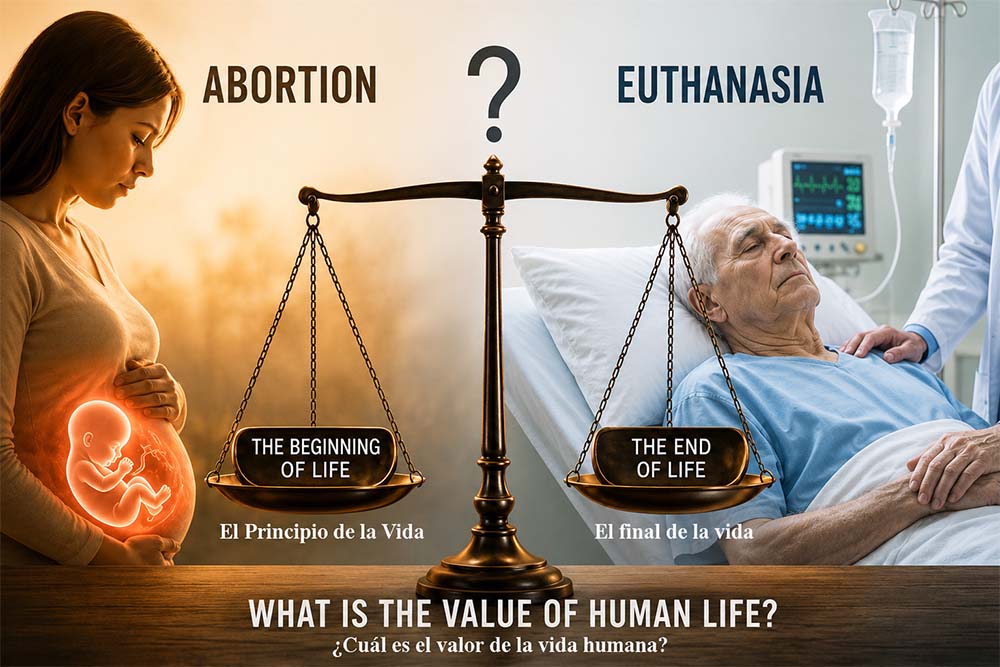
Abortion and euthanasia are often discussed as separate issues, but they share a common ethical question: How does a society define the value of human life?
Abortion concerns life at its earliest stage. Euthanasia, or physician-assisted death where it is legal, concerns life near its natural end. They occur at opposite points of the human journey, yet both ask whether human dignity depends on age, health, independence or personal circumstances.
Supporters of abortion frequently argue that a woman should have the right to make decisions about her own body and future. Supporters of euthanasia often contend that individuals facing unbearable suffering should have the right to choose the timing and manner of their death. While these arguments differ, both place a strong emphasis on personal autonomy.
Others see the issue differently. They argue that human dignity is inherent, not something that increases or decreases according to health, productivity or convenience. From this perspective, every life deserves protection, compassion and care, especially during its most vulnerable moments.
At the same time, many developed nations face a different challenge: rapidly declining birth rates. Countries across Europe, as well as Japan, South Korea and China, are experiencing aging populations and shrinking workforces. Governments that once worried about population growth are now encouraging families to have more children because fewer young people will eventually mean fewer workers, caregivers and taxpayers to support future generations.
These demographic realities raise legitimate questions. Can a society thrive if fewer children are born while a growing number of people view death as an acceptable solution to suffering? The answer is not simple, but it deserves thoughtful discussion.
Equally concerning is the mental health crisis affecting many young people. Rising levels of anxiety, depression and loneliness have been documented in numerous countries. The reasons are complex and cannot be reduced to a single cause. Social media, family instability, economic uncertainty, isolation and the search for identity all appear to play a role.
In our view, another factor deserves consideration: the gradual loss of shared moral and spiritual foundations. Many young people grow up searching for purpose in a culture that often celebrates achievement, consumption and personal success while offering little guidance about enduring meaning, responsibility or hope. Whether one approaches this question from a religious or secular perspective, human beings need reasons to persevere during difficult times.
This is why public policy should focus not only on individual choice but also on strengthening the conditions that make life worth living. Expanding access to quality mental health care, supporting stable families, improving palliative care for the seriously ill, encouraging community involvement and creating policies that make it easier to raise children are practical steps that affirm human dignity.
Respect for life should not end with birth, nor should compassion end when suffering begins. A truly humane society responds to pain by offering treatment, companionship and hope rather than isolation and despair.
Abortion and euthanasia will remain subjects of intense debate. People of good faith will continue to disagree. Yet one principle should unite us all: every human life possesses value that cannot be measured solely by convenience, productivity or suffering. If we lose sight of that truth, we risk not only demographic decline but also the moral foundation upon which every compassionate society ultimately depends.