by the El Reportero staff
More than 140 doctors, nurses and healthcare professionals in Yorkshire have spoken with remarkable courage. They are urging Members of Parliament to reject Britain’s new assisted-suicide bill, warning that it is simply “not safe for patients.”
Their warning should not be dismissed.
When those who spend their lives caring for the sick and dying tell lawmakers that a proposed law could endanger vulnerable people, society has a moral obligation to listen. These professionals are not speaking from political ideology but from years of witnessing suffering, fear, loneliness and hope at the bedside.
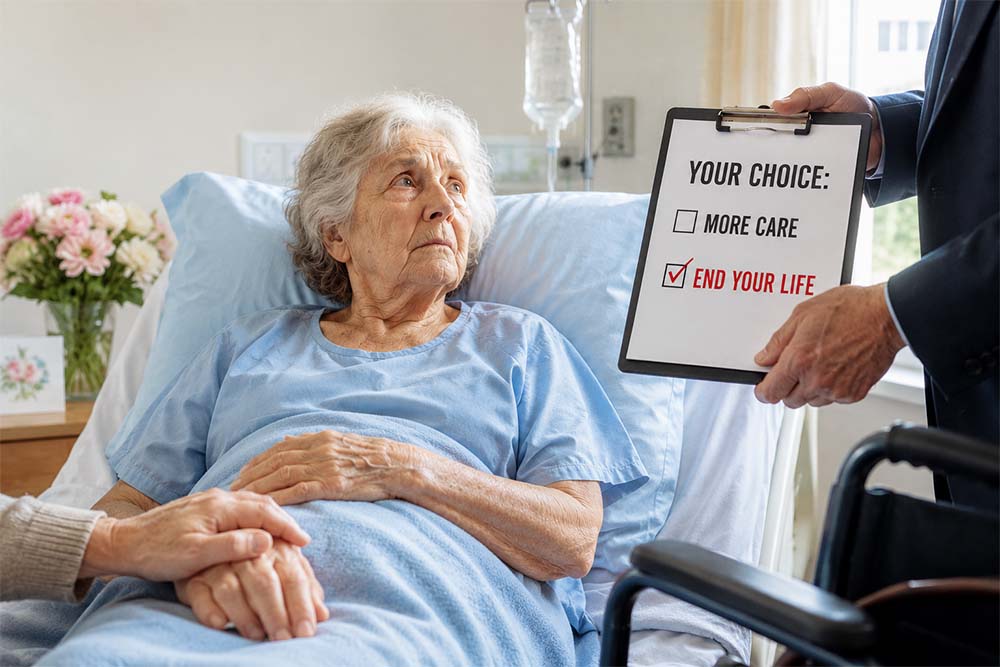
Their message is simple: fix end-of-life care before offering people death.
That is a position I find both reasonable and compassionate.
The debate over assisted suicide is often presented as one of individual freedom. We hear words such as “choice,” “dignity” and “autonomy.” Those are important values. But true freedom exists only when people have genuine alternatives. If a patient cannot obtain adequate pain management, hospice care, emotional support or family assistance, is choosing death really an expression of freedom—or a reflection of society’s failure?
Even Britain’s new Prime Minister, Andy Burnham, has acknowledged that palliative care and social care should be strengthened before the country moves toward legalizing assisted suicide. That alone should give legislators reason to pause.
What troubles me even more is the broader direction in which many Western societies appear to be moving.
For decades, influential organizations, governments and prominent public figures have openly discussed concerns about population growth, declining resources and the environmental impact of humanity. Population control has not been an imaginary topic; it has been debated internationally for generations. Birth-control campaigns, sterilization programs in some countries and family-planning initiatives have all been part of that history.
Because of that history, I cannot help but wonder whether today’s growing acceptance of assisted suicide reflects more than compassion alone. In my opinion, it risks becoming part of a cultural mindset that increasingly views human beings through the lens of economic cost, productivity and demographic management rather than their inherent dignity.
I am not suggesting that every supporter of assisted suicide holds such motives. Many sincerely wish to relieve suffering, and their compassion should be respected. But good intentions do not always produce good laws.
History repeatedly reminds us that societies often begin with narrow exceptions, only to gradually expand them. What starts as a limited option for the terminally ill can slowly extend to other groups once the moral boundary has shifted. That possibility deserves serious reflection before any nation changes the law.
The measure of a civilized society is not how efficiently it solves difficult problems but how faithfully it protects those who cannot protect themselves. The elderly, the disabled, the chronically ill and those struggling with depression or despair should never wonder whether society would rather help them live—or help them die.
The answer should always be life.
Instead of investing political energy in expanding access to assisted suicide, governments should guarantee universal access to high-quality palliative care, hospice services, mental-health support and family caregivers. A compassionate society should make every reasonable effort to relieve suffering without eliminating the sufferer.
The warning from these British healthcare professionals reaches far beyond the United Kingdom. It challenges every nation to ask a fundamental question: Will we respond to human suffering with greater care, or with a quicker path to death?
For me, the answer is clear. Compassion should always extend a healing hand—not an invitation to surrender life itself.
– With reports by Right to Life UK.