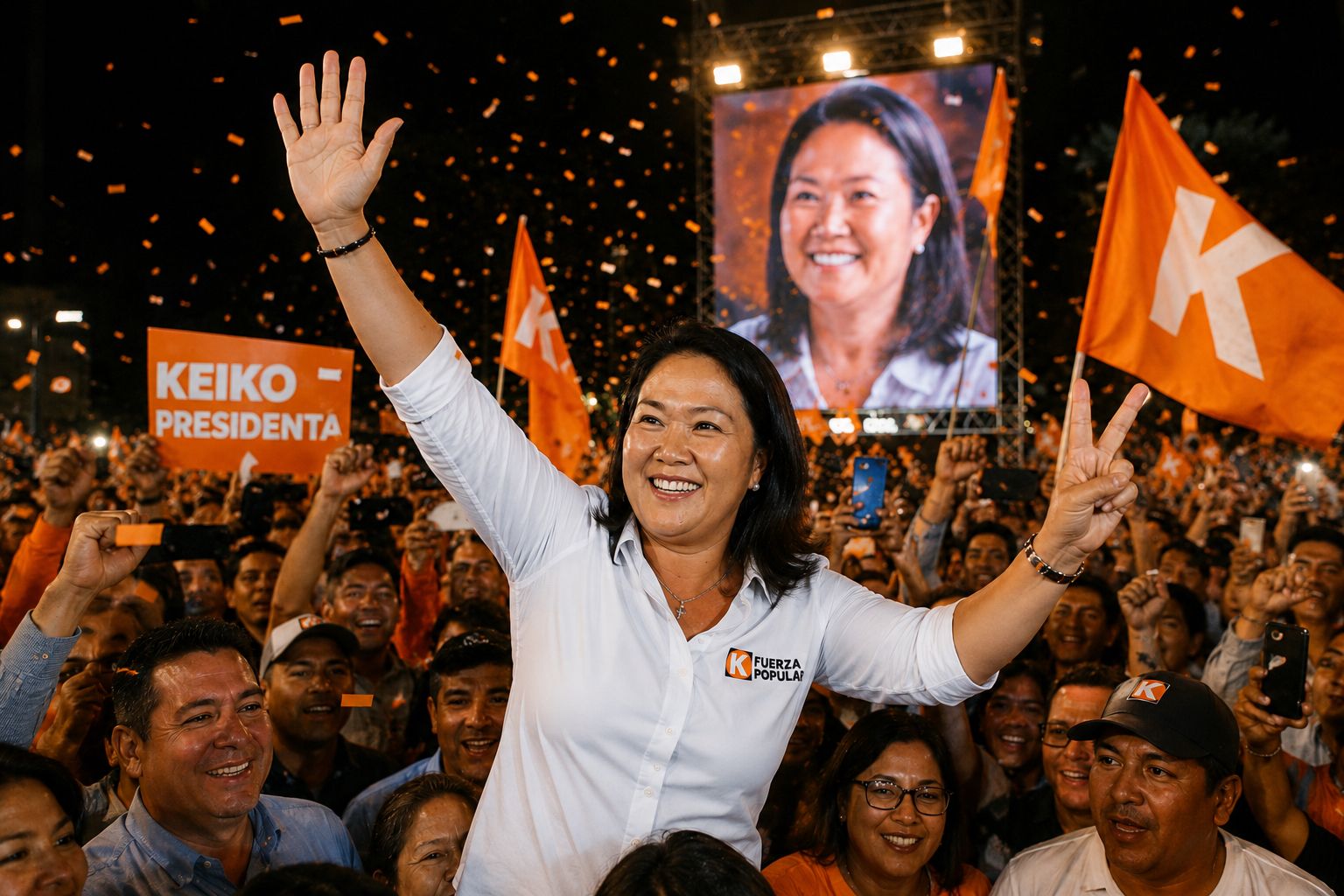
Peru’s official vote count ended June 29, giving Fujimori a razor-thin lead of fewer than 50,000 votes over Roberto Sánchez.
by the El Reportero staff
Peru brought nearly three weeks of electoral uncertainty to an end after the National Office of Electoral Processes (ONPE) completed the official count of the presidential runoff, confirming a narrow victory for Keiko Fujimori, leader of the Popular Force party.
According to the final results released by the electoral authority, Fujimori received 9,223,396 votes, or 50.135% of the valid ballots cast, while her opponent, Roberto Sánchez of Together for Peru, won 9,173,755 votes, or 49.865%. The margin was just 49,641 votes, making it one of the closest presidential races in Peru’s recent history.
Although ONPE has completed the official count, the formal declaration of the winner rests with the National Jury of Elections (JNE), which must finish the legal certification process before officially proclaiming the country’s next president. News reports indicate that the official proclamation could come during the first days of July.
Fujimori, daughter of former President Alberto Fujimori, is set to reach the presidency on her fourth attempt after losing elections in 2011, 2016 and 2021. Her victory would mark the return of Fujimorismo to the presidential palace more than two decades after her father’s political downfall.
The conservative candidate thanked her supporters and said she would assume office with “humility and responsibility.” During the campaign, she pledged to combat rising crime, strengthen the economy and restore stability to a country that has endured years of political turmoil.
Sánchez, however, has refused to concede the election. His campaign questioned part of the overseas vote and alleged voting irregularities, although it has not presented conclusive evidence of fraud. Overseas ballots proved decisive for Fujimori, who received strong support from Peruvians living abroad.
The new administration is scheduled to take office on July 28, Peru’s Independence Day, facing significant challenges. The country has experienced a succession of presidents over the past decade, along with social unrest, growing security concerns and declining public confidence in government institutions.
The razor-thin outcome underscores a deeply divided Peru, with many urban voters supporting Fujimori’s promises of security and economic stability, while Sánchez drew stronger backing in rural regions with proposals for political change and constitutional reform.
Sources: Reuters, Associated Press, Peru’s National Office of Electoral Processes (ONPE), and the National Jury of Elections (JNE).