
by Marvin Ramírez
As El Reportero marks its 36th anniversary, it is impossible not to reflect on a defining moment in its history — and in the history of community journalism in San Francisco.
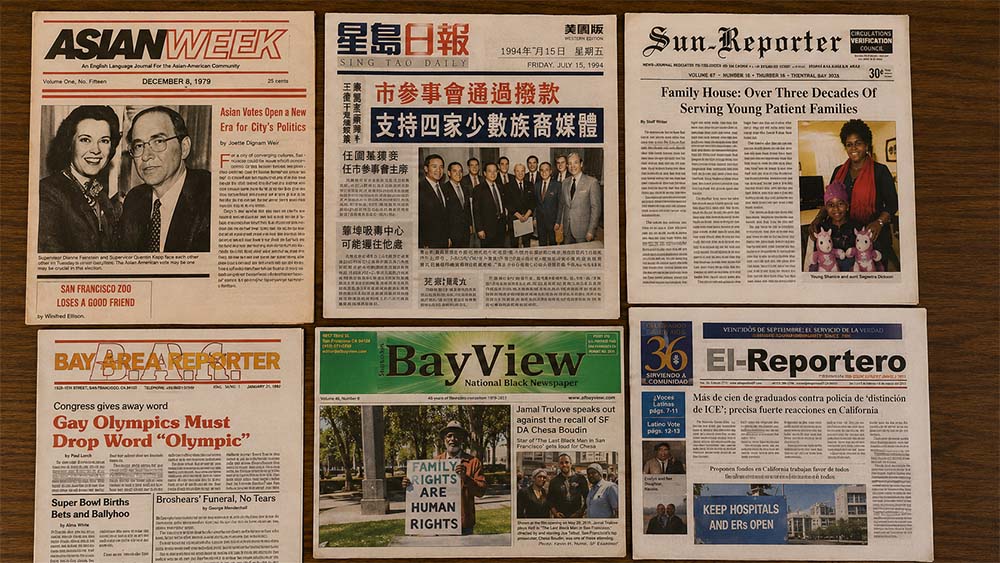
In 1994, what became known as San Francisco Proposition J was more than legislation. It was a mission. City leaders recognized that ethnic and community newspapers were not simply businesses; they were essential bridges between government and underserved communities. Proposition J mandated that a portion of the City’s official advertising budget be allocated to publications serving African American, Latino, Asian, and LGBTQ communities.
At the time, the Bay Area was home to a vibrant ecosystem of community newspapers. Many were weeklies, like El Reportero, printed locally in San Francisco, supported by multiple commercial printers and a steady pipeline of young journalists, interns, and contributors. Proposition J did not just provide advertising revenue; it provided stability, legitimacy, and growth. It allowed small publications to hire staff, expand coverage, and deepen their role as trusted voices within their communities.
El Reportero itself grew into a newsroom of more than a dozen contributors, many of them volunteers driven by a passion for storytelling and public service. Students, aspiring journalists, and seasoned writers alike found a platform in community media that mainstream outlets often overlooked.
Then came disruption.
The aftermath of the September 11 attacks brought economic shockwaves that devastated small businesses — the very advertisers who sustained local newspapers. Many closed their doors. Advertising declined sharply. Community publications struggled to survive.
Yet El Reportero endured.
Over the decades, it weathered economic downturns, the rise of the internet, and the transformation of the media landscape. Today, it stands as one of the last bilingual weekly newspapers serving the Latino community in the Bay Area — a testament to resilience, commitment, and the enduring need for culturally relevant journalism.
But now, the very mission that once sustained community media is at risk of being undermined — not by economic collapse, but by bureaucracy.
In the latest City contracting cycle, El Reportero was deemed “non-responsive” due to a submission arriving two minutes past the deadline — despite documented efforts to comply and a long-standing history of service. This technicality, while procedurally defensible, raises a fundamental question: is the City honoring the spirit of Proposition J, or merely its most rigid interpretation?
Proposition J was never intended to exclude community newspapers over minor procedural issues. Its purpose was to ensure inclusion — to guarantee that vital public information reaches communities that might otherwise be left out of civic discourse.
To deny participation based on a two-minute delay is to lose sight of that purpose.
The consequences extend beyond a single publication. The decline of community newspapers has already narrowed the channels through which local governments communicate with diverse populations. When these outlets disappear, so too does access — to public notices, health information, legal changes, and civic opportunities.
Contrary to common assumptions, print still matters. Official notices, including legal announcements, are required to be published in newspapers. A physical paper placed in a neighborhood café, grocery store, or community center reaches readers who may not seek out information online. It creates visibility, permanence, and trust.
Digital media has expanded access, but it has not replaced the role of trusted community publications.
If Proposition J is to remain meaningful, it must evolve without abandoning its core mission. The City should examine whether outdated requirements — such as rigid printing rules or overly complex application processes — are unintentionally excluding the very outlets the law was designed to support.
A process that requires dozens of pages of documentation for modest advertising contracts is not only inefficient; it is discouraging participation. Community publishers, often operating with limited resources, should not face barriers that undermine their ability to serve the public.
Flexibility is not a weakness. It is a recognition of reality.
San Francisco has long prided itself on diversity, inclusion, and equity. Upholding those values means ensuring that policies like Proposition J function as intended — not as gatekeeping mechanisms, but as bridges.
As the City’s Budget and Finance Committee prepares to consider this matter — and then forward it to the full Board of Supervisors for final approval — the decision before it is not simply procedural. It is philosophical.
Will San Francisco reaffirm its commitment to community media, or allow a technicality to erode a decades-old promise?
The answer will determine not only the future of one newspaper, but the strength of the connection between City Hall and the communities it serves.
El Reportero has carried that connection for 36 years.
It deserves more than a closed door.