by Marvin Ramírez
There is a question many Americans are beginning to ask: is the medical system in the United States serving patients, or has it become something else entirely?
For many, the answer comes not from politics, but from experience.
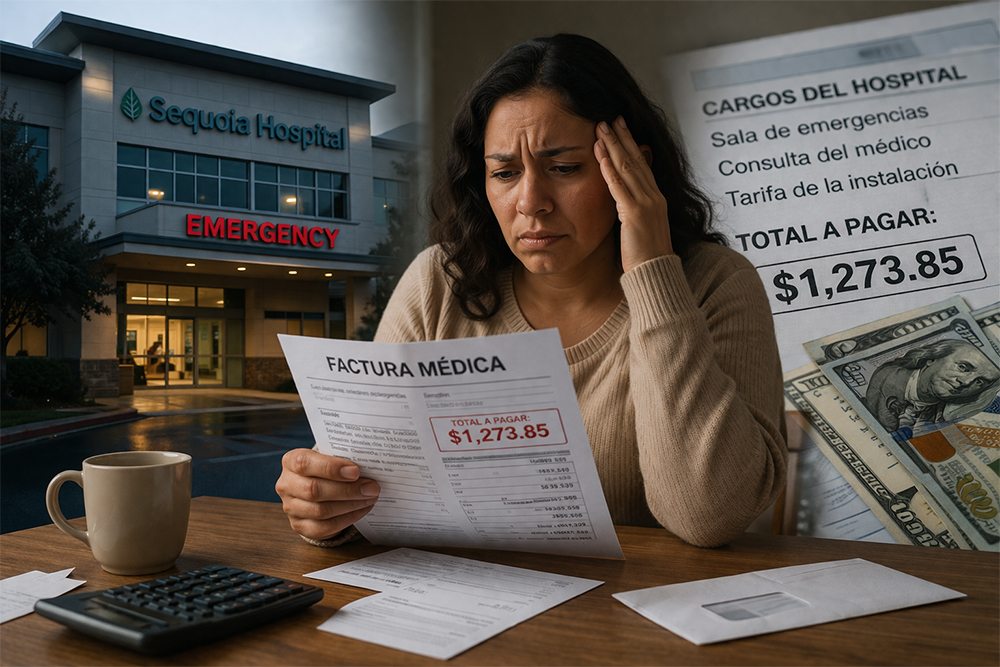
Consider a simple case. A person walks into Sequoia Hospital with a rash—uncomfortable, urgent, but not life-threatening. Within minutes, a nurse sees the patient, followed by a doctor who keeps his distance, offers a quick diagnosis, and writes a prescription. No tests. No physical examination. The prescription itself costs only a few dollars.
Weeks later, the bill arrives: more than $1,200.
That moment—when a minor visit produces a major charge—is where trust begins to erode.
The problem is not that doctors should not be paid. The problem is proportionality. When the service provided does not match the cost charged, patients begin to feel less like people and more like transactions.
And this is not an isolated experience.
Across the country, medical debt has become a defining feature of the healthcare system. Roughly 41 percent of working-age Americans struggle to pay medical bills. Illness itself has become a financial hazard.
The situation described in Colorado reflects this reality. Hundreds of thousands of residents have medical debt in collections. Some have had wages garnished. Others have faced liens on their homes. One woman, despite having insurance, accumulated thousands in debt after her child needed emergency surgery. When she couldn’t pay, her wages were seized, pushing her toward eviction and long-term loans.
This is not simply a billing issue. It is a structural problem.
Medical debt does not behave like other forms of debt. People do not choose to get sick. They are not given clear pricing before treatment. Yet once the bill arrives, the system treats them as if they made a consumer choice.
Experts argue this framing is flawed. Medical debt is often the result of hidden pricing, billing errors, and a system that prioritizes revenue over clarity. Studies suggest that many bills contain errors, and that some debts should have been covered under assistance programs.
This leads to a deeper concern: enforcement.
Hospitals and collection agencies rely on legal mechanisms to recover payments. Courts issue judgments. Wages are garnished. Property liens are imposed. What begins as a medical issue becomes a long-term financial burden.
The consequences extend beyond finances. People with medical debt are more likely to delay or avoid care. The system, intended to promote health, begins to undermine it.
This is where public policy enters the conversation.
A proposal in Colorado aims to prevent the most severe outcomes—protecting wages, limiting asset seizure, and prohibiting liens on primary homes. The principle is simple: no one should lose their house because they got sick.
That idea resonates far beyond one state.
There is growing support for reforms that would shield patients from aggressive collection practices and improve transparency. Some argue these changes should be national.
Yet reform is complicated. Hospitals argue they operate on tight margins and provide large amounts of uncompensated care. These concerns are real.
But they do not negate the core issue.
A system that allows minor medical visits to generate major financial consequences is not balanced.
The frustration many patients feel is not just about cost—it is about fairness. When a brief consultation results in a four-figure bill and accountability seems absent, the system begins to appear less like healthcare and more like a financial machine.
Some point to incentive structures tied to programs like Medicare. Whether or not one agrees, the perception reflects a loss of confidence.
Healthcare depends on trust—trust that providers act in the patient’s best interest and that charges are reasonable.
Rebuilding that trust will require transparency, accountability, and limits on aggressive debt collection.
At its core, the question is simple: is the system fair?
For millions of Americans, the answer is increasingly no.