Monday, October 12, 2026
spot_img
Home Blog Page 3

Supervisors Fielder, Melgar to join tenants at Mission rally over rents and evictions

Las supervisoras Jackie Fielder y Myrna Melgar acompañarán a defensores de inquilinos en manifestación del lunes. Supervisors Jackie Fielder and Myrna Melgar will join tenant advocates at Monday’s Mission District rally.

by the El Reportero staff

San Francisco Supervisors Jackie Fielder and Myrna Melgar will join tenant advocates and residents Monday at a Mission District rally calling for measures aimed at addressing rising rents, evictions and displacement in the city.

The San Francisco Anti-Displacement Coalition is organizing the Oct. 5 rally in collaboration with Fielder and Melgar. The event is scheduled from noon to 1 p.m. at 907 Valencia Street. Senior and Disability Action, a member of the coalition, has also announced the rally. Senior and Disability Action

Organizers are describing the event as a call for “tenant-led solutions” to what they characterize as a rent and eviction emergency. They cite increasing rents, building neglect and real estate speculation among pressures they say are displacing longtime residents, including families, artists, teachers and seniors.

Fielder and Melgar are expected to discuss legislative proposals intended to provide additional protections and assistance to renters. The supervisors’ participation comes as housing affordability and displacement continue to be major issues before the Board of Supervisors.

Molly Goldberg of the San Francisco Anti-Displacement Coalition is also scheduled to speak. Goldberg has been involved in the coalition’s tenant organizing efforts, including campaigns involving residents facing eviction and displacement. KALW

Other scheduled speakers include Russell Lewis of the 907 Valencia Tenant Association, Jasmine Ashley of the 1029 Geary Tenant Association, Kin Wong of the 1120 Jackson Tenant Association and Khaled Zaggei.

The 1120 Jackson tenants have previously organized against eviction notices affecting residents of the Chinatown building, including elderly tenants who had lived there for decades. The tenant association and its supporters held a rally there in June. San Francisco Arts and Dance Center

The Anti-Displacement Coalition brings together tenant and housing organizations that advocate for renters and policies intended to prevent displacement. Its member organizations include groups providing tenant counseling, legal assistance and community organizing. The Housing Rights Committee of SF

Monday’s rally is expected to focus both on legislation being advanced at City Hall and on broader organizing by tenant associations seeking stronger protections against eviction and displacement.

– Sources: San Francisco Anti-Displacement Coalition media advisory, Senior and Disability Action, San Francisco Anti-Displacement Coalition, Housing Rights Committee of San Francisco.


spot_img

Community Calendar — October 2, 2026

ayonics se presenta durante una edición anterior de Valencia LIVE! en el Distrito de la Misión de San Francisco. Imagen tomada de video. Bayonics performs during a previous Valencia LIVE! celebration in San Francisco’s Mission District. Video frame

by the El Reportero staff

October brings music, film, neighborhood celebrations and community activities throughout the Bay Area. From a Mission District street celebration and a benefit concert in San Francisco to independent cinema in Santa Cruz and a major Daly City festival, residents have plenty of opportunities to get out and enjoy the region.

Valencia LIVE! returns to the Mission

Music, dancing and neighborhood activities fill Valencia Street

Valencia LIVE! returns with an evening street celebration featuring live music, salsa lessons, DJs, shopping, outdoor dining and family activities. Performers include Carnaval SF, Sambaxe Dance, Chavalos Danzas Nicaragua and Los Kimberos. A clothing swap, silent disco and other activities are also planned along the corridor.

Thursday, Oct. 8, 5–10 p.m., Valencia Street between 18th and 21st streets, San Francisco.

SERENADE raises funds through music

Breast Cancer Awareness benefit brings performers together

Dee’s Keys joins SERENADE: Unity in Song for a special Breast Cancer Awareness Month open mic benefiting Shanti Project. Pianist Dr. Dee Spencer will accompany an evening welcoming singers and instrumentalists to perform while helping support the community. Admission is free. Imperial Council of San Francisco

Thursday, Oct. 15, 5–8 p.m., Beaux, 2344 Market St., San Francisco.

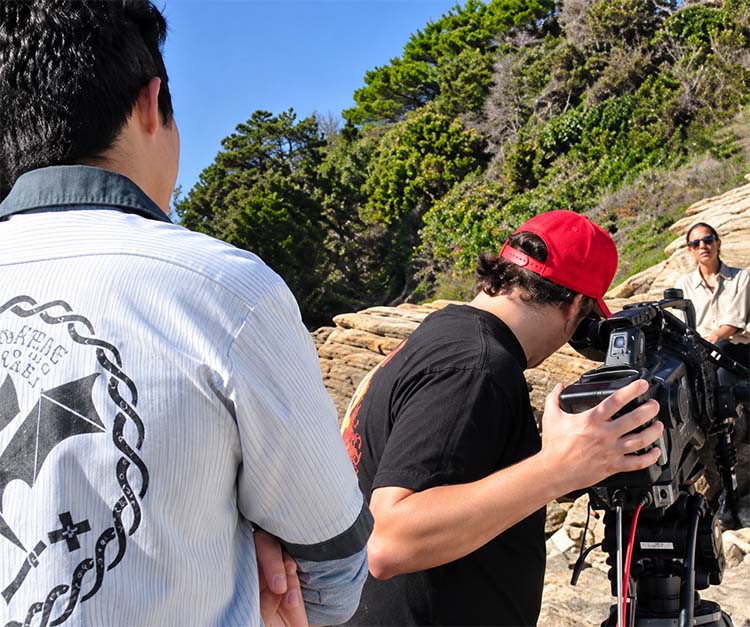
Los cineastas trabajan entre bastidores durante una producción presentada por el Festival de Cine de Santa Cruz. Filmmakers work behind the scenes during a production featured by the Santa Cruz Film Festival. Courtesy SCFF

Santa Cruz Film Festival returns

Five days celebrate independent cinema and filmmakers

The 26th annual Santa Cruz Film Festival brings five days of independent films, filmmaker conversations and special events to venues throughout Santa Cruz. This year’s program includes narrative features, documentaries and shorts, along with gatherings bringing audiences and filmmakers together. Santa Cruz Film Festival

Wednesday through Sunday, Oct. 14–18, at several Santa Cruz venues.

Top of the Hill celebrates Daly City

Music, culture and community take over Mission Street

Daly City’s third annual Top of the Hill Festival returns with live performances, food, community organizations, family activities and a car show. Scheduled performers include J Boog, The Stylistics, Digital Underground and Kamaiyah. The free, all-ages street festival celebrates the businesses and cultures of the Top of the Hill neighborhood. Daly City

Saturday, Oct. 17, noon–6 p.m., Mission Street and John Daly Boulevard, Daly City. Free.

The Green Between welcomes volunteers

Portola neighbors come together to care for community garden

The Green Between invites residents to help plant, weed, mulch and maintain the Portola neighborhood’s community green space. Volunteers of all experience levels are welcome to participate while meeting neighbors and helping keep the garden accessible and beautiful.

First Saturday of every month, 10 a.m.–1 p.m., Green Between gates on Burrows Street at San Bruno Avenue, San Francisco.


spot_img

Nicaraguan boxer Jordan “La Cobra” Orozco remains unbeaten with 18th knockout

El boxeador nicaragüense Jordan “La Cobra” Orozco celebra en Orlando su victoria y nocaut número 18. Nicaraguan boxer Jordan “La Cobra” Orozco celebrates his 18th professional victory and knockout in Orlando.

by the El Reportero staff

Nicaraguan bantamweight Jordan “La Cobra” Orozco kept his perfect professional record intact Friday night, stopping Cuban fighter Yusniel Abrahante in the sixth round at the Caribe Royale Orlando in Florida.

The Oct. 2 victory improved Orozco’s record to an impressive 18-0, with all 18 victories coming by knockout. The victory was particularly memorable because it came on Orozco’s 22nd birthday. He also retained his WBA Continental Gold bantamweight title.

But the victory did not come easily.

Abrahante, who entered the bout with an 8-2 record, controlled much of the first half of the scheduled 10-round fight. The Cuban used his speed, precision and technique effectively, forcing Orozco to miss with several power shots and clearly taking the first five rounds.

Everything changed in the sixth.

Orozco increased the pressure and began landing powerful shots to the body, particularly left hooks. He eventually trapped Abrahante against the ropes and unleashed a sustained combination. With the Cuban unable to respond effectively, referee Luis Pabón intervened and stopped the fight.

The victory continued an extraordinary knockout streak for Orozco, whose professional career began in 2023. The young Nicaraguan remains undefeated and has yet to hear the final bell as a professional.

His team has indicated that the goal is for Orozco to fight twice more before pursuing a world championship opportunity in 2027.

In other boxing news:

Arturo “Lobito” Torres, Mexican boxer.

Mexican boxer Arturo “Lobito” Torres dies at 26

Mexican boxing is mourning the death of Arturo “Lobito” Torres, who died Sept. 25 at age 26, six days after his final fight in Mexicali, Baja California.

Torres faced Gilberto “Torito” García on Sept. 19 at Parque Vicente Guerrero. His corner threw in the towel during the seventh round as the referee intervened to stop the fight. Moments later, Torres collapsed in the ring.

He was rushed to Mexicali General Hospital, where doctors diagnosed a blood clot in his brain and performed emergency surgery. Torres remained in a medically induced coma but did not recover.

His death prompted condolences and tributes from Mexico’s boxing community. Torres ended his professional career with 15 victories, six losses and three draws. N+

– Sources: La Prensa of Nicaragua, Canal 4 Nicaragua, Nueva Ya, N+, Los Angeles Times and Fight News. laprensani.com

spot_img

Community Calendar — September 25, 2026

Un grupo de salsa no identificado se presenta en el Top of the Hill Festival de Daly City. An unidentified salsa group performs at Daly City’s Top of the Hill Festival. Courtesy of The San Francisco Peninsula

by the El Reportero staff

As September gives way to October, the Bay Area calendar continues with music, dance, community gatherings and cultural celebrations. From a free Latin festival in Berkeley to gardening in San Francisco and one of Daly City’s largest community events, the coming weeks offer activities for families and residents throughout the region.

Viva Fall Fest celebrates Latin culture

Music, salsa and folklórico fill Berkeley’s Fourth Street

Viva Fall Fest brings an afternoon of live Latin music, food, local artisans, small businesses and family activities to Fourth Street Makers Row. Visitors can enjoy salsa dancing from 2–3 p.m., followed by folklórico performances beginning at 3:30 p.m. The free celebration welcomes all ages and is also dog-friendly.

Saturday, Sept. 26, 1–5 p.m., Fourth Street Makers Row, 1919 Fourth St., Berkeley. Free.

La jardinería comunitaria reúne a vecinos alrededor de plantas, aprendizaje y tradiciones compartidas. Community gardening brings neighbors together around plants, learning and shared traditions. AI-generated illustration for El Reportero / OpenAI

Jardín Secreto grows community in San Francisco

Neighbors gather around plants, music and family activities

Jardín Secreto brings Mission District neighbors together through gardening, culture and community participation. Activities have included planting herbs and other plants that participants can take home, music, salsa, children’s reading and information about community resources. The gathering reflects an effort to make gardening and plant knowledge accessible to local families.

Saturdays, 1–4 p.m., 2710A Harrison St., San Francisco. Free.

BAWS Resource Fair comes to Oakland

Community organizations provide information and services

The BAWS Resource Fair brings organizations and community resources together for an afternoon of information and services geared toward sex workers. Attendees can connect with participating organizations and learn about available resources in the East Bay.

Saturday, Oct. 3, 1–5 p.m., 1255 7th St., Oakland.

Top of the Hill returns to Daly City

Music, culture and entertainment take over Mission Street

Daly City’s third annual Top of the Hill Festival returns with live music, cultural performances, food vendors and trucks, artisans, small businesses and family activities. The celebration also features community and nonprofit organizations, a sensory space and car show. Scheduled performers include J Boog, The Stylistics, Digital Underground, Kamaiyah, Good Time Collective and The Best Intentions.

Saturday, Oct. 17, noon–6 p.m., Mission Street at John Daly Boulevard, Daly City. Free and open to all ages.

The Eternal Song screens in Berkeley

Native Voices Film Series concludes with filmmakers

The Native Voices Film Series concludes with The Eternal Song, exploring Indigenous cultures, connections to land, cultural loss and intergenerational trauma. Filmmakers Zaya and Maurizio Benazzo will participate in a conversation following the screening.

Monday, Oct. 26, 7–10 p.m., David Brower Center, 2150 Allston Way, Berkeley.

spot_img

PG&E Corporation Foundation and California Fire Foundation award $1 million in Wildfire Safety Grants

75 grants support local wildfire prevention, preparedness, and emergency response initiatives

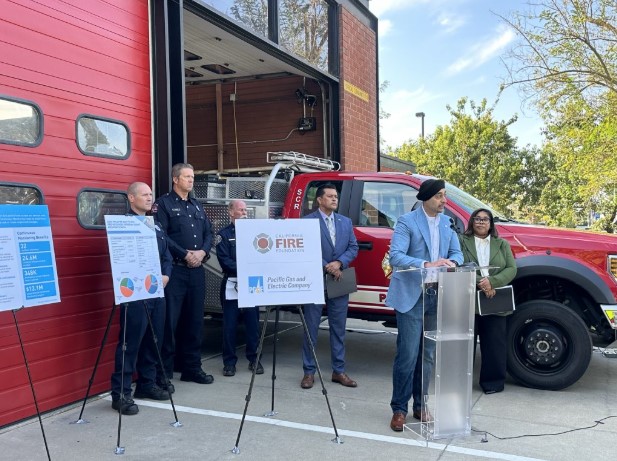
SACRAMENTO, California — With wildfire season a year-round reality in California, sustained prevention and preparedness efforts remain essential for communities across the state. To strengthen these ongoing preparedness initiatives, the California Fire Foundation (CFF), with support from The PG&E Corporation Foundation (PG&E Foundation), has awarded $1 million in wildfire safety grants to 75 fire departments, fire service agencies, and local non-profit organizations in Northern and Central California.

This marks the ninth year that the CFF and the PG&E Foundation have collaborated to award grants helping communities bolster their disaster preparedness and response programs. This year, the PG&E Foundation committed an additional $50,000 to expand the grant program and provide more funding to communities.

The CFF reviewed more than 200 applications during a one-month application period and distributed the annual wildfire safety grants to agencies in high-fire-risk areas. The grants are awarded during National Preparedness Month, observed every September to raise awareness about disaster and emergency preparedness.

The grants will be used to purchase personal protective equipment and specialized gear for firefighters, carry out defensible space and vegetation management work, reduce fuel loads and hazards, and conduct public education and outreach activities regarding fire safety. View the list of grant recipients.

The PG&E Foundation and Pacific Gas and Electric Company (PG&E) are supporting the CFF’s broader Wildfire Safety and Preparedness Program (WSPP) through 2026 with $1.8 million in charitable contributions. Wildfire safety grants account for $1 million of the total charitable funding provided. The program aims to raise awareness about wildfire safety across California and bring resources to underserved communities in high-fire-risk areas. Grants to local organizations are a core component of the WSPP; the funding also supports the CFF’s multilingual public safety education and outreach multimedia campaign.

“California firefighters and local agencies work every day to protect lives, homes, and communities from a wildfire threat that no longer follows a traditional season,” said Darrell Roberts, President of the California Fire Foundation. “We commend these dedicated recipients for their ongoing preparedness and service, especially as warmer-than-normal conditions reinforce the need for statewide vigilance. For nearly a decade, our partnership with the PG&E Foundation has helped local agencies acquire essential equipment, reduce hazardous vegetation, strengthen public education, and better prepare the communities they serve.”

Since 2018, 505 recipients—including fire departments and fire service agencies across the state—have received $6.5 million in direct funding through the WSPP grant program, with the program receiving more applications each year than the last. Funding is directed toward specific communities identified by the California Public Utilities Commission as being at extreme or elevated fire risk on its High Fire-Threat District map. PG&E and the PG&E Foundation have contributed a total of $12.25 million to promote fire safety through the WSPP since the partnership began, with more than half of those funds supporting community grants. This charitable contribution is funded by shareholders, not by PG&E customers.

“Safety and our customers are at the heart of our partnership with the California Fire Foundation,” said Sumeet Singh, Executive Vice President of Operations and Chief Operating Officer at Pacific Gas and Electric Company. “Behind every grant lies the ability to better protect families, support firefighters, and strengthen preparedness and response when it matters most. Disasters do not stop at city or county lines, and neither does our shared commitment. Together, we are deepening local partnerships and building a stronger network dedicated to protecting the families, neighborhoods, and communities we have the privilege to serve.”

The WSPP focuses on two key areas to help keep communities safe:

  • A wildfire safety campaign featuring fire safety education developed by the CFF—available in English, Spanish, Chinese, Vietnamese, and Hmong—to encourage early evacuation during fires. The WSPP has worked diligently to overcome language barriers by developing and distributing fire safety messages in multiple languages. The campaign includes advertising across radio, television, and digital media, as well as billboards in areas at high risk of fire.
  • A grant program administered by the CFF through an application process. The CFF awards grants to fire departments, agencies, and community groups to support projects and programs focused on wildfire and disaster prevention and preparedness, as well as assistance with response, recovery, or both.

How WSPP helps communities
This year’s grant funding supports projects benefiting 4.2 million residents across 36 counties and includes:

  • More than 2,000 units of personal protective equipment, such as helmets, boots, gloves, safety goggles, and fire shelters.
  • More than 600 units of specialized equipment, including water storage tanks, portable radios, headlamps, hoses, clamps, nozzles, chainsaws, and gear packs
  • Fuel reduction/vegetation management:
  • Removal of hazardous trees and brush across several hectares, including over 80 acres of vegetation thinning
  • Hundreds of thousands of pounds of tree limbs, branches, and other combustible materials chipped and removed
  • Hundreds of prescribed burns or pile burns
  • Multiple community safety projects supporting firebreaks or shaded fuel breaks, as well as ingress and egress routes

The CFF’s “Firefighters on Your Side” program, also supported by PG&E, provides multilingual and culturally relevant fire safety messaging—in both digital and print formats—to help the public stay safe.

About The PG&E Corporation Foundation
The PG&E Corporation Foundation is an independent 501(c)(3) nonprofit organization, separate from PG&E and sponsored by PG&E Corporation.

About PG&E
Pacific Gas and Electric Company, a subsidiary of PG&E Corporation (NYSE: PCG), is a combined natural gas and electric utility serving more than 16 million people across 70,000 square miles of Northern and Central California. For more information, visit pge.com and pge.com/news.

spot_img

‘Malinche’ musical sparks debate over Mexico’s colonial history

Estrenada inicialmente en España, “Malinche” se trasladó posteriormente a México, donde sigue atrayendo a numeroso público a pesar de su controvertida representación de la historia de México.First staged in Spain, “Malinche” has since moved on to Mexico, where it continues to draw crowds despite its controversial depiction of Mexican history. (CDMX Secreta)

by Millie Deere

Nacho Cano’s musical Malinche has returned to Mexico City for its second season, attracting large audiences while reigniting controversy over its portrayal of the Spanish conquest and the Indigenous woman at the center of its story.

The production, which reopened Aug. 15 at El Frontón theater, features more than 80 performers combining flamenco, hip-hop and contemporary dance. After a successful run in Madrid, the musical premiered in Mexico in March 2025.

Its central character, Malintzin, also known as Doña Marina or Malinche, was an Indigenous woman who served as interpreter for Spanish conquistador Hernán Cortés. Their relationship produced a son, making her an important historical figure in discussions about Mexico’s mixed Indigenous and European heritage.

However, her legacy remains disputed. Traditional nationalist interpretations have portrayed Malinche as a traitor who assisted the Spanish conquest. Feminist and postcolonial scholars instead emphasize her enslavement, limited autonomy and struggle for survival.

Cano presents a different interpretation, portraying Malinche and Cortés through a romantic narrative that celebrates the emergence of Mexico’s mixed cultural identity. Critics argue this approach minimizes the violence, exploitation and suffering experienced by Indigenous populations during colonization.

The controversy extends beyond the stage.

Cano, formerly a member of the successful Spanish pop group Mecano, maintains close ties with Isabel Díaz Ayuso, the conservative president of Madrid’s regional government. Both have defended aspects of Spain’s historical legacy in the Americas.

Mexican President Claudia Sheinbaum has challenged interpretations portraying the conquest as a civilizing mission, reflecting longstanding disagreements between Mexico and Spain over colonial history.

The musical also enjoys substantial corporate support. Mexican businessman Ricardo Salinas Pliego helped bring the production to Mexico, while his wife, María Laura Medina de Salinas, served as executive producer. Banco Azteca, part of the family’s business conglomerate, sponsors the show.

Historian Juan Miguel Zunzunegui, who challenges negative interpretations of Spanish colonial history, also participates in the production.

Opposition comes from different ideological directions. Some left-wing critics accuse the musical of romanticizing colonial domination and overlooking Indigenous suffering. Certain conservative commentators, meanwhile, argue that it insufficiently celebrates Spain’s historical and religious contributions.

Beyond its elaborate choreography and commercial success, Malinche raises enduring questions about historical memory, cultural identity and who determines how Mexico’s colonial past is represented.

With performances scheduled through January 2027, the musical continues attracting audiences while generating debate over whether its romantic interpretation adequately acknowledges the complexities of conquest. Mexico Desconocido.

– This article was edited and condensed for space.

spot_img

Mexico joins California in restricting cellphones in schools

Estudiantes interactuando en el aula o durante el almuerzo sin teléfonos. Students interacting in the classroom or during lunch without phones.

by the El Reportero staff

Mexico is preparing to restrict cellphone and tablet use in primary and secondary schools nationwide beginning in late October, joining California in a growing effort to reduce digital distractions in classrooms and encourage students to focus more on learning and face-to-face interaction.

Mexican Education Minister Mario Delgado announced Sept. 21 that federal and state education authorities had reached an agreement to restrict the devices. The measure, pending final approval by President Claudia Sheinbaum, is expected to take effect 30 days after it is formally issued, placing implementation around the end of October.

The announcement follows a survey of more than half a million Mexican teachers in which 81 percent supported guidelines and rules for the safe educational use of electronic devices, according to Mexico News Daily.

Delgado said the measure is intended to protect children’s mental health and learning while strengthening attention, human contact and community. At the high-school level, individual institutions will determine limitations allowing responsible educational use.

California students are already experiencing similar restrictions.

Gov. Gavin Newsom signed the Phone-Free School Act in September 2024, requiring every school district, charter school and county office of education to adopt a policy limiting or prohibiting smartphone use by July 1, 2026.

That means students returning to California classrooms in August entered the first school year following the statewide deadline, although the rules are not identical at every school. The law gives local education agencies flexibility in designing their policies.

In San Francisco, district policy allows students to possess cellphones but requires mobile devices to be turned off and put away during instructional time, including passing periods. Exceptions are permitted for emergencies, teacher-authorized educational use, medical needs and requirements contained in a student’s individualized education program.

Some San Francisco schools have gone further.

Herbert Hoover Middle School requires phones, smart watches and Bluetooth headphones to remain off and out of sight from the beginning of the school day until dismissal. Mission High School describes its classrooms as “cell phone free zones,” while ER Taylor Elementary requires phones to remain turned off in backpacks or be given to teachers for safekeeping.

Experience at San Francisco schools that adopted stricter policies before California’s statewide deadline provides an early look at how students respond.

At Thurgood Marshall Academic High School, students initially resisted having their phones unavailable throughout the school day. But students and teachers later reported changes in the school environment, including more face-to-face conversations, greater productivity during free periods and more interaction during lunch and breaks.

One student told the San Francisco Standard that without his phone he began looking up and seeing his friends instead of looking down at a screen. Teachers also reported spending less classroom time policing cellphone use.

Not every reaction has been positive. Some students have expressed concern that phones provide a sense of security, particularly during emergencies. Others say phones can serve as a social lifeline for students who have difficulty interacting with classmates.

Those concerns are reflected in California law, which preserves students’ ability to use devices during emergencies or perceived threats of danger and for specified health and educational needs.

The debate also extends beyond whether students are simply paying attention in class. Supporters argue that reducing cellphone access can encourage young people to talk, socialize and participate in school activities rather than spend breaks scrolling through social media.

The experience is still evolving. Even within San Francisco, enforcement varies by school, and individual campuses can establish rules stricter than the districtwide standard.

Mexico will soon begin its own nationwide experiment. Its approach differs from California’s decentralized system, but both policies reflect the same increasingly urgent question confronting educators and families: how much access to smartphones should children have during the school day?

For students in California, that debate has already moved from legislation into the classroom. For millions of Mexican students, the same transition is expected to begin in late October.

– This article includes reporting from Mexico News Daily, the California Governor’s Office, SFUSD and local Bay Area news sources.

spot_img

When surveillance becomes the norm

Funcionarios de Hood County desactivan cámaras Flock tras cancelar el contrato de vigilancia.Hood County officials disable Flock cameras after terminating the county’s surveillance contract.
Marvin Ramírez, editor

by Marvin Ramírez

Last week, El Reportero warned that the controversy surrounding Flock cameras is about something much larger than catching stolen cars or locating criminal suspects. The fundamental issue is the indiscriminate collection of information about ordinary people who are suspected of no crime.

“Since then, several developments have made that concern even more urgent.”

On Wednesday, the San Francisco Democratic Party considered two competing resolutions involving Flock. Former Supervisor Gordon Mar proposed stronger safeguards and consideration of suspending the city’s contract. A competing resolution by committee chair Nancy Tung and Supervisor Matt Dorsey affirmed support for the city’s continued use of the cameras. It passed 11-3, with four abstentions

In effect, the party voted to continue supporting a surveillance system intended to help police find stolen vehicles and people connected to crimes — but one that, in the process, records information about countless other vehicles belonging to people suspected of absolutely nothing.

To search for the few, the government watches the many.

That is the larger problem.

In Hood County, Texas, officials terminated their Flock agreement, and Constable John D. Shirley personally unplugged and covered the county’s three cameras after commissioners authorized their shutdown, saying the devices indiscriminately recorded ordinary people.

The scale of the network may be even larger than previously understood. A new map published by cybersecurity researcher Joshua Michael, using location coordinates he says came from Flock’s own database, identifies more than 170,000 cameras and more than 130,000 additional devices connected to the company’s nationwide surveillance infrastructure. Flock is now seeking to have the map removed from the internet, according to The Intercept.

While San Francisco was debating Flock, the controversy reached Washington.

The U.S. Senate Judiciary Subcommittee on Crime and Counterterrorism held a hearing Wednesday titled “Always Watching: Flock’s Nationwide AI Surveillance Network.” Senators examined the expanding use of automated license-plate readers and the questions they raise about privacy, data sharing and government oversight.

Among the witnesses was Lindsey Isaacs of Florida, who described being wrongfully accused in connection with a deadly traffic crash. She spent 13 days in jail and faced serious criminal charges before the case against her was eventually dismissed. Her experience illustrates a broader danger: technology may provide investigators with information, but information can be misinterpreted, combined with other errors and used against an innocent person.

None of this means technology has no legitimate place in law enforcement. Police have a responsibility to recover stolen vehicles, locate dangerous suspects, find missing people and investigate serious crimes.

But public safety does not erase constitutional principles.

The Fourth Amendment protects Americans against unreasonable searches and seizures and establishes requirements for warrants. A camera photographing a license plate on a public street is legally different from police entering someone’s home. But the constitutional principle of limiting government intrusion remains relevant: government does not receive unlimited authority merely because technology makes surveillance easier.

Americans would not accept police entering every house in a neighborhood simply to determine whether someone wanted for a crime might be inside.

Why, then, should we accept the creation of enormous searchable databases documenting the movements of people who have done nothing wrong simply because a criminal might also pass before one of those cameras?

San Francisco must confront that question.

The city can pursue criminals without treating the entire population as potential suspects. It can embrace technology without abandoning reasonable limits on government surveillance.

The debate has now reached cities across America, San Francisco’s political leadership and the United States Senate.

El Reportero raised this concern before these latest developments. We raise it again because the central question remains unanswered:

How much surveillance should innocent Americans be required to accept in the name of finding those who break the law?

Public safety matters.

So does liberty.

And in a free society, we should never be forced to surrender one in order to preserve the other.


spot_img

California’s tough-on-crime law promised treatment. Here’s why people are falling through the cracks

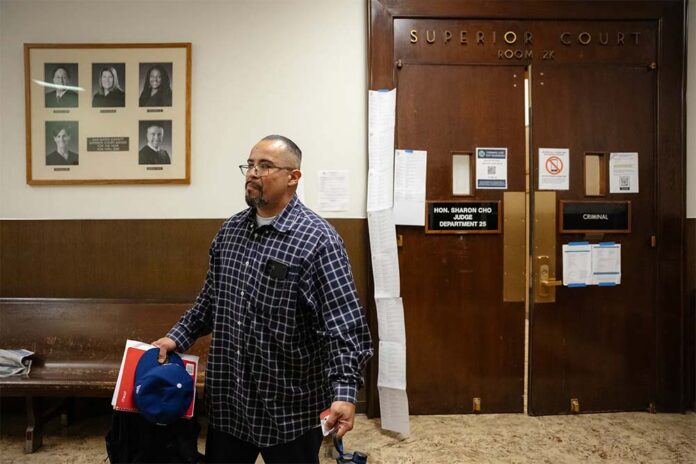
Gustavo Meza sale del tribunal tras presentar a un juez un informe de progreso en la Corte Superior del Condado de San Mateo. Recibió tratamiento obligatorio bajo la Proposición 36. Gustavo Meza leaves court after presenting a progress report to a judge at San Mateo County Superior Court in Redwood City. He received mandated treatment under Proposition 36. Manuel Orbegozo / CalMatters

 by Marisa Kendall and Cayla Mihalovich | CalMatters

California’s Proposition 36 promised to steer people charged with certain drug offenses into addiction treatment instead of prison. But nearly two years after voters approved the tough-on-crime initiative, many of the people it was intended to help appear to be falling through the cracks.

A CalMatters analysis of the 15 counties that filed the most cases under the law found wide differences in how Proposition 36 is being implemented. In some counties, only a small fraction of people arrested under the new “treatment-mandated felony” provision actually enter treatment. Even fewer complete their programs and have their charges dismissed.

The most recent statewide data shows that among 18,666 felony drug cases charged under Proposition 36 last year in counties reporting treatment data, 17% involved defendants who opted for treatment. Just 57 cases were dismissed after defendants completed their programs.

Orange County illustrates the challenges. As of February 2026, 1,311 people had been referred to Proposition 36 on drug charges, but only 314 agreed to treatment. Fewer than half of those were actively receiving treatment, and just 15 had graduated.

Counties also differ dramatically in how they apply the law. Required treatment periods range from three months to two years. San Francisco, meanwhile, has made hardly any Proposition 36 drug arrests.

Funding is one major obstacle. Proposition 36 was approved without dedicated funding for addiction treatment. Lawmakers later appropriated money, but stakeholders said it fell well short of what was needed. Counties already faced shortages of residential treatment beds and outpatient services, while homeless participants may struggle to recover without stable housing.

The measure, backed by district attorneys and sheriffs, partially reversed a 2014 initiative that reduced certain nonviolent felonies to misdemeanors. Under Proposition 36, prosecutors can charge people convicted of various third-time drug offenses with a felony while offering treatment instead of as much as three years in jail or prison.

Defendants who choose treatment must plead guilty or no contest. County behavioral health departments generally assess them and recommend residential or outpatient treatment. Courts may also order mental health services, job training and other requirements. Successful completion allows the felony charge to be dismissed.

San Jose Mayor Matt Mahan, a prominent Democratic supporter of Proposition 36, argues that the law itself is not responsible for the low treatment numbers. He blames Gov. Gavin Newsom’s administration and the Legislature for failing to provide adequate funding and leadership to build a stronger statewide treatment system.

Some county officials nevertheless see signs of progress. Orange County behavioral health director Ian Kemmer said people entering the Proposition 36 program often had never previously sought county addiction services.

San Diego County also has been cited by supporters as an example of implementation. As of February, 71 percent of defendants who pleaded guilty to a Proposition 36 drug felony had their cases started toward mandated treatment, according to the district attorney’s office. Fewer than 5% were sentenced to jail or prison.

But later-stage numbers were less encouraging. As of December, fewer than one-third of those referred in San Diego had agreed to treatment, fewer were actually receiving it, and only two had graduated.

Some defendants still end up incarcerated. From January 2025 through July 2026, California prisons recorded 568 admissions on Proposition 36 drug charges, with an average sentence of 28 months. State finance officials estimate the measure eventually could increase California’s prison population by about 1,550 people.

Yet individual cases demonstrate that treatment can work. Orange County resident Nicco Pierstorff initially resented being ordered into treatment after a drug arrest. He said he already had overcome methamphetamine addiction and homelessness. After completing six months of counseling, drug testing and court appearances, however, his charge was dismissed.

Pierstorff said the program ultimately helped him understand his past drug use and gave him tools to avoid risky situations in the future.

His experience reflects both sides of Proposition 36’s early record: treatment can change lives, but California still faces major challenges getting eligible defendants into programs and helping them successfully complete them.

Editor’s note: This story has been edited for space while preserving the facts and substance of the original report.

spot_img

Studies link regular fish consumption to improved heart and brain health

by the El Reportero staff

Regular fish consumption may help protect against heart disease, cognitive decline and several other health conditions, according to nutritional research examining the benefits of omega-3 fatty acids and essential nutrients found in seafood.

A report published by Healthline identifies fish as one of the most nutrient-dense foods, providing high-quality protein, vitamin D, iodine and minerals essential to human health. Fatty varieties, including salmon, trout, sardines and mackerel, offer particularly high concentrations of omega-3 fatty acids.

A 2020 scientific review associated fish consumption with lower rates of coronary heart disease and mortality. More recently, an analysis involving over 90,000 Japanese adults, published in August 2026 and reported by NaturalNews.com, linked moderate fish consumption to reduced mortality over an average follow-up period of 20.8 years.

Researchers believe omega-3 fatty acids play an important role in cardiovascular protection by regulating inflammation and supporting blood vessel function.

A 2016 study cited by Mercola.com associated omega-3-rich foods with approximately a 10 percent reduction in fatal heart attack risk, even after researchers accounted for several demographic and health factors.

Beyond cardiovascular benefits, fish provides nutrients essential for brain development and cognitive function.

Docosahexaenoic acid, commonly known as DHA, supports fetal brain and eye development, while eicosapentaenoic acid, or EPA, contributes to several important biological functions.

Health authorities generally recommend that pregnant and breastfeeding women consume 8 to 12 ounces of low-mercury seafood weekly while avoiding fish with elevated mercury concentrations. Pregnant women should also avoid raw fish because of potential foodborne illnesses.

Research suggests that fish consumption may offer neurological benefits throughout adulthood.

A 2024 meta-analysis associated higher fish consumption with slower cognitive decline. Other studies have investigated whether regular fish consumption helps preserve gray matter, which is involved in memory and other neurological functions.

Scientists have also examined omega-3 fatty acids for their potential role in reducing depressive symptoms, although findings remain mixed and supplements should not replace prescribed medical treatments.

Additional research suggests that fish consumption may benefit vision, sleep and bone health.

Fatty fish are among the richest natural dietary sources of vitamin D, which supports calcium absorption and healthy bones. Salmon is particularly valuable because it provides substantial amounts of vitamin D alongside protein and omega-3 fatty acids.

A 2018 meta-analysis suggested that introducing fish between six and nine months of age and maintaining regular consumption may reduce asthma and wheezing in young children.

Other investigations have explored possible protective effects against age-related macular degeneration, a major cause of vision impairment among older adults.

A 2024 scientific review also suggested that omega-3 fatty acids may improve sleep quality. Emerging research continues to investigate their potential influence on insulin sensitivity, inflammation and blood sugar regulation.

Despite these potential benefits, experts emphasize that choosing appropriate seafood is essential.

Smaller, shorter-lived species, including sardines and anchovies, generally accumulate less mercury than large predatory fish. Salmon, herring, cod and haddock are additional nutritious choices.

Conversely, shark, swordfish, king mackerel and certain tilefish can contain elevated mercury levels, presenting particular concerns for pregnant women and children.

Nutrition specialists generally recommend consuming fish twice weekly as part of a balanced diet. Individuals who avoid animal products can obtain certain omega-3 fatty acids through microalgae-derived supplements.

Researchers emphasize that while fish consumption is associated with numerous health benefits, observational findings do not necessarily establish direct cause and effect. Food.news.


spot_img