Saturday, July 25, 2026
Home Blog Page 2

Irma Leonor Hodgson Gómez August 15, 1929 – June 30, 2026 – mother of Luis Malespín

Irma Leonor Hodgson Gómez (1929–2026), recordada por su amor, fortaleza y entrega incondicional a su familia. Irma Leonor Hodgson Gómez (1929–2026), remembered for her love, strength, and lifelong devotion to her family.

Some lives are measured not by wealth or fame, but by the love they give, the families they nurture, and the quiet strength with which they face life’s joys and hardships. Such was the life of Irma Leonor Hodgson Gómez, lovingly known as Irma Malespín Hodgson, who peacefully entered into eternal rest on June 30, 2026, in Los Angeles, California, at the remarkable age of 96.

Born on August 15, 1929, in the beautiful Caribbean city of Bluefields, Nicaragua, then part of the Department of Zelaya, Irma belonged to a generation that valued faith, family, sacrifice, and perseverance above all else. Those principles guided her throughout a lifetime that spanned nearly a century of extraordinary change.

In approximately March 1951, she married the love of her life, Salvador Malespín Ibarra, nephew of Salomón Ibarra Mayorga, the celebrated author of the lyrics of Nicaragua’s National Anthem during the Somoza era. Together they established their home in Bluefields before moving to Managua in the mid-1950s, where they began raising the family that would become the greatest blessing of her life.

After the devastating Managua earthquake of December 23, 1972, Irma made the difficult but hopeful decision to begin a new chapter. In February 1973, she settled permanently in Los Angeles, California, where she continued doing what she loved most—caring for her family with unwavering devotion and quiet grace.

To those who knew her, Irma was the very definition of a loving mother. She did not seek recognition or applause. Her life’s work was found within the walls of her home, where she devoted herself wholeheartedly to her husband, her children, and later to generations of grandchildren and great-grandchildren. She believed that love was best expressed through service, patience, honest counsel, and unwavering faith.

She possessed a rare combination of tenderness and strength. She was a woman of deep convictions, remarkable character, and extraordinary resilience. Her wisdom guided her children through life’s challenges, while her loving discipline and compassionate heart helped shape the values they carry to this day.

Irma delighted in the simple pleasures that make a house feel like home. The aroma of freshly brewed morning coffee often welcomed a new day, while music filled the air with memories and joy. She especially treasured the timeless melodies of Trío Los Panchos, Marco Antonio Muñiz, Nat King Cole, Eydie Gormé, Doris Day, and Daniel Santos, whose voices accompanied countless moments throughout her life.

She was also known for preparing one of Nicaragua’s most beloved traditional dishes—nacatamales—which became a symbol of family gatherings, celebrations, and the generous hospitality she extended to everyone around her. Around her table, no one was ever a stranger for long.

Her greatest legacy is found in the family she lovingly built. She is survived by five children, nine grandchildrenEdwin, Jessica, Erico, Fabi, Vanessa, Verónica, Bianca, Alexis, and Kennyten great-grandchildren, two great-great-grandchildren, countless extended family members, and many dear friends whose lives were forever touched by her kindness, generosity, wisdom, and steadfast love.

During the final fifteen years of her earthly journey, her eldest son was blessed with the privilege of becoming her devoted caregiver. His faithful service reflected the same unconditional love that she had first given to him as a mother—a beautiful circle of love completed with dignity, gratitude, and compassion.

Her ashes will be placed in a Christian church in Los Angeles. Family and friends will gather to celebrate her remarkable life on August 15, 2026, what would have been her 97th birthday, at a memorial service to be held at the church where her ashes will rest. Details will be announced by the family.

Although her voice has fallen silent, her influence will never fade. She leaves behind far more than memories. She leaves a heritage of faith, integrity, perseverance, humility, unconditional love, and devotion to family. Her children, grandchildren, and all who were blessed to know her will continue to see her reflection in every lesson she taught, every sacrifice she made, every embrace she offered, and every prayer she whispered on their behalf.

Her eldest son, Luis, offers these words from the depths of his heart:

“God bless you always, my beloved Mother. I will carry you with me for all eternity. Every day I thank God for allowing me the privilege of caring for you and walking beside you during the final years of your beautiful life. Your loving advice, your unwavering faith, your strength, and your endless devotion have left an indelible mark upon my heart that time can never erase. You were my greatest teacher, my greatest blessing, and my constant example of goodness. I love you beyond words, and I will forever carry your spirit in the deepest part of my soul. Until we meet again in the presence of our Lord… rest in eternal peace, my beautiful Mother. Amen.”

A life devoted to God.
A heart devoted to family.
A legacy that will endure for generations.

Rest in eternal peace, Irma Leonor Hodgson Gómez. You were deeply loved, and you will be forever remembered.

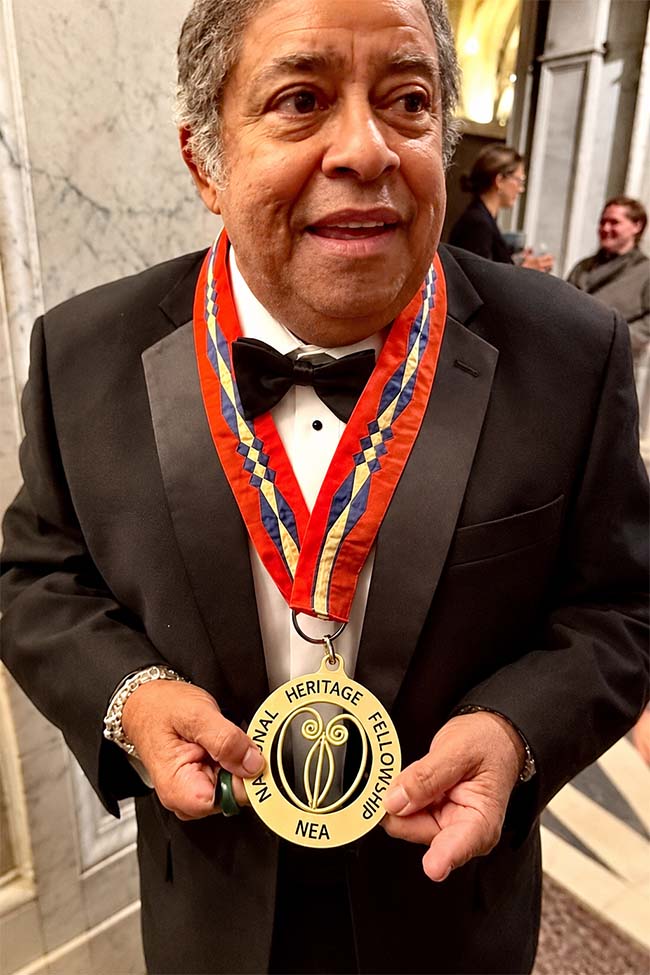
The staff of El Reportero, and especially its editor and publisher, Marvin Ramírez, extend their heartfelt condolences to renowned musician, composer, and longtime friend Luis Malespín on the passing of his beloved mother, Irma Leonor Hodgson Gómez.

We join Luis, his family, and all who knew and loved Mrs. Hodgson in mourning her loss while celebrating a life devoted to faith, family, love, and selfless dedication. Her kindness, strength, and unwavering devotion leave behind a legacy that will continue to inspire generations.

May God grant comfort, peace, and strength to the Malespín family during this time of sorrow, and may the cherished memories of a remarkable mother forever remain in their hearts.

May she rest in eternal peace.

spot_img

When law enforcement ends in tragedy

Robert Arnold comparte un comentario en video que reflexiona sobre el costo humano de las operaciones de control migratorio. Captura de pantalla del video de Robert Arnold en Facebook. -- Robert Arnold shares a video commentary reflecting on the human cost of immigration control operations. Screenshot from Robert Arnold's Facebook video.

photo: Robert Arnold shares a video commentary reflecting on the human cost of immigration control operations. Screenshot from Robert Arnold’s Facebook video.

NOTE FROM THE EDITOR:

Bottom of Form

The debate over immigration in the United States often centers on laws, border security and statistics. Yet behind every immigration enforcement operation are individuals, families and communities whose lives can be changed forever. A video published on Facebook by content creator Robert Arnold offers a reflection on that human cost, recalling the cases of two workers who died during recent operations involving U.S. Immigration and Customs Enforcement (ICE).

Beyond the political debate over immigration, the message raises an important question: Can the law be enforced with greater planning, training and restraint to prevent innocent families from paying the ultimate price? This version has been adapted and condensed for El Reportero from Arnold’s original commentary.

––––––––––––––––––––––

A reflection on the human cost of immigration enforcement operations and the need to protect life during the enforcement of the law

His name was Lorenzo Salgado Araujo. He was fifty-two years old.

He was a husband. He was a father of three sons.

He’d spent more than three decades in Houston building homes, raising a family, and chasing the same version of the American dream that generations before him had crossed oceans to find.

Friends remember a man who loved ranchera music, who worked with his hands, who built not only houses, but a life.

And on July seventh, he left for work and never came home.

Federal agents were looking for someone else, someone driving a similar van, someone they believed resembled the man they were trying to find.

Instead, Lorenzo’s family buried him. Six days later, another family received a phone call that every family fears.

His name was Joan Sebastian Duran Guerrero.

He was twenty-six years old. He was a husband.

He was a father of a three-year-old little girl.

He had legal authorization to work in the United States, and like millions of other fathers, he got up that morning intending just to go to work.

Instead, during an ICE operation in Biddeford, Maine, he was shot and killed.

His wife now has to explain to a little girl why her father isn’t coming home.

And you and I and everyone else listening to this are just men and women of a certain age.

We’re fathers and mothers, daughters or sons, husbands or wives, and we leave for work in the morning, and we expect to come home.

And that’s the quiet promise that we all live by.

The difference here is not that Lorenzo or Joan were somehow different from us.

The difference is that this tragedy has not yet landed on our doorsteps.

Our loved ones have not received that phone call, not yet, because when that call comes, it’s already too late, and it’s too late for the families of these men.

And if we continue to accept and support tactics that make outcomes like this possible, we should not pretend it will always happen to someone else.

Eventually, it will knock on your door or the door of someone you love.

Before we argue about immigration, before we debate border policy, before we sort ourselves into Republicans and Democrats, can we just stop for one moment and simply say their names?

Lorenzo Salgado Araujo, Joan Sebastian Duran Guerrero.

Somewhere along the way, we have developed a terrible habit in this country where we talk about operations, about targets, about suspects.

We talk about collateral consequences, but we rarely talk about empty chairs at dinner tables, about a wife lying awake next to half a bed that’s cold and empty, reaching in the dark for a hand that she will never find.

About three sons who are standing beside their father’s casket, about a three-year-old little girl who will grow up with stories instead of memories, about another family now asking how a chase became a funeral.

And that is where this conversation has to start, not with immigration, with humanity.

And there are questions that I cannot shake, like why should any innocent person ever have to fear for their life at the hands of the state?

Not fear arrest after committing a crime, not fear prosecution after violating the law, but just fear because armed federal agents have decided that today is the day that they wanna talk to you.

And a free society should never ask ordinary people to accept that as the cost of living under the rule of law.

The defenders of these shootings will immediately ask whether the officers feared for their lives.

And that may be an important question, but it shouldn’t be the first question, and it damn sure shouldn’t be the only question.

The government has something no citizen possesses.

It chooses the time. It chooses the place.

It chooses the tactics. It writes the training manuals.

It established the culture. It decides whether success is measured by arrest or by everyone going home alive.

And if operation after operation after operation ends with grieving families asking why their husband, their father, their son is dead, then eventually we have to stop pretending these are only individual tragedies.

These have become institutional questions.

Why are these officers being taught this way?

Why are they so confident in making these decisions to end a life?

Why are these encounters escalating so quickly?

Why are high-risk vehicle stops and pursuits becoming a common feature of immigration enforcement?

How much emphasis is placed on slowing situations down rather than dominating them?

How much training is devoted to preserving life when fear predictably enters the equation?

Because fear is the most predictable part of this equation.

Anyone who believes they might be detained, deported, separated from their family, or simply does not understand what is happening will panic.

The government knows this. The government should plan for this.

The burden of anticipating imperfect human behavior belongs to the state because the state possesses overwhelming power.

That is the moral contract of democracy. The badge is not supposed to lower the threshold for taking a human life.

It’s supposed to raise it. Because again, the badge is a burden and not a shield.

That is what makes these deaths so unsettling.

Not simply because men have died, but because they force us to ask whether our institutions are becoming too comfortable with the idea that if an encounter becomes chaotic, a bullet is the acceptable conclusion.

Every democracy eventually has to answer this one question: What is the value of human life when weighed against the convenience of an enforcement tactic?

I know my answer. It’s worth slowing down.

It’s worth better training. It’s worth better planning.

It’s worth more restraint because if the government cannot be expected to exercise extraordinary care before taking a life, then who among us is truly safe?

Today it was Lorenzo. Today it was Joan. Tomorrow, the government assures us it will be someone else, but that’s precisely the problem.

In a free country, no innocent family should ever have to wonder whether their loved one will become the next name that we say aloud before we move on to the next news cycle.

Defiance till death.

spot_img

Class Action Settlement Notice

Authorized by the United States District Court for the Eastern District of New York
— Class Action Settlement Notice —

TO: All merchants in the U.S. who accepted Visa or Mastercard credit or debit cards at any time on or after December 18, 2020.

This notice (“Notice”) has been authorized by the Court to inform you of an agreement to resolve the equitable relief claims in a class action lawsuit, In re Payment Card Interchange Fee and Merchant Discount Antitrust Litigation, No. 05-md-01720 (BMC)(JAM)(E.D.N.Y.). The lawsuit alleges that Visa and Mastercard, independently and in conjunction with certain banks, violated antitrust laws and caused merchants to pay excessive fees for accepting Visa and Mastercard credit and debit cards, among others, by adopting interchange fees and other network rules, which the litigation has claimed constituted illegal price fixing, unreasonable restraint of trade, and monopoly.

The Defendants say they did nothing wrong. They maintain that their business practices are lawful, justifiable, and the result of independent competition, and that they have benefited merchants and consumers.

The Court has not decided who is right because the parties agreed to establish a settlement, which was preliminarily approved by the Court on June 9, 2026.

A. What Merchants Will Gain from the Settlement During the lawsuit, the Court previously certified a Equitable Relief Class of Claimants under Rule 23(b)(2) and has now preliminarily approved a settlement of the Class of Claimants’ claims (the “Rule 23(b)(2) Class of Claimants Settlement” or “Settlement”). Under the Settlement, Visa and Mastercard have agreed to make substantive changes to the Visa and Mastercard rules applicable to merchants who accept their cards as a form of payment.

The Claimant Group includes all individuals, companies, and entities that accepted Visa or Mastercard cards in the United States at any time during the period between December 18, 2020, and the date of preliminary settlement approval, or June 9, 2026. The Court has set November 16, 2026, as the date for a fairness and final approval hearing (the “Fairness Hearing”) regarding the Settlement, after the claimant group members have had an opportunity to evaluate the Settlement and exercise their rights, as set forth in the Notice. Further information regarding the Settlement and the Fairness Hearing will be posted at www.InterchangeEquitableReliefSettlement.com.

Pursuant to the Group Settlement of Rule 23(b)(2), Mastercard and Visa will modify certain rules to maintain, establish, or expand the circumstances under which merchants may, among other things, do the following:

• Refuse to accept Visa or Mastercard Commercial Credit Cards or Premium Consumer Credit Cards.

• Charge customers a fee for using any Visa or Mastercard Credit Card, which may vary depending on the type of card used (e.g., a different fee for rewards and non-rewards cards).

• Offer discounts to customers who do not pay with Visa or Mastercard Credit Cards, or based on the financial institution that issued the Visa or Mastercard Credit Card.

• Refuse to accept Visa or Mastercard cards at all points of sale operating under the
same name or business banner, even if that merchant accepts those same cards at points of sale operating under a different name or business banner.

• Participate in pilot programs whereby they accept Visa or Mastercard credit cards at some, but not all, points of sale operating under the same name or business banner for a limited period, or test various acceptance, surcharge, and discount options at some, but not all, points of sale operating under the same name or business banner, including the non-acceptance of Premium Consumer or Commercial Credit Cards, for a limited period.

Accepting some digital wallets at physical locations but rejecting others, enabling some digital wallets for online transactions but not others, and “directing the use of certain cards” within a digital wallet under the same rules that govern the “practice of encouraging the use of certain cards” among traditional cards.

• Benefit from reductions in credit card interchange rates: Visa and Mastercard will reduce the published and negotiated interchange rates for U.S. merchant credit cards.

• Benefit from capped interchange rates: The Settlement Agreement reduces and caps Standard Consumer Credit Card rates to a specified level and otherwise limits credit card interchange rates, so that neither Visa nor Mastercard will increase any of their published interchange rates above the rates in effect as of March 31, 2025, and each will reduce its network-wide average interchange rate to or below the specified level.

•Form Merchant Buying Groups that meet certain criteria to negotiate with Visa and Mastercard.

•Receive access to a Merchant Education Program, established and administered under the Settlement Agreement, to help understand and maximize the benefits of the rule changes, including how to effectively implement “targeting” practices for the use of certain cards in states that restrict surcharges.

B. Monetary Aspects of the Rule 23(b)(2) Group Settlement
There is no monetary payment to the members of the Group of Claimants in this Settlement. This Rule 23(b)(2) Group Settlement applies only to the Equitable Relief Claims stipulated in the complaint. Claims for monetary damages arising from the defendants’ alleged antitrust violations are subject to a separate settlement for the Rule 23(b)(3) Group of Claimants. For information about the Rule 23(b)(3) Group of Claimants Cash Settlement, please visit www.PaymentCardSettlement.com.

The Settlement establishes that Visa and Mastercard will make certain payments into the Escrow Account of the Claimants Group Settlement under Rule 23(b)(2), and this money will be used to pay for:
• The cost of administering the settlement and the notice, as approved by the Court;

• The cost of the Merchant Education Program expenses, as approved by the Court;

• The cost of an independent auditor to ensure that Visa and Mastercard comply with their} credit card interchange fee reduction commitments; and

• Attorneys’ fees and expenses, including payments for services rendered by the designated Plaintiffs’ Group Representatives, as approved by the Court.

The money in this fund will be distributed only if the Court grants final approval of the Settlement, and the money for attorneys’ fees and expenses, and Payments for Services to the Plaintiffs’ Group Representatives, will be distributed only if the Settlement has become final and all appeals have been exhausted, and the Court approves the request for attorneys’ fees and expenses, and the Payments for Services to the Plaintiffs’ Group Representatives.

(The Court will grant final approval of the Settlement) Attorneys’ Fees and Expenses, and Payments for Services to the Plaintiffs’ Group Representatives: In respect of work performed up to and including the Court’s final approval of the Settlement, as well as any
work to be performed in the future, the Plaintiffs’ Group Attorneys will request from the Court attorneys’ fees and reimbursement of necessary and reasonable litigation expenses, as well as any award of payments for services to the appointed Plaintiffs’ Group Representatives that the Court may grant, in an amount not to exceed $206,000,000. The Settlement Agreement requires Visa and Mastercard to pay these fees and expenses separately from any other financial obligations of the Settlement, and such fees and expenses will not reduce any other benefit of the Settlement; the Plaintiffs’ Group members will not be required to pay any amount to cover such fees and expenses.

C. Legal Rights and Options
Merchants included in this claim have the legal right to object to the settlement. The deadline to object is September 14, 2026. To learn how to object, visit www.InterchangeEquitableReliefSettlement.com or call toll-free 877-318-7713.

Note: You cannot be excluded from the Rule 23(b)(2) Group Settlement.

For more information about these rights and options, visit www.InterchangeEquitableReliefSettlement.com or call toll-free 877-318-7713.

D. If the Court Grants Final Approval of the Settlement
If the Court grants final approval of the Settlement, the members of the Claimant Group under Rule 23(b)(2) will be bound by the terms of the Settlement and will waive all claims against all the exonerated parties listed in the Settlement Agreement. The Settlement will discharge and resolve all claims by payment card acceptors against Visa, Mastercard, or other defendants that were or could have been alleged in the complaint, including claims based on interchange fees or other charges, no-surcharge rules, no-discount rules, all-card acceptance rules, and other network rules.

The Settlement will also resolve any claims from merchants accepting payment cards based on the future effect of any Visa or Mastercard rule as in effect on or before December 18, 2020, and until the Final Settlement Date (as defined in the Settlement Agreement), the amended rules provided in this Settlement, or any other rules substantially similar to such rules. The release will not preclude the filing of claims related to certain specified standard business disputes that arise as part of the normal course of business.

For more information about the relief, see the Group Settlement Agreement for the amended Rule 23(b)(2) Claimants at www.InterchangeEquitableReliefSettlement.com.

E. Court Hearing Regarding this Settlement
A court hearing will be held on November 16, 2026, at 11:00 a.m. ET, to decide whether to approve the proposed Settlement, the claimant’s attorneys’ fees and expenses, and payments for services rendered to the Group Claimants’ representatives. The hearing will be held at:

United States District Court for the Eastern District of New York U.S. District Judge Brian M. Cogan 225 Cadman Plaza East Brooklyn, NY 11201

You are not required to attend the Court hearing or hire an attorney, although you may do so at your own expense. The Court appointed the law firms of Hilliard Shadowen LLP; Grant & Eisenhofer P.A.; Freed Kanner London & Millen LLC; and Nussbaum Law Group, P.C. to represent the Group of Plaintiffs (“Group of Plaintiffs Attorneys”).

F. Do you have questions?

For more information about this case (In re Payment Card Interchange Fee and Merchant Discount Antitrust Litigation, MDL 1720), you can: Call toll-free: 877-318-7713

Visit: www.InterchangeEquitableReliefSettlement.com Write to the Group of Plaintiffs Administrator: Interchange B2 Class Administrator, P.O. Box 6340, Portland, OR 97228-6340 or email the Claimant Group Administrator at info@InterchangeEquitableReliefSettlement.com

spot_img

Community Calendar – July 2026

Familias disfrutan un festival comunitario de verano en el Área de la Bahía. Families enjoy a summer community festival in the Bay Area.

by the El Reportero staff

Summer celebrations continue across the Bay Area with music, family festivals, cultural traditions and outdoor entertainment. This week’s calendar highlights events taking place from July 19 through July 26, giving readers time to plan ahead and enjoy the region’s rich Latino arts and community activities.

Omar Sosa celebra el lanzamiento de su más reciente álbum con una presentación en Berkeley. Omar Sosa celebrates the release of his latest album with a performance in Berkeley.

Omar Sosa Quarteto Americanos performs in Berkeley

Grammy-nominated Cuban pianist Omar Sosa brings his Quarteto Americanos to Berkeley for an evening blending Afro-Cuban jazz, Latin rhythms and contemporary improvisation. Recognized internationally for his innovative sound, Sosa continues to be one of the most influential figures in Latin jazz. Sunday, July 19, 7 p.m., Freight & Salvage, 2020 Addison St., Berkeley.

Peruvian Independence celebration comes to San Francisco

Celebrate Peru’s Independence with an evening of live salsa, música criolla and Peruvian culture featuring Julio Bravo y Orquesta Salsabor, a special performance by Elizabeth Panchano and music by DJ Rich Era. The event welcomes the entire community for an unforgettable night of dancing and celebration. Saturday, July 25. Doors open at 7 p.m., Verdi Club, San Francisco. Ages 21 and over.

Peruvian community invited to Independence Mass

The Consulate General of Peru in San Francisco invites the community to commemorate Peru’s Independence with a special Mass followed by a community gathering featuring traditional music and folkloric dance. Saturday, July 25, 10 a.m., Mission Dolores Basilica, 3321 16th St., San Francisco. Free admission.

Viva Perú Festival returns to Newark

The third annual Viva Perú Festival celebrates Peruvian culture with authentic cuisine, live music, dance performances and family activities. International salsa star José Alberto “El Canario” headlines this year’s festival, joined by folkloric groups and cultural organizations representing Peru’s diverse traditions. Sunday, July 26, 11 a.m.–7 p.m., Swiss Park, 5911 Mowry Ave., Newark.

Summer music continues throughout the Bay Area

Communities across Northern California continue offering free outdoor concerts, neighborhood festivals and cultural gatherings throughout July. Residents are encouraged to support local artists, nonprofit organizations and community events that celebrate the region’s cultural diversity.

For additional events and updated listings, visit ElReporteroSF.com under Calendar. Nonprofit organizations, cultural groups, artists and event promoters are invited to submit upcoming community events for possible publication by emailing elreportero@aol.com. Your submissions help us keep the community informed while expanding our audience and strengthening El Reportero as the Bay Area’s bilingual community newspaper.

spot_img

S.F. license plate cameras spark privacy debate after improper data access

Una cámara Flock registra vehículos en San Francisco entre crecientes preocupaciones por privacidad. A Flock license plate camera monitors traffic in San Francisco amid growing privacy concerns. Wikimedia Commons

by El Reportero staff

San Francisco’s network of automated license plate reader (ALPR) cameras is facing renewed scrutiny after a police audit found that federal and out-of-state agencies improperly accessed data collected through the city’s surveillance system. The findings have reignited concerns over privacy, government oversight and the potential impact on immigrant communities.

Since 2024, the San Francisco Police Department has deployed approximately 400 Flock Safety cameras at intersections across the city. The department says the system was introduced to help investigators locate stolen vehicles, identify suspects and support criminal investigations. However, officials have not released evidence demonstrating how much the cameras alone have reduced crime or how many cases they have directly solved.

The controversy intensified after an internal audit found that outside agencies conducted nearly 300 unauthorized searches of San Francisco’s license plate database over the past year. Police Chief Derrick Lew suspended access to the regional intelligence network while the incident is investigated.

Speaking before the San Francisco Police Commission, Lew acknowledged the public’s concerns, saying, “It’s no secret ALPR is a controversial tool, and I think there are a lot of privacy concerns.” At the same time, he defended the technology’s value, adding that “ALPR has become an everyday tool for our officers… it’s become a cornerstone of our work.”

Although police said the audit found no direct access by U.S. Immigration and Customs Enforcement (ICE), civil rights advocates argue the incident illustrates the risks of collecting and storing massive amounts of location data. They warn that once information is shared beyond the agency that collected it, public confidence becomes harder to maintain.

For many residents in immigrant communities, including San Francisco’s Mission District, the debate extends beyond technology. Community organizations say people may become reluctant to report crimes, seek public services or simply travel freely if they believe their daily movements could be tracked or later shared with other government agencies.

Supporters argue automated license plate readers remain valuable investigative tools if accompanied by strict oversight, independent audits and clear limits on data access. Critics counter that collecting information on millions of law-abiding drivers to identify a relatively small number of criminal suspects raises fundamental questions about privacy and civil liberties.

As California cities continue expanding surveillance technology, San Francisco’s experience is likely to shape the statewide debate. Many residents are now asking whether the promise of greater public safety justifies the routine collection of information on millions of innocent drivers.

– Sources: Mission Local; KALW News; San Francisco Police Department; San Francisco Chronicle; Electronic Frontier Foundation (EFF); American Civil Liberties Union (ACLU).

spot_img

Trump tightens banking oversight for immigrants without work authorization

Las nuevas directrices federales endurecen la evaluación crediticia para algunos inmigrantes sin autorización laboral. New federal guidance tightens credit evaluations for some immigrants without work authorization. El Reportero/AI

by the El Reportero wire services

The Trump administration has intensified its immigration agenda by directing federal regulators to increase scrutiny of credit applications from people who are not legally authorized to work in the United States. Immigration advocates say the move could discourage some families from seeking financial services.

Federal banking regulators issued new guidance advising banks, credit unions and other financial institutions to consider the immigration status of certain loan applicants when evaluating credit risk. The guidance states that borrowers without legal work authorization may face less stable income or the possibility of deportation, factors that could affect their ability to repay loans.

Las nuevas directrices federales endurecen la evaluación crediticia para algunos inmigrantes sin autorización laboral.
New federal guidance tightens credit evaluations for some immigrants without work authorization.

“When a borrower’s income is derived from employment that is not legally authorized, the source of repayment may be less reliable and may present increased credit risk,” the federal guidance states.

The recommendations stem from an executive order signed by President Donald Trump in May directing the Treasury Department and other federal agencies to strengthen oversight of risks to the financial system associated with unlawful immigration. The order does not require banks to verify the citizenship of all customers or to close accounts held by undocumented immigrants.

Banking industry representatives had raised concerns over earlier proposals that would have required financial institutions to collect citizenship information from every customer. The administration ultimately adopted a narrower approach focused on credit risk assessment and compliance with existing financial regulations.

Immigrant rights organizations argue the new policies could discourage many families from using banks or applying for loans out of concern that their immigration status will receive greater scrutiny. They warn that the changes could push some people toward alternative financial services that often carry higher costs and fewer consumer protections.

The Trump administration maintains that the new guidance is intended to protect the stability of the U.S. financial system, strengthen fraud prevention efforts and ensure financial institutions properly assess lending risks. Federal officials have emphasized that the guidance does not create a blanket requirement for banks to verify customers’ citizenship or immigration status before opening or maintaining deposit accounts.

Sources: Reuters; U.S. Department of the Treasury; The White House.

spot_img

Healthy coffee alternatives for individuals seeking a break from caffeine

Coffee alternatives offer energy with added health benefits

by Evangelyn Rodríguez

For decades, coffee has been the world’s favorite morning pick-me-up. Its rich flavor and caffeine boost remain a daily ritual for millions. But many people are now looking for alternatives that provide steadier energy, lower caffeine or additional health benefits.

One of the fastest-growing options is mushroom coffee, which blends ground coffee with powdered functional mushrooms such as reishi, lion’s mane, chaga and cordyceps. Long used in traditional Eastern medicine, these mushrooms are valued for supporting immune function, cognitive health and the body’s response to stress.

Commercial mushroom coffee typically contains about half the caffeine of a regular cup because it often combines coffee and mushroom powder in equal proportions. This makes it appealing for people who want to reduce caffeine without giving up the familiar taste of coffee. Mushrooms like lion’s mane and cordyceps are considered adaptogens—natural compounds believed to help the body cope with stress while supporting focus and overall balance. Many products can be prepared at home using coffee, mushroom powder, natural sweeteners and milk alternatives.

For those who want to avoid caffeine altogether, several herbal beverages provide flavorful substitutes with their own health benefits.

Chicory root coffee closely resembles coffee’s roasted, slightly bitter taste but contains no caffeine. It is rich in inulin, a prebiotic fiber that promotes digestive health.

Golden milk lattes, made with turmeric, ginger, cinnamon, black pepper and warm milk, are prized for their anti-inflammatory properties. Black pepper enhances the absorption of curcumin, turmeric’s active compound.

Rooibos tea, a naturally caffeine-free herbal tea from South Africa, contains antioxidants that may support heart health.

Matcha, a finely ground green tea powder, offers a moderate amount of caffeine along with L-theanine, an amino acid that promotes calm alertness and may reduce the jitters associated with coffee.

Another popular alternative is yerba mate, a traditional South American beverage. Although it contains about 80 milligrams of caffeine per cup—similar to coffee—it also provides theobromine, which many people find produces a smoother, longer-lasting energy boost. Yerba mate is also rich in antioxidants and has been associated with metabolic, cardiovascular and cognitive benefits.

Chai tea offers a lighter caffeine option, containing about 21 milligrams per cup when prepared with milk, compared with roughly 90 milligrams in a typical cup of coffee. Its blend of cinnamon, ginger, cardamom and cloves has long been associated with digestive and immune support.

The growing popularity of mushroom coffee and herbal beverages reflects a broader change in consumer preferences. Morning drinks are no longer viewed simply as a source of caffeine but as functional beverages that may help manage stress, support immunity and provide sustained energy throughout the day. For many consumers, the ideal morning cup now combines flavor with wellness benefits, offering a healthier way to start the day.

As research into functional foods continues, nutrition experts encourage consumers to choose high-quality products, read ingredient labels carefully and enjoy these beverages as part of an overall balanced lifestyle. Food.news.

– This article was shorten to fit space.

spot_img

Leaked audios suggest BC governor sought deal with FBI to avoid US charges and extradition

Aún no está claro a qué cargos —si es que los hay— podría enfrentarse en Estados Unidos la gobernadora de Baja California, de 40 años. It remains unclear what charges, if any, the 40-year-old Baja California governor could face in the United States. (Presidencia/Cuartoscuro)

MND staff

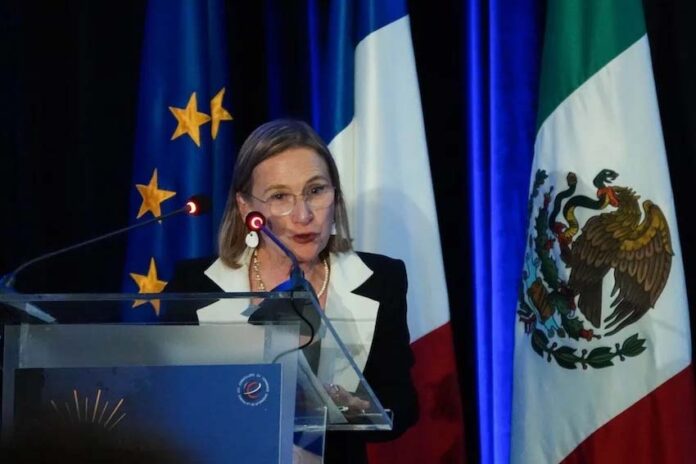
In a telephone conversation with one man identified as an “external” FBI adviser and another man identified as an FBI “special agent,” Baja California Governor Marina del Pilar Ávila Olmeda — who was stripped of her U.S. tourist visa last year — said she is willing to cooperate with U.S. authorities, apparently in order to avoid possible criminal charges in the United States and extradition to that country.

An audio recording in which Ávila speaks of her willingness to collaborate with U.S. authorities was published by the newspaper El Universal on Monday in a column by journalist Héctor de Mauleón. The column is headlined “In new audio, Marina del Pilar offers to collaborate with the FBI.”

In one section of the recording, Ávila says: “They’re saying they’re going to charge me and file an extradition order. I’m always willing to speak about everything I know, how to help, how to cooperate. I can say what I’ve heard in security meetings.”

The governor, who represents the ruling Morena party, has confirmed the authenticity of the audio recording published by El Universal on Monday as well as another recording published by the same newspaper last month in which she expressed her willingness to “clarify anything” to U.S. authorities that needs to be clarified.

In a statement to the media, the social communication department of the Baja California government said that “the recordings disseminated correspond to fragments of a private conversation with people who introduced themselves as agents or intermediaries of U.S. authorities without formally confirming said representation.”

“During the conversation, these people set out different legal scenarios without presenting documents, identification or official requests to support their claims,” the statement said.

The Baja California government also said that the references to “cooperation and exchange of information correspond exclusively to institutional coordination on security matters that Baja California, as a border entity, maintains with the authorities of Mexico and the United States.”

The publication of the second recording comes 14 months after Ávila revealed that the United States had revoked tourist visas for her and her then-husband, Carlos Torres Torres. The governor denied any wrongdoing, saying that the revocation of her visa was “an administrative decision, not an accusation.”

Baja California governor confirms criminal probe into ex-husband

In January, Ávila confirmed that the Federal Attorney General’s Office was investigating her ex-husband, a former federal deputy, for crimes related to arms trafficking, drug trafficking and money laundering.

It was unclear what charges, if any, the 40-year-old Baja California governor could face in the United States. Asked by the FBI adviser “the charges” the governor faces or “the crime” she is accused of, a man said to be an FBI special agent responds: “I can’t discuss that in detail. That would have to be a discussion between our prosecutor and her [lawyer].”

Another Morena party governor, Rubén Rocha Moya of Sinaloa, is accused by U.S. prosecutors of drug trafficking in league with the Sinaloa Cartel.

The New York Times reported in late June that “elected officials in the country’s governing party” — including governors and members of Congress — “have been quietly offering themselves to U.S. authorities as informants against fellow party members, according to eight people involved in the conversations.”

‘A final chance’?

At the start of the most recent recording published by El Universal, a man identified by de Mauleón as an FBI special agent, speaking in English, says: “I think they’re going to offer a final last chance.”

“That was the special agent,” the FBI adviser tells Ávila in Spanish.

The special agent was referring to a “final chance” for Ávila, governor since late 2021, to cooperate with U.S. authorities before charges against her are possibly laid in the United States.

Ávila points out that she has already met with U.S. authorities.

However, the special agent says: “Essentially there is a lot of frustration right now with the U.S. government because the three meetings … were not productive.”

Ávila says she doesn’t want to have any more meetings with U.S. authorities because “they’ve behaved very badly.”

“… I haven’t seen any progress, any attention,” she says.

At one stage of the recording, Ávila questions whether she is going to be sanctioned by OFAC, the U.S. Treasury Department’s Office of Foreign Assets Control. She says she has two bank accounts in the United States. The FBI adviser responds that he doesn’t know anything about possible sanctions.

Later in the recording, the governor asks whether a U.S. prosecutor will contact her lawyer, Miami-based Michael Nadler. The FBI adviser indicates that will happen, and Ávila subsequently says she doesn’t want to cross into the United States for more meetings with U.S. authorities. She expresses her preference for meeting with U.S. authorities at a hotel rather than at the U.S. Consulate in Tijuana, the largest city in the state she governs.

Ávila also says she is privy to a lot of security information and asks whether there is anything in particular that U.S. authorities “want to know.”

Security Secretary Omar García Harfuch came to the partial defense of the governor of Baja California on Tuesday, stating that there is no evidence she provided “confidential” details to the United States government. El secretario de Seguridad, Omar García Harfuch, salió el martes en defensa parcial de la gobernadora de Baja California, afirmando que no hay pruebas de que ella haya proporcionado detalles “confidenciales” al gobierno de Estados Unidos. (Carlos Ramos Mamahua/Presidency)

García Harfuch: No indication that Ávila will provide ‘confidential information’ to US authorities

At President Claudia Sheinbaum’s Tuesday morning press conference, Security Minister Omar García Harfuch said that in the audio recording published on Monday, it cannot be “inferred” that Ávila is going to provide “confidential information” to U.S. authorities.

García Harfuch also said that in state security meetings, information with a high degree of “sensitivity,” whose disclosure to another authority would be concerning, is not presented or discussed.

The only things presented in such meetings — which are attended by federal, state and municipal officials — are crime statistics and information on “priority targets” and “ongoing cases,” he said.

Sheinbaum: It is not known who Ávila spoke to

Asked about the recording published on Monday, Sheinbaum noted that Ávila already provided her own explanation.

“It’s really not even known who she was speaking to,” she added.

“What we have is a telephone call that was made public by a journalist,” Sheinbaum said.

“… We don’t know who the person is. We don’t even know if he is from the U.S. authorities or not,” she said.

Sheinbaum asserted that Ávila has not put the security of Baja California — one of Mexico’s most violent states — at risk in any way.

Sheinbaum: Ávila’s call is not comparable to the ‘Chihuahua case’

A reporter asked Sheinbaum whether it was “valid” for Ávila to be offering security information to the U.S. government after — in light of the CIA’s alleged involvement in a drug lab raid in Chihuahua in April without the knowledge or authorization of the Mexican government — she reminded governors that the bilateral relationship with the United States is conducted solely by federal authorities.

Sheinbaum asserted that the “Chihuahua case” is different as “it is proven” that U.S. agents were operating in Mexican territory. “That is a flagrant violation of the National Security Law,” she said.

Sheinbaum characterized Ávila’s telephone call, and the governor’s apparent offer to provide information to U.S. authorities, as much less serious.

“It’s a call she has with people who we don’t even know who they are, whether they belong to the U.S. government or not,” she said.

“… If it has to be investigated, let it be investigated. But they’re two completely different things,” Sheinbaum said.

She said later in the press conference that the federal government doesn’t believe that Ávila has committed a crime by offering to provide security information to U.S. authorities.

“We don’t think there is a crime to prosecute because in this communication there isn’t anything related to compromising security,” Sheinbaum said.

In Ávila’s telephone conversation, “nothing is heard that compromises national security or the security of the state of Baja California,” the president asserted.

spot_img

Proposition 13 should become a national model

El Reportero/AI

by the editorial team of El Reportero

For nearly half a century, California’s Proposition 13 has protected homeowners from being taxed out of the homes they worked a lifetime to purchase. Approved by voters in 1978, the measure limited the general property tax rate to 1 percent of assessed value and generally restricted annual increases in assessed value to 2 percent until a property changes ownership. It was not a giveaway. It was a shield against government using rising real estate prices as an excuse to seize an ever larger share of a family’s income.

That principle deserves national attention.

Across the United States, homeowners are discovering an uncomfortable truth: paying off a mortgage does not necessarily mean the home is completely theirs. Property taxes continue forever. If owners cannot pay them, government can place a lien on the property and ultimately force its sale. For retirees living on Social Security, working families facing inflation, and longtime residents whose neighborhoods suddenly become expensive, that is not genuine security.

Proposition 13 recognized that a home is more than a financial asset. It is shelter, family history, stability and often the principal inheritance parents leave their children. A person’s tax bill should not explode simply because neighboring homes sell for extraordinary prices. Paper appreciation does not put cash into a homeowner’s bank account.

Such protections would also strengthen communities by allowing older residents to remain near relatives, doctors, churches and familiar neighbors instead of being displaced solely because government reassessed a home they never intended to sell or abandon later.

Critics regularly portray Proposition 13 as outdated, unfair or harmful to public services. Some propose weakening it through a “split roll” that would remove protections from commercial and industrial property. California voters rejected such a proposal, Proposition 15, in 2020. Yet efforts to discredit Proposition 13 continue, often beginning with businesses and eventually placing homeowners’ protections at risk.

Certainly, schools, firefighters, police departments and local services need dependable funding. But government should not balance every budget by threatening people’s homes. Public officials must prioritize spending, eliminate waste and develop revenue systems that do not punish ownership. A national policy could allow states and localities flexibility while establishing basic protections: a reasonable tax-rate ceiling, strict limits on annual assessment increases, enhanced exemptions for seniors and disabled homeowners, and safeguards against tax foreclosure for people with limited incomes.

Opponents will argue that property taxation is a state and local responsibility, not a federal one. Constitutionally, that is largely correct. A president cannot simply abolish county property taxes nationwide. But Congress can encourage national standards through incentives, protections tied to federal housing programs, and relief for vulnerable homeowners. More importantly, the president can use the national platform to begin a serious debate about whether Americans truly own their homes when government can continually raise the price of keeping them.

Rumors circulating online about eliminating taxes on primary residences show that the public is ready for that debate. The rumors may overstate what has been proposed or confuse property taxes with capital-gains taxes, but they reveal real frustration. People are planting the seed because millions believe the present system is unjust.

Proposition 13 is not perfect, and thoughtful adjustments can be discussed. Its central promise, however, must remain untouched: no homeowner should lose a residence merely because its market value increased beyond the owner’s ability to pay taxes.

California started a taxpayer revolt in 1978. The nation should now revive its essential principle. Homeownership should provide permanence, not an endless rental arrangement with government. Once Americans finish paying for their homes, public policy should help them remain there with dignity, certainty and peace.

spot_img

Argentina carries Latin America’s hopes into the World Cup final

Lionel Messi culmina una brillante jugada con un gol y una emotiva celebración para Argentina. Lionel Messi caps off a brilliant play with a goal and an emotional celebration for Argentina. (Video capture by Marvin Ramírez, Shortx101/YouTube.)

Argentina’s dramatic comeback over England sets up a championship showdown with Spain as Latin American fans prepare for one last World Cup celebration

by the El Reportero staff

As the 2026 FIFA World Cup enters its final weekend, Argentina has become the last remaining representative of Latin America after rallying to defeat England 2-1 and secure a place in Sunday’s championship match against Spain.

In the game on July 15, the defending world champions once again demonstrated the resilience that has characterized their tournament run. After falling behind in the second half, Argentina responded with two late goals to complete a dramatic comeback and keep alive its dream of winning consecutive World Cup titles.

For millions of Hispanic fans throughout the United States, Mexico, Canada and Latin America, Argentina now carries the hopes of an entire region. With Mexico, Brazil, Colombia and other Latin American nations eliminated earlier in the knockout rounds, the Albiceleste have become the continent’s final standard-bearer.

Lionel Messi has continued to lead with experience and composure while a new generation of Argentine players has provided the energy needed to navigate one of the most competitive World Cups ever played. Their balanced combination of veteran leadership and young talent has once again placed Argentina on soccer’s biggest stage.

The tournament has also highlighted the future of Mexican soccer despite the national team’s Round of 16 exit. Young defender Mateo Chávez and forward Julián Quiñones emerged as two of Mexico’s brightest performers, offering supporters reasons for optimism as preparations begin for future international competitions.

The expanded 48-team World Cup brought unprecedented excitement across North America, with sold-out stadiums, passionate crowds and strong television audiences throughout the tournament. Hispanic supporters created memorable atmospheres from the opening match through the knockout rounds, reinforcing soccer’s growing influence across the region.

Now, only one match remains.

Argentina will face Spain in the FIFA World Cup final on Sunday, July 19, with the championship trophy at stake. Regardless of the outcome, the 2026 tournament has demonstrated the continued strength, passion and global influence of Latino soccer, while giving fans one final opportunity to cheer for a Latin American champion on the world’s biggest sporting stage.

Sources: FIFA, Reuters, EFE, FIFA World Cup 2026.

spot_img