
Monday, October 12, 2026
spot_img
Home Blog

The PG&E Corporation Foundation contributes $1.32 million to help local food banks fight hunger across 45 counties

Shareholder-funded grants are expected to help provide the equivalent of more than 3.13 million meals

OAKLAND, California — In response to the food insecurity affecting one in five Californians, the PG&E Corporation Foundation (PG&E Foundation) is providing $1.32 million to local organizations on the front lines of the fight against hunger.

The funds will help more than 50 food banks, tribal food banks, and meal programs for seniors across 45 counties provide the equivalent of approximately 3.13 million meals to families and individuals in need.

The funding is being awarded during Hunger Action Month, a national initiative to raise awareness and combat hunger in the United States. This contribution is funded by PG&E shareholders and is not recovered through customer rates.

Grant amounts take into account poverty and unemployment levels in each county—using a formula from the California Department of Social Services—to promote equity among counties with the greatest needs.

“Food banks are often on the front lines when a crisis strikes, and responding to a sudden surge in need requires more than just food. Resources, people, and partnerships are essential to respond quickly and effectively,” said Stacia Levenfeld, Executive Director of the California Association of Food Banks. “We are deeply grateful to partners like PG&E, who understand that in times of need, we are stronger and better prepared when we respond together.”

These grants are being awarded at a time when food insecurity remains a persistent challenge in California. According to the California Association of Food Banks, one in five Californians—approximately 8.8 million people—reported experiencing food insecurity, even though the state produces nearly half of the nation’s fruits and vegetables. Food banks across the state are addressing record levels of need as families continue to face rising costs for housing, food, and other essentials. Communities of color, older adults, and working families are disproportionately affected, with many turning to food assistance for the first time.

“Families across California are facing difficult decisions as the costs of food, housing, and other essentials continue to rise,” said Carla Peterman, President of PG&E Corporation and Chair of the PG&E Corporation Foundation Board of Directors. “These grants will help local food banks provide immediate assistance in the communities they know best. Over the past six years, we have contributed more than $8 million to organizations fighting hunger, and we remain committed to helping our neighbors get the food they need.”

Support for emergency preparedness
In addition to supporting local food banks within PG&E’s service area, the company has agreements with 25 local food banks in high fire-risk zones to provide food replacement during and for up to three days following a Public Safety Power Shutoff (PSPS) event. These PSPS events may be implemented when dry, windy conditions are forecast, and PG&E may need to turn off power in certain areas to prevent wildfires and keep customers safe.

You can find a food bank in your county here. Check with your local food bank to see if there are income restrictions. Food is available while supplies last.

Meals on Wheels delivers meals to older adults enrolled in the program. Enrolled older adults who experience a Public Safety Power Shutoff will receive an additional meal for each day the emergency outage lasts. You can sign up for Meals on Wheels in your area.
PG&E also opens Community Resource Centers during PSPS events to provide customers with basic supplies, charging stations, and information. Transportation support, hotel accommodations, and discounts may also be available. You can find more information here and sign up for power outage alerts.

spot_img

El Reportero Community Calendar – October 9

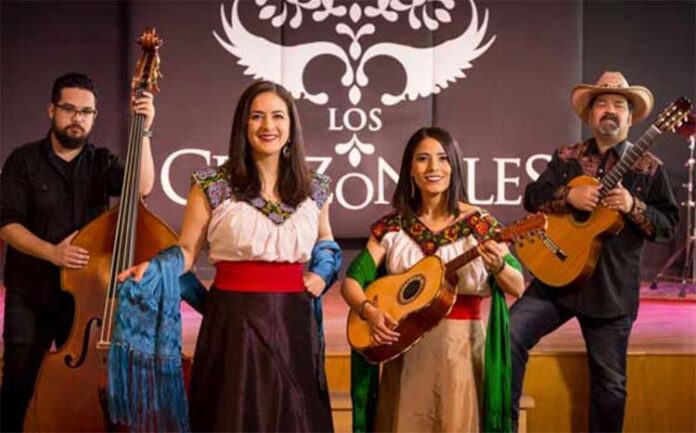
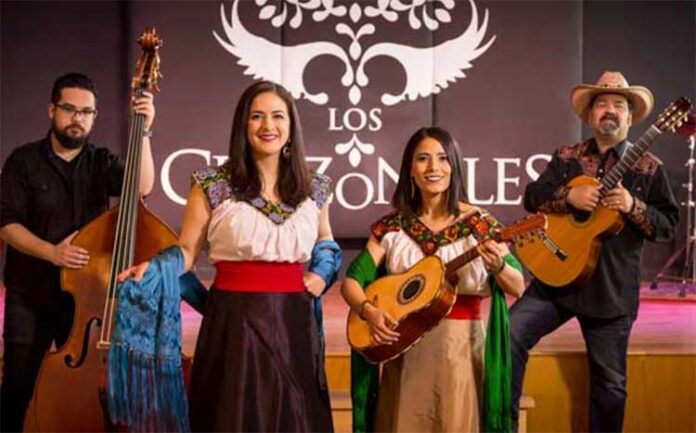
Los Cenzontles feature musicians Eugene and Iñigo Rodríguez, Fabiola Trujillo and Lucina Rodríguez. Kennedy Center.

October brings theater, music and independent cinema to the Bay Area. This week’s events offer opportunities to enjoy live performances, meet artists and discover stories connecting communities

by the El Reportero staff

Teatro Nahual brings migrant stories to San José

Two intertwined plays explore memory and humor

Directed by Verónica Meza, Teatro Nahual combines El viaje de los cantores, written by Hugo Salcedo, with Meza’s Circo, maroma y teatro in a single production. Migrants’ testimonies, family memories, dreams and aspirations intertwine with humor, exploring the social and political realities immigrant communities face in the United States. Music is by Isidro Jiménez. The 80-minute performance is recommended for audiences ages 12 and older. Saturday’s presentation includes English subtitles.

Saturday, Oct. 10, 7:30 p.m.; Sunday, Oct. 11, 2 p.m. MACLA, 510 S. First St., San José. Tickets: teatronahual.org or at the door.

Top of the Hill celebrates Daly City

Music, food and family activities return

The third annual Top of the Hill Festival features live performances, food vendors, a car show and family activities. Scheduled performers include J Boog, The Stylistics, Digital Underground and Kamaiyah. Residents can enjoy an afternoon of entertainment while supporting neighborhood businesses along Mission Street. Admission is free, and the celebration welcomes families and music lovers.

Saturday, Oct. 17, noon–6 p.m. Mission Street at John Daly Boulevard, Daly City. Free admission.

Cine+Más opens Latino Film Festival

Documentary honors television pioneer Sonia Manzano

The 18th San Francisco Latino Film Festival opens with Street Smart: Lessons from a TV Icon, a documentary about Sonia Manzano, who portrayed María on Sesame Street. The program features 20 feature films, shorts and conversations with filmmakers. Another highlight, Bird of Four Hundred Voices, explores the musical and cultural legacy of Los Cenzontles. The group will perform live during a screening at KQED on October 29. The festival offers virtual screenings.

Opening Thursday, Oct. 22, 6 p.m., Roxie Theater, 3117 16th St., San Francisco. In-person screenings Oct. 22–Nov. 1; virtual program Oct. 26–Nov. 5. cinemassf.org.

The Eternal Song screens in Berkeley

Documentary examines Indigenous cultural memory

The Native Voices Film Series presents The Eternal Song, exploring Indigenous traditions, ancestral relationships and the effects of cultural loss across generations. Filmmakers Zaya and Maurizio Benazzo will participate in a discussion following the screening, offering audiences an opportunity to reflect on the documentary’s themes.

Monday, Oct. 26, 7–10 p.m. David Brower Center, 2150 Allston Way, Berkeley.

spot_img

Life on pause: Children left in limbo after parents’ deportation to Mexico

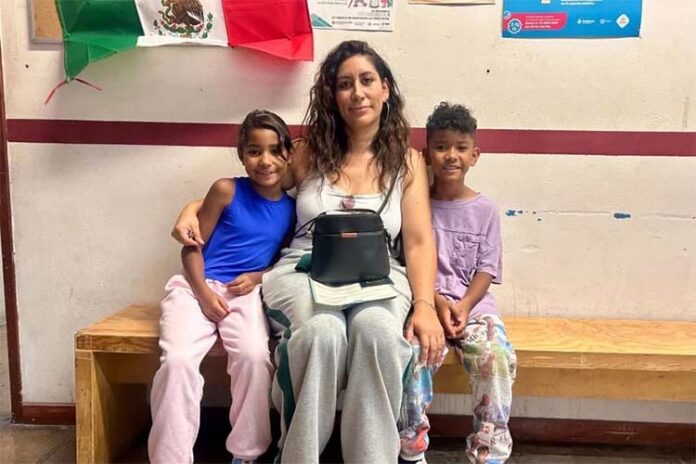
Claudia Duran, center, with her children Havanna Pate Duran and Milan Pate Duran, at the Soy México office in Jalisco. The family, from Sacramento, was applying for Mexican nationality documentation necessary for the kids to go to school. (Tracy L. Barnett)

by Tracy L. Barnett

“One thing about me, I loved school.”

Lina remembers herself as an outgoing girl who played basketball and piano, studied French, painted and loved attending school.

Today, at 17, she is a U.S. citizen living in Jalisco, Mexico. She has not attended school in five years.

“I don’t work. I don’t go to school. I don’t talk to anybody,” she said. “I’m just alone in my thoughts all day.”

Caught between two countries

Lina is among an unknown number of American-born children living in Mexico following a parent’s deportation. Although children born abroad to Mexican parents are entitled to Mexican nationality, obtaining documentation can become a costly bureaucratic struggle.

Without Mexican identification, children may encounter obstacles enrolling in school, accessing services and continuing their education.

The national Soy México program offers a temporary solution. During limited registration periods, eligible applicants can obtain Mexican birth certificates and their Unique Population Registry Code (CURP) without certain expensive requirements.

In Jalisco, the program opened Aug. 22 and is expected to continue through late October, unless federal funding runs out.

For Lina, obtaining those documents could finally reopen the classroom door.

“I have a higher possibility of going to school,” she said.

A family torn apart

Lina’s ordeal began five years ago in Florida, when she learned that her mother, Hanna, had been arrested and faced deportation.

“I was like, just come home, just come home,” Lina recalled.

Her mother’s detention disrupted the family. Lina and her brothers moved among relatives before eventually being separated.

Hanna, born in Mexico but raised in the United States since early childhood, arrived in Mexico with only $100. She struggled to find support and establish a stable home.

Fearing her children might enter state custody, Hanna arranged for them to join her in Mexico.

Lina, who had completed part of seventh grade in Florida, hoped to resume her education. However, without a CURP or Mexican birth registration, her mother could not enroll her.

“I had so much hope every time,” Lina said. But each attempt ended in disappointment.

Her younger brothers encountered similar difficulties. Their elementary school permitted them to attend classes as listeners, without receiving academic credit.

A bureaucratic obstacle

Tran Dang, executive director of The Rhizome Center for Migrants, which assisted the family, explained that obtaining Mexican registration normally requires authenticated, translated and certified U.S. birth records.

Even small discrepancies between documents can delay applications for months.

The organization helped Lina obtain her first government-issued photo identification, a U.S. passport. However, obtaining and apostilling another Florida birth certificate could have taken approximately eight months.

Instead, the family decided to wait for Soy México.

Operating since 2017, the program electronically verifies qualifying U.S. birth records, allowing applicants to bypass certain requirements. Eligible families may receive Mexican documentation the same day.

Nevertheless, not all states participate, and some applications cannot be completed. Texas is among the excluded states.

José Israel López, the program’s coordinator, said educational difficulties are among the principal reasons families seek assistance. Approximately 400 applications were received across Jalisco during the program’s first month.

Lost years, uncertain future

Lina’s brothers have returned to the United States, while she remains in Mexico with her mother.

She watches former classmates and relatives approach college while she struggles to return to school.

In a letter describing her experience, Lina wrote:

“My mother’s deportation did not only affect her. It changed the course of my life.”

Dang warned that bureaucratic delays can have lasting consequences for children’s futures.

Despite everything, Lina continues dreaming of a career and personal achievement.

“I want to be somebody big. Not somebody big to other people, but I want to be someone big to myself.”

Editor’s note: This article was edited to fit the available space in the print edition.

Tracy L. Barnett is a Guadalajara-based freelance writer and founder of The Esperanza Project.

spot_img

Billionaire tax explained: What you need to know about Prop. 40

La gente vitorea durante una actuación de Tom Morello en un acto de campaña a favor de una propuesta de «impuesto a los multimillonarios», en Los Ángeles, el 18 de febrero de 2026. People cheer during a performance by Tom Morello at a campaign event for a proposed “billionaires tax,” in Los Angeles on Feb. 18, 2026. Photo by Jae C. Hong, AP Photo

Proposition 40 would levy a one-time tax on billionaires. Supporters say it would raise money for healthcare and other programs, while opponents warn it could drive wealthy residents and assets out of California

by Jeanne Kuang and Kristen Hwang

Proposition 40, also known as the billionaire tax, is one of the most contentious measures on Californians’ ballots this November.

The proposal would impose a one-time asset tax on the net worth of California’s approximately 200 billionaires. It has divided Democrats, energized progressives and generated fierce opposition from business groups and the state’s wealthy technology sector.

Google co-founder Sergey Brin has poured more than $138 million into the campaign against the measure, including support for countermeasures Propositions 41 and 42. Opponents have raised more than $205 million to defeat Prop. 40.

The measure would also require California to create an entirely new system for taxing wealth. Aside from local taxes on real estate and some business equipment, the state does not generally value and tax personal property.

How would the tax work?

Within six months, California would have to develop methods to assess billionaires’ stocks, investment accounts, business interests and other valuable property, including art, jewelry, cars and collections.

Kirk Stark, a UCLA tax law professor, said the definition of taxable wealth would need to be broad to prevent taxpayers from shifting money into exempt assets.

The Franchise Tax Board would likely need additional employees for appraisals and audits. Some assets, particularly publicly traded stocks, are relatively easy to value. Privately held companies could present greater difficulties and potentially lead to lengthy legal disputes.

Will billionaires leave California?

Opponents warn the tax could prompt billionaires to leave, costing California billions in future income-tax revenue. Experts say it is impossible to know how extensive such an exodus might be.

Several European countries have abandoned wealth taxes because they were difficult and expensive to administer, although economists caution that those systems differed substantially from Prop. 40.

Researchers at the Hoover Institution estimate that billionaires representing about 30% of the proposed tax base have already publicly said they have left California, potentially reducing anticipated revenue.

The measure would apply to anyone who was a California resident on Jan. 1, even if that person subsequently moved. Tax attorneys expect legal challenges over that provision and the measure’s retroactive effect.

Would retirement accounts be taxed?

For Californians who are not billionaires, the answer is no.

Even for billionaires, Prop. 40 generally exempts pensions and individual retirement accounts, although there are exceptions, including certain Roth IRAs containing more than $10 million.

Opponents supporting Prop. 42 argue that broader protections are needed to prevent future taxation of retirement and investment accounts. Prop. 42 would broadly prohibit new taxes on personal property, including investment, pension and retirement accounts.

There are currently no proposals on the ballot or in the Legislature to tax ordinary Californians’ retirement accounts.

If Prop. 40 and Prop. 42 both pass, whichever receives more “yes” votes would become law.

Where would the money go?

Supporters say the billionaire tax would help compensate for federal funding reductions affecting Medi-Cal, California’s healthcare program for low-income residents. State officials project federal cuts could eventually amount to $30 billion annually.

Under Prop. 40, 90 percent of the revenue would go into a special healthcare fund, while 10 percent would support schools and food assistance programs such as CalFresh.

Critics, including the California Medical Association and Planned Parenthood, argue there is no guarantee the money would directly replace lost federal Medi-Cal funding. They say lawmakers could use the new revenue to maintain existing healthcare spending while redirecting other state money elsewhere.

Supporters reject that argument, saying Prop. 40 was specifically designed to provide money to address expected funding shortfalls.

This article was edited and reduced to fit the available space in the print edition.

CalMatters

spot_img

Mexico vs. The World: Mexican boxing stars prepare for Riyadh showdown

Esta es una composición promocional generada con IA a partir de la referencia, no una fotografía original de los boxeadores. This is a promotional composition generated by AI based on the reference, not an original photograph of the boxers.

by the El Reportero staff

Some of Mexico’s most recognizable boxing talents will enter the ring October 31 in Riyadh, Saudi Arabia, for a major international event headlined by Saúl “Canelo” Álvarez and Christian Mbilli.

Promoted as “Mexico vs. The World,” the DAZN card features several established Mexican fighters against international opponents, although questions remain about how competitive some of the matchups will be.

The evening’s main attraction pits Canelo against Mbilli, an aggressive pressure fighter whose relentless pace could present an interesting challenge for the Mexican superstar.

Beyond the headline bout, undefeated WBO featherweight champion Rafael Espinoza (28-0) will defend his title against Venezuela’s Lorenzo Parra (24-1-1). Espinoza enters as the more established competitor, but Parra has an opportunity to make an international statement.

Former world champion Jaime Munguia (46-2) is also scheduled to appear, defending his WBA super middleweight championship against Nikita Zon (12-0-1). The considerable difference in professional experience has raised questions about the selection of Munguia’s opponent.

Another issue involves Munguia’s mandatory challenger, Bektemir Melikuziev, whose anticipated title opportunity remains unresolved.

Meanwhile, Lindolfo Delgado will face Arthur Biyarslanov in a light welterweight contest, while David Picasso meets undefeated Filipino contender Carl Martin.

The event’s promotional campaign emphasizes the impressive combined records of the participating teams. However, boxing analysts frequently caution that victory totals alone cannot establish the competitiveness of a matchup. The quality of previous opponents, fighting styles and championship experience are equally important.

For Mexican boxing fans, the event represents another opportunity to celebrate the country’s longstanding influence on international boxing.

Yet the strongest boxing cards are remembered not simply for their famous names, but for competitive contests, unexpected performances and dramatic finishes.

Whether the Riyadh event delivers those qualities will depend on how effectively the international challengers respond when facing their Mexican counterparts.

For now, anticipation surrounds Canelo’s return and an evening designed to showcase Mexico’s enduring boxing tradition.

Source: Adapted and independently rewritten from reporting by Boxing 24/7 Wire, Oct. 8, 2026.

spot_img

Brazil’s election surprise tests Latin America’s political pendulum

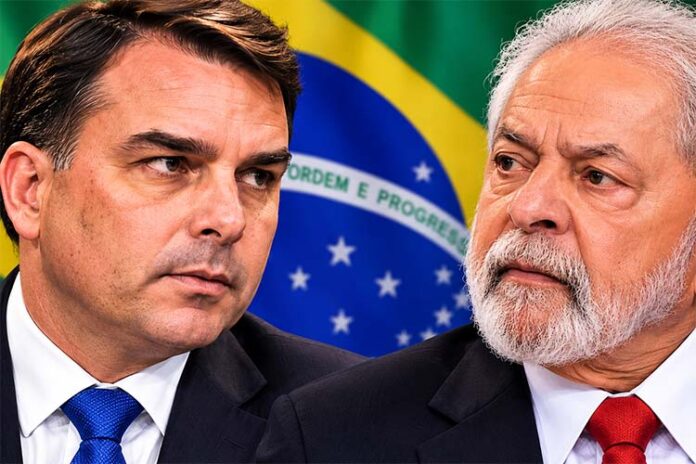
Flávio Bolsonaro y Luiz Inácio Lula da Silva se enfrentarán en la segunda vuelta presidencial de Brasil. Flávio Bolsonaro and Luiz Inácio Lula da Silva will face off in Brazil’s presidential runoff. Illustration: El Reportero/AI

by the El Reportero staff

Brazil’s presidential election has placed Latin America’s shifting political landscape under renewed scrutiny after conservative Senator Flávio Bolsonaro unexpectedly finished ahead of President Luiz Inácio Lula da Silva in the October 4 first round, setting up a closely contested runoff.

Bolsonaro received 47.03 percent of valid votes, compared with Lula’s 45.16 percent, according to Brazil’s Superior Electoral Court. Neither secured the majority required for victory, sending both candidates into an October 25 runoff.

The outcome exceeded expectations for Bolsonaro, whose campaign demonstrated the continuing influence of his father, former President Jair Bolsonaro. It also highlighted divisions among Brazilian voters over economic management, public security and the country’s political direction.

A Datafolha survey released October 8 placed Flávio Bolsonaro at 52 percent and Lula at 48 percent of valid voting intentions. The difference falls within the poll’s statistical uncertainty, underscoring the competitiveness of the race.

Brazil’s election comes amid broader political changes across Latin America. Conservative electoral victories in Chile, Colombia and Peru, alongside Javier Milei’s presidency in Argentina, have altered the region’s ideological balance.

However, the political pendulum has not moved uniformly. Mexico and Uruguay remain governed by left-leaning administrations, demonstrating that national political developments cannot be reduced to a single regional trend.

Analysts point to inflation, public safety, economic uncertainty and dissatisfaction with incumbent governments as recurring concerns influencing elections. Their importance varies considerably according to each country’s circumstances.

In Brazil, the campaign has entered a new phase as candidates seek support from voters whose preferred contenders were eliminated in the first round. Third-place finisher Augusto Cury announced his support for Bolsonaro on October 8, adding another development to the runoff campaign.

The October 25 vote will determine whether Lula continues in office or Brazil undergoes a change in leadership. Beyond domestic politics, the result could influence regional diplomacy, trade relationships and environmental policy.

For Latin America, Brazil’s election offers another indication of how rapidly political alignments can change, even as the region remains divided among competing political visions and economic priorities.

– Sources: Brazil’s Superior Electoral Court, Agência Brasil, Reuters, Datafolha, Associated Press and Americas Quarterly.

spot_img

When justice becomes vengeance, we lose something of ourselves

Marvin Ramírez, editor

by Marvin Ramírez

There is something troubling about how accustomed our society has become to death.

When someone commits a terrible murder, particularly one as brutal as the crime committed by Christa Pike when she was 18 years old, it is understandable that people feel anger, horror and sympathy for the victim and her family. Nothing can erase what happened. Nothing can return a murdered daughter to her parents or undo the suffering caused by that crime.

But after decades have passed, we should be able to ask another question: What does killing the killer accomplish?

This is not about excusing murder. Pike committed a horrific crime and was rightly held accountable. She lost her freedom and has spent most of her life behind bars under a sentence of death. Imagine living year after year knowing that the government intends eventually to end your life.

That itself is an extraordinary punishment.

Yet we increasingly speak about executions as though another death somehow completes the equation. Someone killed, therefore that person must also be killed.

But justice and revenge are not necessarily the same thing.

For Christians especially, there is an uncomfortable contradiction here. Christianity teaches forgiveness, repentance, mercy and the ultimate judgment of God. We cannot preach those principles only when forgiveness is easy. Their real meaning appears precisely when forgiveness seems almost impossible.

Forgiveness does not mean forgetting the victim. It does not mean declaring the murderer innocent. It does not require opening the prison doors.

A person can spend the rest of her life in prison while society still refuses to deliberately take her life.

Pike was only 18 when she committed her crime. That does not diminish its horror. But an 18-year-old who commits an impulsive, savage act and the middle-aged woman who has spent decades imprisoned with that knowledge are not literally the same person at the same moment in life.

Human beings can change. They can understand the enormity of what they have done. They can repent.

If we believe repentance is possible, then mercy must also remain possible.

The victim’s family has endured a loss that most of us cannot imagine, and no outsider has the right to tell them how quickly they should have healed or how deeply they should grieve. Their pain deserves compassion.

But society must make a different decision.

The law should not be an instrument through which our understandable anger is transformed into another deliberate killing. The purpose of justice should be to protect society, hold offenders accountable and recognize the dignity of victims—not to satisfy a thirst for death.

Another execution will not resurrect the victim. It will not erase the crime. It will not restore the years that were stolen from her.

Perhaps there comes a point when the greater act of courage is to say: enough.

Let her remain imprisoned. Let her live with what she did. Let her seek forgiveness from God, from the family she devastated and from her own conscience. Whether that forgiveness is granted in this life is another matter.

And let the victim’s family seek something more valuable than vengeance: peace.

We live in a culture increasingly comfortable with death as a solution—to crime, suffering, conflict and human failure. We should be careful about what that does to us.

Mercy does not dishonor the dead.

Sometimes mercy is precisely how we demonstrate that, even after witnessing something terrible, we refuse to become merciless ourselves.

The final judgment belongs not to us, but to God.

spot_img

Latino or Hispanic? An Identity Worth Understanding

by the El Reportero editorial board

The question behind this column arose unexpectedly while El Reportero was preparing a recent story about a San Francisco Municipal Transportation Agency event celebrating our community’s heritage. During that process, Beatriz, who provided us with information for the story, raised a simple but important question: Should we call ourselves Latino or Hispanic?

It is a question that deserves more than a quick answer.

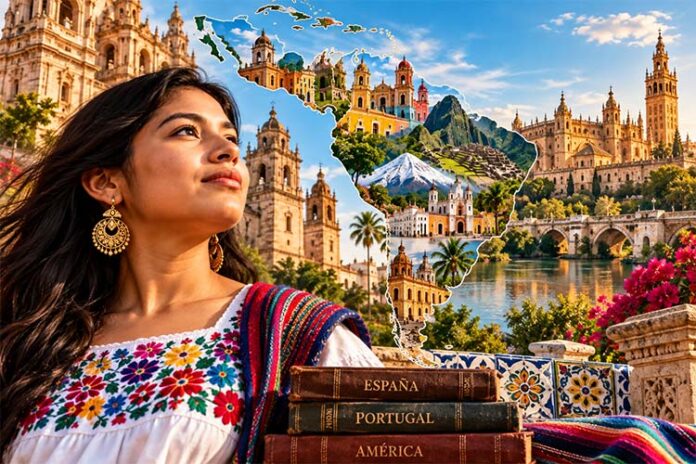
The word “Latino” is used so naturally today in the United States and throughout the Americas that we rarely stop to ask what it actually means, where it came from, or whether it accurately describes the historical and cultural inheritance of our people.

That question led us to look more closely at the history behind these terms. And what we found makes a strong case that, historically and culturally, Hispanic describes much more of our inheritance than the modern label Latino alone can convey.

“Latino” did not originate in the Americas. Its roots lie in Latium, the region of ancient Italy where Rome emerged. As Rome expanded, Latin, Roman law, institutions and customs spread throughout large parts of Europe.

One of those territories was Hispania, the Roman name for much of the Iberian Peninsula. Centuries later, through a long and complex historical process, Spain and Portugal emerged from that Iberian world.

And here an important distinction begins.

Rome never conquered the Americas. There were no Roman provinces in Mexico, Peru, Cuba, Nicaragua, Brazil or Argentina. Roman legions did not establish American cities, nor did Rome directly bring Latin to the New World.

The connection came through another route: Rome profoundly influenced Hispania; Spain and Portugal emerged from the Iberian Peninsula; and Spaniards and Portuguese later brought their languages, institutions, religion, legal traditions and customs to the Americas.

Our European inheritance, therefore, did not arrive directly from Rome. It came through the Iberian world.

That distinction is fundamental. Our connection to ancient Rome is indirect; our historical connection to Spain and Portugal is direct. Spanish-speaking Americans did not inherit Latin from Roman colonizers. We inherited Spanish from Spain. Brazilians inherited Portuguese from Portugal.

So where does “Latin America” come from?

The expression became established during the 19th century, when intellectuals were developing the idea of “Latin” peoples in contrast to the Anglo-Saxon world. France also used the concept in connection with its geopolitical ambitions in the Americas.

This raises an obvious question. If Americans are called Latin because Spanish, Portuguese and French developed from Latin, why should that identity be restricted to the Americas?

Spanish, Portuguese, French, Italian and Romanian are Romance languages descended from Latin. They are spoken by peoples in many parts of the world. Speaking a language derived from Latin cannot, by itself, explain an entire civilization or cultural identity.

Language matters enormously. But culture is much more than language.

Our religious traditions, legal systems, family customs, celebrations, architecture, foods and ways of understanding society developed through centuries of interaction among Indigenous peoples, Africans, Spaniards, Portuguese and many other peoples. That history cannot be reduced to the linguistic fact that Spanish and Portuguese descended from Latin.

Brazil illustrates the distinction. Brazil is not Hispanic America in today’s Spanish-language sense, but it is part of Ibero-America, sharing profound historical roots with Spanish-speaking American nations through the Iberian experience.

None of this means anyone should be told not to call himself or herself Latino. Identities evolve, and particularly in the United States, Latino has acquired a widely understood social and cultural meaning.

But accepting a modern identity should not require forgetting an older one.

If we ask which term more directly identifies the European historical and cultural inheritance transmitted to most of Spanish-speaking America, the answer points not directly to Rome, but to Hispania and, ultimately, Spain.

That was the discovery behind the question that started this column.

We can call ourselves Latino. But we should also understand why Hispanic is not merely another government checkbox or an outdated label. It describes a historical inheritance that existed centuries before the modern term Latin America became popular.

Our Latin linguistic roots reached America largely through the Hispanic and Iberian world. Recognizing that fact does not erase our Indigenous, African or other ancestries. It simply recognizes another essential part of who we are.

Perhaps, then, the question is not whether we are Latino or Hispanic.

The better question is why we should forget that before we were called Latinos, we already had a Hispanic history.


spot_img

Community Calendar – October 9

Los Cenzontles cuentan con los músicos Eugene e Iñigo Rodríguez, Fabiola Trujillo y Lucina Rodríguez. Los Cenzontles feature musicians Eugene and Iñigo Rodríguez, Fabiola Trujillo, and Lucina Rodríguez.

October brings theater, music and independent cinema to the Bay Area. This week’s events offer opportunities to enjoy live performances, meet artists and discover stories connecting communities

by the El Reportero staff

Teatro Nahual brings migrant stories to San José

Two intertwined plays explore memory and humor

Directed by Verónica Meza, Teatro Nahual combines El viaje de los cantores, written by Hugo Salcedo, with Meza’s Circo, maroma y teatro in a single production. Migrants’ testimonies, family memories, dreams and aspirations intertwine with humor, exploring the social and political realities immigrant communities face in the United States. Music is by Isidro Jiménez. The 80-minute performance is recommended for audiences ages 12 and older. Saturday’s presentation includes English subtitles.

Saturday, Oct. 10, 7:30 p.m.; Sunday, Oct. 11, 2 p.m. MACLA, 510 S. First St., San José. Tickets: teatronahual.org or at the door.

Top of the Hill celebrates Daly City

Music, food and family activities return

The third annual Top of the Hill Festival features live performances, food vendors, a car show and family activities. Scheduled performers include J Boog, The Stylistics, Digital Underground and Kamaiyah. Residents can enjoy an afternoon of entertainment while supporting neighborhood businesses along Mission Street. Admission is free, and the celebration welcomes families and music lovers.

Saturday, Oct. 17, noon–6 p.m. Mission Street at John Daly Boulevard, Daly City. Free admission.

Teatro Roxie

Cine+Más opens Latino Film Festival

Documentary honors television pioneer Sonia Manzano

The 18th San Francisco Latino Film Festival opens with Street Smart: Lessons from a TV Icon, a documentary about Sonia Manzano, who portrayed María on Sesame Street. The program features 20 feature films, shorts and conversations with filmmakers. Another highlight, Bird of Four Hundred Voices, explores the musical and cultural legacy of Los Cenzontles. The group will perform live during a screening at KQED on October 29. The festival offers virtual screenings.

Opening Thursday, Oct. 22, 6 p.m., Roxie Theater, 3117 16th St., San Francisco. In-person screenings Oct. 22–Nov. 1; virtual program Oct. 26–Nov. 5. cinemassf.org.

The Eternal Song screens in Berkeley

Documentary examines Indigenous cultural memory

The Native Voices Film Series presents The Eternal Song, exploring Indigenous traditions, ancestral relationships and the effects of cultural loss across generations. Filmmakers Zaya and Maurizio Benazzo will participate in a discussion following the screening, offering audiences an opportunity to reflect on the documentary’s themes.

Monday, Oct. 26, 7–10 p.m. David Brower Center, 2150 Allston Way, Berkeley.

spot_img

San Francisco Latino Film Festival marks 18 years of bringing Latino stories to the screen

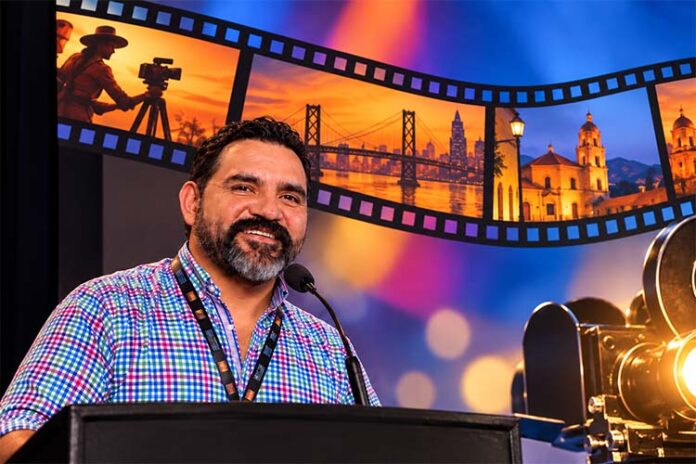
Lucho Ramírez, director de Cine+Más SF, encabeza el Festival de Cine Latino de San Francisco, que celebra su decimoctava edición. Lucho Ramírez, director of Cine+Más SF, leads the San Francisco Latino Film Festival, celebrating its 18th edition.

by the El Reportero staff

The San Francisco Latino Film Festival returns October 22 through November 1 for its 18th edition, presenting 40 films selected from more than 400 submissions and continuing its mission of giving Latino filmmakers a platform beyond mainstream Hollywood.

Organized by Cine+Más SF under the leadership of Lucho Ramírez, the festival showcases documentaries, dramas, thrillers, romances and comedies from the United States, Latin America and Spain, with special attention to independent filmmakers from the San Francisco Bay Area and Northern California.

“I’m excited by the program,” Ramírez told El Reportero. “We received over 400 films and arrived at 40 with features and shorts. There are many documentaries that profile people with interesting and inspiring stories.”

Among this year’s selections, Carmela & the Walkers follows a woman helping migrants in Ecuador. Comparsa explores young women using art to heal communities affected by violence, while Maxita presents environmental and spiritual lessons from Brazilian Indigenous leaders working to protect nature.

These documentaries illustrate the festival’s commitment to human stories that might otherwise receive little exposure in commercial theaters.

Another highlight is Bird of Four Hundred Voices, a documentary featuring Los Cenzontles, the Richmond-based Mexican-American cultural organization dedicated to preserving traditional music and cultural heritage.

The film is scheduled for October 29 at The Commons at KQED in San Francisco, accompanied by a live performance by Los Cenzontles. Their participation is also featured in El Reportero’s Community Calendar in this edition.

For Ramírez, the festival represents more than entertainment. In a 2022 KPIX CBS News Bay Area interview, he emphasized the importance of visibility for Latino filmmakers, particularly those creating independently outside the Hollywood industry. He also stressed that Latino filmmakers should not be confined to particular cinematic genres.

That mission continues today, despite the financial challenges of organizing an annual cultural event.

“It’s always challenging to decide on films and even more challenging to produce the festival with a limited budget,” Ramírez said.

The festival also offers audiences opportunities to meet fellow film enthusiasts, discover emerging directors and experience cinematic perspectives rooted in different cultures and identities.

“We hope people will come out to watch some great films, meet other film lovers, and see works that otherwise you may never see at a theater,” Ramírez added.

For screening schedules and ticket information, visit www.cinemassf.org.

spot_img