Cheech Marin y Tommy Chong recibirán una estrella conjunta en Hollywood próximamente. Cheech Marin and Tommy Chong will soon receive a joint star on the Hollywood Walk of Fame.
by the El Reportero staff
Cheech Marin and Tommy Chong, the pioneering comedy duo whose humor helped bring Chicano identity and 1970s counterculture into mainstream entertainment, have been selected to receive a joint star on the Hollywood Walk of Fame.
The Hollywood Chamber of Commerce named Cheech & Chong to its Class of 2027 in the motion pictures category. The selection was announced July 23 after the Walk of Fame Selection Committee chose 32 honorees from hundreds of nominations and the Chamber’s board ratified the choices.
No ceremony date or star location has been announced. Honorees generally have two years from their selection to schedule the dedication, and the Chamber usually releases ceremony details shortly before each event.
The distinction recognizes a partnership that began more than five decades ago. Richard “Cheech” Marin, a Los Angeles-born Mexican American, met Canadian musician and comedian Tommy Chong in Vancouver during the late 1960s. Their contrasting personas developed into comedy routines that mixed social satire, cannabis humor and sharply observed portrayals of American life.
After building a following through live performances and successful comedy albums, the pair reached movie audiences with Up in Smoke in 1978. The film became a counterculture landmark and led to several more collaborations, including Cheech and Chong’s Next Movie, Nice Dreams and Still Smokin.
Their influence has endured through changing attitudes toward cannabis and Latino representation. Their story received renewed attention in Cheech & Chong’s Last Movie, a documentary combining archival footage, animation and a present-day road trip. After premiering at South by Southwest in 2024 and entering theaters in 2025, it began streaming on Paramount+ in 2026.
Marin also established a major independent career as an actor, director and voice performer. His credits include Born in East L.A., Nash Bridges, Tin Cup, The Lion King, Cars and Coco. Away from film, he has become one of the country’s most prominent advocates and collectors of Chicano art.
In 2022, the Riverside Art Museum opened the Cheech Marin Center for Chicano Art & Culture, known as “The Cheech.” The center houses a collection of nearly 500 works donated by Marin and promotes exhibitions, research and public dialogue about Chicano art.
The Walk of Fame honor therefore celebrates more than the duo’s familiar characters. It recognizes two artists whose comedy challenged cultural boundaries, created space for Mexican American voices and remained influential across generations in American film and popular culture today.
– Sources: Hollywood Walk of Fame; Riverside Art Museum; Paramount+
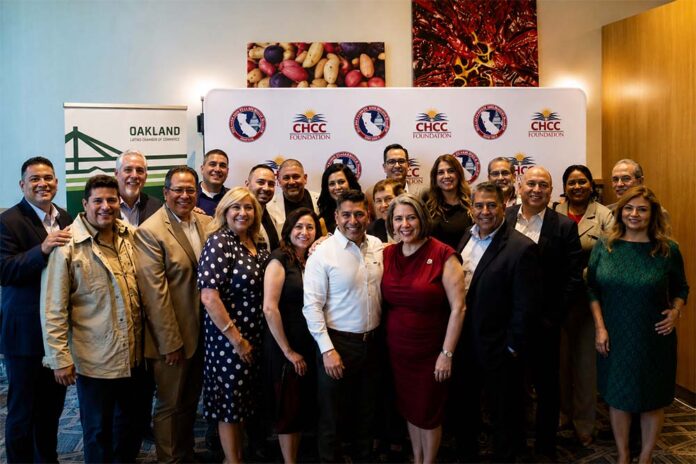
Líderes empresariales y comunitarios participan en la Convención Estatal de CHCC en Oakland. Business and community leaders participate in the CHCC Statewide Convention in Oakland.
by the El Reportero staff
Late summer brings music, culture, business and family entertainment across the Bay Area. From Puerto Rican rhythms in Hayward to a major Latino business convention in Oakland, upcoming events offer opportunities to gather, celebrate and connect.
Music at the Mansion
Latin Rhythm Boys bring Puerto Rican sounds to Hayward
The Music at the Mansion Summer Concert Series continues with the Latin Rhythm Boys, bringing their energetic blend of salsa and Puerto Rican rhythms to an outdoor community celebration. Families can enjoy live music, children’s activities and food vendors while spending the afternoon on the grounds of historic Mt. Eden Mansion.
Sunday, Aug. 16, 1–5 p.m., Mt. Eden Mansion, 2451 W. Tennyson Rd., Hayward. Free admission. Information: thehardfoundation.org.
CHCC 47th Annual Statewide Convention
Latino business leaders gather in Oakland
The California Hispanic Chambers of Commerce brings entrepreneurs, business owners, corporate executives and community leaders together for its 47th Annual Statewide Convention. The three-day gathering features networking, workshops, speakers and discussions focused on economic development, entrepreneurship, leadership and opportunities for Latino-owned businesses throughout California.
Wednesday through Friday, Aug. 19–21, Oakland Marriott City Center, 1001 Broadway, Oakland. Registration required. Information: CHCC2026.com.
MJ Santos Live Recording Scholarship Fundraiser
Bay Area musicians support a young artist’s education
The MJ Santos Scholarship Fund continues its fundraising campaign with a special live recording session featuring talented Bay Area musicians and supporters. The event helps percussionist MJ Santos pursue his studies at The New School in New York while bringing the community together around music, education and the next generation of artists.
Saturday, Aug. 15, 25th Street Recording, 426 25th St., Oakland. Advance reservations and event information are recommended.
Beyond the Latino Community
San Francisco celebrates Italian culture at Festa Coloniale
San Francisco’s Italian American community welcomes visitors to Festa Coloniale, a neighborhood celebration featuring live entertainment, traditional food, family activities and the atmosphere of historic North Beach. The annual gathering offers Latino families an opportunity to experience another of the Bay Area’s rich immigrant cultural traditions.
Saturday, Aug. 22, Italian Athletic Club, 1630 Stockton St., San Francisco. Admission information and schedule available from the organizers.
For additional summer events, visit ElReporteroSF.com under Calendar. Community organizations, nonprofits, artists and event promoters may submit upcoming events for possible publication at elreportero@aol.com.
Mexico’s Under-20 men’s national team completed a memorable tournament by winning the 2026 Concacaf championship, qualifying for the 2027 FIFA U-20 World Cup and securing a place in the 2028 Los Angeles Olympics.
El Tri defeated the United States 2-0 in the Aug. 9 final at Estadio Banorte in Mexico City, defending the title it won in 2024. Cristóbal Alfaro scored both goals as Mexico claimed its record 15th Concacaf U-20 championship.
Alfaro opened the scoring in the 28th minute with a header following a set piece. The United States was reduced to 10 players late in the first half when captain Chris Applewhite received a red card after a video review of his challenge on Hugo Camberos.
Alfaro struck again in the 69th minute, capitalizing on a defensive mistake and heading the ball into the net from inside the penalty area. Mexico protected its advantage and completed the tournament undefeated, conceding only one goal.
Mexico reached the championship match by defeating Canada 2-1 in the Aug. 7 semifinal. Canada scored in the sixth minute, but Alfaro equalized shortly after halftime. Camberos then converted a penalty in the 78th minute to complete the comeback and guarantee Mexico’s Olympic qualification.
The tournament’s four semifinalists—Mexico, the United States, Canada and Costa Rica—earned berths in the 2027 FIFA U-20 World Cup in Azerbaijan and Uzbekistan. Because the United States had already qualified automatically for the 2028 Olympics as the host country, Mexico secured Concacaf’s available Olympic berth by winning the championship.
The victory restored momentum for Mexico after the country failed to qualify for the men’s soccer tournament at the 2024 Paris Olympics. It also confirmed another strong generation of young Mexican players, with Camberos finishing as the tournament’s leading scorer and receiving the Best Player award.
Mexico’s Under-23 team experienced a different conclusion at the Central American and Caribbean Games. It earned the silver medal after drawing Venezuela 2-2 in the men’s final in Santo Domingo and losing the penalty shootout 3-2. Mateo Levy scored Mexico’s two goals, but Venezuela prevailed from the penalty spot to capture the gold medal.
A free call to 811 helps keep you safe and prevents costly repairs
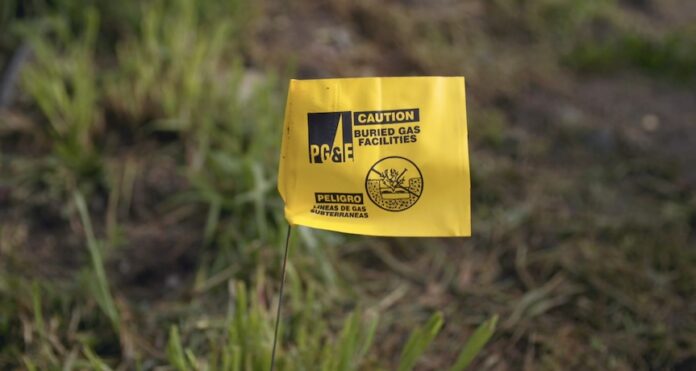
OAKLAND, Calif. — Almost every day, somewhere in Northern and Central California, an underground utility line is damaged due to excavation. Each of these incidents poses a public safety risk requiring a 911 response and can result in repair bills averaging $3,500. To help prevent these incidents and raise awareness about the importance of calling 811 before any excavation project—large or small—Tuesday, August 11, is recognized as National 811 Day.
Failure to contact 811 before digging is the leading cause of underground utility damage each year. In PG&E’s service area alone, there were more than 1,200 incidents of line damage in 2025, and in 55% of those cases, 811 was not called.
Underground utility lines can be shallow—sometimes just a few inches below the surface—so it is important to call 811 before starting any project that involves digging, even seemingly small ones like building or replacing a fence, planting, or landscaping.
“With a quick, free call to 811, utility professionals will come to your home or worksite and mark the location of underground lines so you can dig safely and avoid costly repairs. Know what’s below before starting any excavation project—whether it’s planting, landscaping, or working on a fence—and call 811 two days before you dig. Remember: call 811 so you don’t have to call 911,” said Mitch Smith, PG&E’s Director of Damage Prevention.
By the Numbers
During warmer months, the number of excavation projects increases, and with that, so does the number of damages to unmarked underground lines. In fact, across PG&E’s service area in Northern and Central California:
There were 1,247 incidents in 2025 within PG&E’s service area where underground utility lines were damaged due to excavation; in 55% of these incidents, 811 was not called.
So far in 2026, there have been 561 incidents where underground utility lines were damaged due to excavation; in 57% of these incidents, 811 was not called.
For homeowners specifically, that figure rises to 89%.
The average cost to repair a damaged utility line is $3,500.
Common causes of damage to underground utility lines during excavation include building or replacing a fence, gardening and landscaping, planting a tree or removing a stump, sewer and irrigation work, and building a deck or patio.
When you call 811 to request that lines be located and marked, a professional locator will visit your project site to mark the location of underground utility lines—including gas, electric, water, telecommunications, and sewer—at no cost. Knowing where underground lines are buried while you dig and following safe excavation practices will help keep you and your family safe and connected to essential services.
Calling 811 is quick and free.
Customers should call 811 at least two business days before starting any project that involves digging, regardless of its size. Customers can also visit 811express.com to request that underground utility lines at their project site be marked.
Professional utility workers from all utility companies (gas, electric, water, sewer, and telecommunications) will be dispatched to mark the location of all underground utility lines at the project site using flags, spray paint, or both.
The 811 call center serving Northern and Central California—USA North—is staffed 24 hours a day, seven days a week, and offers translation services into Spanish and other languages.
PG&E tips for safe digging
Mark the project area in white: Identify the excavation site by drawing a box around the area using white paint, white stakes, white flags, white chalk, or even white baking flour.
Call 811 or submit an online request at least two business days before digging: Be prepared to provide the project address and general location, the start date, and the type of excavation activity. PG&E and other utility companies will identify underground facilities in the area at no cost. Requests can be submitted up to 14 days before the project begins.
Dig safely: Use hand tools when digging within 24 inches of the outer edge of underground lines. Leave utility flags, stakes, or paint marks in place until the project is complete. Backfill and compact the soil.
Be alert for signs of a natural gas leak: Watch for the smell of “rotten eggs,” listen for whistling, hissing, or roaring sounds, and look for dirt blowing into the air, bubbling in a pond or stream, or dead or dying vegetation in an area that would otherwise be moist. If you smell gas, call 911 and then call G&E at 800-743-5000.
About PG&E:
Pacific Gas and Electric Company, a subsidiary of PG&E Corporation (NYSE: PCG), is a combined natural gas and electric utility serving more than 16 million people across 70,000 square miles in Northern and Central California. For more information, visit pge.com and pge.com/news.
El Salvador capped its campaign in the women’s soccer tournament at the XXV Central American and Caribbean Games Santo Domingo 2026 with a bronze medal after defeating Venezuela 2-0 on Thursday in the third-place match.
La Selecta imposed its tactical discipline, neutralized Venezuela’s attack and struck at key moments. Yoselyn López opened the scoring in the 28th minute with a powerful right-footed shot from outside the penalty area that gave the Venezuelan goalkeeper no chance.
In the second half, team captain Victoria Sánchez sealed the victory with a precise header following a free kick. Solid defending and clinical finishing proved to be the keys as El Salvador secured a place on the podium, while Venezuela finished in fourth place.
Cuba repeats as women’s handball champion with victory over the Dominican Republic
Cuba’s women’s national team successfully defended its title by winning the gold medal in the handball tournament at the XXV Central American and Caribbean Games Santo Domingo 2026, defeating the Dominican Republic 35-15 before a packed crowd at the Handball Pavilion in Parque del Este.
From the opening whistle, the Cubans dominated both ends of the court. Backed by a strong defense and an efficient offense, they steadily increased their lead and sealed a commanding victory to claim the gold medal.
Colombia secures silver in women’s volleyball at Santo Domingo 2026 Games
Colombia secured the silver medal in the women’s volleyball tournament at the XXV Central American and Caribbean Games on Thursday by defeating Cuba in four sets.
The Colombians won 25-19, 25-19, 17-25 and 25-23 at Ricardo Gioriber Arias Volleyball Palace.
Colombia had taken a 2-0 lead before Cuba’s coach made changes to the starting lineup for the third set. The substitutions paid immediate dividends, as players coming off the bench helped Cuba extend the match.
The gold medal match is scheduled for Friday at 8:00 p.m.
Leading Colombia were María Alejandro, Ana Karina Olaya, Valerín Carabalí and Ivonne Montaño. Cuba, which will now compete for the bronze medal, was led by Yalain de la Peña, Laura Suárez and Gretell Moreno.
For more than seven decades, Luis Gasca carried a trumpet that spoke many musical languages. It sang with the elegance of jazz, the fire of Afro-Cuban rhythms, the soul of blues and the energy of rock. Whether performing alongside Count Basie, Janis Joplin, Santana, Tito Puente or Malo, Gasca became one of the rare musicians capable of moving effortlessly between musical worlds while leaving a distinctive sound that was unmistakably his own.
Now the Latin music community is mourning the loss of one of its most influential voices.
Friends and fellow musicians say Gasca gave what would become his final public performance on Aug. 1, 2026, during the Little Joe and Cris Hernandez Legacy Scholarship Foundation inaugural benefit in San Antonio. Within hours, tributes flooded social media from musicians, promoters and longtime friends remembering not only his extraordinary talent but also his kindness, humility and willingness to mentor younger artists.
Although the family had not publicly released the cause of death as of publication, the outpouring of condolences reflected the enormous respect Gasca earned throughout the music world.
From Houston’s tamale stands to Berklee
Born March 24, 1940, in Houston, Texas, Luis Gasca grew up in a hardworking Mexican American family. His parents earned a living making and selling tamales, and music soon became the young Gasca’s calling.
By the age of 15 he was already playing paid gigs, displaying remarkable talent that led to a scholarship at Berklee College of Music in Boston when he was only 18.
There he immersed himself in jazz while studying the work of Miles Davis, Cal Tjader, Tito Puente, John Coltrane and other masters who would influence his lifelong musical journey.
Years later, Gasca reflected on those formative experiences by saying that love for music “cannot be taught. One has to love the music and the knowledge.”
A career among legends
Gasca’s résumé reads like a history of modern American music.
Early in his career he performed with Count Basie and Stan Kenton before joining Afro-Cuban giants such as Mongo Santamaría and Tito Puente. During the late 1960s he became part of the San Francisco Bay Area’s exploding musical scene, where jazz, Latin rhythms, psychedelic rock and blues intersected.
He appeared with Janis Joplin, including her legendary Woodstock performance in 1969, and collaborated with musicians connected to Santana, the Grateful Dead and Malo, helping shape the emerging sound of Latin jazz fusion.
His landmark 1972 album For Those Who Chant remains one of the genre’s defining recordings. Featuring Carlos Santana, Joe Henderson, Stanley Clarke, Lenny White, Greg Rolie, Neal Schon and other celebrated musicians, the album demonstrated Gasca’s ability to unite jazz improvisation with Latin percussion, funk and rock.
A Bay Area connection
Although his career took him around the world, Gasca maintained strong ties to Northern California.
In May 2025 he appeared as a special guest with Calito Franco y Su Tumbao Añejo at Blondie’s Bar in San Francisco, delighting Bay Area audiences with the same vibrant sound that had defined his career for decades.
Local musicians remember him not simply as a celebrated artist but as a generous mentor.
Janis Joplin junto al trompetista Luis Gasca, integrante de la Kozmic Blues Band, a finales de la década de 1960. Janis Joplin with trumpeter Luis Gasca of the Kozmic Blues Band during the late 1960s.
Bay Area saxophonist David Villanueva recalled meeting Gasca in 1996 and spending hours listening to stories about Santana, Janis Joplin, Pérez Prado, Cal Tjader and Joe Henderson.
“Luis was a musical force,” Villanueva wrote after learning of his death. “He touched many of our local jazz community cats and everyone has a Luis Gasca story.”
Sammy Ybarra echoed that sentiment, remembering Gasca first as a friend and then as “one of the baddest horn players ever to walk this earth.”
Other musicians recalled seeing him perform only days before his passing, a reminder that he remained committed to sharing his music until the very end.
More than a musician
Gasca’s life was not without challenges.
At one point he stepped away from performing after acknowledging struggles with self-destructive behavior. Instead of allowing those difficulties to define him, he eventually returned to the stage, continuing to record, teach and perform for new generations of musicians.
His resilience became another part of his legacy.
Throughout his career he inspired countless young artists, not only through his recordings but also through personal encouragement, conversations after performances and his willingness to share knowledge accumulated over decades.
A final encore
Perhaps the most fitting ending for a musician who dedicated his entire life to performance is that his final public appearance came before a live audience.
Those who attended the Aug. 1 benefit could not have known they were witnessing the last public performance of one of Latin jazz’s pioneering trumpet voices.
Today, the applause has faded, but the music remains.
From Houston to Boston, from Woodstock to San Francisco, from jazz clubs to concert halls around the world, Luis Gasca helped redefine what Latin jazz could become.
His trumpet may now be silent, but its sound will continue to inspire musicians and audiences for generations.
— References: Woodstock Whisperer; Tejano 360 Network; public statements and tributes by David Villanueva, Sammy Ybarra, Annie Rodriguez, Everett Lovato, and other musicians and friends; historical biographies and discographies of Luis Gasca.
Funcionarios de inmigración se enfrentaron con residentes de Bell tras una colisión de tráfico con uno de sus vehículos durante redadas de inmigración en el área de Los Ángeles el 20 de junio de 2025. Immigration officials clash with residents in Bell after a traffic collision with one of their vehicles during immigration raids in the Los Angeles area on June 20, 2025. Photo by Carlin Stiehl, Los Angeles Times via Getty Images
A federal judge held the Department of Homeland Security in contempt for not disclosing records related to the cellphone communications of immigration agents in Los Angeles
August 4, 2026 – A federal judge on Tuesday held the Department of Homeland Security in contempt for allegedly slow-rolling an order to create digital copies of communications from personal cell phones used by immigration agents during operations in the Los Angeles area last year.
U.S. District Judge Maame Ewusi-Mensah Frimpong in the Central District of California previously ordered the federal government in January to expedite imaging the personal cell phones of more than 800 agents involved in controversial immigration raids in Los Angeles in 2025.
Judge Frimpong imposed a fine of $500 per day on the federal government until it complies with the order to turn over phones as part of discovery and reimburse plaintiffs’ attorneys for the legal costs of getting the records.
Attorneys for DHS admitted in court in June that the agency had not provided the records. They told the judge they were processing the government devices at a rate of three phones every two weeks, which plaintiffs noted would take nearly four years to complete.
Attorneys representing immigrants caught up in Operation At Large — the name given to the Trump administration’s Los Angeles immigration crackdown last year — argue the phones may contain evidence of a pattern of racial profiling by federal agents.
Attorneys from the American Civil Liberties Union wrote in May that the Department of Homeland Security “simply proceeded to thwart” Frompong’s order “by dragging their feet on imaging government-issued cell phones and by openly defying the order as to personal phones.”
Last month, ACLU attorneys asked Frimpong to issue another order that would prohibit agents from detaining people based on their race. They cited text messages and body camera footage in which agents used racial slurs, including “wet and “tonks,” to identify working-class Latinos to stop, according to court records.
“Not only are federal agents violating the Constitution on the streets, the government is violating court orders by intentionally withholding critical evidence about its immigration enforcement operations.” said Mayra Joachin with the ACLU of Southern California.
The Department of Homeland Security has not responded to questions about whether agents’ use of the word “tonks” violated it policy.
It issued a written statement after Frimpong’s contempt order that was identical to one it released last week after a different development in the case.
“Our agents are focused on protecting the American people — not entertaining performative outrage,” the statement read. “Where is the media’s outrage for Angel families who lost a loved one to illegal alien crime?”
According to the Associated Press, the contempt order does not resolve the underlying lawsuit over the Los Angeles immigration operations, which remains pending in federal court. The cellphone records are being sought as part of the discovery process, during which both sides exchange evidence before the case proceeds. Additional hearings are expected as the court considers whether the requested records support the plaintiffs’ allegations that federal agents engaged in unconstitutional enforcement practices during the 2025 operations. CalMatters.
Ilustración representa la disputa judicial que enfrentó una legisladora con su madre durante un polémico proceso de tutela.Illustration depicts the legal dispute between a California lawmaker and her mother during a controversial conservatorship proceeding.
Records show Anamaría Ávila Farías tried to have her mother placed under conservatorship. She dropped it once she gained control of disputed properties
by Byrhonda Lyons
CalMatters
AnaMaria Ávila Bugarin had racked up tens of thousands of dollars in bills for psychological evaluations, legal costs and fiduciary fees to prove what seemed obvious to most of the people around her: She didn’t have dementia.
But one of her daughters claimed she couldn’t take care of herself. Ávila Bugarin wanted to show she didn’t need a court-appointed conservator.
So the 76-year-old showed up impeccably dressed for her final exam with a neuropsychologist in September 2018, according to court records. Tearful and distraught, she explained how a quarrel over real estate had destroyed her family and landed her in a fight for the most basic human right, records show. First, she claimed, her daughter had hit her as their property dispute boiled over. Then, her daughter petitioned to get her declared incompetent.
Such ugly family battles can be common in California. What makes Ávila Bugarin’s story unique is that the person who tried to strip her of her autonomy is now Assemblymember Anamarie Ávila Farías, who sits on her chamber’s eldercare committee — the legislative body that’s supposed to protect seniors.
CalMatters reviewed the case as part of our ongoing investigation into California’s conservatorship system, which is designed to protect the vulnerable by taking control of their lives and finances. Previous stories have shown that weak oversight by the state’s Professional Fiduciaries Bureau and the courts has allowed the system to be used against the people it’s supposed to protect.
Records on file at the Contra Costa County Superior Court show that before Ávila Farías rose to become an assemblymember, she faced a temporary restraining order for elder abuse after allegedly hitting her mother and ended her conservatorship attempt only after her mother agreed to sign over real estate in a settlement agreement.
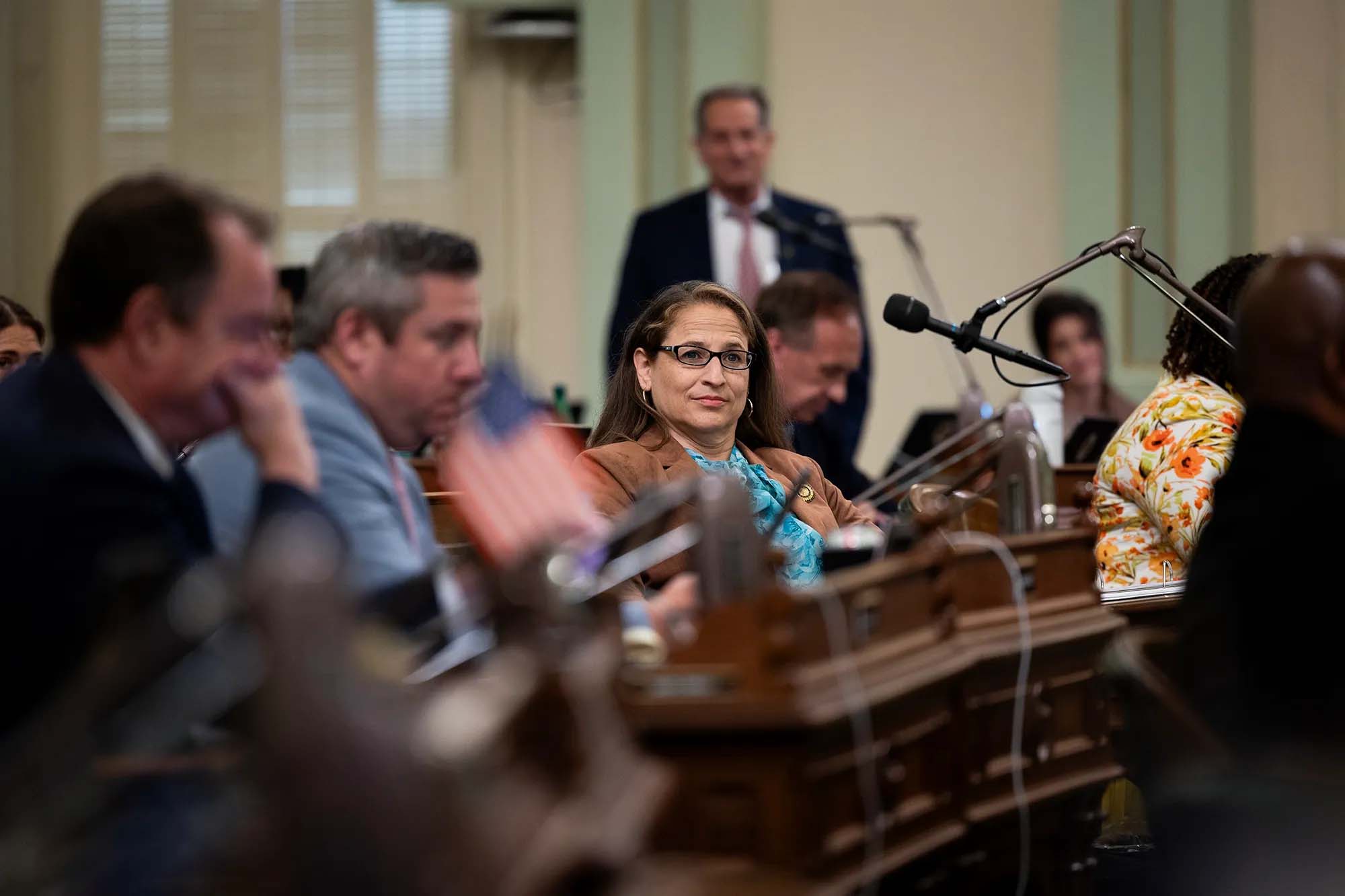
La asambleísta Anamarie Ávila Farías durante una sesión en el pleno del Capitolio estatal en Sacramento, el 28 de mayo de 2026. Assemblymember Anamarie Ávila Farías on the floor during a session at the state Capitol in Sacramento on May 28, 2026. Photo by Miguel Gutierrez Jr., CalMatters
The records also reveal that Ávila Farías and her husband have filed for bankruptcy three times on behalf of themselves and their company since 2011, and the assemblymember provided a vastly different explanation of the property in question to the courts than she did to the Fair Political Practices Commission.
Melissa Brown, an elder-law professor emeritus at the University of the Pacific’s McGeorge School of Law, said Ávila Farías’ attempt to place her mother in conservatorship looks like “a weaponization of the process.”
Ávila Farías would not comment on details of the case, citing a confidentiality agreement that was part of the case’s settlement. But she said she plans to introduce legislation on the issue because of her experience in the case, “hopefully next year.” She didn’t provide specifics about the focus of the legislation.
Her spokesperson, Roger Salazar, said in a written statement that there “has never been a judicial finding that Anamarie Farías engaged in any wrongdoing.”
“California conservatorship proceedings commonly involve complex family dynamics,” he said.
He pointed out that she has since been named a conservator for another family member, which “reflects the court’s independent determination that she satisfied the legal standards required to serve in a fiduciary capacity.”
Her other family members also declined to comment for this story, citing the confidentiality agreement, or didn’t respond to requests for comment.
Nick Miller, a spokesperson for Assembly Speaker Robert Rivas, said the speaker was not aware of the temporary restraining order or the conservatorship petition when he appointed Ávila Farías to the committee.
Ávila Farías grew up in Martinez, where she served on the city council and the Contra Costa County Board of Education. She was on the board of directors for the California Housing Finance Agency from 2015 to 2024, during the court battles. Two years ago, voters sent her to the state Assembly with the endorsement of Gov. Gavin Newsom.
In 2024, the Fair Political Practices Commission received complaints that Ávila Farías had not disclosed all of her economic interests for several years. The commission closed an investigation in 2025 after she amended her forms, disclosed reportable economic interests and completed the commission’s educational course.
Recently, she introduced a bill that would ban some U.S. Immigration and Customs Enforcement employees from becoming police officers and teachers in California. A watered-down version of the bill passed the Assembly and is now in the Senate.
Ávila Farías sits on the Assembly’s Aging and Long-Term Care Committee and is running for a second term in the Legislature.
Before her ascent in state politics, Ávila Farías and her husband tried their hand in real estate, leaving behind a trail of bankruptcies and questionable property transfers, court and property records show.
Their family strife centered on three properties: the family home that Ávila Farías purchased with her mother and sister, which they rented to a tenant; Ávila Farías’ permanent home; and another rental property.
In August 2008, Ávila Farías and her husband gifted the three properties to the lawmaker’s mother, Ávila Bugarin, property records show. In court filings, Ávila Bugarin maintained she had no idea she’d been given ownership of two of the properties. Ávila Farías told the court that her mother was aware of the transfers.
About three months after the transfers, the couple signed a $2.3 million business loan agreement. They defaulted on the loan about 18 months later, according to court filings, and the couple’s real estate company filed for bankruptcy in September 2011, eventually turning over ownership of an unrelated property to the lending company.
The bankruptcy case was dismissed in April 2012.
Years later, Ávila Bugarin said that she discovered her daughter “was behind on her mortgage” on the family home, according to the court investigator’s report. It was then, Ávila Bugarin said, that she started researching the properties, and she learned that her daughter had placed the two other homes in her name.
Ávila Bugarin told the court investigator she also learned that her daughter had taken out loans against the family home. Ávila Bugarin, who spoke limited English, told the court investigator that she signed the bank documents for the loans, thinking she was refinancing the home, not borrowing against it.
She refused to deed the two properties back to Ávila Farías, saying she’d have to get the family home back first.
The police eventually got involved.
In February 2018, according to court records filed by Ávila Bugarin, Ávila Farías stormed into her apartment, yanked the telephone from her mother’s hand and hit her wrist.
The mother filed for a temporary restraining order, asking for protection for herself and her daughter who lived with her, Judith Ávila, which a judge granted. Judith Ávila corroborated her mother’s account in court filings.
Ávila Farías denied the allegations, saying her mother slapped her instead.
Salazar pointed to a statement from another sister, RoseMarie Griffin, who was on the other end of the phone call when the altercation occurred. Griffin told the court her sister had no history of verbal or physical abuse. “I have never experienced or witnessed any behavior” that would merit a restraining order, she said.
The temporary restraining order was in place for about a year, according to court records.
After mediation over the restraining order failed, the mother filed to evict Ávila Farías from the home that was now in her name. Ávila Farías filed a request in probate court to place her mother and her sister in a conservatorship, telling the court that her mother had “an inability to carry out actions in her own rational self-interest, and is subject to delusional and severely disorganized thinking.”
She argued that her brother was unduly influencing their mother and that her mother needed a neutral conservator in light of disagreements between her and her siblings.
Ávila Farías told the court that her mother was forgetful and cited years-old incidents of her mother being scammed out of about $500 and allowing “some squatters (homeless felons)” to use her water hose as examples of why her mother needed someone else to handle her affairs.
The judge immediately placed Ávila Bugarin and Judith Ávila under a temporary conservatorship. He said Ávila Bugarin appeared to have been unduly influenced and ordered that she be evaluated. The conservatorship, albeit temporary, blocked Ávila Bugarin from making any financial or personal decisions for herself.
In subsequent proceedings to determine whether the conservatorship should be permanent, Ávila Bugarin’s other children told the court that they didn’t think their mother had dementia. Two medical doctors came to the same conclusion. And after the final exam, so did the neuropsychologist.
“Ms. Avila does not present with any form of significant cognitive deficits which would limit her ability to make medical, legal, financial or life care planning decisions for herself,” Dr. Eric Freitag told the court.
Even the court-appointed professional fiduciary — whom Ávila Farías had recommended — told the court investigator that she “hadn’t noticed any of the issues (Ávila Farías) set forth in the petition.” The fiduciary said Ávila Bugarin was “clear headed and able to take care of herself,” court records show.
A group of experts drew similar conclusions about Judith Ávila, saying she did not need a conservatorship.
Ávila Farías’ attorney, Gary Winuk, said it was appropriate to use conservatorship to figure out Ávila Bugarin’s mental capacity. “The whole purpose of the conservatorship process is to get appropriate testing to find out what someone’s capacity is,” he said.
But even after experts determined that her mother and sister had the capacity to make their own decisions, the Contra Costa County politician didn’t drop the conservatorship cases.
About a year after her petition, Ávila Farías won a significant victory: Her mother agreed to transfer ownership of the two contested properties, valued at about $1.8 million. And they both agreed to sell the family home they owned together.
Her mother also agreed to drop her petition for a restraining order. Ávila Farías, who had been arguing that her mother wasn’t competent to make her own financial decisions, said she would stop trying to get the government to take away her mother and sister’s ability to control their own lives.
Five months after the settlement, Ávila Farías hadn’t listed the home for sale. The judge appointed a receiver, over Ávila Farías’ objection, to sell the home. Three months later, Ávila Farías filed for bankruptcy. The home was eventually sold in November 2020.
Researchers analyzing data from the Framingham Heart Study Offspring Cohort found that adults whose diets were more likely to promote inflammation had smaller brain volume, according to a study published in Neurology.
The study included 1,897 adults with an average age of 62. Participants completed food frequency questionnaires over several years, allowing researchers to estimate their usual eating habits. Each person received a Dietary Inflammatory Index (DII) score, which measures the inflammatory potential of an overall diet. Higher scores indicate more pro-inflammatory eating patterns, while lower scores reflect more anti-inflammatory diets.
After adjusting for factors such as age, sex, education, smoking, physical activity and health conditions, researchers found that people with higher DII scores tended to have smaller total brain volume and less gray matter. They also had larger lateral ventricles, a structural brain change commonly associated with age-related brain shrinkage.
The researchers analyzed MRI scans for several markers of brain aging and cerebrovascular health, including total brain volume, gray matter volume and signs of small vessel disease. They found no meaningful association between inflammatory diets and hippocampal volume, white matter lesions or cerebral microbleeds.
Although some loss of brain volume occurs naturally with age, accelerated shrinkage has been linked to cognitive decline and a higher risk of dementia. Researchers emphasized, however, that this cross-sectional study cannot prove that diet directly caused the observed brain changes. The findings point to an association rather than a cause-and-effect relationship.
The Dietary Inflammatory Index evaluates the combined effects of foods and nutrients rather than individual ingredients. Diets with higher inflammatory scores typically include ultra-processed foods, refined grains, sugary drinks, processed meats and foods high in saturated and trans fats.
By contrast, Mediterranean-style diets rich in fruits, vegetables, legumes, whole grains, olive oil and fish have consistently been associated with lower levels of inflammation. Omega-3-rich seafood and olive oil have also been linked to heart and brain health.
Researchers concluded that chronic inflammation may damage blood vessels, increase oxidative stress and interfere with communication between brain cells, potentially contributing to age-related brain tissue loss. While the findings do not justify immediate treatment recommendations, they add to growing evidence that healthy eating patterns may help support long-term brain health and healthy aging. Food.news.
Mediados de agosto ofrece a los residentes del Área de la Bahía una variedad de festivales culturales, música en vivo, actividades familiares y eventos empresariales.
Festival de Artes Aéreas de San Francisco
Festival de tres días llena Fort Mason con espectáculos aéreos
La séptima edición bienal del Festival de Artes Aéreas de San Francisco reúne a artistas aéreos de reconocimiento internacional, compañías de circo contemporáneo y nuevos talentos durante tres días de innovadoras presentaciones y espectáculos juveniles. Presentado por Zaccho Dance Theatre y Fort Mason Center for Arts & Culture, el festival transforma teatros y espacios públicos en escenarios para creativas expresiones artísticas.
Del viernes 7 al domingo 9 de agosto, Fort Mason Center for Arts & Culture, Gateway Pavilion, Pier 2, 2 Marina Blvd., San Francisco. Boletos e información: sfaerialartsfest.org.
Más allá del mundo hispano
La Semana Internacional destaca las alianzas globales de San Francisco
La Semana Internacional de San Francisco resalta las conexiones internacionales de la ciudad en los ámbitos de los negocios, el comercio y la cultura mediante recepciones de networking, foros empresariales y programas multiculturales organizados por cámaras de comercio, consulados y organizaciones comunitarias.
Del lunes 10 al viernes 14 de agosto. Noche inaugural: lunes 10 de agosto, de 5:30 a 8:30 p.m., Rincon Center, 101 Spear St., San Francisco. Se requiere inscripción. Información: sfcentered.org.
Fiesta en la Plaza – Noche de la Herencia Latina
Rohnert Park celebra la cultura latinoamericana
Momotombo SF actuará en el Hayward Latin Jazz Festival el 27 de junio. Momotombo SF will perform at the Hayward Latin Jazz Festival on June 27.
Disfrute de la música en vivo de Momotombo SF, con exintegrantes de Malo y Santana, además del Ballet Folklórico Papiyoltzin, una exhibición de automóviles clásicos, puestos de comida latinoamericana y artesanías en esta celebración familiar gratuita.
Viernes 14 de agosto, de 5 a 8 p.m., Rohnert Park Community Center Complex, 5401 Snyder Ln., Rohnert Park. Entrada gratuita.
Música en la Mansión
Latin Rhythm Boys encabeza el concierto de verano en Hayward
La serie gratuita Music at the Mansion, del Distrito de Recreación y Parques del Área de Hayward, continúa con la presentación de Latin Rhythm Boys, interpretando enérgica música puertorriqueña. Las familias también podrán disfrutar de actividades infantiles y puestos de comida en los históricos jardines de Mt. Eden Mansion.
Domingo 16 de agosto, de 1 a 5 p.m., Mt. Eden Mansion, 2451 W. Tennyson Rd., Hayward. Entrada gratuita. Información: thehardfoundation.org.
47.ª Convención Estatal Anual de la CHCC
Líderes empresariales latinos se reúnen en Oakland
La Cámara Hispana de Comercio de California celebrará su Convención Estatal Anual con conferencistas principales, talleres y oportunidades de networking para emprendedores, propietarios de negocios y líderes comunitarios.
Del miércoles 19 al viernes 21 de agosto, Oakland Marriott City Center, 1001 Broadway, Oakland. Se requiere inscripción. Información: CHCC2026.com.



 No ceremony date or star location has been announced. Honorees generally have two years from their selection to schedule the dedication, and the Chamber usually releases ceremony details shortly before each event.