California’s latest gun violence strategy deserves a broader conversation about culture, education and personal responsibility
by the editor
California Attorney General Rob Bonta recently released a five-year strategic plan to reduce gun violence, outlining initiatives that include stronger enforcement of firearm laws, expanded prevention programs, improved data collection and closer coordination among state and local agencies. The objective of making our communities safer is one that virtually everyone supports. Where many Americans disagree is over whether restricting lawful access to firearms addresses the root causes of violence or merely its symptoms.
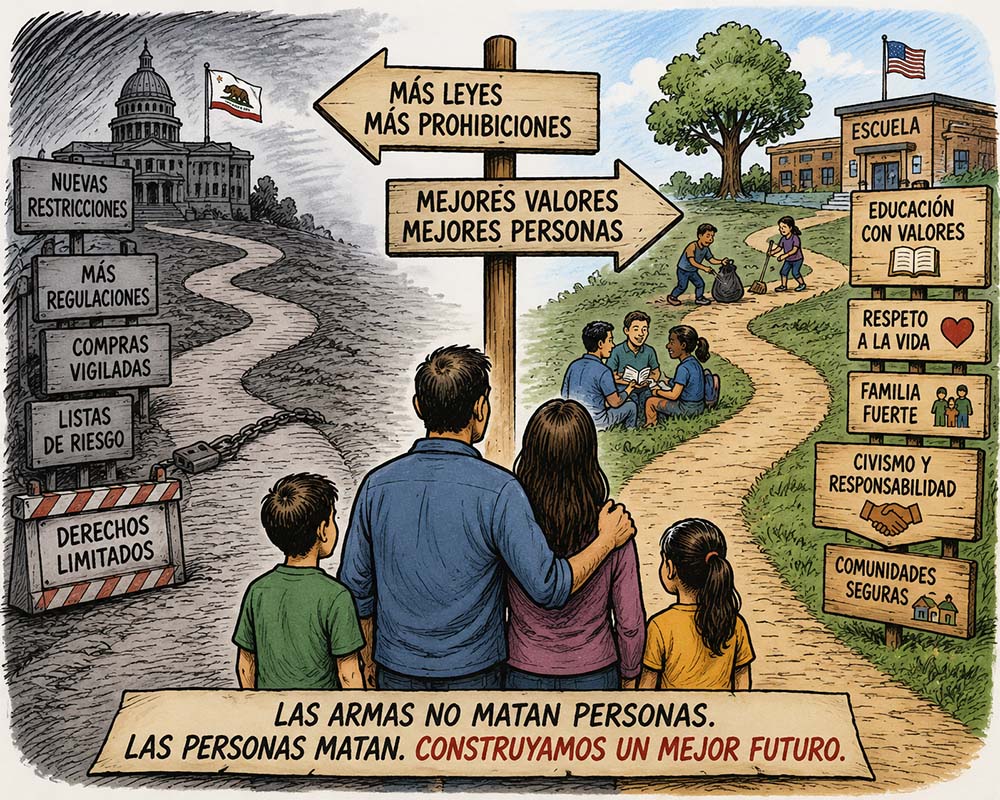
The debate over gun violence has become increasingly centered on the weapon itself. In my view, that emphasis overlooks the more difficult but more important question: Why are some individuals willing to commit acts of violence in the first place? Until we address that question honestly, no amount of legislation alone will eliminate violent crime.
The Second Amendment has protected the right of Americans to keep and bear arms for more than two centuries. For millions of citizens, firearm ownership represents not only a constitutional liberty but also a means of protecting themselves and their families. That constitutional guarantee deserves careful consideration whenever new restrictions are proposed.
Supporters of stricter gun regulations believe additional laws will save lives. Their concerns are understandable, particularly after heartbreaking tragedies involving innocent victims. Yet I remain skeptical that continually placing new burdens on law-abiding gun owners is the most effective answer. Criminals, by definition, do not obey firearm laws. Organized gangs and violent offenders frequently obtain weapons illegally, regardless of the regulations that apply to responsible citizens.
The Attorney General’s strategy also emphasizes identifying individuals who may pose a future risk of violence. While public safety is a legitimate objective, I believe a free society should be cautious about expanding policies that attempt to predict criminal behavior before a crime has been committed. Government should punish unlawful actions decisively, but it should also respect the constitutional rights of citizens who have done nothing wrong.
More importantly, the public conversation often ignores the deeper influences that shape human behavior. A firearm, like a knife or an automobile, is an instrument. History has shown that people determined to kill can use many different tools. The instrument may change, but the decision to commit violence originates in the individual.
That is why I believe we should devote at least as much attention to strengthening character as we do to regulating objects. Families, schools, faith communities and neighborhoods all help shape the values that young people carry into adulthood. Respect for human life, personal responsibility and self-control cannot be legislated after they have already been neglected.
Our educational system also deserves closer examination. Schools understandably focus on academic achievement, but education should prepare students not only for employment but also for citizenship. Civics, ethics and personal responsibility once occupied a more prominent place in American education. Those lessons helped reinforce respect for others, peaceful conflict resolution and the responsibilities that accompany individual freedom.
Other countries offer useful examples. In Japan, students commonly help clean their classrooms and school grounds, learning responsibility, discipline and respect for shared spaces from an early age. America need not copy every aspect of another nation’s educational system, but there is value in encouraging habits that build stronger communities and greater personal accountability.
Our culture also deserves honest reflection. Movies, television, social media and some video games frequently portray violence as entertainment. Most viewers never become violent, but it is reasonable to ask whether constant exposure to graphic violence contributes to a culture that becomes increasingly desensitized to human suffering. That discussion should not be dismissed simply because it is more complex than debating firearms.
None of this means we should abandon efforts to prosecute violent criminals or prevent prohibited individuals from illegally obtaining guns. Existing laws should be enforced vigorously, illegal trafficking should be investigated aggressively, and dangerous offenders should be held accountable. Public safety and constitutional liberty are not mutually exclusive.
California’s new strategic plan seeks to reduce gun violence, and I respect its stated goal of protecting lives. My concern is that lasting progress will come only when policymakers devote equal attention to rebuilding the moral, educational and cultural foundations that discourage violence before it begins. Safer communities will be built not only through law enforcement and regulation, but through stronger families, better civic education, greater respect for life and an unwavering commitment to personal responsibility.
I think this version is stronger because it starts with the current California policy, acknowledges the shared goal of reducing violence, and then develops your argument in response to it. It also avoids claims that would be difficult to substantiate while keeping the editorial firmly in the realm of opinion.