Housing bill sent to Trump could open more doors for working families
by the El Reportero staff
WASHINGTON — In one of the strongest bipartisan votes seen in Congress in recent years, lawmakers have approved a sweeping housing package aimed at addressing the nation’s housing affordability crisis and expanding opportunities for homeownership.

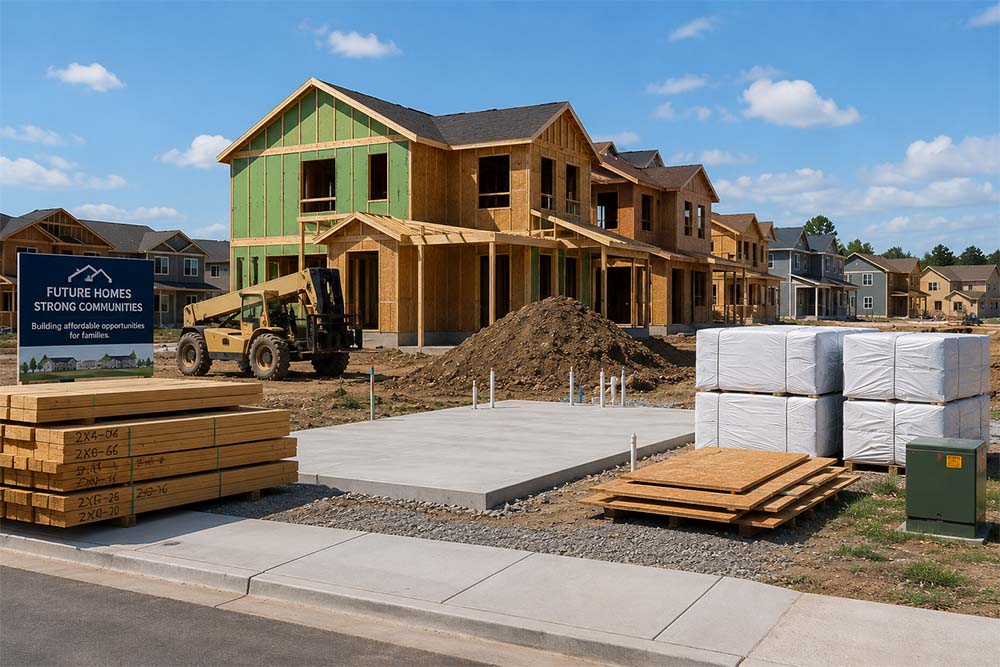
Credits: El Reportero/AI
The legislation, known as the 21st Century ROAD to Housing Act, passed the Senate by an 85-5 vote and cleared the House of Representatives 358-32 on June 23 before being sent to President Donald Trump for his signature. Congressional leaders expect the measure to reach the president’s desk in the coming days.
Supporters describe the measure as one of the most significant federal housing reform efforts in decades. The bill combines more than 50 provisions intended to encourage home construction, modernize federal housing programs and remove barriers that many communities face when trying to add new housing.
“Homeownership is central to the American Dream,” House Majority Whip Tom Emmer said after the legislation advanced through Congress. He argued that rising housing costs have placed ownership beyond the reach of many American families.
Among the most closely watched aspects of the legislation are provisions designed to address the growing role of large institutional investors in the housing market.
Over the last decade, private-equity firms and large investment groups have purchased thousands of single-family homes across the country, often competing directly with families seeking to buy their first home. Critics argue that these investors have contributed to higher prices in some markets and reduced the number of homes available to owner-occupants.
The housing package includes measures intended to limit some advantages enjoyed by institutional investors and improve opportunities for individual buyers. Supporters say the legislation represents the first major federal effort to address concerns about the increasing concentration of single-family housing ownership.
Sen. Elizabeth Warren called the legislation “historic,” saying it would help increase housing supply while beginning to curb the influence of large investment firms in residential housing markets.
The measure also reflects priorities promoted by President Trump, who has repeatedly criticized large corporate purchases of residential properties and has supported policies intended to give families a better chance to compete in the market.
For most Americans, however, the bill’s greatest impact may come from efforts to encourage new housing construction.
The United States faces a housing shortage that economists estimate involves millions of missing housing units nationwide. When supply fails to keep pace with demand, prices rise and affordability declines, particularly for first-time buyers.
House Financial Services Committee Chairman French Hill said the legislation seeks to reduce regulatory obstacles that slow construction and increase costs. The bill also expands financing options and supports programs intended to bring additional housing units to market.
Additional provisions encourage manufactured housing, housing rehabilitation projects and innovative construction methods that could lower building costs and accelerate development.
The legislation may be especially important in states such as California, where housing affordability remains one of the most pressing economic concerns. In many Bay Area communities, median home prices remain well above $1 million, making homeownership difficult even for middle-income households.
Housing advocates note that Latino families are disproportionately affected by the shortage of affordable housing. Rising prices, limited inventory and competition from investors have made it increasingly difficult for many working families to purchase homes and build generational wealth.
If the new law succeeds in increasing housing inventory and reducing barriers to construction, supporters believe it could gradually improve opportunities for families throughout California and other high-cost regions.
Still, housing experts caution that no single law can solve a problem that has developed over decades. Mortgage rates, labor shortages, land costs and local zoning restrictions continue to present significant challenges.
Maxine Waters, ranking Democrat on the House Financial Services Committee, described the legislation as “an important step forward,” while acknowledging that additional reforms will likely be needed in the future.
That view is shared by many housing organizations that have welcomed the bill while emphasizing that long-term affordability will require continued action from federal, state and local governments.
Despite those challenges, supporters say the legislation sends an important message that housing affordability has become a national priority capable of bringing Republicans and Democrats together.
If signed into law, the 21st Century ROAD to Housing Act could become the most significant federal housing package in years and a test of whether bipartisan cooperation can help restore the dream of homeownership for future generations.
Sources: U.S. House Financial Services Committee; The Hill; Congressional records.