by Willow Tohi
What you eat may influence not only your health today but also how quickly your body ages. A systematic review published Nov. 2, 2026, in Nutrition Reviews examined 11 human studies from Europe, the United States and the Middle East, finding that Mediterranean-style eating patterns were associated with healthier aging, improved memory, greater physical strength and reduced frailty.
Researchers analyzed studies published between 2013 and 2025, examining whether diets rich in vegetables, fruits, whole grains, beans, nuts, olive oil and fish could influence biological age and overall health.
The biological clock and diet
One striking finding came from the DIRECT PLUS trial, which investigated whether Mediterranean-style eating could influence biological aging.
Participants following this dietary approach showed an average 8.9-month favorable difference between their observed and expected biological age. Researchers estimated biological age using blood tests that detect chemical changes in DNA.
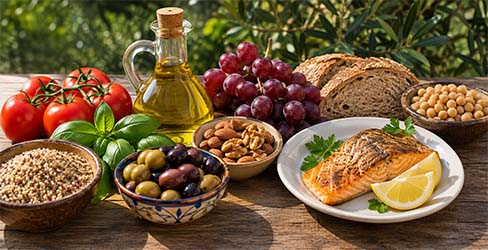
The Mediterranean diet emphasizes plant-based foods, healthy fats and fiber while limiting red meat, processed foods and added sugar.
However, researchers found that a polyphenol-rich variation called Green-MED was not significantly more effective than other Mediterranean-style approaches, suggesting that overall dietary habits may matter more than individual modifications.
Better memory and physical strength
Other studies linked Mediterranean-style eating to measurable improvements in cognitive and physical health.
In the one-year NU-AGE trial, older adults following this dietary pattern experienced reduced inflammation and improvements in handgrip strength and certain memory measures.
Researchers also observed that older men with stronger adherence to Mediterranean eating had lower odds of frailty, while a nine-year U.S. study associated greater adherence with slower memory decline.
These findings are particularly important as aging populations face increasing challenges involving cognitive decline, physical weakness and loss of independence.
Why food matters
The Mediterranean diet provides fiber, unsaturated fats and polyphenols, natural plant compounds found in olive oil, nuts and legumes.
These nutrients have antioxidant and anti-inflammatory properties that may help protect cells from damage.
Researchers also identified favorable associations between Mediterranean-style eating and biological aging markers, including telomere dynamics and epigenetic age.
Nevertheless, the review cautioned that these findings do not prove the diet directly slows aging. Differences in study methods, exercise habits and participants’ self-reported food consumption complicate the results.
Healthy eating and exercise
Adopting Mediterranean-style eating does not require a complicated meal plan.
Simple changes include eating more vegetables, fruits, beans and whole grains, replacing butter with olive oil, choosing nuts and seeds, and incorporating fish regularly.
Physical activity also plays an essential role. The review found that improvements in physical performance and frailty were strongest when dietary changes were combined with exercise.
Walking, resistance training and other regular activities can complement healthy eating.
Ultimately, researchers suggest that healthier aging depends less on individual foods or supplements than on consistent dietary patterns.
The choices people make every day may influence their future energy, independence and quality of life.
Sources: Nutrition Reviews; MindBodyGreen.com; Academic.oup.com.
Edited to fit space.