New president appoints central bank chief as prosecutors investigate former officials and teachers demand protection for pension funds
by the El Reportero staff
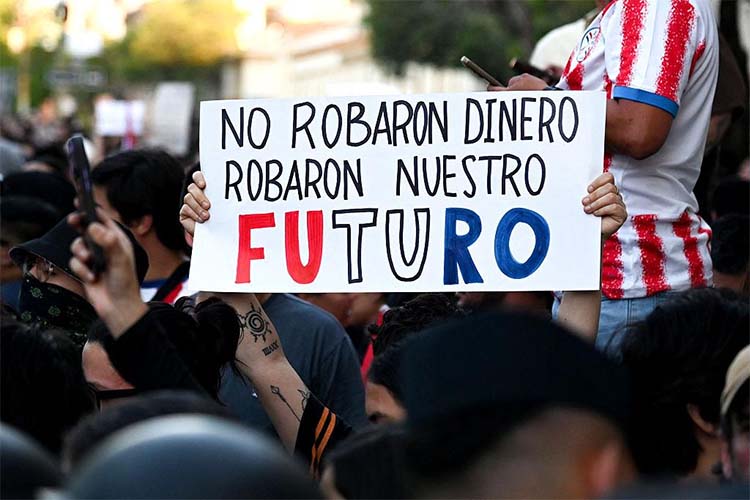
ASUNCIÓN, Paraguay — Paraguay’s banking crisis entered a new phase this week as authorities reported substantial progress returning deposits to customers of collapsed Ueno Bank, even as prosecutors expanded investigations and teachers demanded protection for pension funds.
The Central Bank said Tuesday, November 10, that 93.1 percent of eligible customers had received reimbursements by Monday through the national Deposit Guarantee Fund. Payments covered 1,738,804 accounts and totaled approximately $340 million.
The figure is narrower than the nearly 2.9 million customers originally associated with the digital lender. Officials excluded duplicate accounts, those without positive balances and some accounts carrying debts when calculating eligible claims.
The latest developments follow the bank’s intervention on November 2 after regulators found its solvency ratio had fallen below half the legal minimum. The shutdown disrupted payments and access to savings, triggering demonstrations and a political crisis.

Former President Santiago Peña left office amid the scandal, and former Vice President Pedro Alliana became president. On Monday, Alliana’s choice of economist Jorge Schreiner as the new Central Bank president won congressional approval, replacing Carlos Carvallo.
Prosecutors also searched Ueno’s brokerage business and recovered torn documents, including material that appeared related to financial reviews and correspondence. Investigators searched properties connected to Peña as they examined alleged misconduct.
Peña and Carvallo face charges involving alleged breach of trust and administration for personal benefit. Both deny wrongdoing and remain in pretrial detention. The allegations have not been proven in court.
Meanwhile, public-school teachers protested Monday over pension money deposited in the failed bank. Teacher representatives said Alliana promised to work toward recovering the funds.
The larger challenge involves public deposits, estimated at around $800 million, much of it connected to pension systems. Recovering insured personal savings does not automatically resolve losses or exposure involving government institutions.
Authorities say the resolution process is designed to protect depositors and the broader financial system. Still, the investigation, disputed public funds and political upheaval leave Paraguay facing questions about regulatory oversight and confidence in its banks.
Further repayments and the outcome of the criminal inquiry will determine whether financial and political stability can be restored.