by Coco Somers
Adapted and edited by El Reportero
Maintaining a healthy brain throughout life may depend not only on what people eat but also on their age. A scientific review published in the journal Nutrients suggests that the foods most strongly associated with brain development and cognitive protection change as people progress from infancy to older adulthood.
The researchers examined 54 scientific papers, including 46 food-specific empirical studies and eight broader conceptual papers. Their findings indicate that animal-sourced foods play an important role during early development, while plant-based foods become increasingly important in protecting cognitive function during adulthood and aging.
The review examined five stages of life: the first 1,000 days, school age, adolescence, adulthood and older adulthood. Rather than concentrating on dietary supplements, researchers focused on whole foods and their contributions to brain function.
Building a healthy brain during childhood
The first 1,000 days of life, beginning at conception, represent a critical period for brain development. During this stage, adequate nutrition helps support the formation of brain cells and neurological connections.
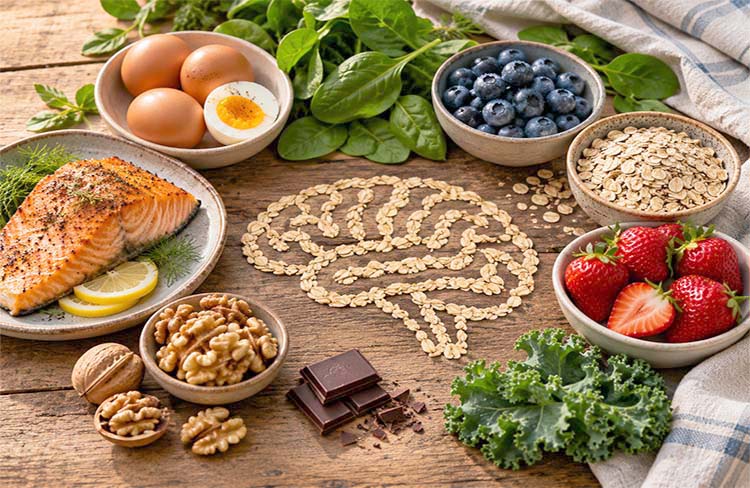
Eggs, meat and nuts were associated with improved brain development and fewer developmental delays. Eggs are particularly valuable because they provide choline, DHA and lutein, nutrients involved in neurological development.
Regular egg consumption during early childhood was associated with lower rates of delays in communication, motor skills and social development.
Animal proteins also provide all nine essential amino acids necessary for protein synthesis. During fetal development, inadequate intake of essential amino acids can interfere with normal brain development.
As children enter school and adolescence, walnuts, berries and vegetables become increasingly relevant. Walnut consumption has been associated with improvements in attention and reaction time among school-aged children.
Protecting the brain during adulthood
As the brain matures, the nutritional emphasis gradually shifts toward foods containing antioxidants and other protective plant compounds.
Berries, vegetables, dark chocolate and other plant foods contain flavonoids, which researchers have associated with protective effects on brain health. Fruits and vegetables also provide antioxidant nutrients, including vitamins C and E.
Whole grains may offer additional benefits. Higher consumption has been associated with lower levels of depression and anxiety during adolescence and adulthood.
These findings are consistent with the principles of the MIND diet, which combines elements of the Mediterranean diet and the DASH eating pattern. This approach emphasizes foods associated with cognitive health, including leafy vegetables, berries, nuts and whole grains.
Nutrition and the aging brain
Among older adults, leafy green vegetables, nuts and berries demonstrated some of the most consistent associations with cognitive protection.
Fish consumption also showed promising results. A large meta-analysis included in the review associated fish consumption of up to 150 grams daily with a reduced risk of dementia and cognitive impairment.
Dairy products, however, produced less consistent findings. While some studies suggested modest cognitive benefits, others indicated that the saturated fat content of certain dairy products could potentially offset benefits through effects on blood vessels or inflammatory processes.
The Alzheimer’s Association has also encouraged Americans to adopt dietary habits that support healthy blood circulation to the brain.
A balanced approach throughout life
The findings do not suggest that adults should eliminate animal proteins or that children should avoid plant-based foods. Instead, they highlight the changing nutritional priorities associated with different stages of human development.
A varied diet incorporating eggs, fish, vegetables, berries, nuts and whole grains may provide complementary nutrients that support brain health throughout life.
Researchers caution that the review combines observational studies and clinical trials rather than presenting new experimental findings. Consequently, associations between particular foods and cognitive outcomes do not necessarily establish direct cause and effect.
Nevertheless, the evidence suggests that adapting dietary habits to changing nutritional needs throughout life may help support healthy brain development, cognitive function and healthier aging.
Editor’s note: This article has been adapted and edited to fit space.