by Marvin Ramírez
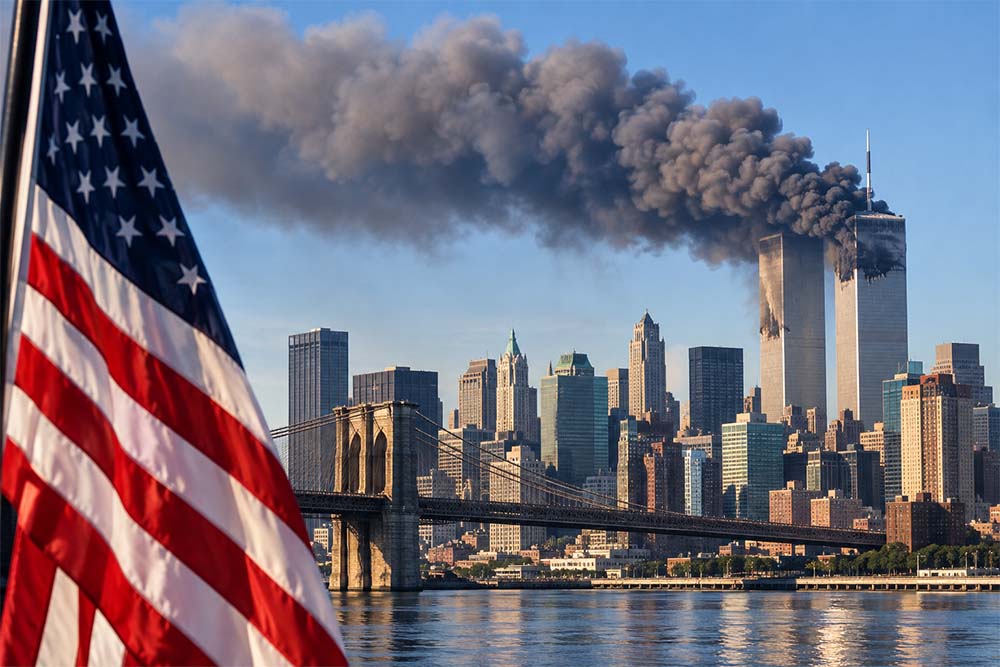
Twenty-five years ago, on the morning of September 11, 2001, America was wounded in a way that an entire generation will never forget.
Nearly 3,000 innocent people were killed. Families went to work that morning expecting an ordinary Tuesday and never returned home. Firefighters, police officers, emergency workers and ordinary citizens ran toward danger while thousands desperately tried to escape it.
The attacks struck New York, the Pentagon and a field near Shanksville, Pennsylvania. But the wound belonged to the entire nation.
For immigrants especially, America has represented something extraordinary: a country where millions from virtually every corner of the world have arrived seeking freedom, opportunity and the possibility of building a better life for their children.
On September 11, that country was attacked.
But something else happened afterward that deserves reflection 25 years later.
America became afraid.
Airports changed. Security checkpoints expanded. Surveillance increased. Government acquired new investigative powers. The USA PATRIOT Act was enacted within weeks of the attacks, dramatically expanding federal authorities in the name of preventing another catastrophe.
Many Americans accepted those changes because another attack seemed possible at any moment.
Perhaps some measures were necessary. Government has a fundamental responsibility to protect its people.
But September 11 taught us another lesson that we should never forget: fear can change a free society.
Once citizens surrender a freedom during an emergency, recovering it can be extraordinarily difficult.
The years following 9/11 produced intense debates over government surveillance, privacy, searches, intelligence gathering and the proper limits of state power. Those debates continue today.
There have also been countless theories questioning aspects of the attacks and the government’s explanations. Americans have the constitutional right to question their government, examine evidence and disagree. That freedom itself is part of what distinguishes this country.
But whatever anyone believes about those controversies, one historical fact cannot reasonably be disputed:
September 11 changed America.
Its victims also did not end with those who died that morning.
The enormous cloud created by the collapse of the World Trade Center exposed responders, workers, residents and survivors to hazardous dust and contaminants. Years later, firefighters, police officers, cleanup workers and civilians have suffered respiratory diseases, cancers and other illnesses associated with those exposures.
Today, the federal World Trade Center Health Program serves nearly 150,000 responders and survivors across the United States.
They are living reminders that for thousands of Americans, September 11 never completely ended.
So on this 25th anniversary, we should remember more than collapsing buildings.
Remember the firefighters climbing the stairs while everyone else was coming down.
Remember the police officers and paramedics.
Remember the passengers of Flight 93.
Remember the workers covered in dust searching through the ruins.
Remember those who became sick years afterward.
Remember the families who still look at an empty chair.
And remember something else.
America’s greatest strength is not its skyscrapers, military power or wealth. It is an idea written into a constitutional system that recognizes that government exists to protect the liberties of the people — not that people exist to serve the government.
Security matters. But so does liberty.
A terrorist attack should never be allowed to accomplish indirectly what terrorists could never accomplish militarily: making Americans permanently surrender the freedoms that define their nation.
For the millions of immigrants whom America welcomed and who made this country their home, the wound of September 11 was also ours.
We mourned together.
We rebuilt together.
And 25 years later, we should stand together again — remembering those who died, caring for those who still suffer, defending this nation and preserving the freedom that made it worth coming to in the first place.
We will remember September 11. And we must also remember the America we are determined to preserve.
Creo que “September 11: The Wound That Changed America” tiene el tono correcto: patriótico, solemne, pero también muy propio de una página editorial que defiende las libertades constitucionales.