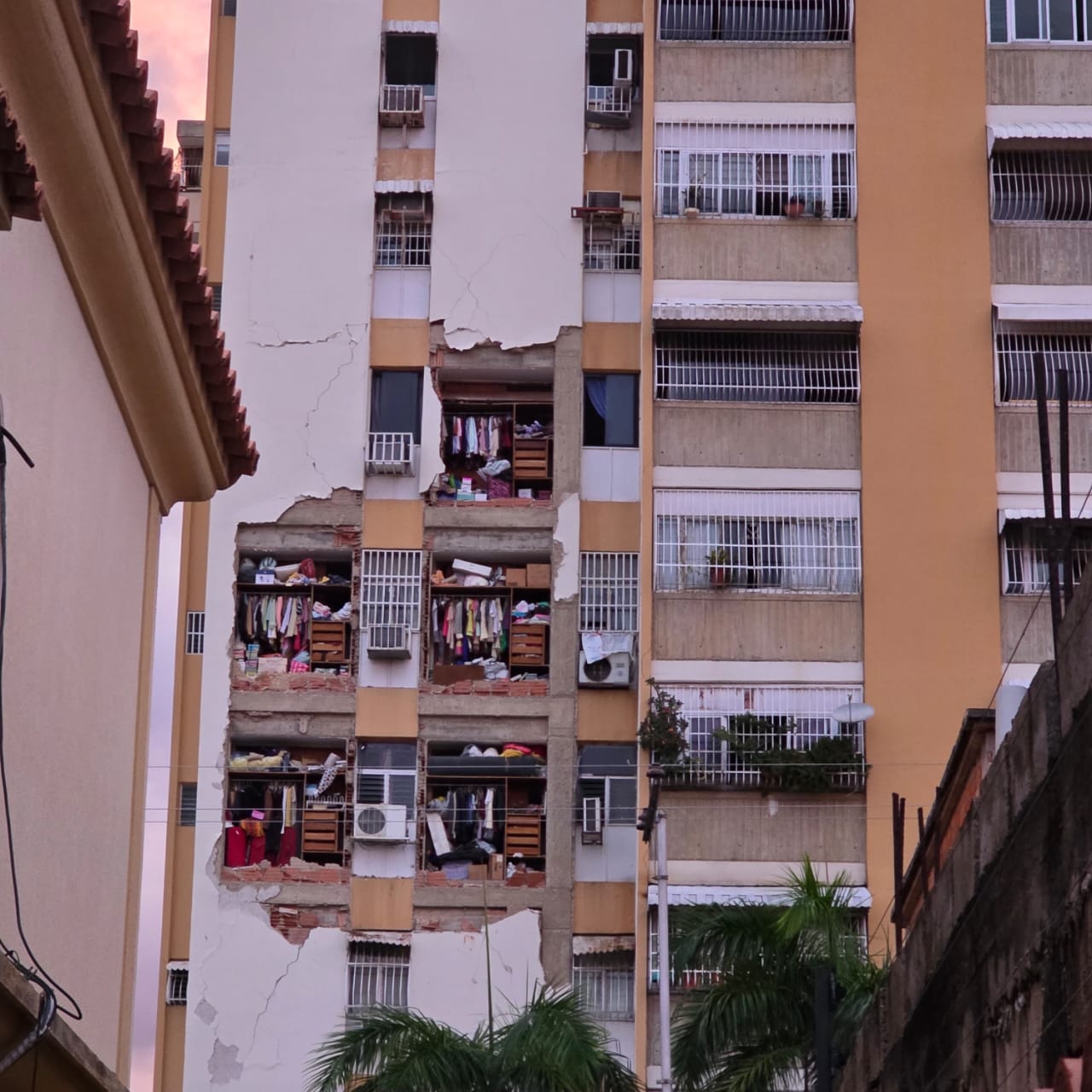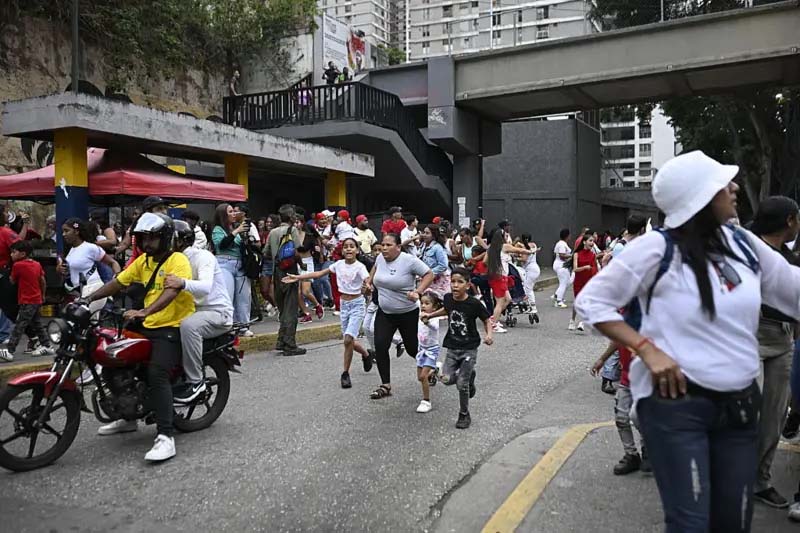
Two powerful earthquakes measuring 7.2 and 7.5 struck north-central Venezuela just 39 seconds apart, causing building collapses, trapping people beneath the rubble, disrupting electricity and communications, while authorities continue to assess the scale of the disaster.
by the El Reportero staff
CARACAS, Venezuela — Venezuela experienced one of the most dramatic days in its recent history on Wednesday after two powerful earthquakes struck the country’s north-central region just 39 seconds apart, causing buildings to collapse, damaging public infrastructure, triggering widespread power outages and communication failures, and prompting a massive emergency response.
According to the U.S. Geological Survey (USGS), the first earthquake registered a magnitude of 7.2 and was followed just 39 seconds later by a second, even stronger quake measuring 7.5. Both earthquakes were centered near Morón, in Carabobo state, west of Caracas.
The earthquakes were felt across much of Venezuela as well as throughout the Caribbean, including Colombia, Trinidad and Tobago, and other parts of northern South America.
Panic in Caracas
In Caracas, thousands of residents evacuated apartment buildings, office towers, hospitals, shopping centers and Metro stations as structures swayed violently for several long seconds.
 Videos shared across social media showed residents rushing into the streets, families embracing in open spaces and bystanders attempting to help those trapped inside damaged buildings.
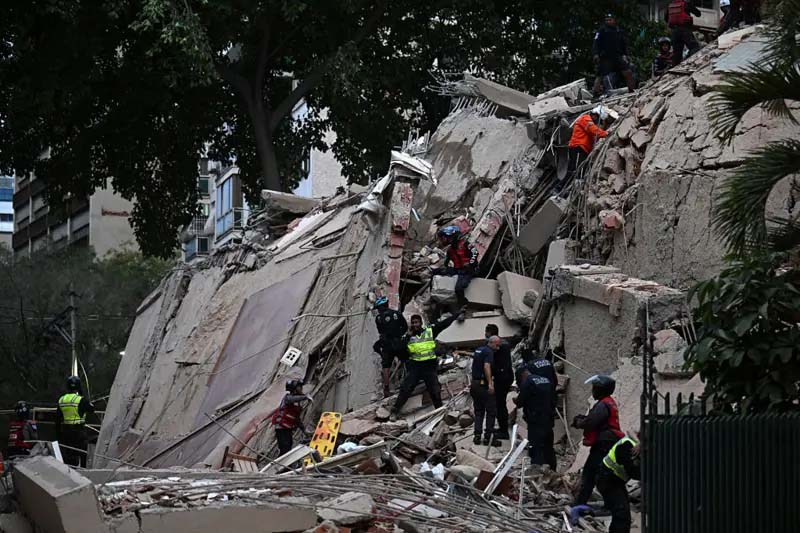
One of the most significant incidents occurred in the Los Palos Grandes neighborhood in eastern Caracas, where a residential building partially collapsed. Images distributed by Getty Images showed firefighters, rescue crews and police officers searching through the rubble for survivors.
Structural damage was also reported in Altamira, another Caracas neighborhood historically affected by seismic activity.
People trapped beneath the rubble
Within hours of the earthquakes, reports began emerging of people trapped inside collapsed buildings.
Firefighters, Civil Protection personnel, police officers and volunteers launched search-and-rescue operations while heavy equipment was brought into the hardest-hit areas.
As of publication time, Venezuelan authorities had not released an official death toll or casualty figures because rescue operations remained underway and several affected areas were still difficult to reach.
Airport, power and communications affected
Among the reported damage were impacts at Simón Bolívar International Airport in Maiquetía, where part of a roof structure was reportedly damaged during the earthquake.
Several Venezuelan states experienced widespread power outages, internet disruptions and cellular service failures, making it difficult for families to contact one another during the hours following the disaster.
Authorities also began inspecting highways, bridges and other infrastructure for possible structural damage.
Authorities warn of aftershocks
Venezuela’s Interior Ministry urged residents to leave buildings showing visible structural damage and remain in open areas because of the continuing risk of powerful aftershocks.
The USGS warned that additional earthquakes could continue over the coming hours and even days.
The agency also cautioned that there is a significant risk of landslides and soil liquefaction in some areas. Liquefaction occurs when water-saturated sediments temporarily lose their strength during an earthquake, causing the ground to behave like a liquid and increasing the risk of structural collapse.
Tsunami warning canceled
Shortly after the earthquakes, the U.S. Tsunami Warning System issued precautionary alerts for parts of Venezuela, Aruba, Bonaire, Puerto Rico and the British Virgin Islands.
After analyzing seismic and ocean monitoring data, however, officials canceled all tsunami alerts, concluding that there was no longer any threat to the region.
Even so, several coastal residents reported seeing what appeared to be an unusual retreat of the sea immediately following the earthquake, raising fears of a possible tsunami.
Memories of the 1967 earthquake
Wednesday’s disaster revived memories of one of Venezuela’s deadliest earthquakes.
The July 29, 1967 earthquake, which measured 6.6 in magnitude, killed more than 200 people and injured approximately 2,000 others while destroying numerous buildings in Los Palos Grandes and Altamira.
Following that tragedy, Venezuela strengthened its building codes to improve earthquake resistance.
Many Caracas residents compared Wednesday’s earthquake with the devastating 1967 disaster.
A national holiday
The earthquakes occurred on Venezuela’s national holiday commemorating the Battle of Carabobo, fought on June 24, 1821, under the leadership of Simón Bolívar.
Because it was a public holiday, many more people than usual were at home with their families when the earthquakes struck.
Eyewitness account
Katty Arangua, graphic designer for El Reportero and a resident of Venezuela, experienced the earthquake firsthand.
“Thank God nothing happened to us. We were in the backyard, but the house moved like it was made of paper. It lasted a long time. It was horrible. The walls, the roof… everything was moving.”
Later she described the conditions facing many communities.
“Buildings also collapsed here. Part of the roof at Maiquetía airport collapsed. We still have no electricity in several states, there is no local cell phone service, and then an aftershock came. We were terrified.”
Arangua added that she was only able to remain online because she had an uninterruptible power supply (UPS) keeping her internet connection operating.
She also said many residents remained outside their homes for fear of additional aftershocks and that reports of a possible tsunami circulated during the first few minutes after the earthquakes.
An unfolding emergency
The USGS said that, because of the earthquakes’ intensity and the dense urban population near the epicenter, there is a significant probability of widespread damage and numerous casualties. However, the agency emphasized that these are scientific estimates based on preliminary modeling and do not replace official casualty reports.
As rescue efforts continue, Venezuelan authorities are urging residents to rely only on official information, avoid spreading rumors and follow instructions from Civil Protection and other emergency agencies.
The full extent of the damage has yet to be determined. Nevertheless, images emerging from Caracas and other affected cities suggest that Venezuela is facing one of its most serious natural disasters in decades.
Sources: U.S. Geological Survey (USGS), U.S. Tsunami Warning System, Reuters, Associated Press, BBC News Mundo and eyewitness testimony collected by El Reportero.