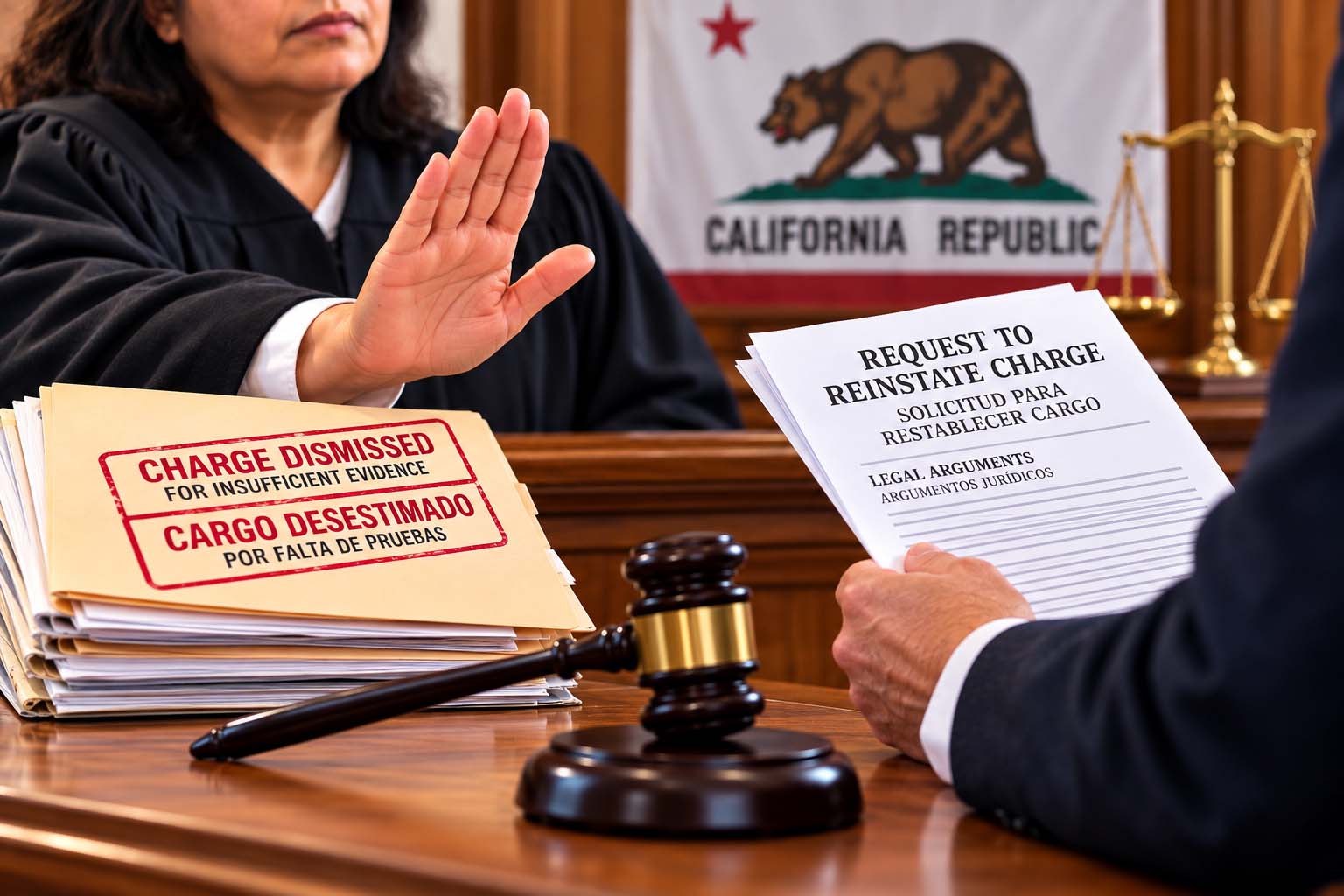
San Francisco Public Defender’s Office helps advance legislation strengthening judicial oversight.
by the El Reportero staff
California’s governor signed Assembly Bill 1917 on Sept. 20, introducing new restrictions on prosecutors seeking to reinstate criminal charges previously dismissed by judges for insufficient evidence.
Known as the Respect Judicial Decisions Act, the legislation was authored by Assemblymember Nick Schultz and co-sponsored by the San Francisco Public Defender’s Office, Californians for Safety and Justice, and California Attorneys for Criminal Justice.
The law addresses a controversial practice that allowed prosecutors to restore certain criminal charges without explaining their decision or obtaining additional judicial approval.
Beginning January 1, 2027, prosecutors seeking to reinstate qualifying dismissed charges must file a formal motion presenting their legal justification. A judge will decide whether reinstatement is appropriate.
Protecting defendants’ rights
During preliminary hearings, judges examine evidence to determine whether sufficient grounds exist for criminal charges to proceed.
Previously, prosecutors could reinstate certain charges dismissed during these hearings without providing additional justification, potentially undermining judicial decisions.
Supporters argue that the new legislation strengthens defendants’ rights, improves accountability and prevents unnecessary legal proceedings.
However, the measure does not prohibit prosecutors from reinstating dismissed charges. Instead, it requires them to justify their decisions before a judge.
San Francisco leads reform efforts
San Francisco Public Defender Mano Raju, whose office sponsored the legislation, criticized the previous practice.
Raju explained that preliminary hearings provide defense attorneys their first substantial opportunity to challenge felony charges. Allowing prosecutors to restore dismissed allegations without explanation undermined that process.
Assemblymember Schultz, a former prosecutor and chair of the Assembly Public Safety Committee, emphasized that criminal charges should be supported by evidence.
The legislation received support from nearly 40 organizations throughout California.
What changes in 2027?
Under the new law, prosecutors must present legal arguments explaining why charges dismissed for insufficient evidence should be reinstated.
Judges will have authority to approve or reject those requests, providing additional judicial oversight.
The legislation does not automatically dismiss pending cases or prevent prosecutors from pursuing charges supported by sufficient evidence.
Supporters believe the reform will discourage unjustified prosecutions, reduce unnecessary court proceedings and strengthen confidence in California’s criminal justice system.
Its actual impact will depend on implementation and how prosecutors and judges apply the new requirements.
For defendants, the legislation introduces an additional procedural safeguard, ensuring that prosecutors cannot simply disregard qualifying judicial dismissals without further review.
Sources: San Francisco Public Defender’s Office; California Legislature, AB 1917; California Governor’s Office.