by Mexico News Daily
Mexican cattle exports to the United States resumed Monday through the Sonora-Arizona border, marking an important step toward restoring agricultural trade between the two countries after a prolonged shutdown prompted by concerns over the New World screwworm.
The Douglas, Arizona, port of entry, across the border from Agua Prieta, Sonora, reopened to Mexican cattle Aug. 24 as part of a phased plan coordinated by Mexican and U.S. agricultural authorities.
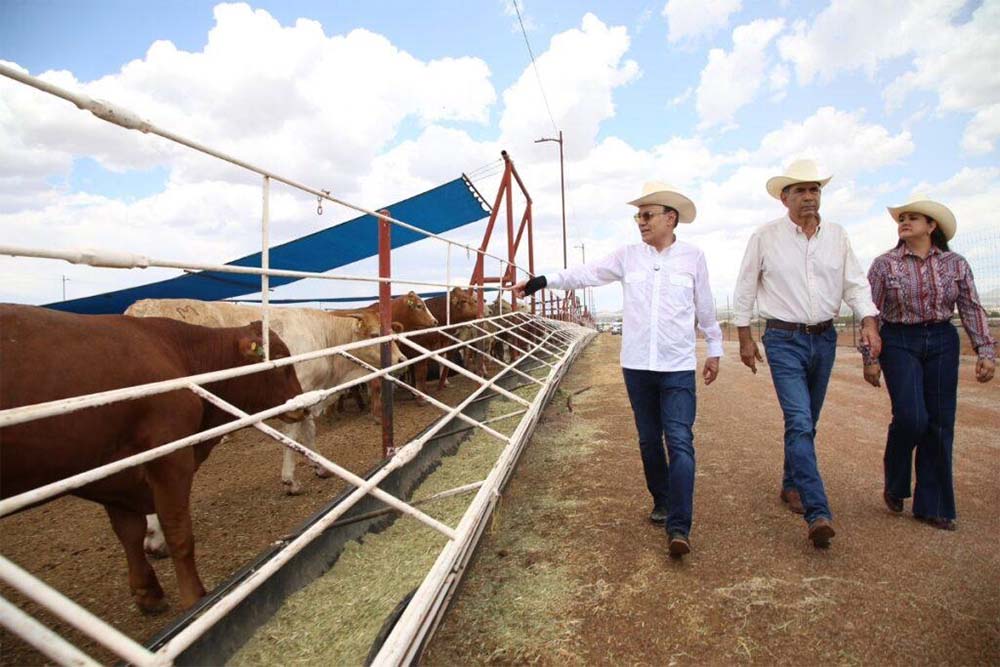
Sonora Gov. Alfonso Durazo joined President Claudia Sheinbaum’s Monday morning press conference by video from the quarantine station in Agua Prieta to announce the resumption of exports.
“We’re here at the quarantine station in Agua Prieta with the extraordinary news of the reopening of cattle exports to the United States,” Durazo said.
The reopening is particularly significant for ranchers in northern Mexico, where cattle exports to the United States represent an important source of income and an integral part of the cross-border agricultural economy.
The United States restricted Mexican livestock imports because of concerns over the spread of the New World screwworm, a parasitic fly whose larvae can infest wounds and feed on living tissue of cattle and other warm-blooded animals.
The restrictions caused significant economic losses for Mexican cattle producers. With access to the U.S. market curtailed, more Mexican beef remained in the domestic market.
“There was an economic impact, although, believe it or not, meat production in Mexico increased,” Sheinbaum said.
“While [Mexican beef] wasn’t sold in the United States, it was sold in the domestic market. But the [ban on exports] obviously affected different cattle sectors across the whole country,” she added.
The reopening will be gradual. During the first week, exports through Douglas are limited to 700 head of cattle per day. The limit is expected to rise to 900 per day during the second week and eventually to approximately 1,300 daily.
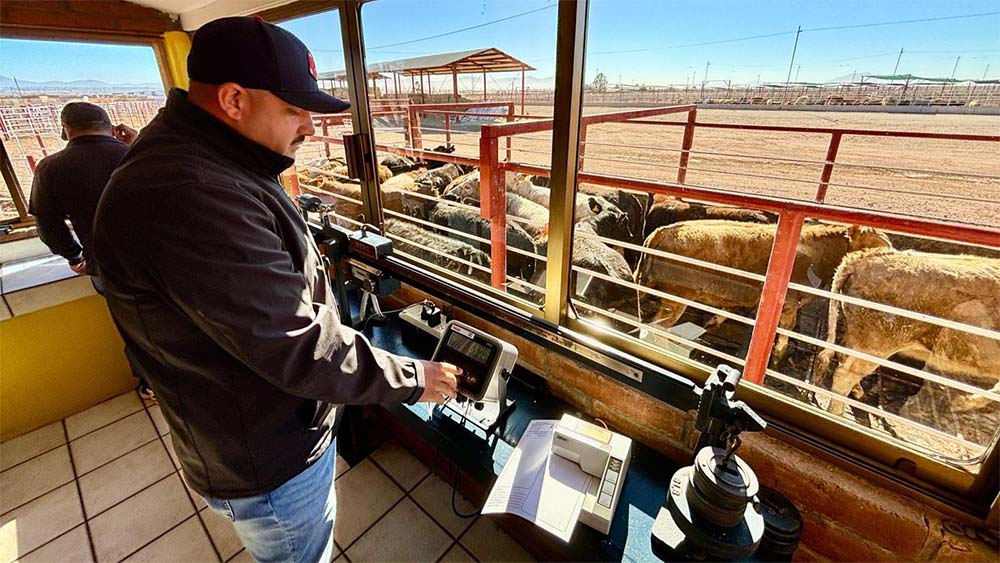
The resumption of trade comes with stricter sanitary measures. Cattle must carry radio-frequency identification tags in their ears and undergo screening before being permitted to enter the United States. Mexican and U.S. authorities also inspect the animals for evidence of screwworm infection.
Durazo said cattle trade between Agua Prieta and Douglas is resuming with an “enhanced health-screening capacity.”
The U.S. Department of Agriculture has described Douglas as the first port in a phased reopening of the southern border to Mexican livestock. Additional crossings in New Mexico could reopen later depending on animal-health conditions and the effectiveness of safeguards.
Mexico, meanwhile, has intensified efforts to control the parasite, including livestock surveillance, movement controls and the dispersal of sterile flies. The technique involves releasing sterilized male flies that mate with wild females but produce no offspring, gradually reducing the pest population.
The renewed Mexican shipments could also help the U.S. cattle industry. American cattle inventories have fallen to historically low levels, tightening beef supplies and contributing to higher consumer prices.
Mexico traditionally supplies feeder cattle to U.S. ranchers and feedlots, where the animals become part of the American beef-production system. The trade demonstrates how closely connected the livestock industries on both sides of the border have become.
For Mexican ranchers, particularly in northern states such as Sonora and Chihuahua, U.S. buyers provide a market that cannot easily be replaced by domestic sales.
The reopening therefore represents more than the restoration of an export route. It marks the gradual recovery of a longstanding agricultural relationship connecting ranchers, livestock operations and consumers in Mexico and the United States.
Continued access to the U.S. market will now depend on sanitary controls and cooperation between both countries to contain the screwworm while allowing cross-border livestock trade to recover.