Vive Oaxaca Guelaguetza es un festival cultural que no puedes perderte. Vive Oaxaca Guelaguetza is a cultural festival you can’t miss (Courtesy https://scsenderos.org/vive-oaxaca-guelaguetza/)
By Magdy Zara
Raíz Magazine has organized the 2026 San José Flower and Song Festival, where you can enjoy a weekend with your family filled with fun outdoor activities. This bilingual event will focus on culture, poetry, and community art.
There will be three days of activities, including a free art workshop, an art exhibit, a youth poetry event, an open mic, a book fair, and much more.
During the festival, you will have the opportunity to share the work you have created in workshops, present it in open mic sessions, and even promote your books.
The Festival will take place starting this Friday, April 24, at different locations and times.
The opening ceremony will be held on Friday, April 24, at the Raíz Magazine offices, located at 3275 Stevens Creek Blvd Ste 301. Saturday, the 25th, at Escuela Popular, 149 N. White Rd; Sunday, the 26th, at the Dr. Roberto Cruz Alum Rock Branch Library, 3090 Alum Rock Ave.
Annual Job Fair Connects Students with Career Opportunities
El Camino College and the South Bay Workforce Investment Board will host the 26th Annual Job Fair, a free event open to the public where students and community members can explore career options, connect with potential employers, and take the next step in their professional development.
More than 100 employers from various industries will be present, offering opportunities in areas such as healthcare, medical administration, manufacturing, transportation, retail, customer service, food, office, government, childcare, construction, landscaping, education, social services, automotive, security, and professional services, among others.
During the fair, recruiters will be available to discuss openings and, in some cases, may offer on-the-spot interviews. Attendees are encouraged to bring their resumes and dress in professional casual attire to make the most of this opportunity.
The event is presented by El Camino College Career Services in collaboration with the South Bay Workforce Investment Board.
It will take place on Tuesday, April 28, 2026, from 10:00 a.m. to 2:00 p.m., in the El Camino College Student Services Plaza.
Celebrate Book Day with the Children at Home
As part of the Book Day and Children’s Day celebrations, share a special day of creativity and learning with your family and friends.
The San Francisco Public Library, in conjunction with other organizations, hosts an annual festival to provide a day of creativity and learning in the heart of the Mission District.
This year’s event will feature live music, dance, and storytelling, as well as fun crafts and activities for all ages. There will also be surprises and gifts from our partners.
This Sunday, April 26, was the chosen day for this celebration, which will take place starting at 11 a.m. at Parque Niños Unidos, located at 3090 23rd St, San Francisco. Admission is free.
Sheinbaum chaired a meeting at the National Palace attended by Greer, U.S. Ambassador to Mexico Ron Johnson, Mexican Economy Minister Marcelo Ebrard, Finance Minister Édgar Amador Zamora and other officials. (Presidencia)--Estados Unidos y México fijan el 25 de mayo como fecha para la primera ronda oficial de negociación del T-MEC
by Mexico News Daily
After meeting with U.S. Trade Representative Jamieson Greer in Mexico City on Monday, President Claudia Sheinbaum declared that talks with the United States related to the review of the U.S.-Mexico-Canada Agreement (USMCA) are advancing “positively.”
Sheinbaum chaired a meeting at the National Palace attended by Greer, U.S. Ambassador to Mexico Ron Johnson, Mexican Economy Minister Marcelo Ebrard, Finance Minister Édgar Amador Zamora and other officials.
“I received at the National Palace the delegation from the United States, headed by Ambassador Jamieson Greer, Trade Representative, for the conversations with Mexico regarding the review of the USMCA. We continue to advance positively,” the president wrote on social media.
Later on Monday, Ebrard and Greer — the top USMCA negotiators for Mexico and the U.S. — issued a joint statement that outlined the objectives for bilateral trade talks this week.
“Ambassador Greer and Secretary Ebrard directed their teams to advance important technical discussions this week on economic security and complementary trade actions, strengthened rules of origin for key industrial goods, collaboration on critical minerals, and to resolve outstanding bilateral trade irritants,” the statement said.
The English-language statement issued by the Office of the United States Trade Representative said that Greer, who has returned to the United States, and Ebrard “also agreed to hold a first official bilateral negotiating round for the USMCA Review the week of May 25, 2026, in Mexico City.”
In their statement, Ebrard and Greer said that “the USMCA Joint Review” — involving all three countries — will take place on July 1. The three North American trade partners have to decide whether they want to renew their free trade pact for an additional 16 years — i.e., to 2042. Mexico is confident that the USMCA will be extended, even though U.S. President Donald Trump has made disparaging remarks about the pact. Even if Mexico, the U.S. and Canada don’t agree to extend the agreement during the upcoming review process, it would not be terminated until 2036.
There is a range of “trade irritants” between Mexico and the United States. Mexico’s primary complaint is that Trump has imposed tariffs on a range of Mexican goods, including steel, aluminum and vehicles. Among the United States’ concerns is Mexico’s energy sector framework, which favors state-owned firms over private and foreign companies.
Citing industry sources, Reuters reported on Tuesday that Greer “told Mexico’s auto and steel industries they should not expect the renegotiation of the U.S.-Mexico-Canada Agreement to remove President Donald Trump’s tariffs on their sectors”.
US more concerned about deficit with China than deficit with Mexico
Another trade irritant for the United States is that it has a large deficit with Mexico — US $196.9 billion in 2025, a 14.8% annual increase. Trump has cited the deficit as one reason for his decision to impose tariffs on Mexican goods, and last year, he and Sheinbaum agreed to work to narrow the trade imbalance.
Nevertheless, Greer said on Monday that the U.S. is more concerned about its trade deficit with China than its trade deficit with Mexico, according to a report by the newspaper El Economista.
The U.S. trade representative made the remark during talks with Mexican officials at the headquarters of the Mexican Banking Association (ABM), El Economista reported, citing sources who were at the meeting.
The United States has good reason to be more concerned about the deficit with China than the deficit with Mexico. The U.S. and China are, of course, geopolitical rivals, but beyond that, there are other reasons why the Trump administration wants to reduce the reliance on imports from China. One key issue is that Chinese exports to the U.S. contain very little U.S. content. According to an analysis by the SAI consultancy firm that was cited by El Economista, at the end of the last decade, exports from China to the U.S. had just $4 of U.S.-made content for every $100 of goods sold, whereas Mexican exports to the U.S. had $40 of U.S.-made content for every $100 — ten times more.
At the ABM headquarters, Greer highlighted that Trump wants to “re-industrialize” the United States, according to El Economista, but recognized that Mexico is a key supply chain partner. Indeed, the two countries are said to be part of a “co-production system.”
Greer meets with business groups
During his visit to Mexico City, Greer also participated in meetings with the Business Coordinating Council — a leading Mexican private sector group — and the American Chamber of Commerce of Mexico (AmCham), which represents U.S. companies in Mexico and seeks to facilitate economic integration between Mexico and the United States. Ebrard attended both meetings as well.
AmCham president Oscar del Cueto said that there is a “genuine interest” from both the Mexican and U.S. governments to “know the private sector’s positions” on issues related to the USMCA.
“From AmCham, we see the review of the USMCA as an opportunity to continue advancing in this [bilateral] integration while looking after the competitiveness of each of our economies,” he said.
“We don’t have to divide the cake, we can make a bigger cake together,” del Cueto said.
AmCham said in a statement that during the meeting with Greer and Ebrard, it “highlighted four common objectives” for both Mexico and the United States:
Re-industrialize the United States and Mexico in order to better compete with Asia.
“North Americanize” supply chains.
Build energy and critical minerals security.
Strengthen Mexico’s economy as part of a stronger North America.
“To achieve this, we proposed that Mexico receive preferential tariff treatment, that the duration of the USMCA be extended as soon as possible to provide certainty for investment, and that we work toward the vertical integration of our region to balance the trade deficit and strengthen our economic resilience,” AmCham said.
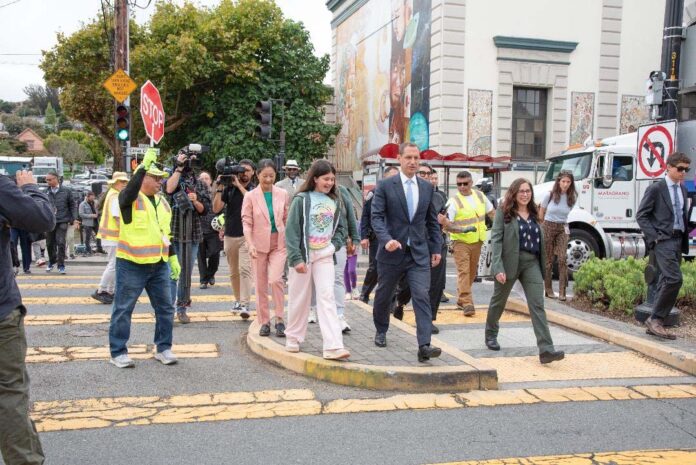
San Francisco housing leaders and community organizations gathered Thursday, April 23, at the 16th Street BART Plaza to mark the groundbreaking of “Marvel in the Mission,” a major affordable housing development at 1979 Mission Street. Mission Housing Development Corporation, in partnership with Mission Economic Development Agency (MEDA) and community partners, hosted the event.
There is no question that housing is needed. In a city like San Francisco, where rents and home prices remain out of reach for many, every new unit matters. Projects like this are often the result of years of community advocacy, public funding, and collaboration between nonprofits, financial institutions, and government agencies.
But as these developments continue to rise across the city, an important question remains largely unaddressed: why are so many of these units designed only for rent, and not for ownership?
Supportive housing serves an important purpose for residents who need long-term assistance. However, there is another group that often gets overlooked—working people earning $50,000, $60,000, or even $80,000 a year. These are individuals and families who hold steady jobs, run small businesses, and pay their rent month after month. Many of them already pay amounts comparable to what a mortgage would cost.
Yet, under the current system, they are locked into being renters.
Eligibility rules often cap how much a tenant can earn in order to qualify for “affordable” units. In some cases, that ceiling is around $50,000 a year. Earn more than that, and you no longer qualify. Stay within that range, and you may secure a unit—but you remain a tenant indefinitely, with no pathway to ownership, no equity, and nothing to pass on to the next generation.
This raises a deeper concern. Affordable housing, as it is currently structured, provides stability—but not mobility. It keeps people housed, but it does not necessarily help them build wealth or move forward economically. Over time, this can reinforce a cycle in which working families remain dependent on regulated housing without a realistic exit toward ownership or upward financial movement.
The question becomes even more pressing when considering that many of these tenants are already financially responsible. They pay rent on time, maintain steady employment, and contribute to the local economy. Yet the system offers them no mechanism to convert that reliability into ownership or long-term financial security.
Why not explore models where long-term tenants can transition into ownership? If residents are already paying consistent monthly rent, why couldn’t that same payment be applied toward a mortgage structure over time? Why not allow families the opportunity to build equity in the very communities they help sustain?
Some will argue that converting these developments into ownership carries risks. Homeownership brings additional costs—property taxes, maintenance, and, in many cases, high homeowner association fees. In some condominium models, those fees can reach hundreds of dollars a month, creating a new financial burden. And if a homeowner falls behind, they could risk losing the property altogether.
Those are valid concerns. But they should not end the conversation.
There are alternative models—such as limited-equity cooperatives or community land trusts—that attempt to balance affordability with ownership. These approaches can provide long-term stability while still giving residents a stake in their homes.
The current approach, however, leans heavily in one direction: creating permanent renters.
San Francisco has made significant investments in affordable housing, and those efforts deserve recognition. But if the goal is not only to house people, but to strengthen communities and reduce inequality, then ownership must be part of the discussion.
Housing should not only be about having a place to live. It should also be about having a future.
Magnesium is essential for bone health, muscle function and blood pressure regulation, yet nearly half of Americans don’t meet daily requirements. Deficiency can cause cramps, fatigue and cardiovascular risks.
Top magnesium-rich foods outperforming almonds (76.5 mg/oz): cooked spinach (157 mg/cup, 38 percent DV), which is also rich in folate, iron and vitamins; pumpkin seeds (156 mg/oz, 37 percent DV), which is high in iron, zinc and plant protein; chia seeds (111 mg/oz, 26 percent DV), which is packed with omega-3s, fiber and antioxidants; Brazil nuts (107 mg/oz, 25 percent DV), which is excellent source of selenium and healthy fats; and edamame (99 mg/cup, 24 percent DV), which provides plant-based protein and fiber.
Underrated sources of magnesium include mackerel (83 mg/3 oz, omega-3s), amaranth (80 mg/½ cup, gluten-free grain) and quinoa offer high magnesium with added nutrients like B12 and fiber.
Some absorption Tips: Combine magnesium-rich foods (e.g., seeds + nuts), choose raw/minimally processed sources (boiling leaches magnesium) and avoid excess calcium/caffeine, which hinder absorption.
Modern processed diets contribute to deficiencies, but diversifying whole-food sources (leafy greens, seeds, fish) ensures optimal intake and broader health benefits.
Magnesium, according to BrightU.AI‘s Enoch, is an essential mineral involved in over 300 enzymatic reactions, critical for cellular function, energy production muscle and nerve regulation and detoxification, yet nearly half of Americans fail to meet their daily requirements.
While almonds (76.5 mg per ounce) are a well-known source, several other foods—including quinoa, pumpkin seeds, spinach and chia seeds—offer even higher concentrations of this essential mineral. Nutrition experts emphasize diversifying magnesium intake to optimize absorption and overall health benefits.
Top magnesium sources outperforming almonds
Cooked spinach (157 mg per cup)
Leafy greens like spinach are among the most magnesium-dense foods, providing 38 percent of the daily value (DV) in just one cooked cup. Spinach also delivers folate, iron, calcium, and vitamins C and E, making it a powerhouse for overall wellness.
Pumpkin seeds (156 mg per ounce)
A single ounce of roasted pumpkin seeds supplies 37 percent of the DV for magnesium, along with iron, zinc and plant-based protein. Their versatility makes them an easy snack or salad topping.
Chia seeds (111 mg per ounce)
Despite their small size, chia seeds pack 26 percent of the DV for magnesium while offering omega-3 fatty acids, fiber and antioxidants—key for reducing inflammation and supporting digestion.
Brazil nuts (107 mg per ounce)
Best known for selenium, Brazil nuts also provide 25 percent of the magnesium DV per ounce, alongside copper, vitamin E and healthy unsaturated fats.
Edamame (99 mg per cup)
Shelled edamame offers 24 percent of the DV, along with plant-based protein and fiber—ideal for maintaining energy levels and digestive health.
Mackerel (83 mg per 3 ounces)
This fatty fish is an underrated magnesium source, contributing 20 percent of the DV while supplying omega-3s, vitamin D and B12 for heart and brain health.
Amaranth (80 mg per ½ cup cooked)
An ancient grain rich in protein and fiber, amaranth provides 38 percent of the magnesium DV per cooked cup, making it a gluten-free alternative to traditional grains.
Why magnesium matters
Magnesium deficiency has been linked to muscle cramps, fatigue and even cardiovascular risks. Historically, diets rich in whole grains, nuts and leafy greens ensured adequate intake, but modern processed foods have contributed to widespread shortfalls.
Tips for maximizing magnesium absorption
Pair magnesium-rich foods (e.g., pumpkin seeds with almonds or mackerel with quinoa) to enhance intake.
Opt for raw or minimally processed sources, as boiling vegetables can leach magnesium.
Balance with other nutrients—excess calcium or caffeine can hinder absorption.
While almonds remain a convenient snack, diversifying magnesium sources—from spinach to chia seeds—ensures broader nutritional benefits. With growing awareness of dietary gaps, incorporating these foods can support long-term health, proving that sometimes, the best solutions are found not in supplements, but on our plates.
On Tuesday morning, Sheinbaum highlighted that a Mexican state is not legally permitted to "directly" enter into a security agreement with a U.S. government agency. (Galo Cañas/Cuartoscuro). -- Sheinbaum ordena investigación sobre si operación de la CIA en Chihuahua violó la ley mexicana.
by the El Reportero wire services
President Claudia Sheinbaum said Tuesday that federal authorities are investigating what two U.S. officials were doing in Mexico prior to their death in a car accident in Chihuahua on Sunday.
At her Tuesday morning press conference, Sheinbaum was asked to respond to a Washington Post report that stated that “two U.S. embassy officials who died in an automobile accident in northern Mexico as they returned from the scene of a counternarcotic operation worked for the Central Intelligence Agency (CIA).”
“We’re investigating what these people were doing and what agency they were from,” the president said.
“So far, the information we have is that they were working jointly [with Chihuahua authorities]. … So the whole investigation has to be done by the Federal Attorney General’s Office [FGR] to see if the constitution or the National Security Law was violated,” Sheinbaum said.
Two Chihuahua security officials, including the director of the State Investigation Agency, were also killed when a vehicle in which they and the U.S. officials were traveling plunged into a ravine early Sunday.
On Monday, Sheinbaum said that her administration was asking the Chihuahua government and U.S. authorities for information about their security collaboration in the northern border state. She said her government was unaware of the collaboration. The president is steadfastly opposed to the participation of U.S. officials in security operations in Mexico, although her government and the Trump administration do cooperate on security issues and share intelligence. She has declined offers from U.S. President Donald Trump to send the U.S. Army into Mexico to combat cartels.
Citing two unnamed sources, The Washington Post reported on Tuesday that the deceased U.S. officials “worked for the Central Intelligence Agency [CIA] as part of a significantly expanded role in battling narcotics trafficking in the Western Hemisphere.”
The Post noted that “Chihuahua’s attorney general, César Jáuregui Moreno, told Mexico’s El Universal newspaper that the Americans did not directly participate in the Mexican raid” on a “clandestine drug lab in a remote area” of Chihuahua.
“Jáuregui, the attorney general in Chihuahua, said Sheinbaum’s office was not notified because only Mexican agents — about 40 in all — participated in the seizure of the drug lab, which took about three months to plan,” the Post reported.
Jáuregui “said the Americans, whose agency affiliation he did not identify, were doing training work ‘about eight to nine hours away’ from the location of the operation against the drug lab. After that operation, they met with personnel from Chihuahua’s state investigation agency, known as AEI, which participated in the raid,” the Post wrote.
The Times reported that “Mexico’s national security law forbids foreign agents, including U.S. military and law enforcement officials, from operating in the country without authorization from the government.”
“American officials working directly with state-level authorities without federal approval would be a breach of the Constitution,” the newspaper wrote.
Sheinbaum: Mexico will send protest note to US if investigation confirms joint operation with Chihuahua
On Tuesday morning, Sheinbaum highlighted that a Mexican state is not legally permitted to “directly” enter into a security agreement with a U.S. government agency. Such an agreement has to be authorized by the federal government, she stressed.
The quarterback’s selection by the Las Vegas Raiders revives the conversation about the historic lack of Latino representation in football’s most visible position
by the El Reportero staff
On the night of Thursday, April 23, 2026, Fernando Mendoza heard his name called as the first overall pick in the NFL Draft, selected by the Las Vegas Raiders, marking a historic moment not only for his career but also for the Latino community in the United States.
Of Cuban heritage, Mendoza enters the league with an outstanding college career and high expectations as a quarterback, a position widely considered the most strategic and visible in professional football. But beyond his on-field achievements, his selection has resonated for what it represents.
For decades, Latino players have been present in the NFL across various positions; however, their presence as starting quarterbacks has been limited. For many, the last major reference remains Jim Plunkett, the Mexican-American quarterback who led the then–Oakland Raiders to two Super Bowl titles in the 1980s.
Since then, few have reached that level of prominence at the position, making Mendoza’s selection a turning point for some analysts and fans.
Although they now play in Las Vegas, the Raiders maintain deep roots in Oakland, where for decades they built a loyal fan base in the Bay Area. That historical connection makes Mendoza’s arrival resonate with fans who still identify the team with its California past.
The NFL regular season is scheduled to begin in September 2026, when Mendoza could make his debut as a starter and take on the challenge of leading a franchise seeking to return to its years of glory.
For many young Latinos, his rise represents more than a sports story. It is a sign that new generations are reaching spaces where they historically did not see themselves reflected.
“There is always a special sense of pride when someone from your community reaches the top,” fans commented on social media. “Now we can see ourselves in that position too.”
In a league that continues to evolve and diversify, Mendoza’s emergence could mark a new chapter—not only for the Raiders, but for a community that has long waited to see itself represented at the center of the field.
A new face has been added to one of San Francisco’s most iconic cultural landmarks, recognizing a life devoted not only to music, but to family, culture, and community.
Ángel “Carmelito” Vélez Sr., a beloved Puerto Rican cuatro player and longtime Mission District figure, is now featured on the famed “House of Latin Rock” mural at the corner of 25th and Hampshire streets. The muralized home, created and onwed by artist Richard Segovia, celebrates legendary musicians who have shaped Latin music and the cultural identity of San Francisco.
Se añade un mural de Carmelito Vélez en la SF House of Latin Rock. Carmelito Vélez mural added at the SF House of Latin Rock.
For Carmelito Vélez, the recognition represents more than an artistic tribute—it is a permanent place in the cultural memory of the neighborhood he helped shape through decades of music and presence.
Born on July 24, 1924, in Barceloneta, Puerto Rico, Vélez developed his passion for music at an early age. By the age of 11 or 12, he had already formed his first band alongside three of his brothers. Coming from humble beginnings, he built his first guitar himself. With the money he later earned traveling across the island performing, he was able to purchase his first cuatro—the instrument that would define his life.
That early connection to the cuatro, central to Puerto Rican musical tradition, became the voice through which he expressed his heritage throughout his life. His musical journey eventually brought him to the mainland United States and later to San Francisco, where he settled, raised a family, and became a respected figure in the Mission District.
He married Nancy Vélez in 1956, whose heritage was both Hawaiian and Puerto Rican, and together they built a large and deeply rooted family. The couple had six children—two born in Puerto Rico and the rest in San Francisco—marking the continuation of their story across generations in the Bay Area.
That legacy grew into a remarkable family tree: 11 grandchildren, 20 great-grandchildren, and 7 great-great-grandchildren—a total of 37 descendants. Many have followed in his musical footsteps, transforming his personal passion into a living, evolving tradition.
Four of his earliest grandchildren showed a strong interest in music from a very young age.
Bill Ortega Jr. began playing trumpet in elementary school before moving on to timbales and vocals. He has performed with well-known recording artists and now manages his own band, Orchestra Borinquén.
Freddy Martinez also started early, developing his skills as a saxophonist and vocalist while performing with multiple bands and established artists.
Freddy’s younger brother, Manuel Vélez, first learned the cuatro from his grandfather around the age of 9 or 10, mastering a few chords before transitioning to trumpet and later guitar. Today, he is a singer-songwriter who leads his own band, “BULLY WEST,” blending a passionate, modern blues-rock style with his musical roots.
The youngest of the group, Ashley Vélez, showed her artistic instincts almost from the start. At just three years old, she was already creating performances at home for family members, singing songs by artists such as Selena and Whitney Houston. Growing up surrounded by music, becoming a performer was almost inevitable. Ashley created her own band, Mama Foxxy.
Family members recall that one of Carmelito Vélez’s greatest joys was playing his cuatro alongside his grandchildren, encouraging them to sing, explore instruments, and find their own voice. Those moments helped spark a multigenerational musical lineage that continues today.
Richard Segovia contándole su experiencia de juventud con Carmelito Vélez, a Nancy Vélez. — Richard Richard Segovia recounting his youthful experiences with Carmelito Vélez to Nancy Vélez.
One of the most emotional moments surrounding the mural came during a recent conversation between the family and artist Richard Segovia. According to his daughter Nancy Vélez, Segovia became visibly moved as he reflected on Carmelito’s impact on his life.
“He told us he was just a young kid who wanted to play in a band,” Nancy Vélez recalled. “Someone had given him a drum set, but he didn’t really know how to play. My dad didn’t care—he gave him a chance anyway.”
Segovia described how Carmelito would invite him to meet at a Woolworth store with his equipment, then take him along to perform, even allowing him to open shows.
“He said if it wasn’t for my dad giving him that first opportunity, none of this would have happened,” she said. “He told us, ‘Your father was my inspiration.’”
According to Vélez, her father was known for giving opportunities to anyone who showed interest in music, regardless of experience.
“He never judged,” she said. “Because my dad let him play, he kept improving and eventually became who he is today.”
Beyond the stage and recordings, it was that humanity that left the deepest mark.
Over the years, countless stories emerged from those who crossed his path—couples who met at one of his performances, later marrying and building families of their own. Those same families would invite him back time and again: to play at weddings, baptisms, their children’s weddings, and eventually, years later, even at final farewells.
When he passed in 2007 from a heart attack, that impact became visible in a powerful way. His family recalls a funeral procession stretching four to five blocks long—an extraordinary tribute reflecting the number of lives he touched and the love he gave so freely.
Now immortalized alongside figures such as Carlos Santana, Vélez’s addition to the mural reinforces the deep Puerto Rican and Latino roots embedded in San Francisco’s cultural landscape.
Amid renewed attention, there has also been increasing discussion about formally recognizing the House of Latin Rock as a historic landmark. Although no official designation has been announced, the conversation reflects the mural’s cultural importance and its role as a living archive of Latino musical history in the city. Any future designation would likely involve agencies such as the San Francisco Planning Department and the San Francisco Historic Preservation Commission.
In a city constantly evolving, the mural stands as a reminder that culture is not only preserved in institutions, but in people—in the music they share, the families they build, and the communities they uplift.
Carmelito con su guitarra, serenando a su amada Nancy en el Cielo. — Carmelito with his guitar, serenading his beloved Nancy in Heaven.
And now, Carmelito Vélez’s legacy—rooted in the cuatro, carried by generations, and painted into the heart of the Mission—will continue to resonate for years to come.
(Carmelito Vélez’s mural was created by Mission District muralist Carlos “Kookie” Gonzalez, a veteran community artist and professional conga player whose work reflects the culture, music and lived experiences of Latino life in San Francisco’s Mission District. Gonzalez, who is currently undergoing cancer treatment, continues his work as an artist.)
Players react on the field during a professional soccer match, reflecting the intensity of Liga MX and MLS competitions this April.-- Jugadores reaccionan en el campo durante un partido profesional de fútbol, reflejando la intensidad de las competiciones de Liga MX y MLS este abril.
by the El Reportero staff
Soccer fans across the San Francisco Bay Area continue to follow closely as both Mexico’s Liga MX and Major League Soccer present key matchups this week and into the next, offering nonstop action that resonates strongly with Latino communities.
In Liga MX, the Clausura tournament is entering its final regular-season stretch, with critical matches scheduled over the coming days. Teams such as Club América and Cruz Azul are expected to play decisive games this weekend, as they push to secure favorable positions ahead of the playoffs. Meanwhile, Chivas Guadalajara faces upcoming fixtures that could determine whether the club advances into the postseason, increasing the stakes for fans and intensifying rivalries across the league.
Looking ahead to next week, midweek Liga MX matches will continue to shape the standings, keeping supporters engaged on a near-daily basis. Several clubs are fighting for the final playoff spots, while others aim to secure direct qualification, making every point essential. These games are widely available on U.S. television and streaming platforms, allowing fans to follow their favorite teams without missing key moments.
At the same time, Major League Soccer maintains a full schedule of weekend matches. Locally, the San Jose Earthquakes are set to play both home and away games over the next week, drawing attention from Northern California fans eager to support their regional team. Across the league, matchups featuring international stars and emerging talent continue to attract growing audiences.
Sports bars in San Francisco, particularly in Latino neighborhoods such as the Mission District, are expected to fill during these upcoming fixtures, as fans gather to watch both Liga MX and MLS games live. The variety of match times—morning, afternoon, and evening—allows supporters to follow multiple competitions throughout the week.
As April progresses, these upcoming matches will play a crucial role in shaping playoff scenarios and maintaining excitement among fans. For many in the Bay Area, the current soccer calendar offers daily opportunities to stay connected to the sport, celebrate shared traditions, and enjoy the energy of the game.
These matches are part of the 2026 Clausura tournament in Liga MX, which runs from January through late April, leading into the playoffs.
Photographer Alexa Treviño captures two women in Cuban ceremonial attire posing against a floral backdrop in the Mission District. (Courtesy: Alexa "LexMex" Treviño. https://eltecolote.org/content/es/sf-mission-foto-galeria-alexa-trevino) -- XX Festival Anual CubaCaribe
By Magdy Zara
With the motto “Looking Back, Moving Forward,” the 20th Annual CubaCaribe Festival is underway, aiming to preserve and promote the cultural and artistic traditions of the Caribbean and its diaspora.
Understanding that dance, music, and visual arts can connect people from diverse perspectives, CubaCaribe organizes festivals, performances, classes, and exhibitions to foster a greater understanding and appreciation of Caribbean arts and culture, especially Cuban arts and culture.
For two decades, CubaCaribe has showcased masters of traditional dance, mostly unknown to the Cuban and Caribbean diaspora. During the 14 days of the festival, they will present a festive retrospective of the last 20 years of progress in community, resilience, and joy.
The festival began on April 8 and concludes this Sunday, April 19, taking place simultaneously at various venues in San Francisco and Berkeley.
The cost of registration and admission ranges from $15 to $60. For more information, visit https://www.cubacaribe.org/2026. The ODC Theater is located at 3153 17th Street, San Francisco.
Galería de la Raza presents Alexa Treviño and Anthony Jiménez.
Galería de la Raza presents artists Alexa Treviño and Anthony Jiménez as part of the first installment of the AO Series, the first part of an exhibition that will be divided into three parts.
This first part showcases the work of Alexa “LexMex” Treviño, a first-generation Mexican-American photographer and photojournalist based in San Francisco’s Mission District.
Anthony Jiménez is a second-generation Latino artist, muralist, and educator residing in San Francisco, California. The exhibition is open to the public from March 7th to May 9th, starting at 5:00 pm. Admission is completely free.
Gallery’s Studio 24 is located at 2779 Folsom St., Suite A, San Francisco.
Pre-election information forums are being organized.
San Francisco residents will have the opportunity to hear directly from their candidates in a series of free forums being held before the June 2nd election, organized by the League of Women Voters of San Francisco.
It is important to note that this is a forum, not a debate. Candidates are asked to focus on sharing their positions and not attacking each other.
The first forum will be with the candidates for District 2 of the San Francisco Board of Supervisors, on Monday, April 20th, at 6 pm, at Calvary Presbyterian Church, 2515 Fillmore Street, San Francisco. The San Francisco Congressional Candidates Forum will then take place on Wednesday, April 29, at 6 p.m. at the Mission Bay Conference Center, 1675 Owens Street, San Francisco.
The San Francisco Board of Supervisors, District 4 Candidates Forum will be held on Tuesday, May 5, at 6 p.m. at Lowell High School, 1101 Eucalyptus Drive, San Francisco.
Altar tolteca descubierto en Tula durante obras del tren México–Querétaro revela rituales domésticos antiguos. Toltec altar discovered in Tula during Mexico–Querétaro train works reveals ancient domestic rituals.
by México Desconocido
Due to the works of the Mexico–Querétaro Passenger Train, the notable finding of an altar in Tula was carried out. Let us discover its secrets!
The works of the Mexico City–Querétaro Train are being a relevant project for different reasons. In addition to the fact that they give continuity to the return of passenger trains in the country, they are being accompanied by diverse archaeological salvage works. It is for this reason that, in the state of Hidalgo, an ancient altar has been found in Tula. The structure gives account of the extension of the ancient Toltec capital.
The discovery of the altar in Tula
In archaeological salvage labores for the route of the Mexico City–Querétaro Passenger Train, specialists of the National Institute of Anthropology and History (INAH) discovered an altar in Tula, state of Hidalgo. Known in the Nahuatl language as momoztli, this structure measures around one meter per side. It was raised with natural stones and was composed, probably, of three low bodies without stairways. The base is of quarry stone, while the second has modular slabs of the same mineral. Finally, the upper part is made of rounded stones and basalt rock.
On the other hand, on three of the sides of the plan of the altar, offerings of human bones were found. The set is composed of four skulls and long bone remains. Ceramic vessels, fragments of obsidian and small blades were also unearthed. Regarding what was observed in the skulls, one was oriented toward the upper part and another toward the southwest. Thanks to this, it was detected that there was a compacted layer with stucco, perhaps lime with sand. Below this level was where the other skeletons were found.
Revealing the dimensions of Tula
The discovery of the momoztli in the works of the new Mexico–Querétaro Train is very important. The altar is located in the proximities of the archaeological zone of Tula, near the area known as Tula Chico. It has been dated in the constructive phase Tollan (900–1150 A.D.). Having been found only 300 meters from the perimeter wall of the site, it is known with certainty that that point was also part of the pre-Hispanic city.
Precisely, having formed part of the Toltec urban complex and being on compacted ground, it is known that the shrine was in the middle of a patio; remains of wall confirm this fact. That is to say, the structure formed part of a house, and was a fundamental part of domestic worship. The archaeologists of INAH speculate that that dwelling and its rooms were within an elite context. For this reason, it is probable that there also exist vestiges of palatial complexes in that place.
As of today the experts know that at the ends of Tula were located the neighborhoods of the ruling classes, the priests and the officials, while in the distances rose the dwellings of the macehuales, that is, the common people. Thanks to the recent finding, a clearer image is being shaped of how that Mesoamerican capital must have been.