Coffee alternatives offer energy with added health benefits
by Evangelyn Rodríguez
For decades, coffee has been the world’s favorite morning pick-me-up. Its rich flavor and caffeine boost remain a daily ritual for millions. But many people are now looking for alternatives that provide steadier energy, lower caffeine or additional health benefits.
One of the fastest-growing options is mushroom coffee, which blends ground coffee with powdered functional mushrooms such as reishi, lion’s mane, chaga and cordyceps. Long used in traditional Eastern medicine, these mushrooms are valued for supporting immune function, cognitive health and the body’s response to stress.
Commercial mushroom coffee typically contains about half the caffeine of a regular cup because it often combines coffee and mushroom powder in equal proportions. This makes it appealing for people who want to reduce caffeine without giving up the familiar taste of coffee. Mushrooms like lion’s mane and cordyceps are considered adaptogens—natural compounds believed to help the body cope with stress while supporting focus and overall balance. Many products can be prepared at home using coffee, mushroom powder, natural sweeteners and milk alternatives.
For those who want to avoid caffeine altogether, several herbal beverages provide flavorful substitutes with their own health benefits.
Chicory root coffee closely resembles coffee’s roasted, slightly bitter taste but contains no caffeine. It is rich in inulin, a prebiotic fiber that promotes digestive health.
Golden milk lattes, made with turmeric, ginger, cinnamon, black pepper and warm milk, are prized for their anti-inflammatory properties. Black pepper enhances the absorption of curcumin, turmeric’s active compound.
Rooibos tea, a naturally caffeine-free herbal tea from South Africa, contains antioxidants that may support heart health.
Matcha, a finely ground green tea powder, offers a moderate amount of caffeine along with L-theanine, an amino acid that promotes calm alertness and may reduce the jitters associated with coffee.
Another popular alternative is yerba mate, a traditional South American beverage. Although it contains about 80 milligrams of caffeine per cup—similar to coffee—it also provides theobromine, which many people find produces a smoother, longer-lasting energy boost. Yerba mate is also rich in antioxidants and has been associated with metabolic, cardiovascular and cognitive benefits.
Chai tea offers a lighter caffeine option, containing about 21 milligrams per cup when prepared with milk, compared with roughly 90 milligrams in a typical cup of coffee. Its blend of cinnamon, ginger, cardamom and cloves has long been associated with digestive and immune support.
The growing popularity of mushroom coffee and herbal beverages reflects a broader change in consumer preferences. Morning drinks are no longer viewed simply as a source of caffeine but as functional beverages that may help manage stress, support immunity and provide sustained energy throughout the day. For many consumers, the ideal morning cup now combines flavor with wellness benefits, offering a healthier way to start the day.
As research into functional foods continues, nutrition experts encourage consumers to choose high-quality products, read ingredient labels carefully and enjoy these beverages as part of an overall balanced lifestyle. Food.news.
Aún no está claro a qué cargos —si es que los hay— podría enfrentarse en Estados Unidos la gobernadora de Baja California, de 40 años. It remains unclear what charges, if any, the 40-year-old Baja California governor could face in the United States. (Presidencia/Cuartoscuro)
MND staff
In a telephone conversation with one man identified as an “external” FBI adviser and another man identified as an FBI “special agent,” Baja California Governor Marina del Pilar Ávila Olmeda — who was stripped of her U.S. tourist visa last year — said she is willing to cooperate with U.S. authorities, apparently in order to avoid possible criminal charges in the United States and extradition to that country.
An audio recording in which Ávila speaks of her willingness to collaborate with U.S. authorities was published by the newspaper El Universal on Monday in a column by journalist Héctor de Mauleón. The column is headlined “In new audio, Marina del Pilar offers to collaborate with the FBI.”
In one section of the recording, Ávila says: “They’re saying they’re going to charge me and file an extradition order. I’m always willing to speak about everything I know, how to help, how to cooperate. I can say what I’ve heard in security meetings.”
The governor, who represents the ruling Morena party, has confirmed the authenticity of the audio recording published by El Universal on Monday as well as another recording published by the same newspaper last month in which she expressed her willingness to “clarify anything” to U.S. authorities that needs to be clarified.
In a statement to the media, the social communication department of the Baja California government said that “the recordings disseminated correspond to fragments of a private conversation with people who introduced themselves as agents or intermediaries of U.S. authorities without formally confirming said representation.”
“During the conversation, these people set out different legal scenarios without presenting documents, identification or official requests to support their claims,” the statement said.
The Baja California government also said that the references to “cooperation and exchange of information correspond exclusively to institutional coordination on security matters that Baja California, as a border entity, maintains with the authorities of Mexico and the United States.”
The publication of the second recording comes 14 months after Ávila revealed that the United States had revoked tourist visas for her and her then-husband, Carlos Torres Torres. The governor denied any wrongdoing, saying that the revocation of her visa was “an administrative decision, not an accusation.”
Baja California governor confirms criminal probe into ex-husband
In January, Ávila confirmed that the Federal Attorney General’s Office was investigating her ex-husband, a former federal deputy, for crimes related to arms trafficking, drug trafficking and money laundering.
It was unclear what charges, if any, the 40-year-old Baja California governor could face in the United States. Asked by the FBI adviser “the charges” the governor faces or “the crime” she is accused of, a man said to be an FBI special agent responds: “I can’t discuss that in detail. That would have to be a discussion between our prosecutor and her [lawyer].”
Another Morena party governor, Rubén Rocha Moya of Sinaloa, is accused by U.S. prosecutors of drug trafficking in league with the Sinaloa Cartel.
The New York Times reported in late June that “elected officials in the country’s governing party” — including governors and members of Congress — “have been quietly offering themselves to U.S. authorities as informants against fellow party members, according to eight people involved in the conversations.”
‘A final chance’?
At the start of the most recent recording published by El Universal, a man identified by de Mauleón as an FBI special agent, speaking in English, says: “I think they’re going to offer a final last chance.”
“That was the special agent,” the FBI adviser tells Ávila in Spanish.
The special agent was referring to a “final chance” for Ávila, governor since late 2021, to cooperate with U.S. authorities before charges against her are possibly laid in the United States.
Ávila points out that she has already met with U.S. authorities.
However, the special agent says: “Essentially there is a lot of frustration right now with the U.S. government because the three meetings … were not productive.”
Ávila says she doesn’t want to have any more meetings with U.S. authorities because “they’ve behaved very badly.”
“… I haven’t seen any progress, any attention,” she says.
At one stage of the recording, Ávila questions whether she is going to be sanctioned by OFAC, the U.S. Treasury Department’s Office of Foreign Assets Control. She says she has two bank accounts in the United States. The FBI adviser responds that he doesn’t know anything about possible sanctions.
Later in the recording, the governor asks whether a U.S. prosecutor will contact her lawyer, Miami-based Michael Nadler. The FBI adviser indicates that will happen, and Ávila subsequently says she doesn’t want to cross into the United States for more meetings with U.S. authorities. She expresses her preference for meeting with U.S. authorities at a hotel rather than at the U.S. Consulate in Tijuana, the largest city in the state she governs.
Ávila also says she is privy to a lot of security information and asks whether there is anything in particular that U.S. authorities “want to know.”
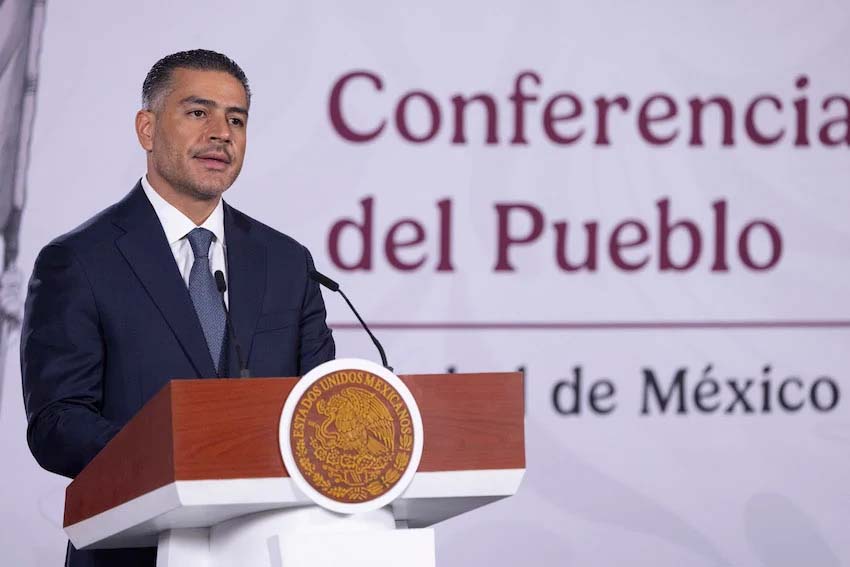
Security Secretary Omar García Harfuch came to the partial defense of the governor of Baja California on Tuesday, stating that there is no evidence she provided “confidential” details to the United States government. El secretario de Seguridad, Omar García Harfuch, salió el martes en defensa parcial de la gobernadora de Baja California, afirmando que no hay pruebas de que ella haya proporcionado detalles “confidenciales” al gobierno de Estados Unidos. (Carlos Ramos Mamahua/Presidency)
García Harfuch: No indication that Ávila will provide ‘confidential information’ to US authorities
At President Claudia Sheinbaum’s Tuesday morning press conference, Security Minister Omar García Harfuch said that in the audio recording published on Monday, it cannot be “inferred” that Ávila is going to provide “confidential information” to U.S. authorities.
García Harfuch also said that in state security meetings, information with a high degree of “sensitivity,” whose disclosure to another authority would be concerning, is not presented or discussed.
The only things presented in such meetings — which are attended by federal, state and municipal officials — are crime statistics and information on “priority targets” and “ongoing cases,” he said.
Sheinbaum: It is not known who Ávila spoke to
Asked about the recording published on Monday, Sheinbaum noted that Ávila already provided her own explanation.
“It’s really not even known who she was speaking to,” she added.
“What we have is a telephone call that was made public by a journalist,” Sheinbaum said.
“… We don’t know who the person is. We don’t even know if he is from the U.S. authorities or not,” she said.
Sheinbaum asserted that Ávila has not put the security of Baja California — one of Mexico’s most violent states — at risk in any way.
Sheinbaum: Ávila’s call is not comparable to the ‘Chihuahua case’
A reporter asked Sheinbaum whether it was “valid” for Ávila to be offering security information to the U.S. government after — in light of the CIA’s alleged involvement in a drug lab raid in Chihuahua in April without the knowledge or authorization of the Mexican government — she reminded governors that the bilateral relationship with the United States is conducted solely by federal authorities.
Sheinbaum asserted that the “Chihuahua case” is different as “it is proven” that U.S. agents were operating in Mexican territory. “That is a flagrant violation of the National Security Law,” she said.
Sheinbaum characterized Ávila’s telephone call, and the governor’s apparent offer to provide information to U.S. authorities, as much less serious.
“It’s a call she has with people who we don’t even know who they are, whether they belong to the U.S. government or not,” she said.
“… If it has to be investigated, let it be investigated. But they’re two completely different things,” Sheinbaum said.
She said later in the press conference that the federal government doesn’t believe that Ávila has committed a crime by offering to provide security information to U.S. authorities.
“We don’t think there is a crime to prosecute because in this communication there isn’t anything related to compromising security,” Sheinbaum said.
In Ávila’s telephone conversation, “nothing is heard that compromises national security or the security of the state of Baja California,” the president asserted.
For nearly half a century, California’s Proposition 13 has protected homeowners from being taxed out of the homes they worked a lifetime to purchase. Approved by voters in 1978, the measure limited the general property tax rate to 1 percent of assessed value and generally restricted annual increases in assessed value to 2 percent until a property changes ownership. It was not a giveaway. It was a shield against government using rising real estate prices as an excuse to seize an ever larger share of a family’s income.
That principle deserves national attention.
Across the United States, homeowners are discovering an uncomfortable truth: paying off a mortgage does not necessarily mean the home is completely theirs. Property taxes continue forever. If owners cannot pay them, government can place a lien on the property and ultimately force its sale. For retirees living on Social Security, working families facing inflation, and longtime residents whose neighborhoods suddenly become expensive, that is not genuine security.
Proposition 13 recognized that a home is more than a financial asset. It is shelter, family history, stability and often the principal inheritance parents leave their children. A person’s tax bill should not explode simply because neighboring homes sell for extraordinary prices. Paper appreciation does not put cash into a homeowner’s bank account.
Such protections would also strengthen communities by allowing older residents to remain near relatives, doctors, churches and familiar neighbors instead of being displaced solely because government reassessed a home they never intended to sell or abandon later.
Critics regularly portray Proposition 13 as outdated, unfair or harmful to public services. Some propose weakening it through a “split roll” that would remove protections from commercial and industrial property. California voters rejected such a proposal, Proposition 15, in 2020. Yet efforts to discredit Proposition 13 continue, often beginning with businesses and eventually placing homeowners’ protections at risk.
Certainly, schools, firefighters, police departments and local services need dependable funding. But government should not balance every budget by threatening people’s homes. Public officials must prioritize spending, eliminate waste and develop revenue systems that do not punish ownership. A national policy could allow states and localities flexibility while establishing basic protections: a reasonable tax-rate ceiling, strict limits on annual assessment increases, enhanced exemptions for seniors and disabled homeowners, and safeguards against tax foreclosure for people with limited incomes.
Opponents will argue that property taxation is a state and local responsibility, not a federal one. Constitutionally, that is largely correct. A president cannot simply abolish county property taxes nationwide. But Congress can encourage national standards through incentives, protections tied to federal housing programs, and relief for vulnerable homeowners. More importantly, the president can use the national platform to begin a serious debate about whether Americans truly own their homes when government can continually raise the price of keeping them.
Rumors circulating online about eliminating taxes on primary residences show that the public is ready for that debate. The rumors may overstate what has been proposed or confuse property taxes with capital-gains taxes, but they reveal real frustration. People are planting the seed because millions believe the present system is unjust.
Proposition 13 is not perfect, and thoughtful adjustments can be discussed. Its central promise, however, must remain untouched: no homeowner should lose a residence merely because its market value increased beyond the owner’s ability to pay taxes.
California started a taxpayer revolt in 1978. The nation should now revive its essential principle. Homeownership should provide permanence, not an endless rental arrangement with government. Once Americans finish paying for their homes, public policy should help them remain there with dignity, certainty and peace.
Lionel Messi culmina una brillante jugada con un gol y una emotiva celebración para Argentina. Lionel Messi caps off a brilliant play with a goal and an emotional celebration for Argentina. (Video capture by Marvin Ramírez, Shortx101/YouTube.)
Argentina’s dramatic comeback over England sets up a championship showdown with Spain as Latin American fans prepare for one last World Cup celebration
by the El Reportero staff
As the 2026 FIFA World Cup enters its final weekend, Argentina has become the last remaining representative of Latin America after rallying to defeat England 2-1 and secure a place in Sunday’s championship match against Spain.
In the game on July 15, the defending world champions once again demonstrated the resilience that has characterized their tournament run. After falling behind in the second half, Argentina responded with two late goals to complete a dramatic comeback and keep alive its dream of winning consecutive World Cup titles.
For millions of Hispanic fans throughout the United States, Mexico, Canada and Latin America, Argentina now carries the hopes of an entire region. With Mexico, Brazil, Colombia and other Latin American nations eliminated earlier in the knockout rounds, the Albiceleste have become the continent’s final standard-bearer.
Lionel Messi has continued to lead with experience and composure while a new generation of Argentine players has provided the energy needed to navigate one of the most competitive World Cups ever played. Their balanced combination of veteran leadership and young talent has once again placed Argentina on soccer’s biggest stage.
The tournament has also highlighted the future of Mexican soccer despite the national team’s Round of 16 exit. Young defender Mateo Chávez and forward Julián Quiñones emerged as two of Mexico’s brightest performers, offering supporters reasons for optimism as preparations begin for future international competitions.
The expanded 48-team World Cup brought unprecedented excitement across North America, with sold-out stadiums, passionate crowds and strong television audiences throughout the tournament. Hispanic supporters created memorable atmospheres from the opening match through the knockout rounds, reinforcing soccer’s growing influence across the region.
Now, only one match remains.
Argentina will face Spain in the FIFA World Cup final on Sunday, July 19, with the championship trophy at stake. Regardless of the outcome, the 2026 tournament has demonstrated the continued strength, passion and global influence of Latino soccer, while giving fans one final opportunity to cheer for a Latin American champion on the world’s biggest sporting stage.
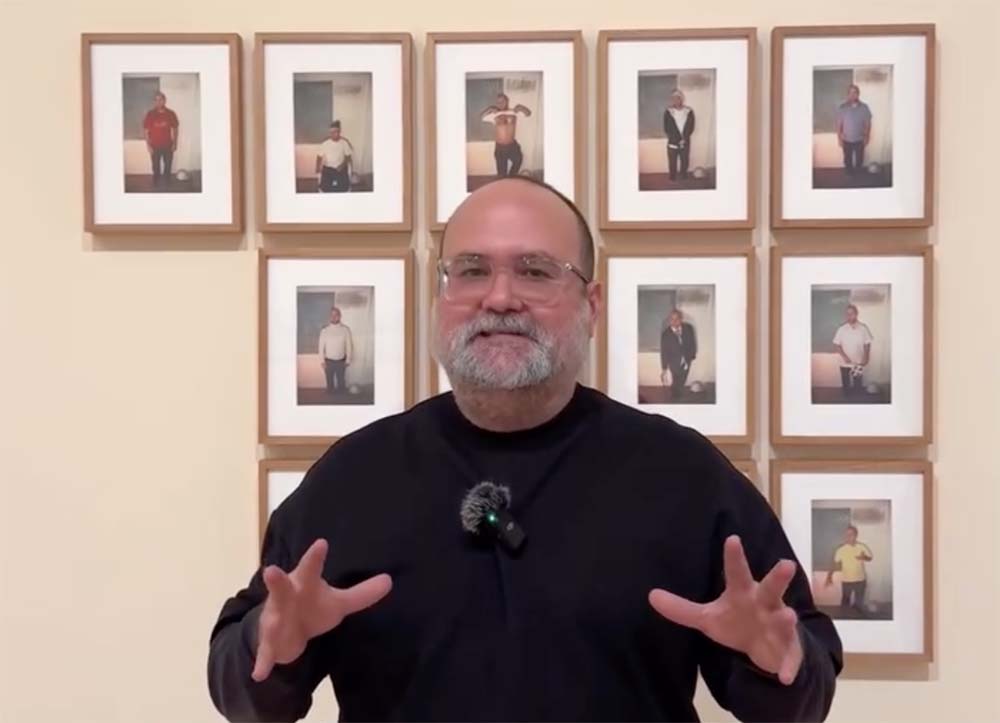
The San Francisco Museum of Modern Art (SFMOMA) is strengthening its commitment to Latin American art with the acquisition of 33 photographs by acclaimed Mexican photographer Alejandro Cartagena, adding one of Mexico’s most influential contemporary visual artists to the museum’s permanent collection.
Alejandro Cartagena
The acquisition is part of SFMOMA’s announcement that it has added more than 90 modern and contemporary artworks by artists from around the world, reflecting the museum’s continued effort to broaden the diversity of voices represented in its galleries.
Born in the Dominican Republic and raised in northern Mexico, Cartagena has built an international reputation through photography that examines urban development, migration, family life and the changing landscapes of the U.S.-Mexico border. His images often explore how rapid growth and social change affect everyday communities while blending documentary photography with conceptual art.
SFMOMA acquired works from Cartagena’s acclaimed Without Walls series, including Mother #33 and Daughter #34. The photographs investigate relationships between people and the spaces they inhabit, offering intimate portraits that invite viewers to reflect on identity, belonging and human connection.
The acquisition comes as SFMOMA is also highlighting Mexican art through its major summer exhibition, Graciela Iturbide: Between Two Worlds, the first large U.S. retrospective in more than two decades devoted to one of Mexico’s most celebrated photographers. Together, the exhibition and Cartagena’s newly acquired works underscore the museum’s growing investment in showcasing contemporary Mexican artists.
For Bay Area audiences, the announcement represents another opportunity to experience internationally recognized Latino artists whose work reflects themes familiar to many local communities, including migration, culture, family and cross-border experiences.
SFMOMA, one of the nation’s leading modern art museums, continues expanding its permanent collection with artists whose work reflects a broad range of cultural perspectives. Museum officials said the latest acquisitions reinforce their commitment to presenting art that speaks to today’s social realities while preserving important artistic voices for future generations.
Visitors can currently explore the museum’s summer exhibitions, including the Graciela Iturbide retrospective, while future gallery installations will gradually incorporate Cartagena’s photographs into SFMOMA’s permanent collection, allowing Bay Area residents to experience another significant chapter in contemporary Mexican photography.
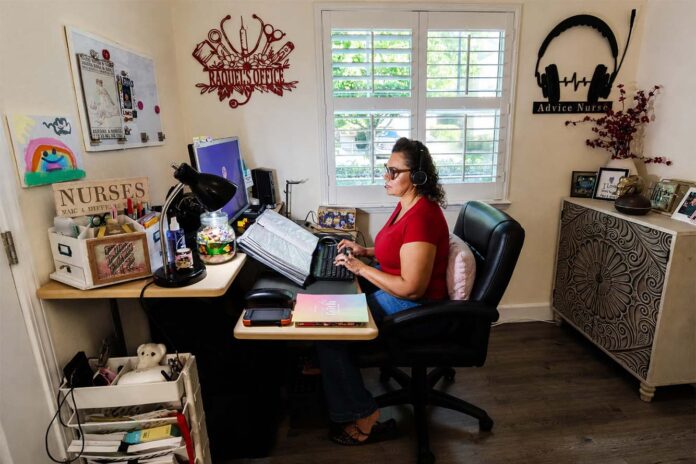
La enfermera de Kaiser Raquel Álvarez Sánchez trabaja desde casa mientras enfermeras expresan preocupación por la vigilancia laboral con IA. Kaiser nurse Raquel Alvarez Sanchez works from home as nurses raise concerns over AI workplace monitoring. Photo by Chad Surmick for CalMatters
by Khari Johnson
Kaiser Permanente nurses who answer advice and triage calls say their duty of care for patients is being increasingly threatened by workplace surveillance.
Seven current and former nurses told CalMatters that those who spend more than 15 minutes on a call with a patient routinely face criticism from Kaiser management or get called into performance evaluation meetings. Call time, they said, factors into monthly performance scores they receive.
In addition to tracking call length, they said Kaiser uses software that tries to predict on a daily basis whether they’re being unproductive or failing to answer calls quickly. Artificial intelligence systems have also been used to rate their empathy and tone of voice.
Their comments come as the California Nurses Association begins negotiating a new contract with Kaiser this month with AI a likely issue. Kaiser nurses went on strike against AI for one day in March and picketed against AI last fall. The CNA is bargaining for 25,000 nurses, including 1,000 in call centers.
At the same time, California lawmakers are considering several bills regulating AI in the workplace, including one that would protect from retaliation doctors and nurses who override automated care recommendations.
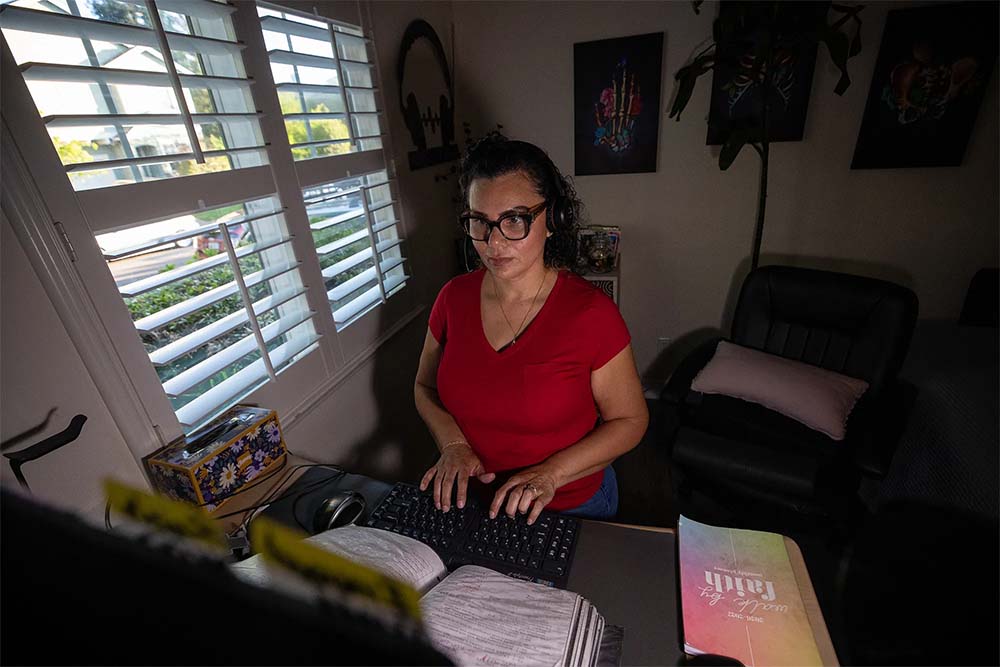
Raquel Álvarez Sánchez atiende llamadas de pacientes desde su oficina en casa durante su jornada con Kaiser Permanente. Raquel Álvarez Sánchez answers patient calls from her home office during her shift with Kaiser Permanente.
Kaiser defended its use of AI, saying it deploys the technology with patient safety in mind and does not use “average handle time” to assess performance.
Kaiser Permanente is the largest private employer in California, providing healthcare services to more than 9 million people in the state and to 3 million other Americans. That means the company’s use of artificial intelligence could set important precedents for managing workers with AI. It could also have a big impact on patient care, providing an early example of how the healthcare sector balances cost-cutting automation with human presence or touch.
Raquel Alvarez Sanchez, a Kaiser Permanente advice nurse in Vallejo since 2010, said she was on a call with a patient who was suicidal last year that took more than an hour because she had to wait for police to arrive before hanging up. She tried to make the man feel cared for, even though she was cognizant that staying on the call that long would throw off her average call time for weeks and could lead to questions from management. Sanchez, a union steward, said she’s accompanied colleagues to performance evaluation meetings, where they were found to have done everything right on a call — except staying on the line for more than 15 minutes. She said she hasn’t seen nurses get fired for doing that, but she fears that continued pressure can lead nurses to quit or retire early.
“I think at some point all of the nurses have been talked to about their average handle time,” she said. “The only thing I can think of is they’re doing it for profit.”
Another nurse who spoke with CalMatters on condition of anonymity due to fear of retribution described how that surveillance affected a call with a patient last year. Initially she thought her patient, an elderly woman who just received a terminal cancer diagnosis, was suicidal, but quickly came to understand that she was in shock and really needed somebody to talk to.
The nurse wanted to take time to show compassion or comfort to the woman, who acts as a caretaker for her daughter, but she stopped herself out of fear it would hurt her monthly performance score and lead to a reprimand from her manager. She became a nurse to provide people with compassionate care, but “I had to ask myself: Am I going to get disciplined for going off script or saying more than what is necessary?”
Kaiser Permanente says its performance evaluations help improve patient outcomes. A company spokesperson said, “Kaiser Permanente does not use Average Handle Time to assess agent performance or enforce call time metrics. Any tools used in contact center settings support our quality assurance efforts and have human review and oversight.” In a statement provided to CalMatters, spokesperson Vincent Staupe added that Kaiser uses AI responsibly, with human oversight, and by “prioritizing patient safety, privacy, and equity,” but he said, “As a large organization, we do not share specific information about internal technology systems for security and operational reasons.”
Is technology putting patients at risk?
It’s not clear how patient care is affected by algorithmic management, nor is the impact of limiting the length of triage and advice calls on patients. Kaiser call center nurses can’t say for certain whether the pressures they face results in adverse outcomes for patients because their contact with patients ends after they hang up the phone. A 2024 public records request by CalMatters to the California Department of Managed Health Care found no complaints by patients against Kaiser related to call times. But nurses insist the risk to patient safety and quality of care is real.
Consumer Watchdog patient advocate Michele Ramos said many Kaiser patients begin their care on the advice line. They later complain to her, mostly about things that happen in Kaiser facilities, but “I can see now where a lot of the problems” start, given the call constraints nurses are under.
Ramos said the time pressures may fit a broader pattern at Kaiser of putting costs over quality. The health giant was hit with a record fine, $50 million, as part of a settlement over findings from the California Department of Managed Health Care that it delayed behavioral health appointments beyond statutory limits and too often moved patients into group rather than individual therapy. Kaiser also settled with the U.S. Department of Labor after investigations into its substance use and mental health services. Kaiser faced criticism in 2002 for paying bonuses to call center workers who aren’t nurses for keeping calls short, though call center nurses who spoke with CalMatters said they encountered no such practices today.
“Kaiser’s been known through the years to manage dollars over managing care, and I think this would be a contributor to that, which is only going to fail patients,” Ramos added.
Nurses said they are pressured to stay under 15 minutes even for the sorts of calls that often take more time, like diagnosing a patient with multiple symptoms, chronic illnesses, new parents in need of advice and assurance, people who desire extended health education, or people who are overwhelmed after receiving life-altering news who could use some compassion. Nurses say calls that involve interpreters often take 30 minutes or more. About four in 10 Californians speak a language other than English and half of them do not speak English well, according to a state environmental health agency.
“The amount of time that Kaiser is giving us to complete a call is sometimes not safe,” said one nurse, who asked to remain anonymous due to fear of retaliation.
“People can get hurt,” said Charlotte Capulong, who has worked in nurse call centers for 22 years and helped organize Kaiser nurses against the AI tone-of-voice tool. Capulong said nurses felt harassed by managers in meetings she attended as a union rep, even if they successfully carried out all other duties of their jobs except completing calls within 15 minutes.
“You aren’t calling Comcast. We’re dealing with life here,” she said.
Nurses are instructed to stick to a script on phone calls and give no more than two to three pieces of advice, Capulong and other nurses said, which means they may sometimes need to decide whether to withhold advice or face a performance evaluation hearing.
The nurses say artificial intelligence could make the surveillance nurses encounter on the job worse.
In summer 2024, Kaiser began testing an AI tool that attempts to assess empathy and tone in the voices of nurses and patients, according to nurses who spoke with CalMatters. In response, nurses circulated and signed a petition in favor of the right to patient privacy, more transparency, and the right to exercise their professional judgement and encouraged management to involve nurse’s input and feedback. The signature campaign used the same tag line that nurses used at protests outside San Francisco hospitals earlier that year: “Trust nurses, not AI.” The AI tests ended in November 2024, but union representatives were told that managers may bring the program back in the future.
Nurses reported feeling harassed by existing surveillance, “and that was intensified when they said we’re going to use AI to evaluate our calls and grade us,” said Sanchez.
Another nurse speaking on condition of anonymity said “AI did not understand our job and would grade us wrong all the time.”
A Kaiser spokesperson declined to respond to questions about the AI tool or answer questions about the use of AI and other automated systems in the company’s call centers and healthcare facilities, including for evaluating nurse performance or whether patients were informed about the use of AI to evaluate their empathy and tone.
Nurses also said they get little time between calls even if that call involves speaking with a patient who is suicidal, experiencing a mental health episode, or near death. In years past, nurses got around 10 minutes to finish writing notes in a patient’s chart or collect themselves after a particularly tough call. Today they say they typically get 30 seconds or less when lines are busy, although more at slow times, like late at night, or if they get a manager’s permission after a particularly challenging call. The overall pace they say, can lead to mistakes like missing important cues into a patient’s wellbeing.
CNA reps declined to talk about specific provisions they intend to seek related to AI ahead of their talks with Kaiser this summer.
How surveillance and AI shape nursing
Critics say excessive workplace monitoring can lead to lower morale as employees feel less trusted and autonomous, relegated to being no more than algorithm monitors. UC Berkeley Labor Center Technology and Work Program director Annette Bernhardt has warned that algorithmic management can turn people into fleshy robots, echoing complaints from an Amazon factory worker who CalMatters interviewed last year. A 2023 academic survey of call centers in four developed countries found that using AI for management or monitoring left workers with less time between calls and more likely to feel emotionally drained by their work. Nearly half of respondents said that AI tools made their jobs more stressful. A prior study by the same researchers, Virginia Dolleghast of Cornell University and Sean O’Brady of McMaster University found that performance monitoring leads to higher rates of emotional exhaustion.
Dolleghast, who has studied the impact of surveillance technology on call center workers for more than a decade, said what Kaiser call center nurses are experiencing is part of a broader trend: Across different industries, persistent surveillance is increasing stress levels for workers who are resolving complex, emotionally-charged problems.
The FIFA World Cup has once again reminded us why soccer is called the world’s game. It inspires extraordinary pride, unforgettable moments and an emotional connection that crosses generations. This year’s tournament has given millions of fans reasons to celebrate, including Mexico’s spirited performances and Argentina’s continued success. But it has also exposed something far less admirable: how quickly passion can turn into hostility.
Following Argentina’s recent victory, videos circulated on social media showing a small number of fans insulting Mexicans, stepping on the Mexican flag and shouting offensive remarks. Whether every video accurately reflects what happened or whether some clips lack context, they have generated anger and disappointment among many Mexican fans.
It is important, however, not to confuse the actions of a handful of individuals with the character of an entire nation.
Argentina is not racist because a few people behaved badly. Mexico is not intolerant because some of its fans have also crossed the line in the past. Soccer history is filled with examples of unacceptable conduct by supporters from many countries, leading FIFA to strengthen its anti-discrimination efforts and punish offensive behavior regardless of where it occurs.
The overwhelming majority of Argentine and Mexican fans simply love the sport. They celebrate with their families, sing, wave flags and enjoy the unique atmosphere that only the World Cup can create. They do not travel to insult strangers or provoke violence.
Unfortunately, every large gathering attracts a small minority that mistakes aggression for passion. Fueled by alcohol, immaturity, peer pressure or the desire for attention on social media, they seek notoriety instead of sportsmanship. One viral video can suddenly make millions of decent people appear guilty by association.
That is exactly why we must be careful before assigning labels to entire populations. Calling all Argentines racist because of a few offensive fans is just as unfair as judging all Mexicans, Salvadorans, Hondurans or Nicaraguans by the worst behavior of a small group. Prejudice only creates more prejudice.
Social media has made this problem even worse. Smartphones capture the most outrageous moments because outrage attracts clicks, comments and shares. Calm conversations rarely become viral, but insults travel around the world in seconds. Before long, isolated incidents begin to define public perception, even though they do not represent the majority.
As Latinos, we should know better.
Across the United States, our communities face many common challenges. We work hard, raise families, build businesses and strive to create better opportunities for future generations. We share languages, traditions, music, food and a cultural heritage that should bring us together instead of driving us apart over ninety minutes on a soccer field.
Rivalries are part of sports. They make competition exciting. Fans should cheer loudly, celebrate victories and accept defeats with dignity. But there is a clear difference between competitive banter and behavior that humiliates another people or disrespects their national symbols.
The World Cup will end. The trophies will be lifted. Champions will be remembered.
What should endure is something greater than any score: mutual respect.
When the final whistle blows, we are still neighbors, coworkers, friends and fellow Latinos. No match, no rivalry and no moment of emotion should ever make us forget that.
Sources: FIFA; Associated Press (AP); publicly available social media videos following Argentina’s World Cup victory; and international news coverage of the 2026 FIFA World Cup.
Pursuant to section 12101 of the California Election Code, notice is hereby given that a General Municipal Election will be held in the City of San Carlos on Tuesday, November 3, 2026, for three members of the City Council for a full four-year term.
The nomination period for these positions will begin on Monday, July 13, 2026, at 8:00 a.m. and will end on Friday, August 7, 2026, at 5:00 p.m. If a current City Council member does not submit the nomination documents by the August 7 deadline, the filing period will be extended for five (5) days, ending on Wednesday, August 12, 2026, at 5:00 p.m. for non-current candidates. Nomination documents for elected positions must be obtained from the City Clerk’s Office. If no candidates are nominated or only one person is nominated for an elected position, the appointment to that position may be made in accordance with the provisions of Section 10229 of the California State Elections Code.
Polling places will be open on November 3, 2026, from 7:00 a.m. to 8:00 p.m. In accordance with the Voter’s Choice Act, additional polling places will be made available throughout the county in the days leading up to Election Day. FURTHERMORE, pursuant to Section 12111 of the California Election Code, it is hereby announced that the General Municipal Election will be held on Tuesday, November 3, 2026, in which the following measure will be put to a vote:
To fund City of San Carlos services, such as maintaining streets, sidewalks, storm drains, parks, and local community facilities safe, clean, and in good condition; repairing streets and potholes; and alleviating traffic congestion. To repair aging infrastructure and support fire protection, paramedic, crime prevention, and 911 emergency response services, should the City of San Carlos approve the half-cent sales tax that will provide $6,000,000 annually for general government use for 14 years, with independent audits and all funds under local control?
For more information about the measure and running for elected office in San Carlos, please contact City Clerk Crystal Mui at cmui@cityofsancarlos.org or by calling (650) 802-4219.
Crystal Mui, MMC
Municipal Secretary / Official
municipal electoral
600 Elm Street
San Carlos, CA 94070
(650) 802-4219
CITYOFSANCARLOS.ORG
You are hereby notified that the City of Redwood City Municipal General Elections will be held concurrently with the State General Elections in the City of Redwood City on Tuesday, November 3, 2026, for the following municipal offices:
● Three (3) City Council members to represent City Council Districts 2, 5, and 6, each for a full four (4) year term.
The nomination period for the District 2, 5, and 6 Council Member election will be held during regular business hours from Monday, July 13, 2026, through Friday, August 7, 2026. If an eligible incumbent Council Member does not submit a nomination, the nomination period for that position will be extended, for candidates who are not incumbent Council Members only, until 5:00 p.m. on Wednesday, August 12, 2026. Nomination forms for the District 2, 5, and 6 Council Member office will be available by appointment starting at 8:00 a.m. on Monday, July 13, 2026, by contacting the City Clerk’s Office. For more information and to schedule an appointment with the City Clerk’s Office, please call the City Clerk’s Office at
(650) 780-7220 or email ycastro@redwoodcity.org.
MEASURE FOR A BALLOT
It is further noted that the following measure will be submitted for a ballot in the Redwood City General Municipal Elections, to be held concurrently with the State General Elections in Redwood City on Tuesday, November 3, 2026:
● Should the measure repeal Chapter 42 of the Redwood City Municipal Code and replace it with a new Chapter 42 that (1) limits rent increases in multifamily dwellings constructed before February 1, 1995; (2) extends protection against just cause eviction to most rental dwellings, including single-family homes, accessory dwelling units (ADUs), and affordable housing; (3) requires a new municipal administration with an estimated cost of between $5 million and $11 million annually, funded by annual dues from landlords of rental properties; and (4) increases relocation assistance in cases of unjustified eviction?
The location and hours of polling places, the location and hours of ballot drop boxes, the procedures and deadlines for voting by mail, the election officials, and other personnel and procedures for the General Municipal Elections will be the same as those used by San Mateo County and will comply with the California State Election Code. Polls will be open on Election Day from 7:00 a.m. to 8:00 p.m.
Yessika Castro, CMC, CPMC Municipal Clerk Published: July 10, 2026 El Reportero, 7.10.26
El verano ofrece música, cultura y celebraciones para toda la familia en la Bahía. Summer offers music, culture and celebrations for the whole family in the Bay.
by the El Reportero staff
Summer continues to fill Northern California with music, art, family entertainment and cultural celebrations. From San Francisco museums and jazz clubs to family festivals and community gatherings, July offers residents plenty of opportunities to enjoy the Bay Area.
Graciela Iturbide exhibition opens at SFMOMA
SFMOMA presents Graciela Iturbide: Between Two Worlds, the first major U.S. retrospective in more than two decades honoring one of Mexico’s most acclaimed photographers. More than 100 black-and-white images explore Indigenous communities, everyday life and cultural traditions spanning five decades. Opens Saturday, July 11, SFMOMA, 151 Third St., San Francisco.
La Raza Athletic Association hosts annual fundraiser
La Raza Athletic Association will hold its Annual Fundraising Dinner benefiting youth programs and scholarships. The evening features live music by Mio Flores and His Latin All Stars, a Ballet Folklórico presentation, dinner and a social hour. Saturday, July 11, social hour 5–6 p.m.; dinner and entertainment 6–10:30 p.m., Scott’s Seafood, Jack London Square, Oakland.
Tony Lindsay performs at Kuumbwa Jazz Center
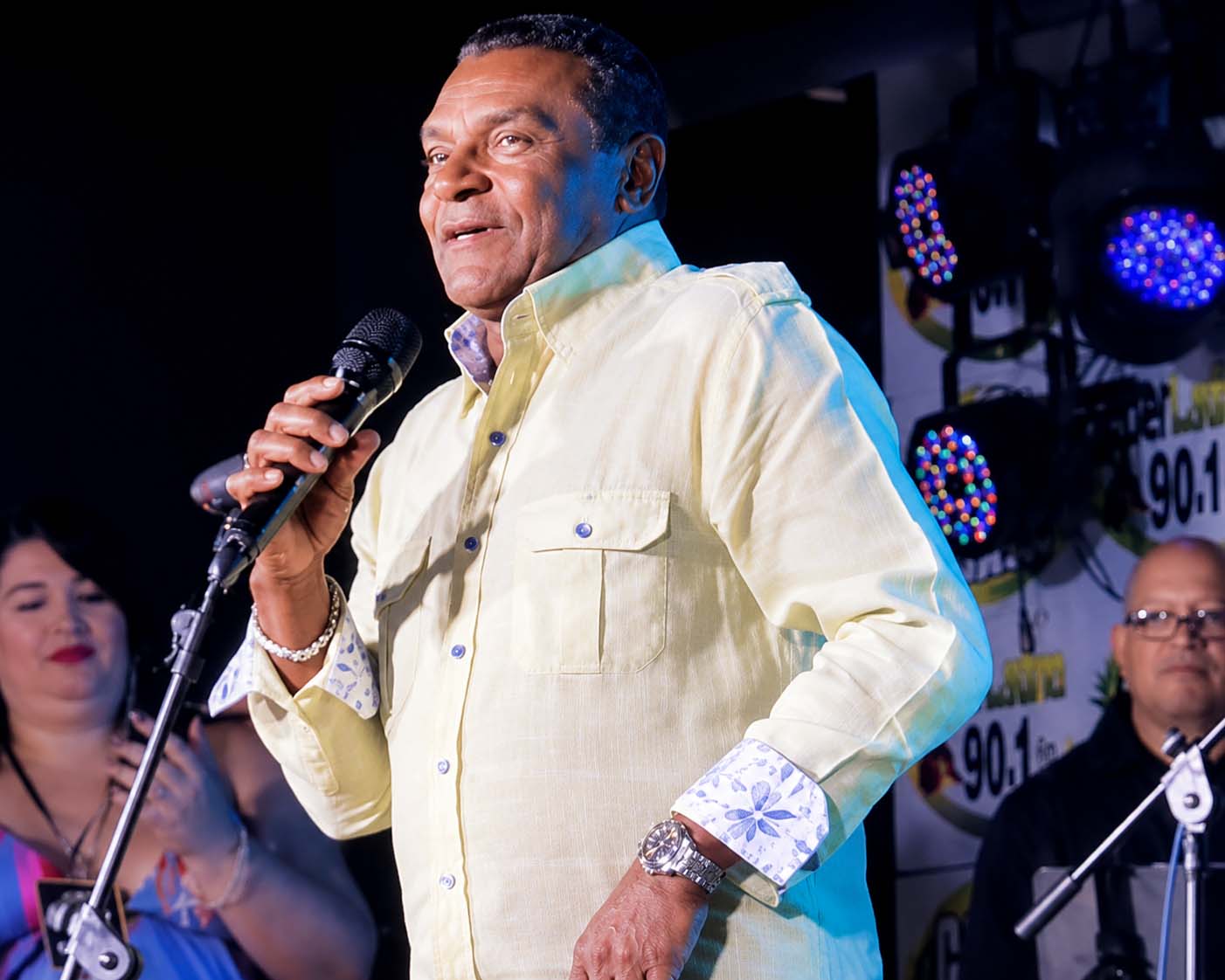
Tony Lindsay, Santana’s longest-serving lead vocalist, brings his blend of soul, jazz and R&B to the Kuumbwa Jazz Center. During nearly 25 years with the legendary band, he appeared on Supernatural, Shaman and Milagro, earning multiple Grammy Awards. Thursday, July 16, 7 p.m., Kuumbwa Jazz Center, 320-2 Cedar St., Santa Cruz.
SFMOMA celebrates Mexican culture
Inspired by the Graciela Iturbide exhibition, SFMOMA presents Rooftop Radio featuring DJ mare.efresh, a live performance by Y La Bamba, folklórico dance by El Espíritu Bailarín and audience dance lessons. Thursday, July 16. Activities begin at 5:45 p.m.; Rooftop Radio from 6–9 p.m., SFMOMA, 151 Third St., San Francisco.
¡Kids Rock! regresa con su serie musical centrada en los niños. Kids Rock! returns with its kid-focused music series
Kids Rock! returns to Redwood City
Kids Rock! returns with Lori & RJ for a free morning of interactive music, dancing and family fun especially for kids.. Saturday, July 18, 10 a.m.–noon, Courthouse Square, Redwood City.
Omar Sosa celebra el lanzamiento de su más reciente álbum con una presentación en Berkeley. Omar Sosa celebrates the release of his latest album with a performance in Berkeley.
Omar Sosa Quarteto Americanos se presenta en Berkeley
El pianista nominado al Grammy Omar Sosa llevará su Quarteto Americanos a Berkeley para una velada que combina jazz afrocubano, ritmos latinos e improvisación contemporánea. Domingo 19 de julio, 7 p.m., Freight & Salvage, 2020 Addison St., Berkeley.
Viva Perú Festival returns to Newark
The third annual Viva Perú Festival features Peruvian cuisine, live music, dance performances and family activities, headlined by international salsa star José Alberto “El Canario.” Sunday, July 26, 11 a.m.–7 p.m., Swiss Park, 5911 Mowry Ave., Newark.
– For additional events and updated listings, visit ElReporteroSF.com under Calendar. Organizations, nonprofits, artists and event promoters are invited to submit upcoming community events for possible publication by emailing elreportero@aol.com.