by the El Reportero staff
Every December, the streets of Nicaragua come alive with religious songs, colorful altars, fireworks and a familiar cry that has echoed through generations: “¿Quién causa tanta alegría?” The response comes immediately: “¡La Concepción de María!”
Known as La Gritería, this cherished Nicaraguan tradition takes place on December 7, the eve of the Catholic Feast of the Immaculate Conception. However, preparations and devotional gatherings begin in late November with La Purísima, a novena of prayers and songs honoring the Virgin Mary.
The celebration traces its religious roots to Spanish Franciscan missionaries during the colonial period. Its present popular form is traditionally attributed to Monsignor Gordiano Carranza, who, on December 7, 1857, encouraged residents of León to build altars in their homes and visit one another while singing and expressing their devotion.
What began as a religious observance eventually became one of Nicaragua’s most distinctive expressions of national identity.
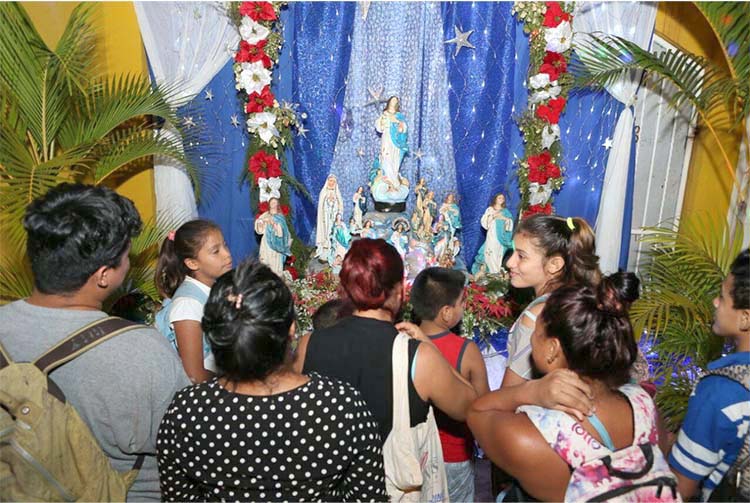
Traditionally, at six in the evening on December 7, church bells and fireworks announce the celebration. Children, parents, grandparents and groups of friends walk through neighborhoods, visiting homes where elaborate altars display images of the Virgin surrounded by flowers, candles and colorful decorations.
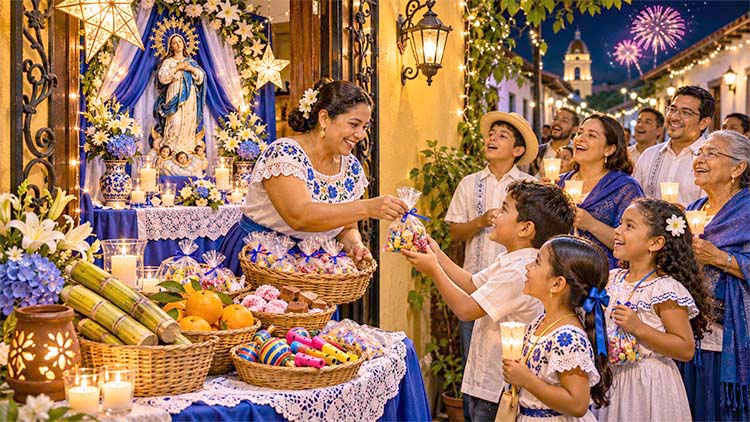
After singing traditional hymns, visitors receive gifts known as la gorra or el brindis. These may include sugarcane, oranges, traditional sweets, wooden toys, whistles and beverages such as chicha.
The celebration also preserves Nicaragua’s rich musical heritage. Traditional hymns such as “Tu gloria, tu gloria,” “Salve, azucena divina” and “Toda bonita eres María” have been passed down through generations, becoming an inseparable part of the country’s December festivities.
Artisans, musicians, confectioners and families contribute to the celebration, preserving traditional crafts, recipes and artistic expressions that might otherwise disappear with time.
Beyond Nicaragua’s borders, immigrant communities continue celebrating La Purísima in the United States, Costa Rica and other countries. For Nicaraguans living abroad, the festivities provide an opportunity to reconnect with their homeland, share childhood memories and introduce younger generations to their cultural roots.
Although deeply rooted in Catholic devotion, La Gritería also represents generosity, hospitality and community solidarity. Families open their doors to neighbors and strangers alike, sharing what they have regardless of social or economic differences.
This December 7 marks 169 years since the historic celebration in León that helped shape the tradition as it is known today. Through changing times, generations and geographical boundaries, Nicaragua’s beloved Gritería remains a living expression of faith, joy and cultural belonging.