by the El Reportero editorial board
Democracy is often measured by the ability of citizens to elect their leaders. But is holding elections enough to guarantee a healthy democratic system? What happens when one political party becomes so powerful that its opposition is reduced to little more than a symbolic presence?
California is approaching a political reality that deserves serious reflection, regardless of whether one identifies as a Democrat, Republican or independent.
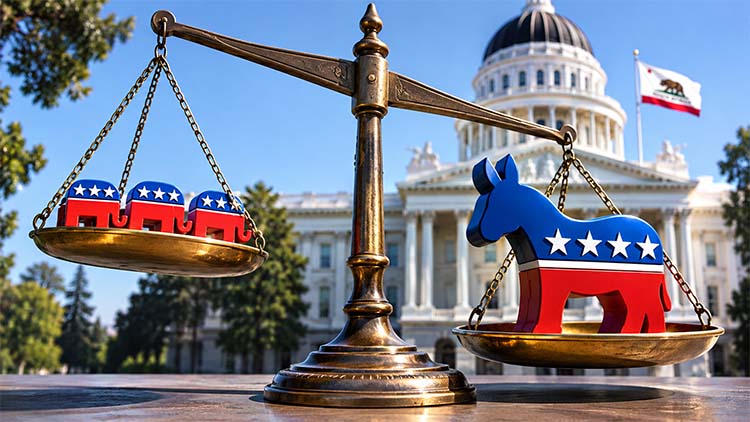
Following the November elections, Republicans are expected to lose nearly one-third of their already limited representation in the California Legislature, according to CalMatters. Democrats, who already enjoyed a supermajority, will exercise even greater control over the legislative process.
For some, this represents a political victory worth celebrating. For others, it raises a fundamental question about the future of representative government in the Golden State.
The issue is not whether Democrats deserve their electoral victories. They won through an established electoral process, and the will of the voters must be respected. The issue is whether any political organization, regardless of its ideological orientation, should exercise power without facing meaningful political competition.
Competition keeps politicians honest.
When elected officials know that their decisions can cost them their positions, they have a powerful incentive to listen to constituents, reconsider unpopular policies and negotiate with those who disagree with them. When that threat virtually disappears, accountability can gradually weaken.
Throughout history, concentrated political power has presented challenges to democratic institutions. Governments do not necessarily abandon democratic practices overnight. Sometimes, the deterioration begins when alternative voices become increasingly irrelevant and political competition loses its effectiveness.
California is not a dictatorship, nor does it legally prohibit opposition parties. Nevertheless, the overwhelming dominance of a single political organization raises questions about whether the state is developing some of the characteristics of a one-party system.
The distinction between a legally established one-party government and a practically dominant political party is important. But so are the consequences of governing without an effective counterweight.
Consider California’s persistent problems: the high cost of housing, homelessness, expensive living conditions, taxation, struggling businesses and the difficulties many working families face in achieving economic stability.
If the same political organization controls the legislative agenda year after year, where does the institutional pressure for alternative solutions come from?
Certainly, Democrats are not a politically homogeneous group. Moderate and progressive Democrats frequently disagree, and internal competition can provide meaningful debate. However, disagreements within a dominant party do not necessarily substitute for an organized opposition with an independent political platform and a realistic opportunity to govern.
There is also a responsibility that falls upon the Republican Party itself. Its declining influence cannot simply be blamed on Democratic success. Republicans must examine why their message has failed to attract sufficient support among California voters and whether their leadership adequately represents the concerns of an increasingly diverse population.
An opposition party earns its relevance by offering credible solutions, not merely by criticizing those in power.
The democratic principle at stake extends far beyond California. If Republicans controlled the state with an equally overwhelming majority, the same concerns would apply. No political party should be considered immune from scrutiny simply because its policies are popular with a majority of voters.
Democracy requires more than majority rule. It also requires respect for minority opinions, institutional accountability, freedom of expression and the possibility of political change.
Without these elements, elections risk becoming exercises that periodically reaffirm existing power rather than provide a genuine opportunity to challenge it.
Citizens, too, have a responsibility. Political loyalty should never replace independent judgment. Voters should evaluate candidates according to their competence, integrity and proposals rather than automatically supporting someone because of the letter appearing beside their name on a ballot.
A strong opposition benefits even those who support the governing party. It exposes weaknesses, challenges assumptions, demands explanations and forces leaders to defend their decisions publicly.
California’s political future should not be measured exclusively by how many seats Democrats win or Republicans lose, but by whether its institutions remain responsive to the people, including those who disagree with the prevailing political majority.
The ultimate purpose of democracy is not to guarantee the permanent victory of one political organization. It is to ensure that political power remains accountable, contestable and subject to the judgment of citizens.
A government should never become so comfortable in power that it no longer fears losing it.