by the El Reportero staff
For years, Americans have been told that the hamburger on their plate carries a climate cost. Cattle release methane, ranching uses land and water, and consumers are encouraged to eat less beef or substitute plant-based products. Some international organizations and researchers have even promoted insects as a future source of protein.
These initiatives are real, although no government is presently forcing Americans to eat insects. Cattle also genuinely produce methane. Denying that would weaken any serious criticism of climate policy. The Environmental Protection Agency says digestion by livestock represents more than one-quarter of greenhouse-gas emissions from the American agricultural sector.
The planet has also warmed. Average global temperature has risen approximately 2 degrees Fahrenheit since the late nineteenth century. Sea levels have risen, glaciers have retreated, oceans have accumulated heat and atmospheric carbon dioxide has climbed sharply. A responsible debate should begin by recognizing measured facts, not by pretending that every climate observation was invented.
But accepting the measurements does not require accepting every policy proposed in their name. Nor does it excuse the striking double standard emerging around artificial intelligence and the enormous data centers supporting it.
The same political and corporate culture that scrutinizes cattle is now welcoming facilities that consume staggering quantities of electricity and water. Data centers used about 4.4 percent of all United States electricity in 2023, according to the Department of Energy. Berkeley Lab now estimates that their share could reach 11.8 percent by 2030, with scenarios ranging as high as 15.3 percent.
Globally, the International Energy Agency expects data-center electricity consumption to roughly double by 2030. In the United States, these facilities could account for nearly half of electricity-demand growth through the end of this decade. That electricity will not materialize without consequences. Renewable and nuclear power will supply part of it, but natural gas and coal will also be needed.
Then there is water. Many data centers require large cooling systems, while electricity generation itself can consume additional water. In communities already worried about drought, aging electrical grids or rising utility bills, residents are entitled to know how much water and power a proposed facility will require—and who will pay for the infrastructure.
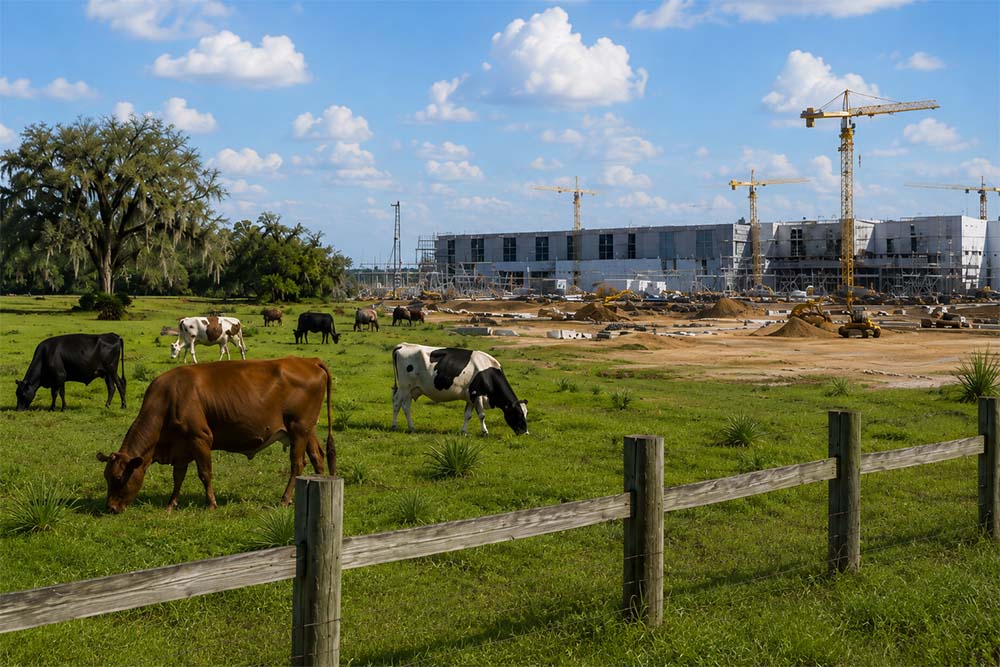
This creates an unavoidable question: Why is the family dinner treated as a climate problem while the expansion plans of some of the richest corporations in history are described as technological progress?
Beef is not merely a fashionable consumer product. It provides complete protein, iron, zinc and vitamin B12 in a concentrated form. Ranching also supports farmers, processors, truck drivers, restaurants and rural communities. That does not mean every production method is environmentally harmless or that people must consume unlimited quantities. It means policy makers should not casually treat a nutritious traditional food as something society must eliminate.
Plant-based burgers, cultivated meat and insect protein may remain available to anyone who wants them. Consumers should be free to choose. But governments should not manipulate markets, taxes, institutional menus or regulations to push families away from natural meat while granting favorable treatment to energy-hungry technology projects.
The answer is not to close every data center. Modern society depends on digital networks for hospitals, banking, communications, publishing and scientific research. Artificial intelligence may produce genuine benefits. Those benefits, however, do not justify allowing the industry to conceal or externalize its environmental costs. The answer is consistent standards.
Before approving new facilities, governments should require public disclosure of projected electricity consumption, water use, backup-generator emissions, tax incentives and effects on residential utility rates. Technology companies should finance the new power and water infrastructure their operations demand instead of transferring those expenses to local residents. Promises of renewable energy should be measurable and enforceable, not advertising slogans.
Farmers should likewise be encouraged to reduce methane through improved feed, manure management, breeding and grazing practices. Environmental improvement is more constructive than condemning an entire food source or frightening consumers.
Climate policy loses credibility when sacrifice is demanded principally from ordinary people while powerful industries receive exceptions. If methane from cows deserves public scrutiny, then the electricity, water and emissions associated with artificial intelligence deserve scrutiny at least as rigorous.
The real debate is not cows versus computers. It is whether environmental rules will be based on evidence and applied equally. Families should not be shamed for eating beef while corporations consume the resources of entire communities behind closed doors.
A credible environmental policy must protect nature without controlling people’s diets, destroying livelihoods or permitting technology companies to escape the standards imposed on everyone else.
– Sources: U.S. Environmental Protection Agency; U.S. Department of Energy; Lawrence Berkeley National Laboratory; International Energy Agency; NASA; World Meteorological Organization; Food and Agriculture Organization of the United Nations; European Commission.