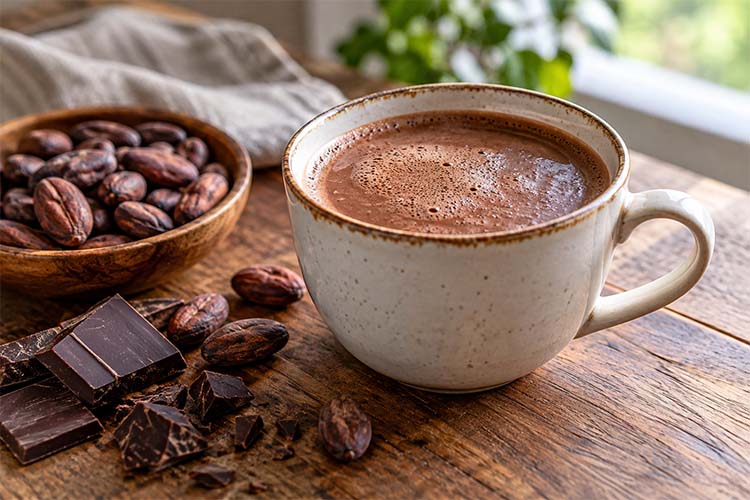
Research suggests cocoa flavanols may help preserve circulation during prolonged sitting and insufficient sleep
by the El Reportero staff
A cup of cocoa may offer more than comfort during a long workday. Research suggests that cocoa rich in flavanols, naturally occurring plant compounds, may help protect blood vessel function from some of the immediate effects of prolonged sitting and inadequate sleep.
The findings, discussed in an October 14 report by Ava Grace for Food.News, draw attention to an increasingly common health problem: spending hours at a desk while getting too little rest.
Sitting without moving for extended periods can interfere with normal circulation. Sleep deprivation can also affect blood pressure and the inner lining of blood vessels, known as the endothelium. Both may reduce the ability of arteries to expand when the body needs additional blood flow.
Researchers have examined whether cocoa flavanols can counter these short-term changes. In experiments described in the report, volunteers consumed drinks containing either substantial amounts of cocoa flavanols or very low amounts before researchers assessed their vascular responses.
One experiment involved healthy young men sitting continuously for two hours. Another investigated vascular responses associated with insufficient sleep. Researchers used ultrasound measurements of flow-mediated dilation, a test that assesses how effectively an artery widens when blood flow increases.
Participants receiving low-flavanol drinks experienced declines in this measure under the conditions studied. Those receiving flavanol-rich cocoa generally maintained better vascular responses, suggesting a potentially protective effect.
Scientists believe one explanation involves nitric oxide, a substance produced in the body that helps blood vessels relax. Cocoa flavanols may support pathways involving nitric oxide and help the endothelium function more effectively.
These findings are promising, but they require careful interpretation. A temporary improvement in an ultrasound measurement does not establish that drinking cocoa prevents heart attacks, strokes or long-term arterial disease. Nor does it prove that cocoa can reverse the broader consequences of chronic sleep loss or inactivity.
The amount of flavanols matters. Ordinary sweetened hot chocolate mixes may contain relatively little, and processing can substantially change the flavanol content of cocoa products. A label advertising a high cocoa percentage does not necessarily reveal how many flavanols a serving provides.
Unsweetened cocoa powder may be a practical ingredient for people who enjoy cocoa, although its flavanol content varies. Dark chocolate is another option, but it can contain considerable calories, sugar and saturated fat. Adding large amounts is not necessary or advisable.
Flavanols also occur in foods such as tea, apples, grapes and berries, making a varied plant-rich diet another way to obtain these compounds.
Most importantly, cocoa should not become an excuse to remain seated all day or regularly sacrifice sleep. Standing up, walking periodically, exercising, and maintaining a consistent sleep schedule remain essential steps toward cardiovascular health.
Further studies must establish appropriate doses and effects across diverse populations.
For readers who enjoy cocoa, the research offers an encouraging possibility: a familiar beverage might provide a modest additional benefit when prepared with suitable ingredients. Its greatest value, however, is likely as one part of a balanced routine rather than a substitute for movement, rest or medical care.
Based on a report by Ava Grace, Food.News, October 14, 2026.